
China Central to Global Supply Chains: Manufacturing Value Added (1994-2024)
Why China Remains Central to Global Supply Chains: Manufacturing Value Added (1994-2024)
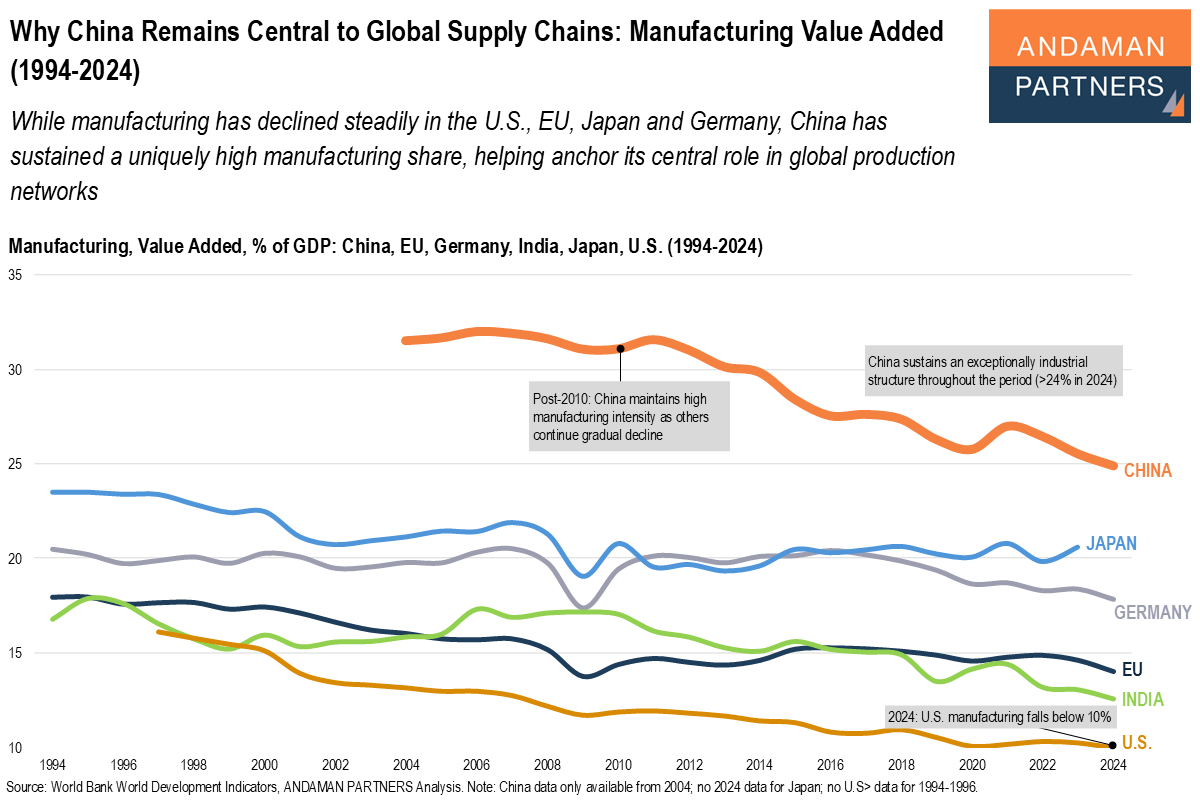
While manufacturing has declined steadily in the U.S., EU, Japan and Germany, China has sustained a uniquely high manufacturing share, helping anchor its central role in global production networks.
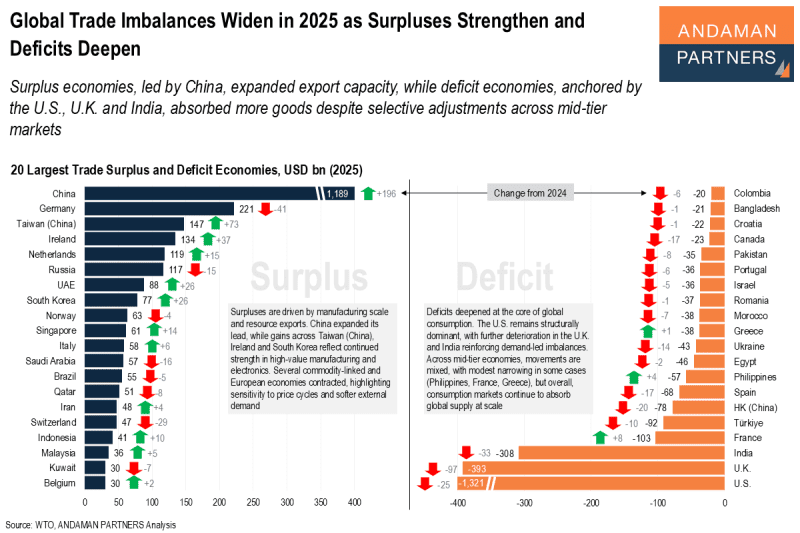
Global manufacturing structures have diverged sharply over the past three decades. While the manufacturing share of GDP has declined steadily in the U.S., EU, Japan and Germany—reflecting the long-term shift toward services—China has sustained an unusually high manufacturing intensity throughout the period.
This structural divergence is the foundation of the modern global production system. Most advanced economies normalised toward 12-18% manufacturing shares; China remained above 25% even as its economy grew tenfold.
This sustained industrial structure helps explain China’s centrality in global supply chains. After 2010 in particular, China maintained an elevated manufacturing share at a time when other major economies were continuing gradual de-industrialisation. This divergence made China uniquely capable of absorbing global production at scale, extending deep supplier networks across electronics, machinery, metals, chemicals and consumer goods.
The fact that China in 2024 is still at 24.9% of manufacturing value added as % of GDP, contrasted with the downward trajectories of the U.S., EU, Japan, and Germany, illustrates why China became the world’s dominant manufacturing hub during the hyper-globalisation era and why it is still central to manufacturing and supply chains.
Also by ANDAMAN PARTNERS:
ANDAMAN PARTNERS supports international business ventures and growth. We help launch global initiatives and accelerate successful expansion across borders. If your business, operations or project requires cross-border support, contact connect@andamanpartners.com.

Hong Kong: From a Gateway to a Springboard Out of Mainland China by ANDAMAN PARTNERS Co-Founder Rachel Wu
Analysis by ANDAMAN PARTNERS Co-Founder Rachel Wu on Hong Kong’s changing role
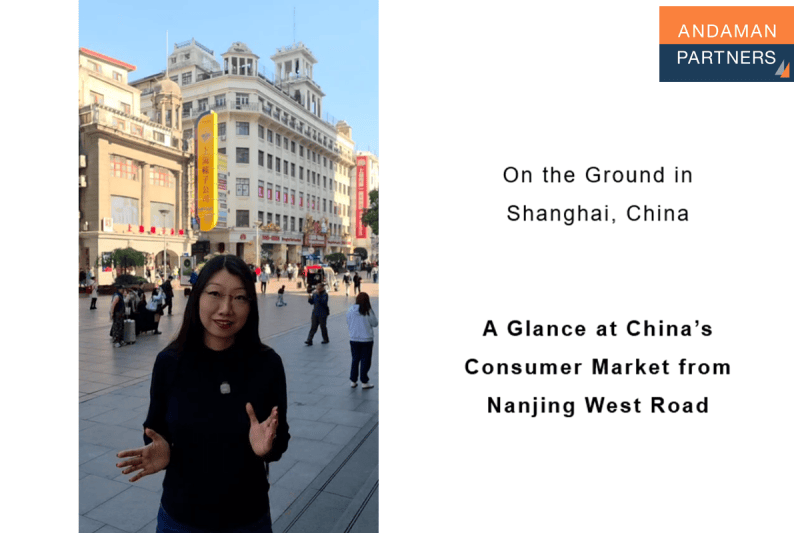
A Glance at China’s Consumer Market from Nanjing West Road by ANDAMAN PARTNERS Co-Founder Rachel Wu
Analysis by ANDAMAN PARTNERS Co-Founder Rachel Wu on China’s consumer economy

China Keeps Shopping for Services. Are You Selling? By ANDAMAN PARTNERS Co-Founder Rachel Wu
Analysis by ANDAMAN PARTNERS Co-Founder Rachel Wu on Shanghai’s services economy
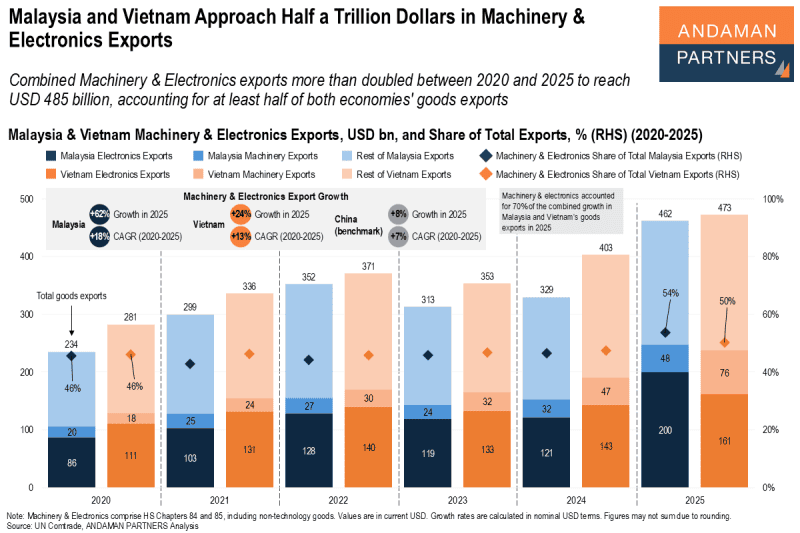
Malaysia and Vietnam Approach Half a Trillion Dollars in Machinery & Electronics Exports
Combined Machinery & Electronics exports more than doubled between 2020 and 2025 to reach USD 485 billion
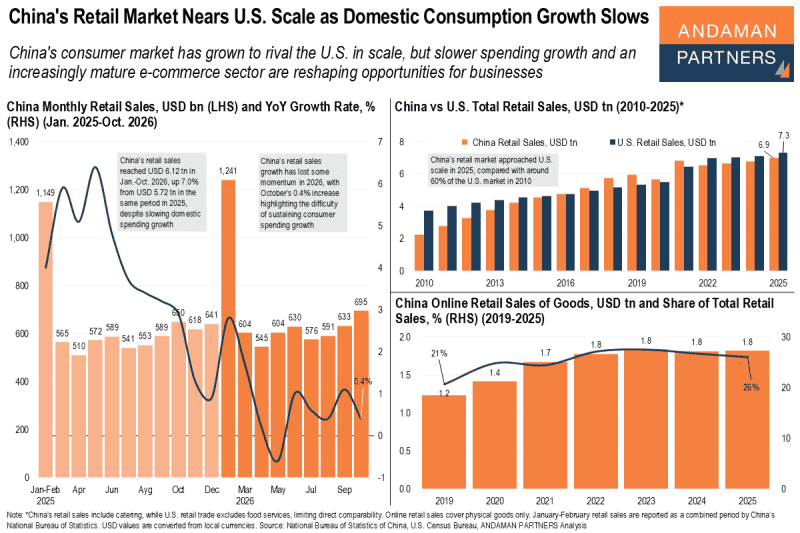
China’s Retail Market Nears U.S. Scale as Domestic Consumption Growth Slows
China’s consumer market has grown to rival the U.S. in scale, but slower spending growth is reshaping opportunities for businesses
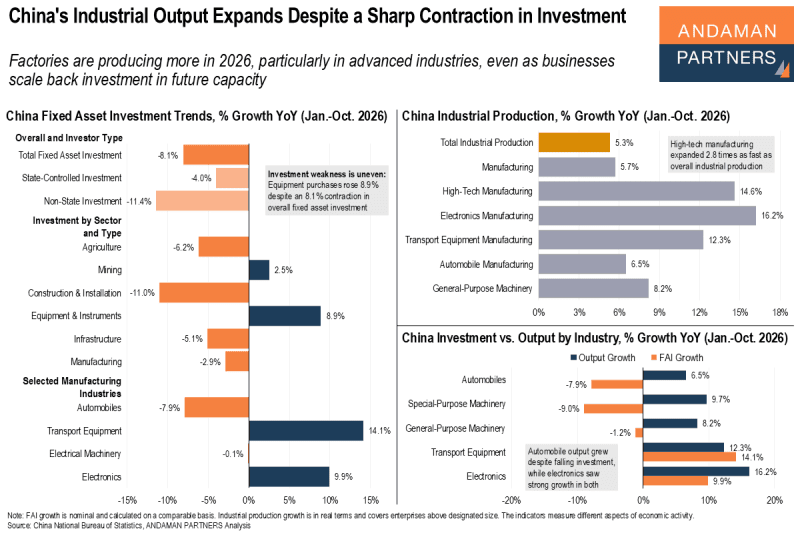
China’s Industrial Output Expands Despite a Sharp Contraction in Investment
Factories are producing more in 2026, particularly in advanced industries, even as businesses scale back investment in future capacity
Pingback: China’s Mining Hierarchy in 2025: The 10 Firms Shaping Energy and Metals Supply | ANDAMAN PARTNERS