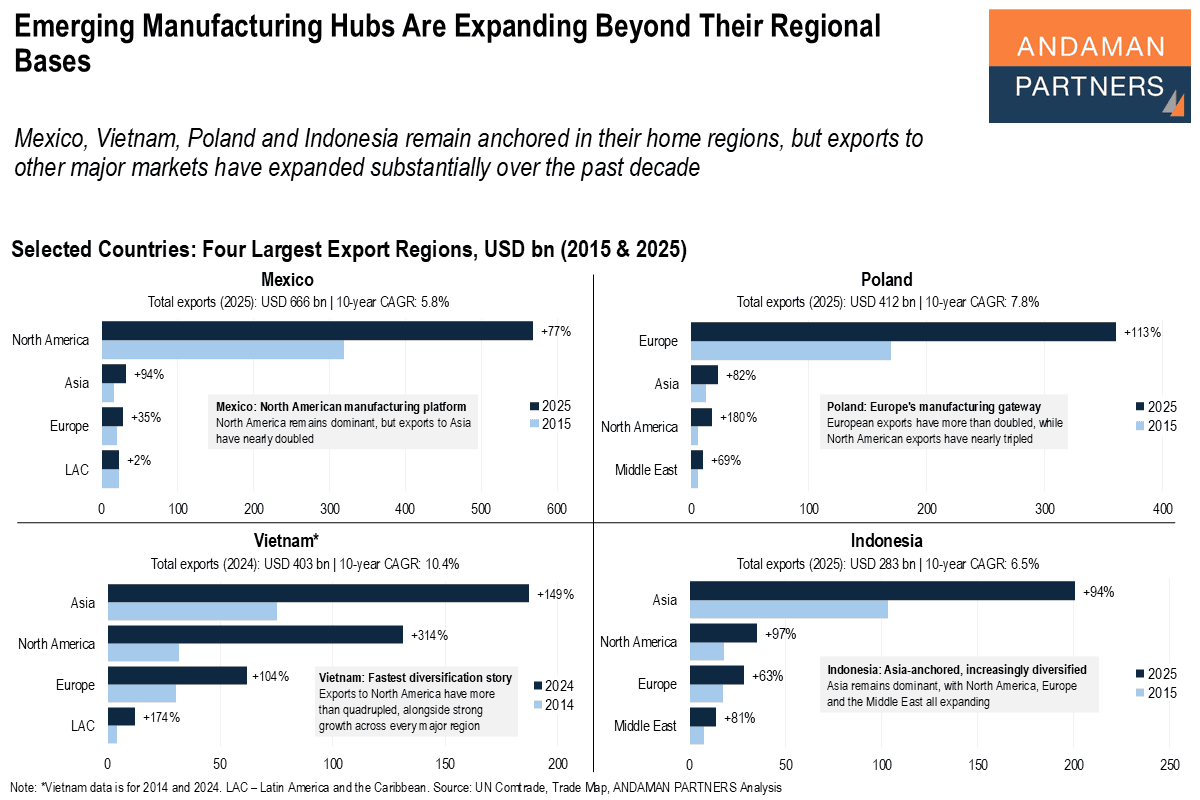
Emerging Manufacturing Hubs Are Expanding Beyond Their Regional Bases
Mexico, Vietnam, Poland and Indonesia remain anchored in their home regions, but exports to other major markets have expanded substantially

Mexico, Vietnam, Poland and Indonesia remain anchored in their home regions, but exports to other major markets have expanded substantially
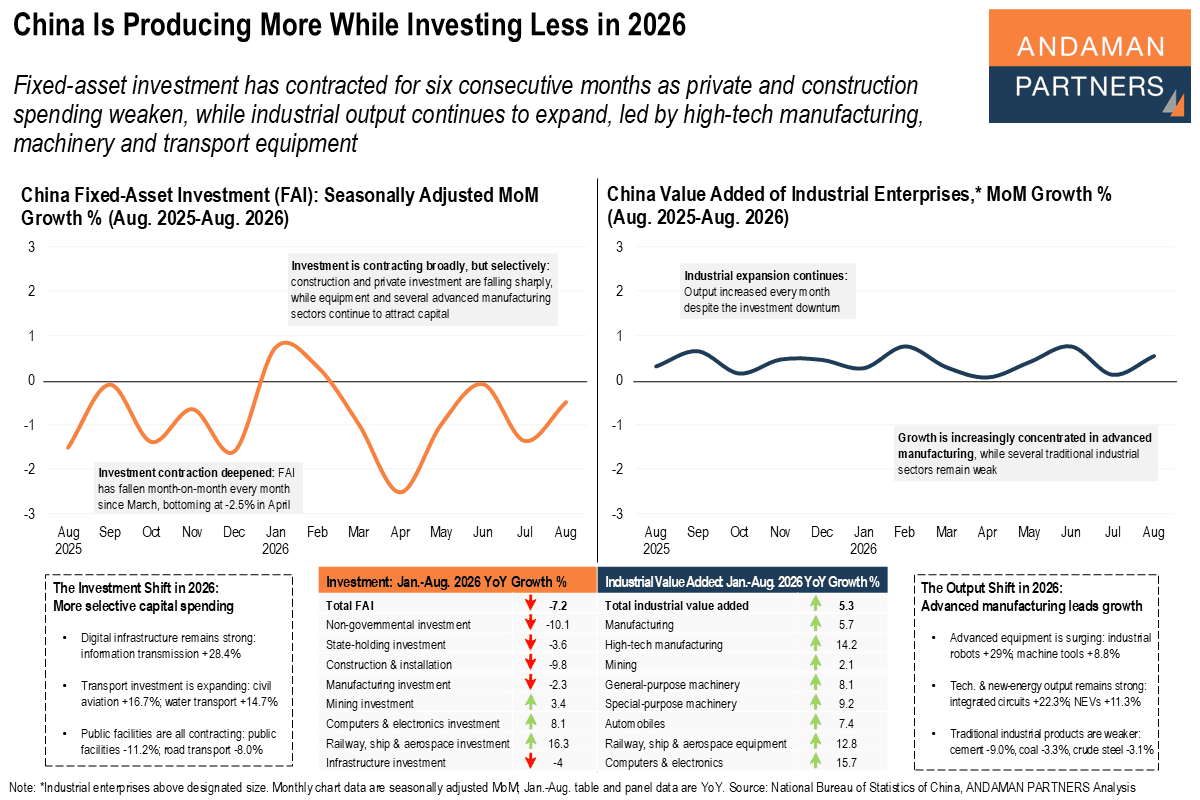
FAI has contracted for six consecutive months as private and construction spending weakens, while industrial output continues to expand.
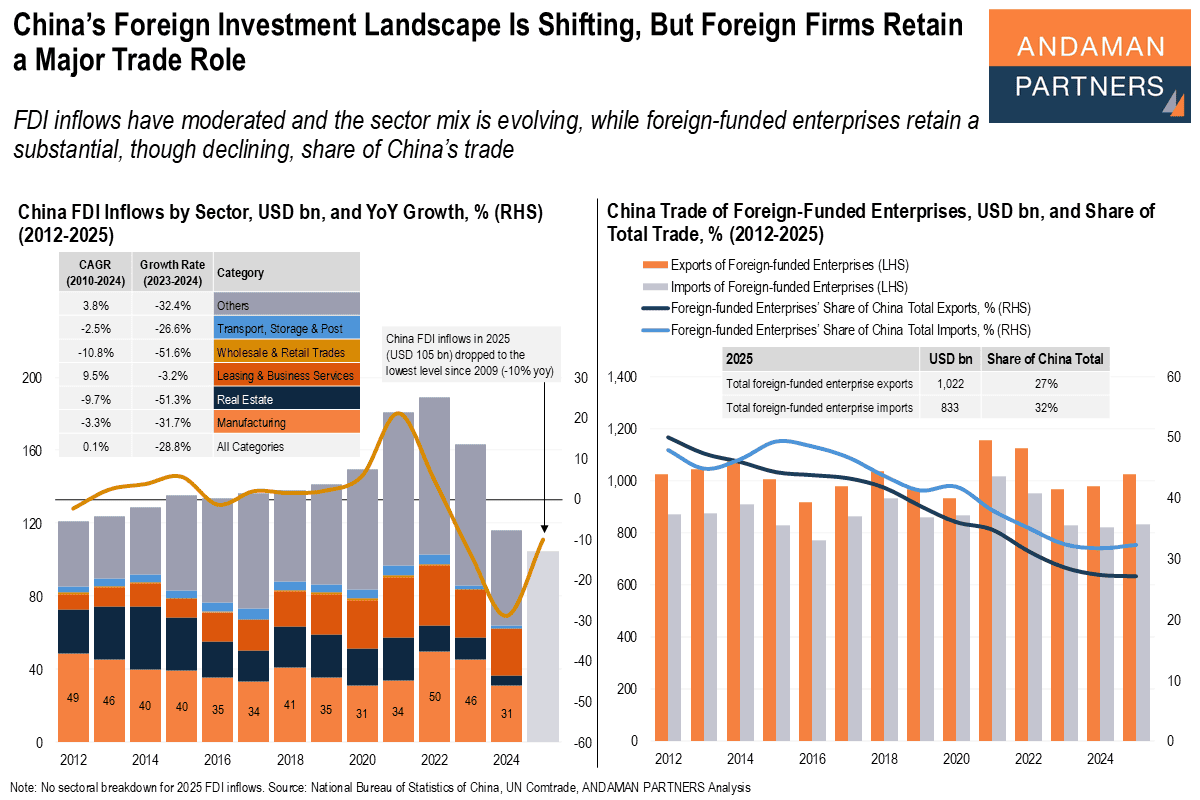
FDI inflows have moderated and the sector mix is evolving, while foreign-funded enterprises retain a substantial, though declining, share of China’s trade.
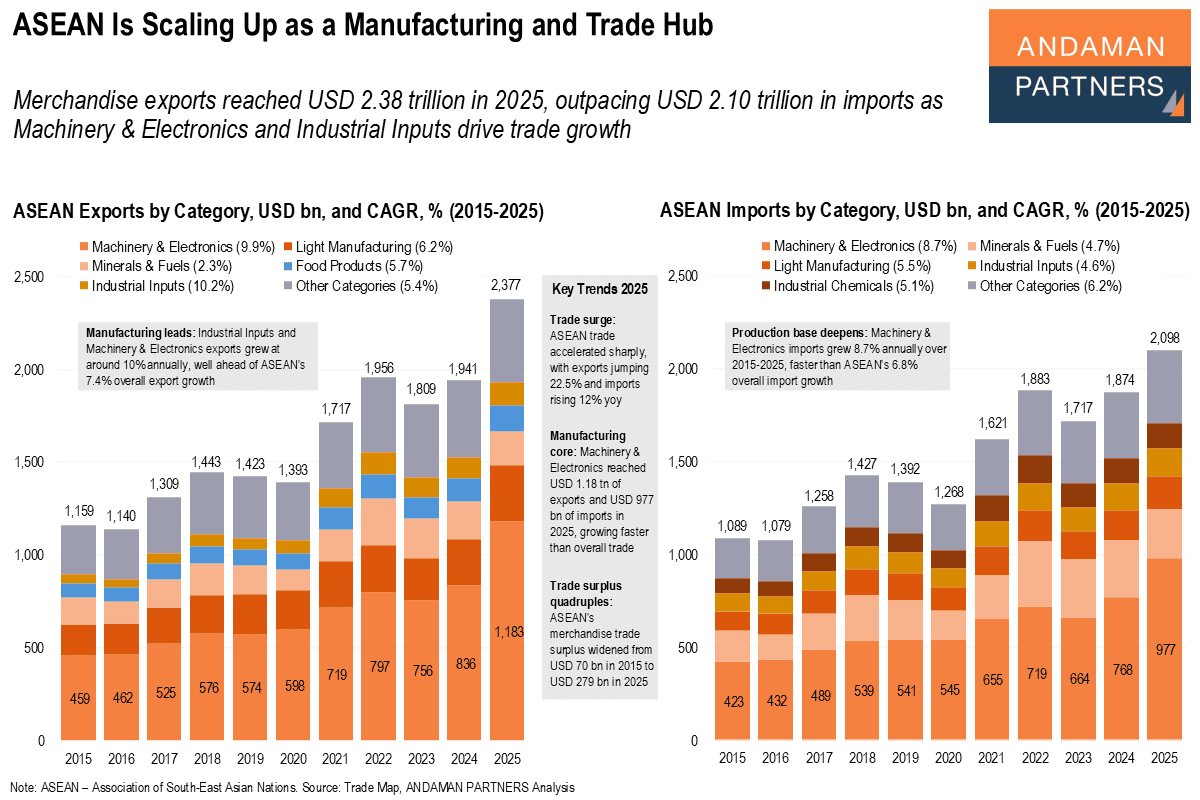
Merchandise exports reached USD 2.38 trillion in 2025, outpacing USD 2.10 trillion in imports
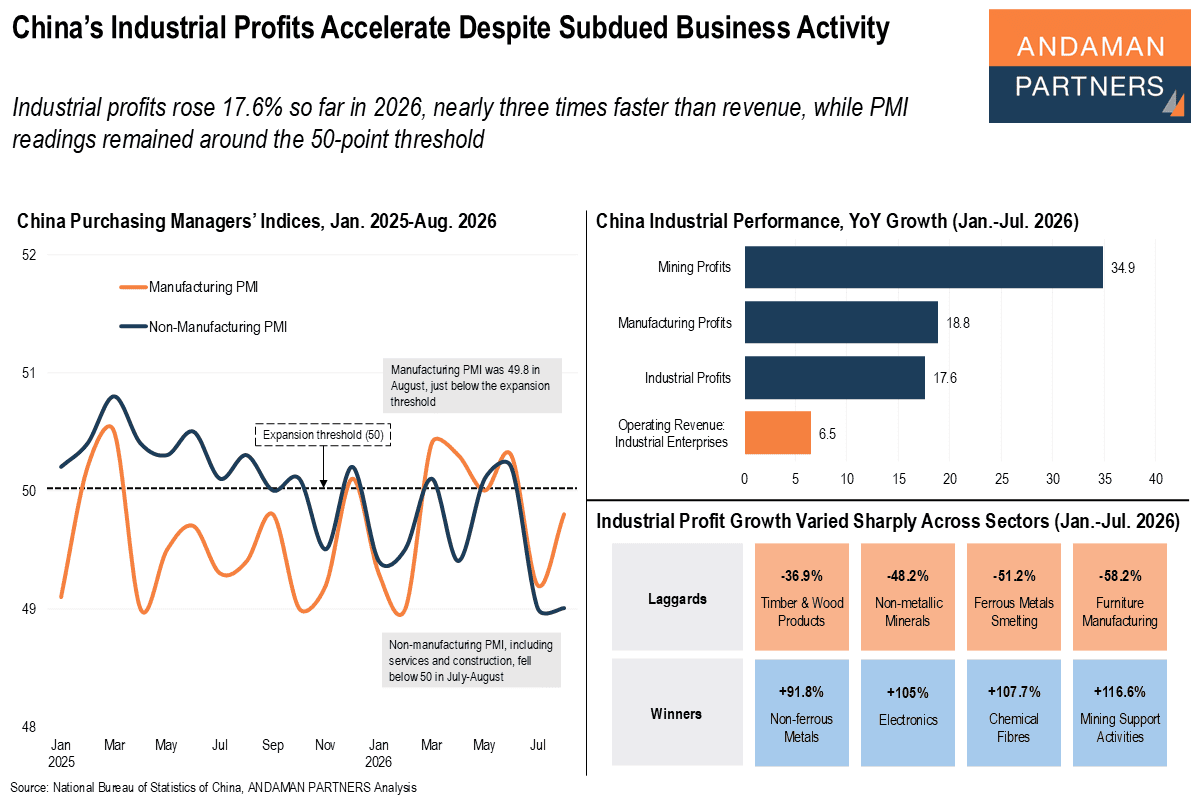
Industrial profits rose 17.6% so far in 2026, nearly three times faster than revenue, while PMI readings remained below 50
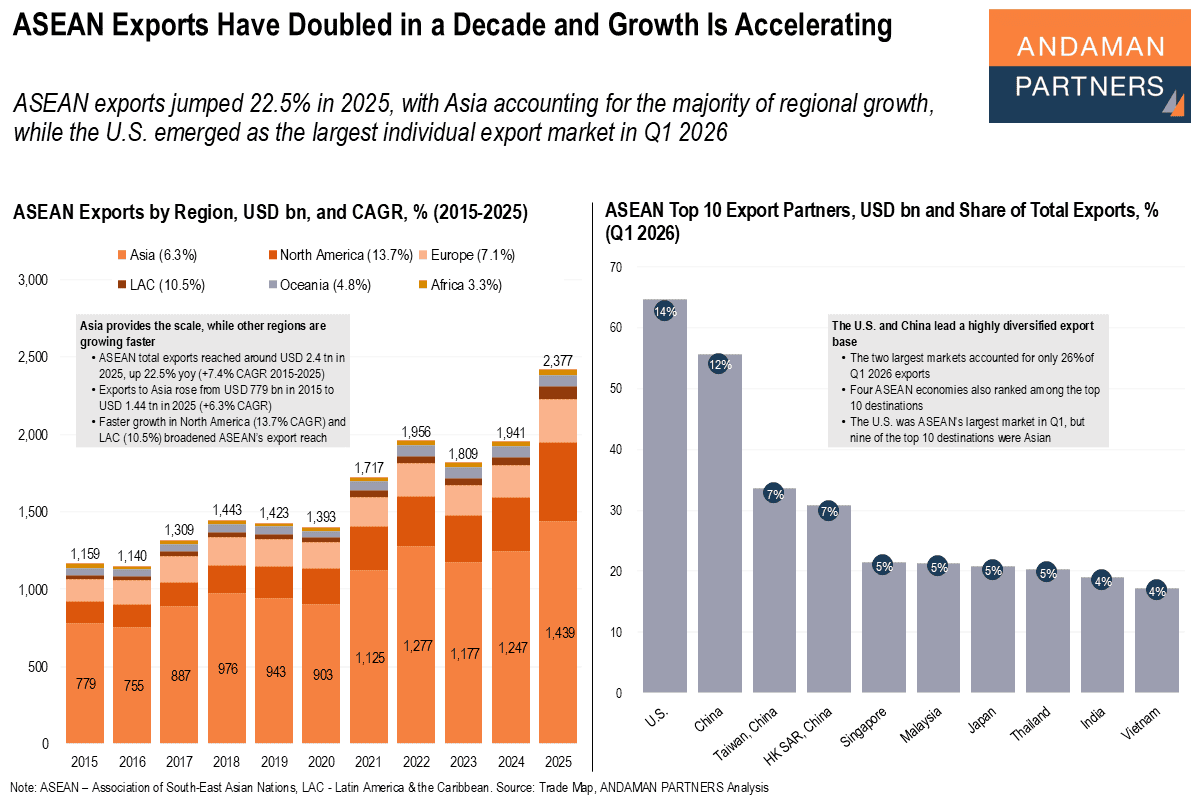
ASEAN exports jumped 22.5% in 2025, with Asia accounting for the majority of regional growth
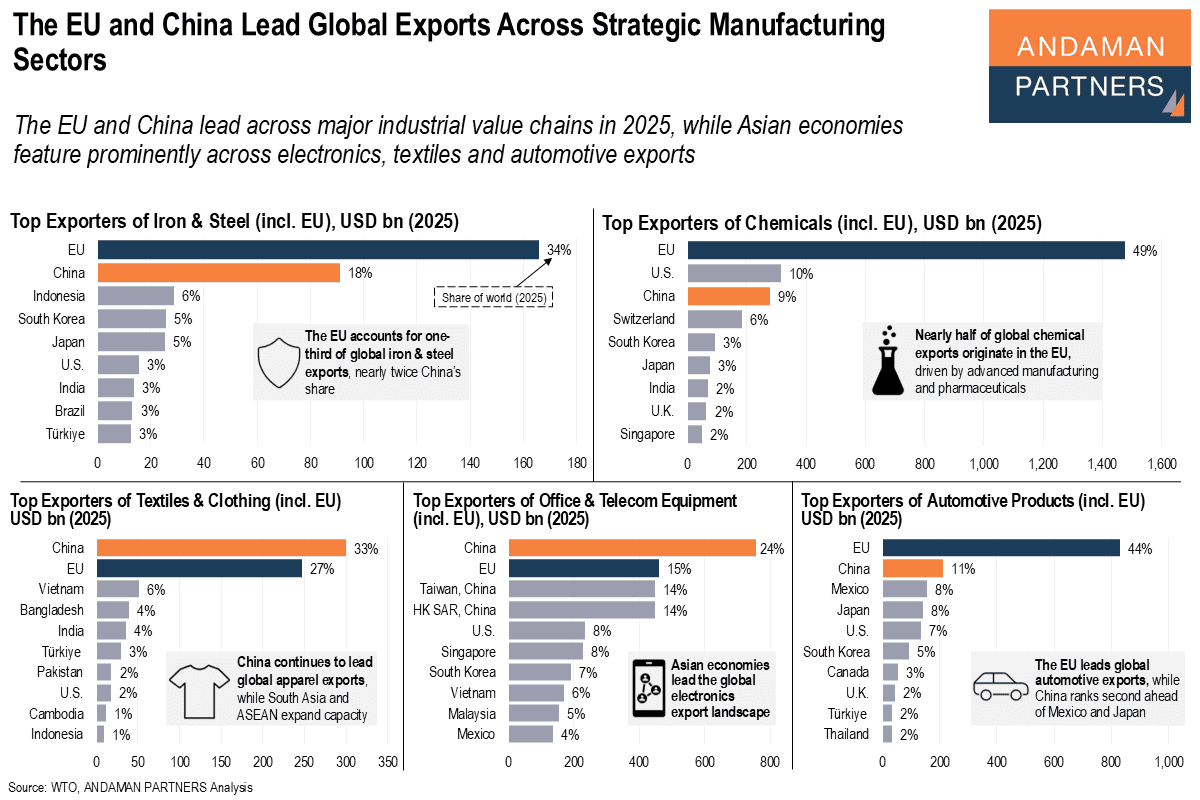
The EU and China lead across major industrial value chains in 2025, while Asian economies feature prominently in electronics, textiles and automotive
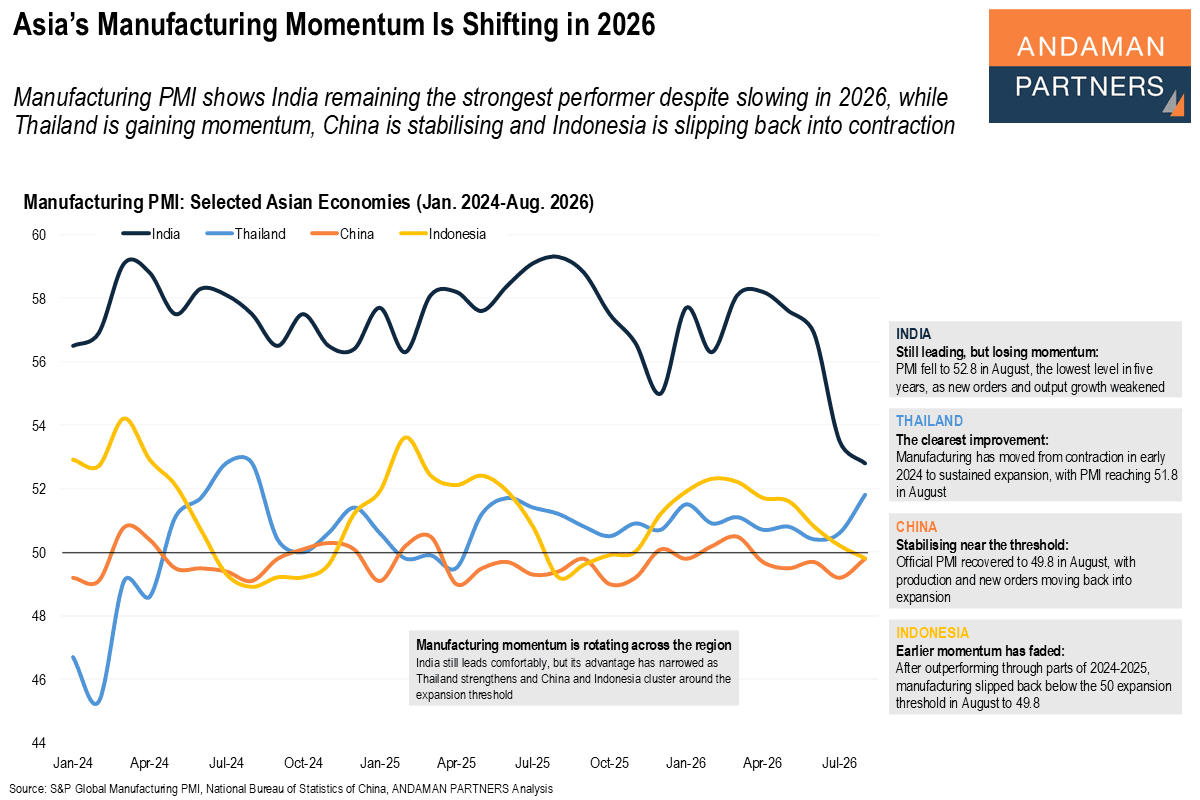
India leads despite slowing in 2026; Thailand is gaining momentum; China is stabilising and Indonesia is slipping back into contraction
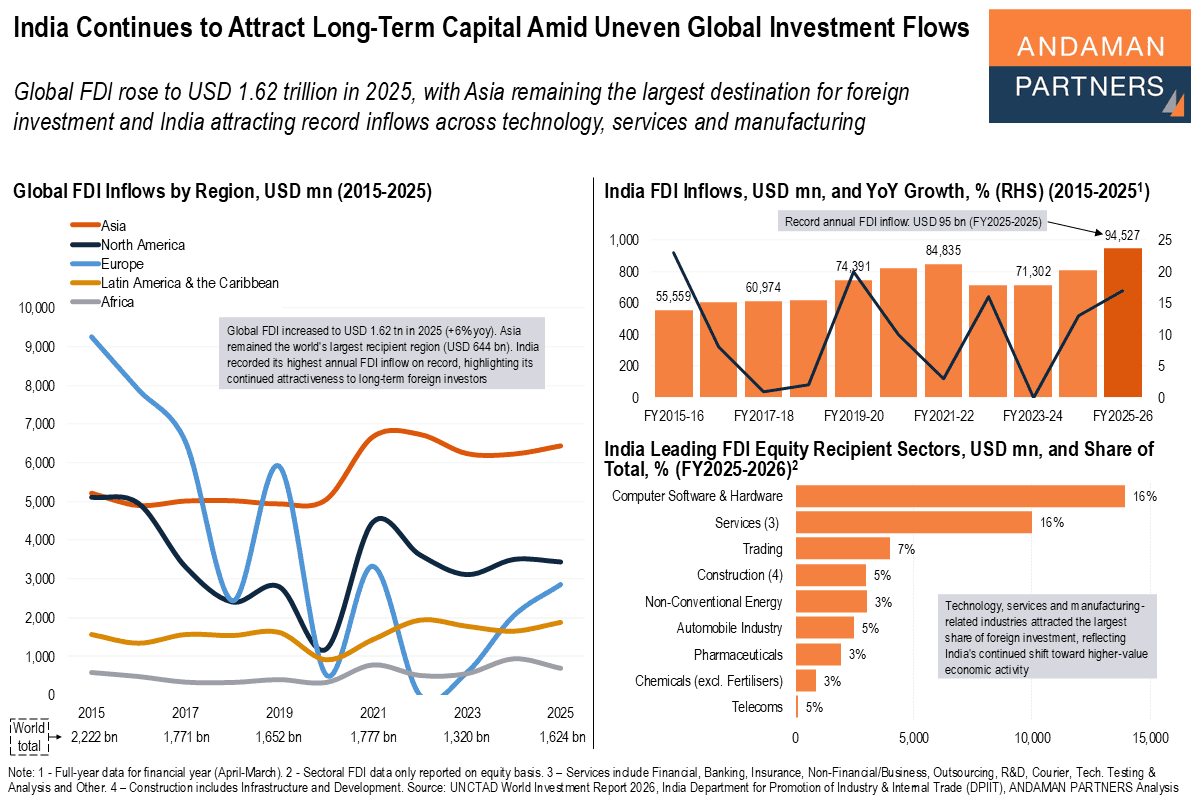
Global FDI rose to USD 1.62 trillion in 2025, with Asia remaining the largest destination and India attracting record inflows
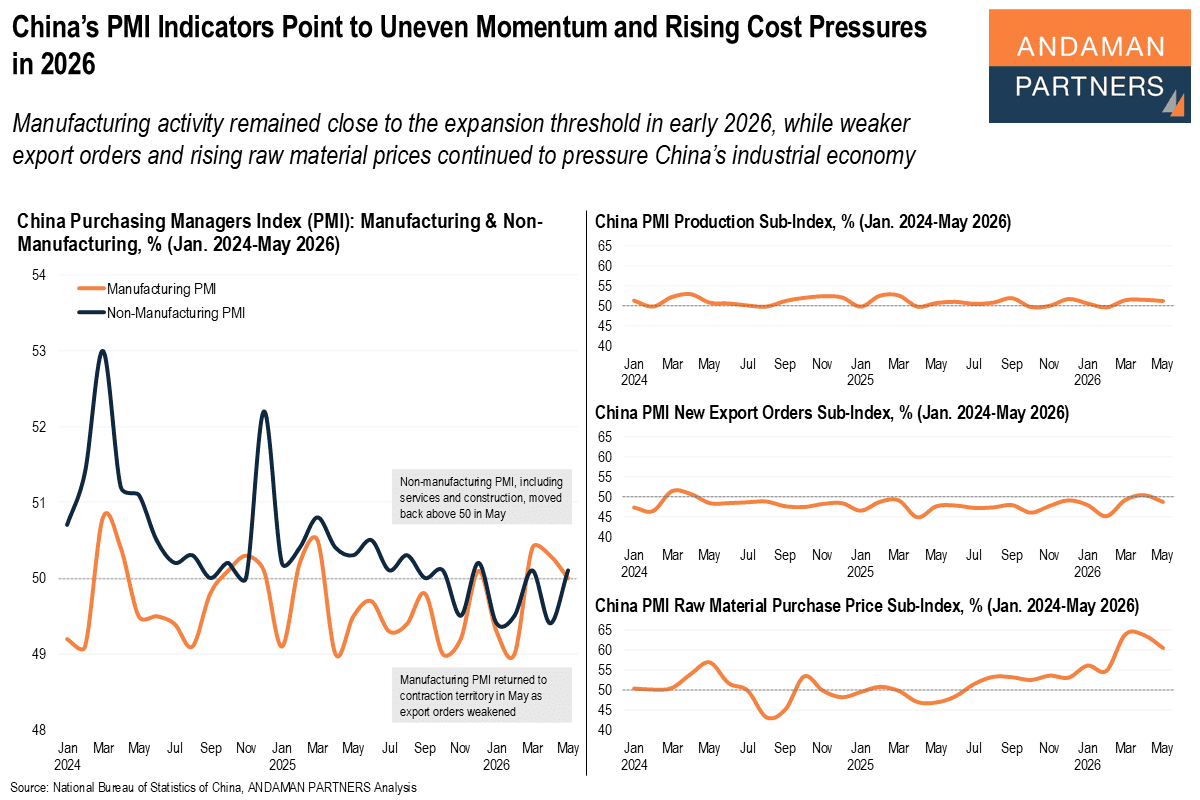
Manufacturing activity remained close to expansion in early 2026, while weaker export orders and raw material prices pressure the economy