China’s Trade With Africa
Africa’s Import Demand Continues to Grow as Industrial and Consumer Markets Expand
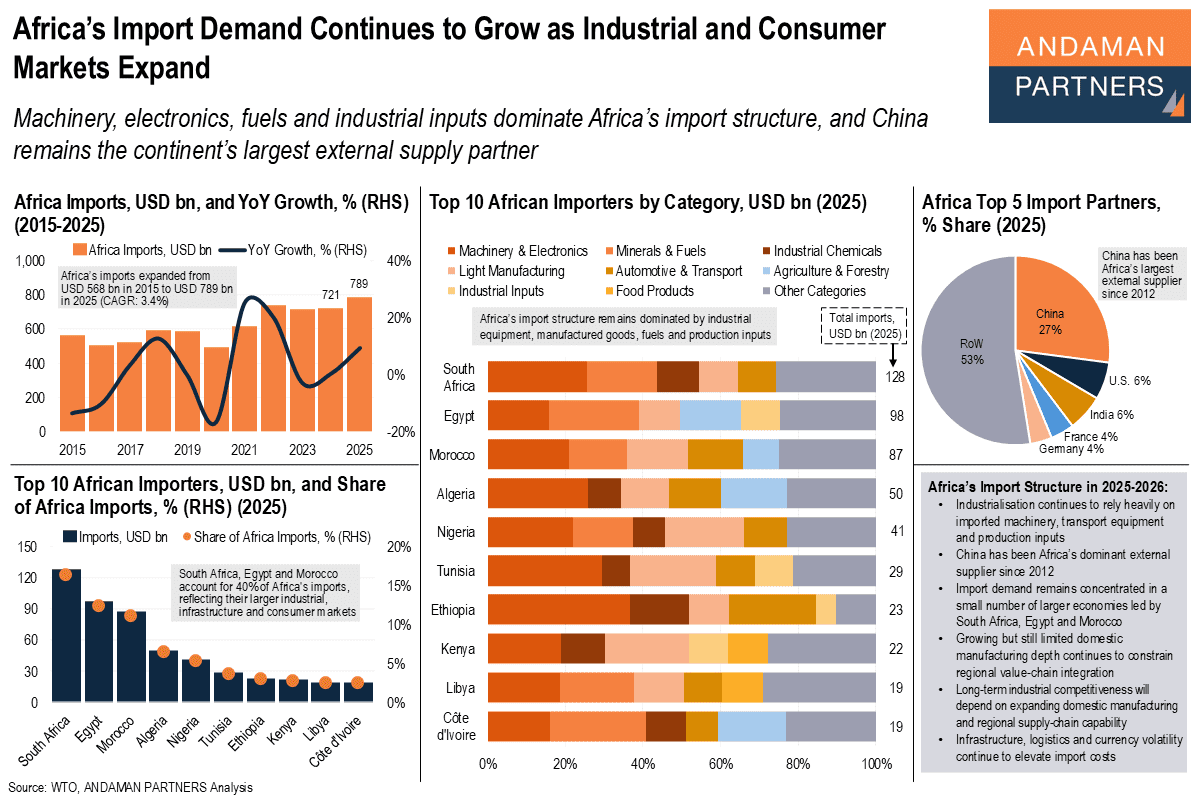
Machinery, electronics, fuels and industrial inputs dominate Africa’s import structure, and China remains the continent’s largest external supply partner.
Africa’s imports reached USD 789 billion in 2025, continuing a long-term upward trend driven by industrial expansion, infrastructure investment and rising consumer demand across the continent. Despite periods of commodity volatility, currency pressure and weaker global trade conditions, Africa’s import demand has remained structurally resilient, reflecting the continued expansion of urban economies, manufacturing activity and consumption markets.
The composition of imports highlights the continent’s industrial and supply-chain priorities. Machinery, electronics, transport equipment, fuels and industrial inputs dominate import structures across most major African economies, underlining continued dependence on external manufacturing ecosystems and production capabilities. South Africa, Egypt and Morocco remained Africa’s three largest importers in 2025, together accounting for roughly 40% of the continent’s total imports, reflecting their larger industrial, infrastructure and consumer markets.
China remained Africa’s largest external supplier, accounting for 27% of total imports in 2025, more than the U.S., India, Germany and France combined. This reflects China’s growing role across industrial equipment, manufactured goods, infrastructure inputs and consumer supply chains throughout the continent.
The broader trend is that Africa’s economic expansion continues to increase demand for imported industrial systems, intermediate goods and consumer products faster than domestic manufacturing capacity is expanding. While regional industrialisation efforts are progressing in several economies, infrastructure constraints, logistics costs and growing but limited manufacturing depth continue to reinforce reliance on external suppliers across many sectors.
Also by ANDAMAN PARTNERS:
ANDAMAN PARTNERS supports international business ventures and growth. We help launch global initiatives and accelerate successful expansion across borders. If your business, operations or project requires cross-border support, contact connect@andamanpartners.com.

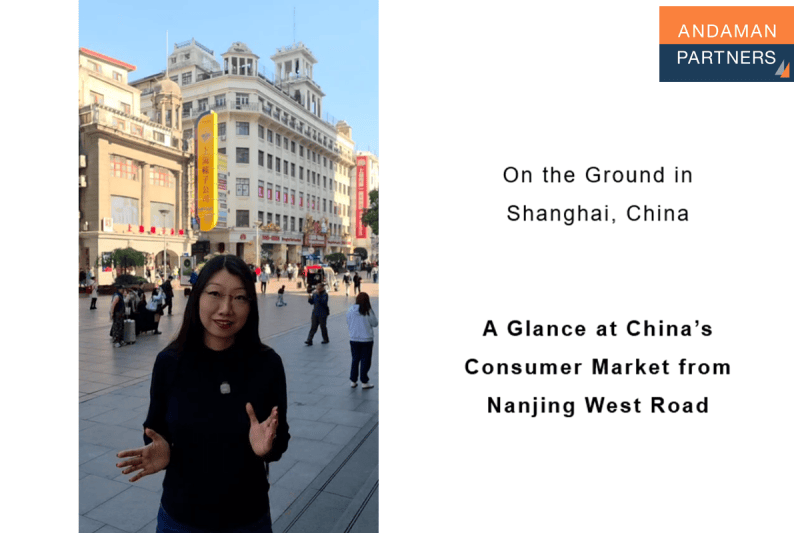
A Glance at China’s Consumer Market from Nanjing West Road by ANDAMAN PARTNERS Co-Founder Rachel Wu
Analysis by ANDAMAN PARTNERS Co-Founder Rachel Wu on China’s consumer economy

China Keeps Shopping for Services. Are You Selling? By ANDAMAN PARTNERS Co-Founder Rachel Wu
Analysis by ANDAMAN PARTNERS Co-Founder Rachel Wu on Shanghai’s services economy

Shenzhen: Where Entrepreneurs Land and Ideas Take Off by ANDAMAN PARTNERS Co-Founder Rachel Wu
Analysis by ANDAMAN PARTNERS Co-Founder Rachel Wu on what makes the city of Shenzhen different
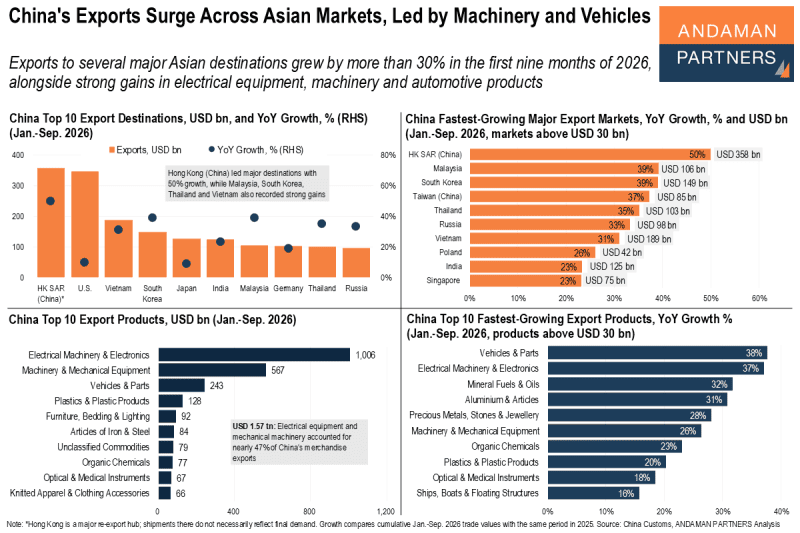
China’s Exports Surge Across Asian Markets, Led by Machinery and Vehicles
Exports to several major Asian destinations grew by more than 30% in the first nine months of 2026
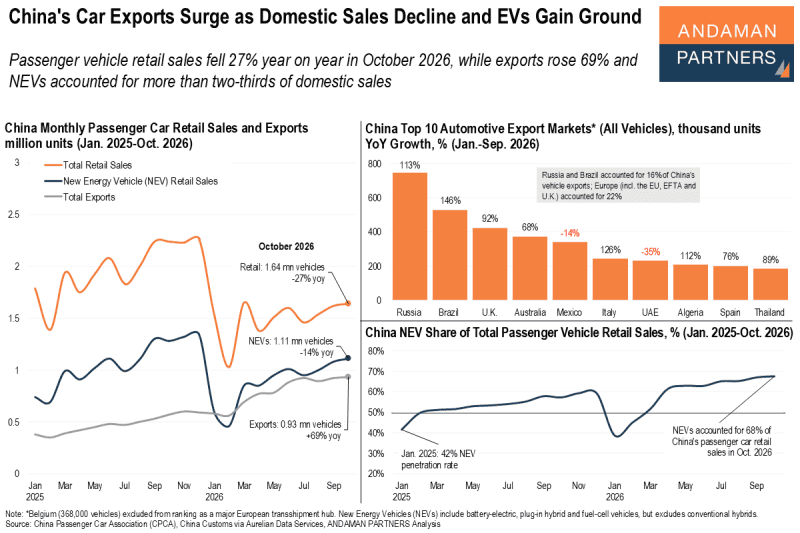
China’s Car Exports Surge as Domestic Sales Decline and EVs Gain Ground
Passenger vehicle retail sales fell 27% year on year in October 2026, while exports rose 69%
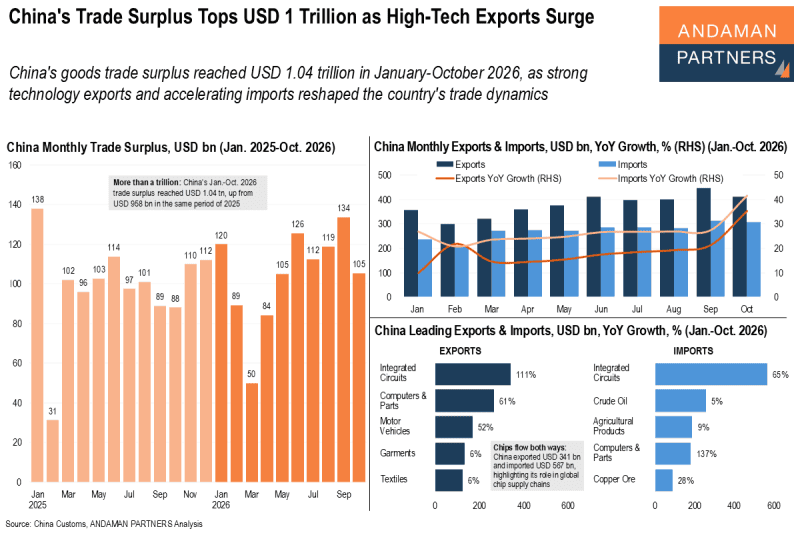
China’s Trade Surplus Tops USD 1 Trillion as High-Tech Exports Surge
China’s goods trade surplus reached USD 1.04 trillion in the first ten months of 2026