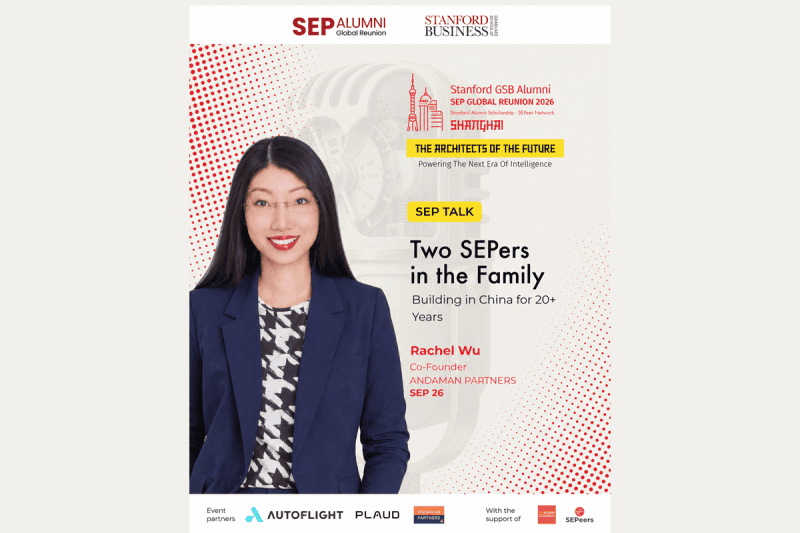
ANDAMAN PARTNERS Co-Founder Rachel Wu to Deliver Talk at SEP Global Reunion 2026 in Shanghai, China
Rachel will deliver a talk at the event entitled ‘Two SEPers in the Family – Building in China for 20+ Years’

ANDAMAN PARTNERS to Attend Stanford Executive Programme Global Reunion 2026 in Shanghai, China
ANDAMAN PARTNERS will attend the SEP Global Reunion 2026 in Shanghai, China, from 28 October to 1 November 2026
ANDAMAN PARTNERS to Attend 2026 IMF & World Bank Annual Meetings in Bangkok, Thailand
ANDAMAN PARTNERS will attend the IMF & World Bank Annual Meetings in Bangkok on 12-18 October 2026
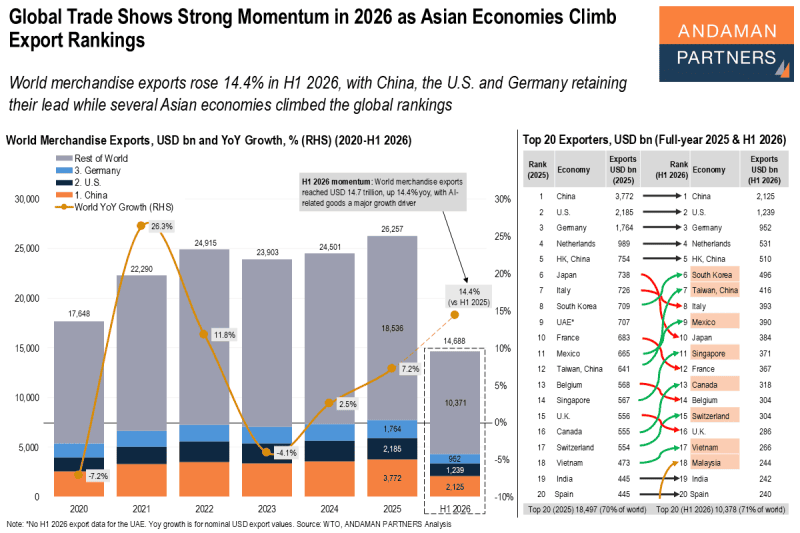
Global Trade Shows Strong Momentum in 2026 as Asian Economies Climb Export Rankings
World merchandise exports rose 14.4% in H1 2026, with several Asian economies climbing the global rankings
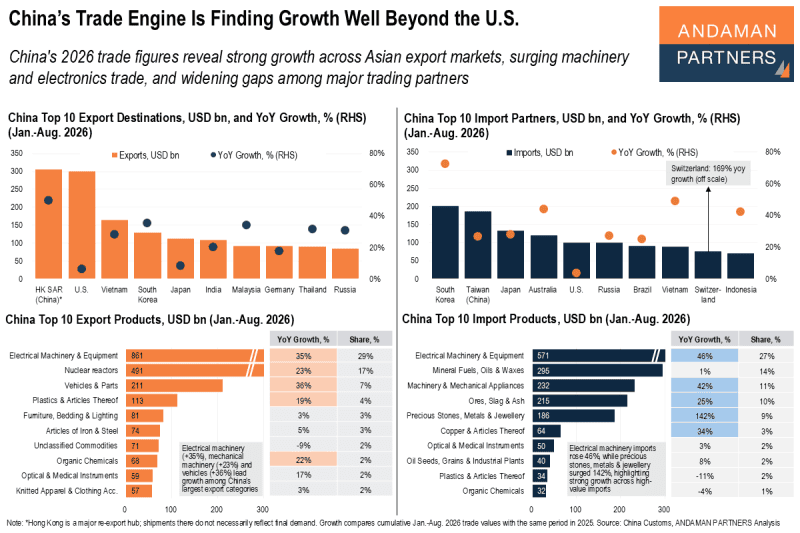
China’s Trade Engine Is Finding Growth Well Beyond the U.S.
China’s 2026 trade figures reveal strong growth across Asian export markets and surging machinery and electronics trade
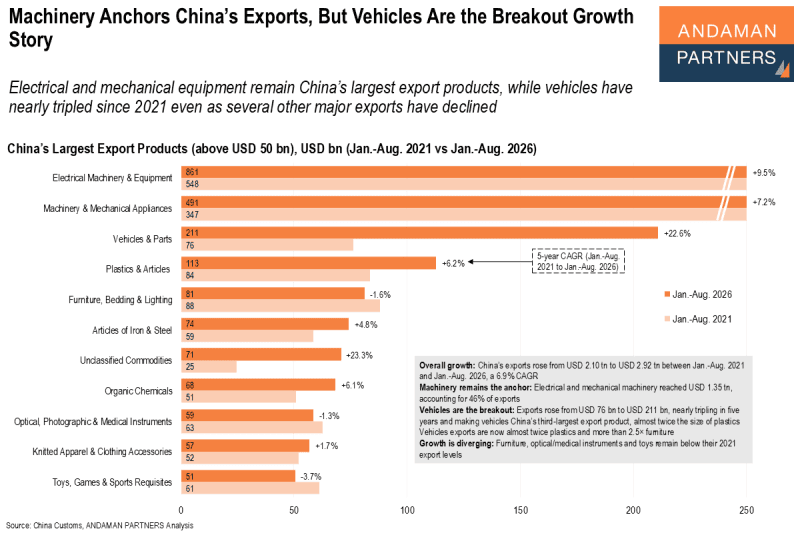
Machinery Anchors China’s Exports, But Vehicles Are the Breakout Growth Story
Electrical and mechanical equipment remain China’s largest export products, while vehicles have nearly tripled since 2021