
The New African Growth Geography: The Largest Economies and the Regions Driving Growth
The New African Growth Geography
Scale is in North and Southern Africa, but the continent’s economic dynamism emanates from the West and the East.
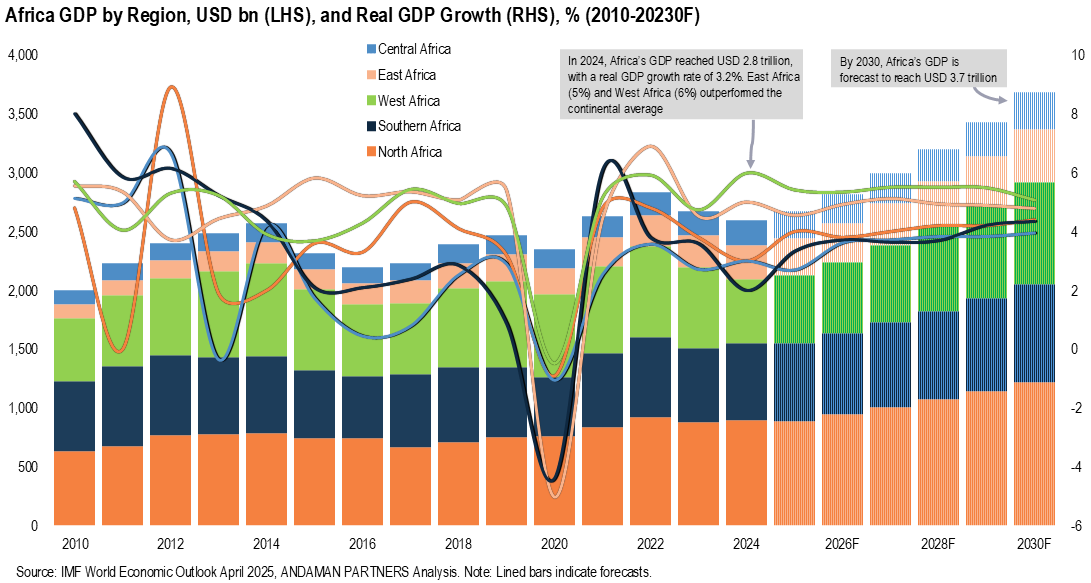
With real GDP growth of 3.2% in 2024—projected to increase to 3.9% in 2025 and 4.5% in 2030—Africa remains one of the world’s most dynamic regions. The continent’s GDP totalled USD 2.8 trillion in 2024 and is forecast to reach USD 3.7 trillion by 2030.
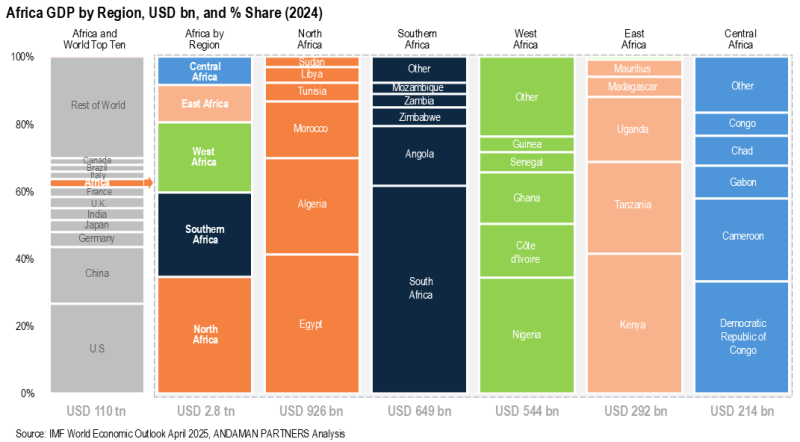
On aggregate, Africa’s GDP in 2024 was slightly larger than Italy’s (USD 2.4 trillion), and would rank as the eighth-largest economy, just behind France (USD 3.2 trillion) and the U.K. (USD 3.6 trillion).
By region, North Africa (USD 926 billion)—led by Egypt (USD 383 billion)—and Southern Africa (USD 649 billion)—led by South Africa (USD 400 billion)—are Africa’s largest, followed by West Africa (USD 544 billion), East Africa (USD 292 billion) and Central Africa (USD 214 billion).
In real GDP growth terms, however, West Africa (5.5%), East Africa (4.7%) and Central Africa (3.4%) expanded the fastest in 2024, while North Africa (2.6%) and Southern Africa (2.1%) grew below the continental average.
North Africa
After Egypt, Algeria (USD 265 billion) and Morocco (USD 155 billion) are the region’s largest economies—and also its fastest-growing in 2024, led by Algeria (4%) and Morocco (3%).
Regional growth was subdued overall in 2024, although Algeria recorded strong performances in the agriculture, textiles and trade sectors, while Morocco posted relatively strong gains on the back of resilient manufacturing exports and high tourism revenue.
Southern Africa
South Africa remains the regional heavyweight, followed by Angola (USD 116 billion) and Zimbabwe (USD 35 billion). South Africa grew 0.6% in 2024, while Angola (5%), Zambia (4%) and Eswatini (4%) recorded the region’s strongest growth.
Angola’s upturn reflected a rebound in oil output alongside diamonds, fisheries, trade, telecoms and agriculture. Zambia’s growth was driven by a mining recovery and services, while Eswatini’s gains came from higher sugar output and a pickup in mining.
West Africa
At USD 188 billion in 2024, Nigeria is the region’s largest economy, with real GDP growth (3.4%), slightly above the continental average. Côte d’Ivoire and Ghana—each roughly half Nigeria’s size—are growing much faster, at 6% and 5.7%, respectively. Côte d’Ivoire’s momentum reflects substantial investment and industrialisation, while Ghana benefited from a surge in gold output.
The region’s fastest-growing economies were Niger (10%), Senegal (7%) and Benin (7%), driven by hydrocarbon exports in Niger and Senegal and broad-based expansion of services and industry in Benin.
East Africa
Kenya was the region’s largest economy in 2024 at USD 109 billion, followed by Tanzania (USD 79 billion) and Uganda (USD 52 billion). Uganda (6%) and Tanzania (5%) led growth, followed by Mauritius (5%); Kenya grew 4.5%.
Uganda’s gains were broad-based—manufacturing, mining and services—while Tanzania was propelled by tourism and infrastructure spending. Mauritius’s growth was underpinned by tourism, construction and financial services; Kenya’s growth was led by agriculture and services.
Central Africa
The region’s largest economies are the Democratic Republic of Congo (USD 71 billion), Cameroon (USD 53 billion) and Gabon (USD 21 billion). The fastest-growing economies in 2024 were Rwanda (9%), followed by the Democratic Republic of Congo (7%) and Cameroon (4%).
Rwanda’s performance was broad-based across services, industry and agriculture, supported by tourism and construction. In the Democratic Republic of Congo, mining remained the primary engine. Cameroon’s growth was based on agriculture and manufacturing, aided by high cocoa prices, better cotton yields and improved power supply.
Also by ANDAMAN PARTNERS:
ANDAMAN PARTNERS supports international business ventures and growth. We help launch global initiatives and accelerate successful expansion across borders. If your business, operations or project requires cross-border support, contact connect@andamanpartners.com.

ANDAMAN PARTNERS to Attend China Mining 2026 in Tianjin, China
ANDAMAN PARTNERS will attend the China Mining Conference and Exhibition in Tianjin, China, on 10-12 September 2026

ANDAMAN PARTNERS at the Singapore Institute of Directors Annual Conference 2026
ANDAMAN PARTNERS at the Singapore Institute of Directors Conference 2026 in Singapore on 28 August 2026

ANDAMAN PARTNERS Attended the Australia Governance Summit 2026 in Sydney
ANDAMAN PARTNERS Co-Founder Kobus van der Wath attended the Australia Governance Summit (AGS26) in Sydney, Australia.
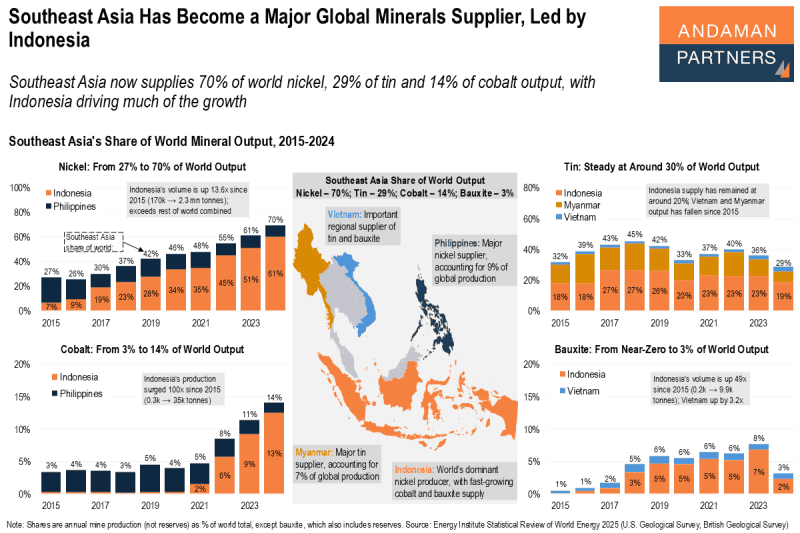
Southeast Asia Has Become a Major Global Minerals Supplier, Led by Indonesia
Southeast Asia now supplies 70% of world nickel, 29% of tin and 14% of cobalt output, with Indonesia driving much of the growth
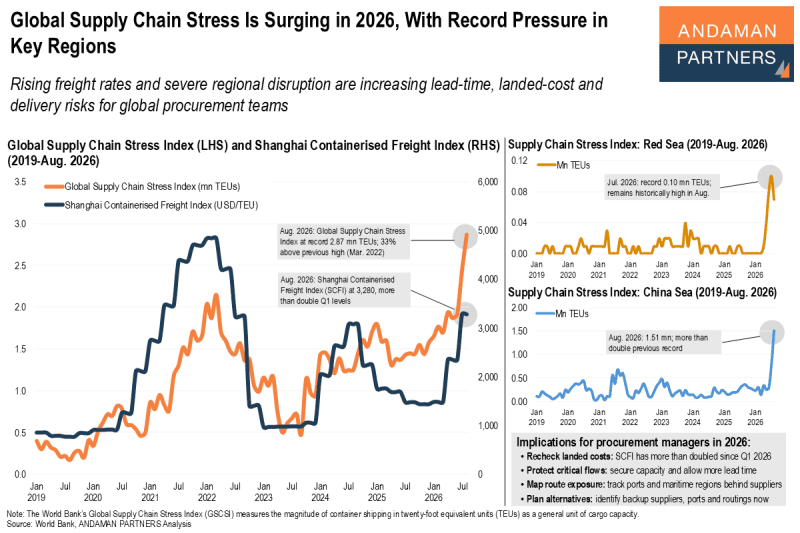
Global Supply Chain Stress Is Surging in 2026, With Record Pressure in Key Regions
Rising freight rates and severe regional disruption are increasing lead-time, landed-cost and delivery risks for global procurement teams
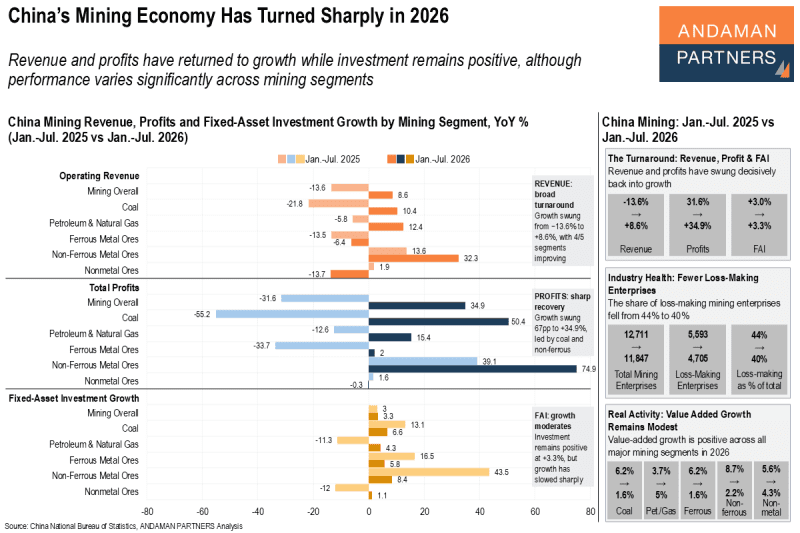
China’s Mining Economy Has Turned Sharply in 2026
Revenue and profits have returned to growth while investment remains positive, although performance varies significantly across segments
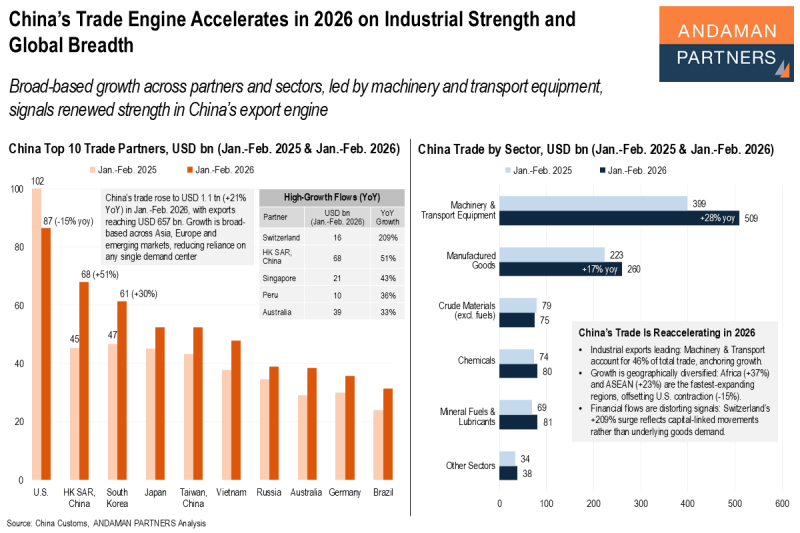
Pingback: How Africa’s Trade Structure Shifted | ANDAMAN PARTNERS