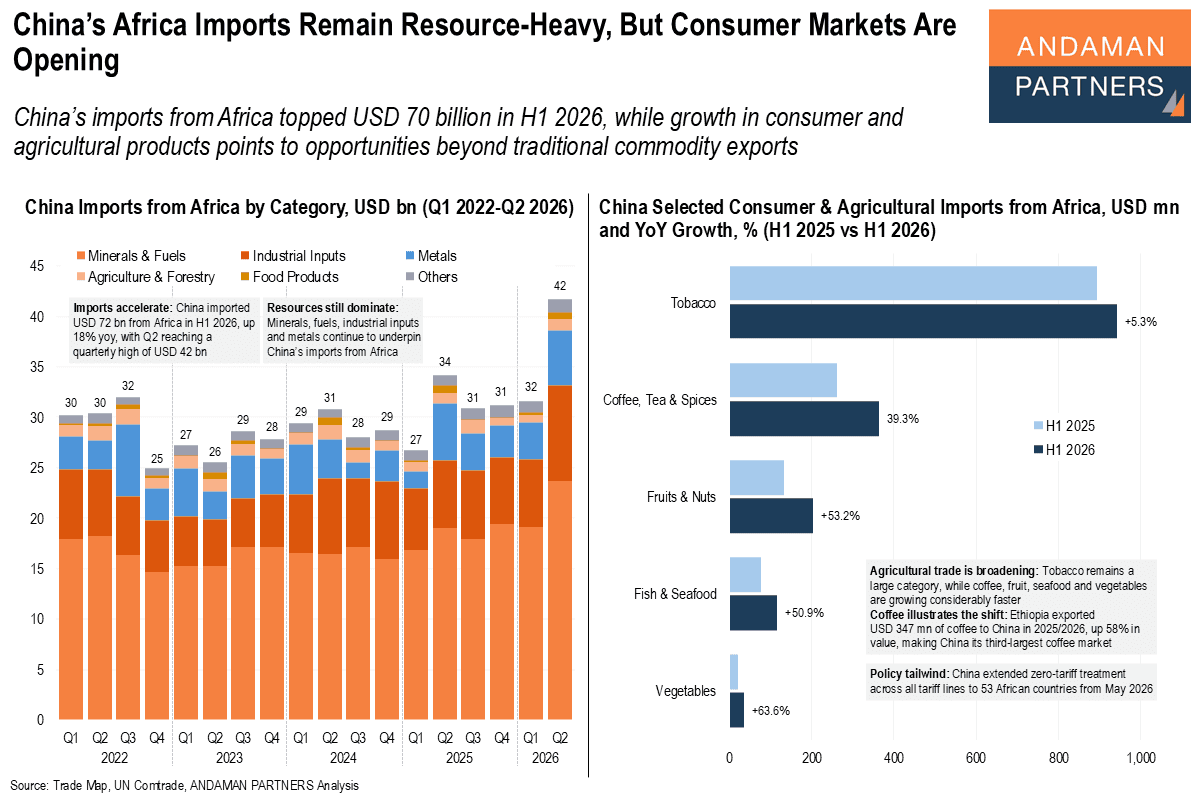
China’s Africa Imports Remain Resource-Heavy, But Consumer Markets Are Opening
China’s imports from Africa topped USD 70 billion in H1 2026, while consumer and agricultural products point to new opportunities for growth

China’s imports from Africa topped USD 70 billion in H1 2026, while consumer and agricultural products point to new opportunities for growth
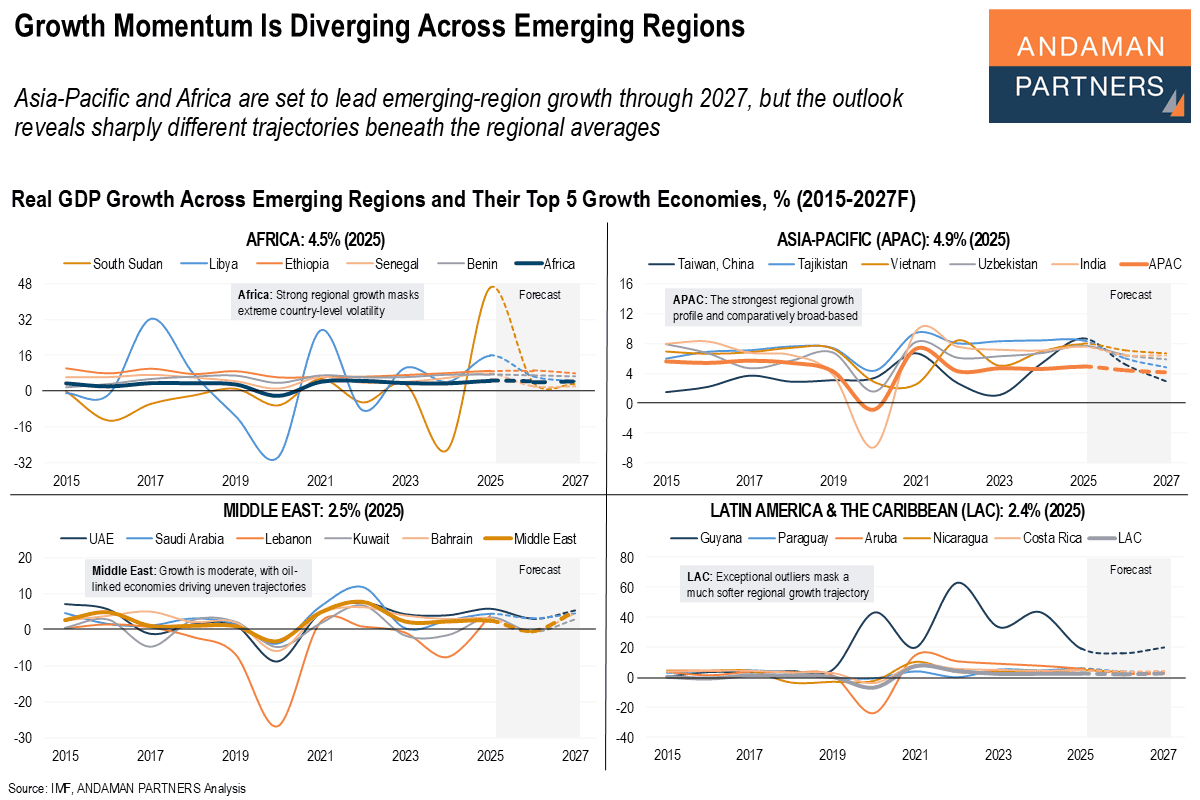
Asia-Pacific and Africa are set to lead emerging-region growth through 2027
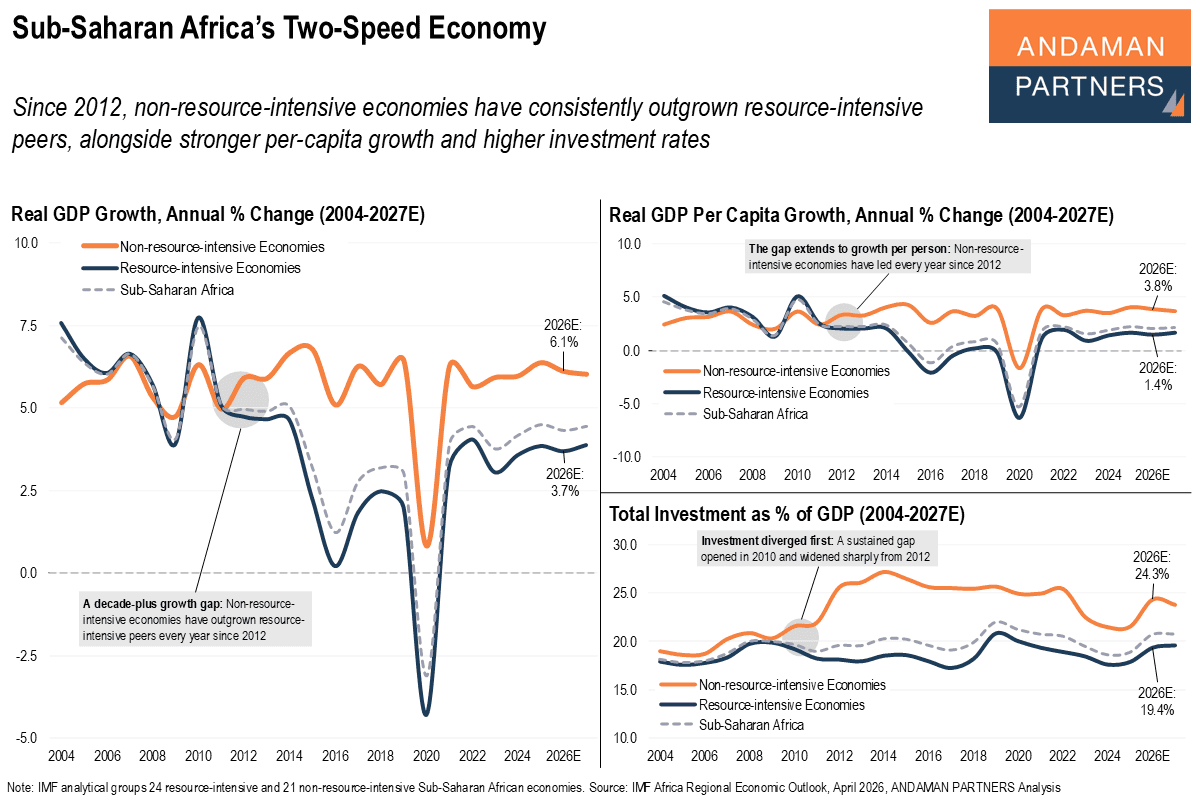
Since 2012, non-resource-intensive economies have consistently outgrown resource-intensive peers
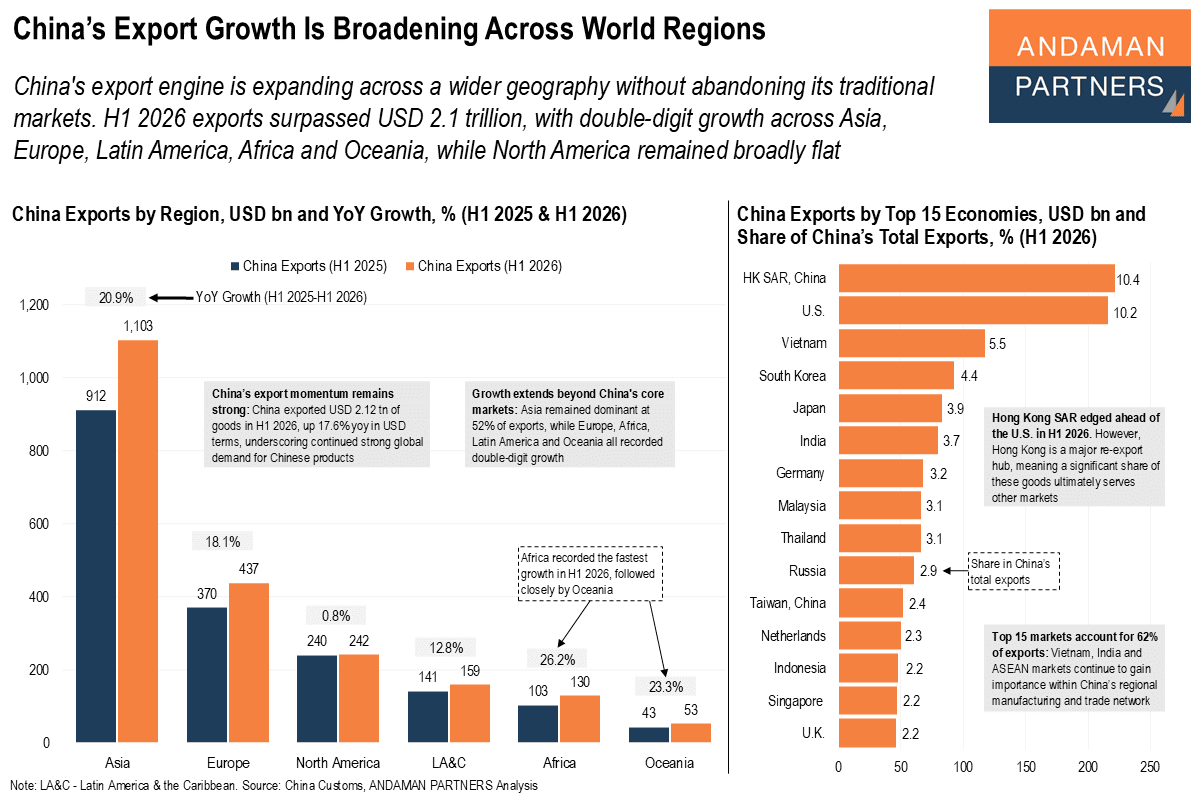
China's export engine is expanding across a wider geography without abandoning its traditional markets
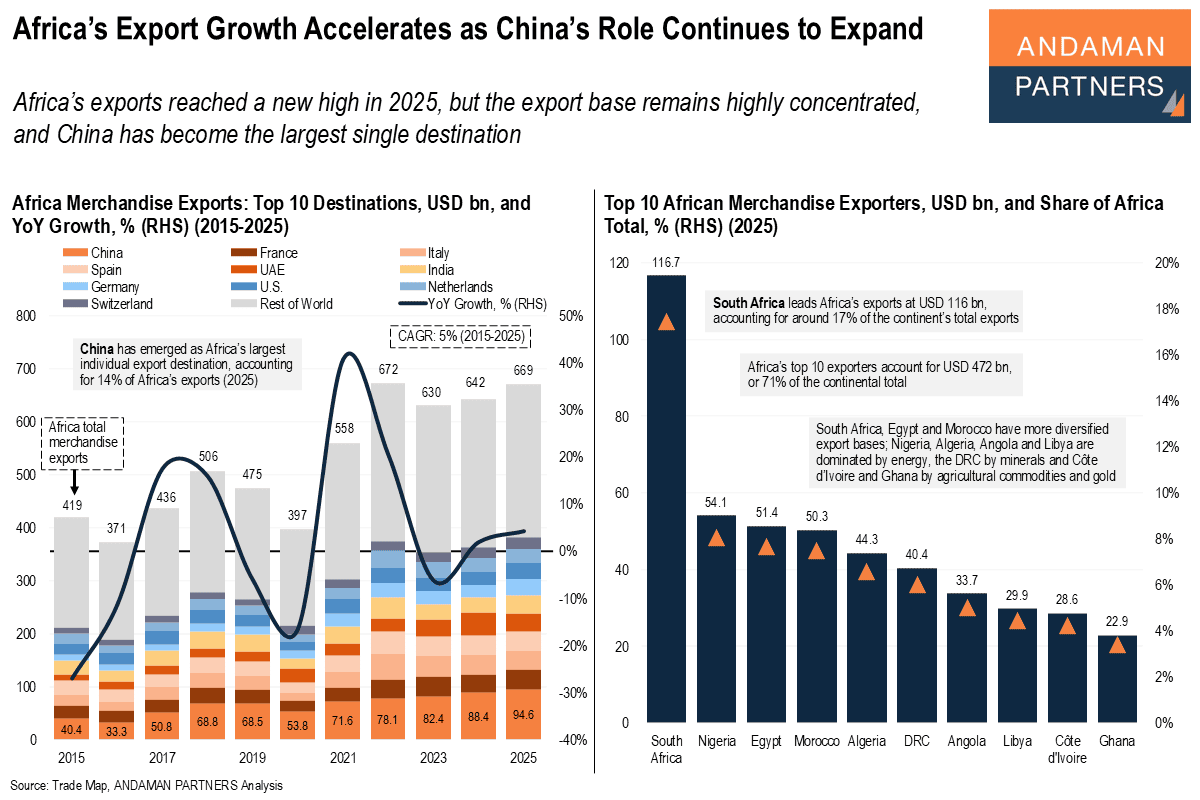
Africa’s exports reached a new high in 2025, but the export base remains highly concentrated, and China has become the largest single destination
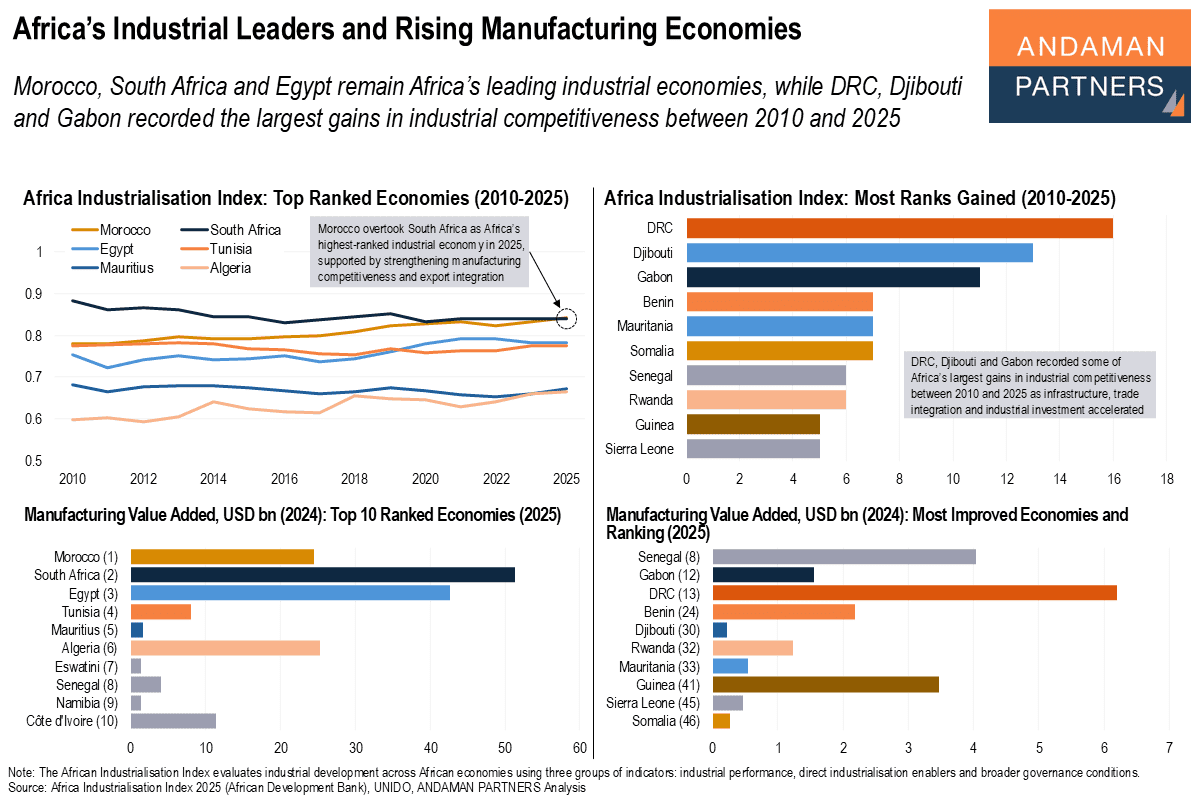
Morocco, South Africa and Egypt remain Africa’s leading industrial economies; DRC, Djibouti and Gabon recorded the largest gains in competitiveness
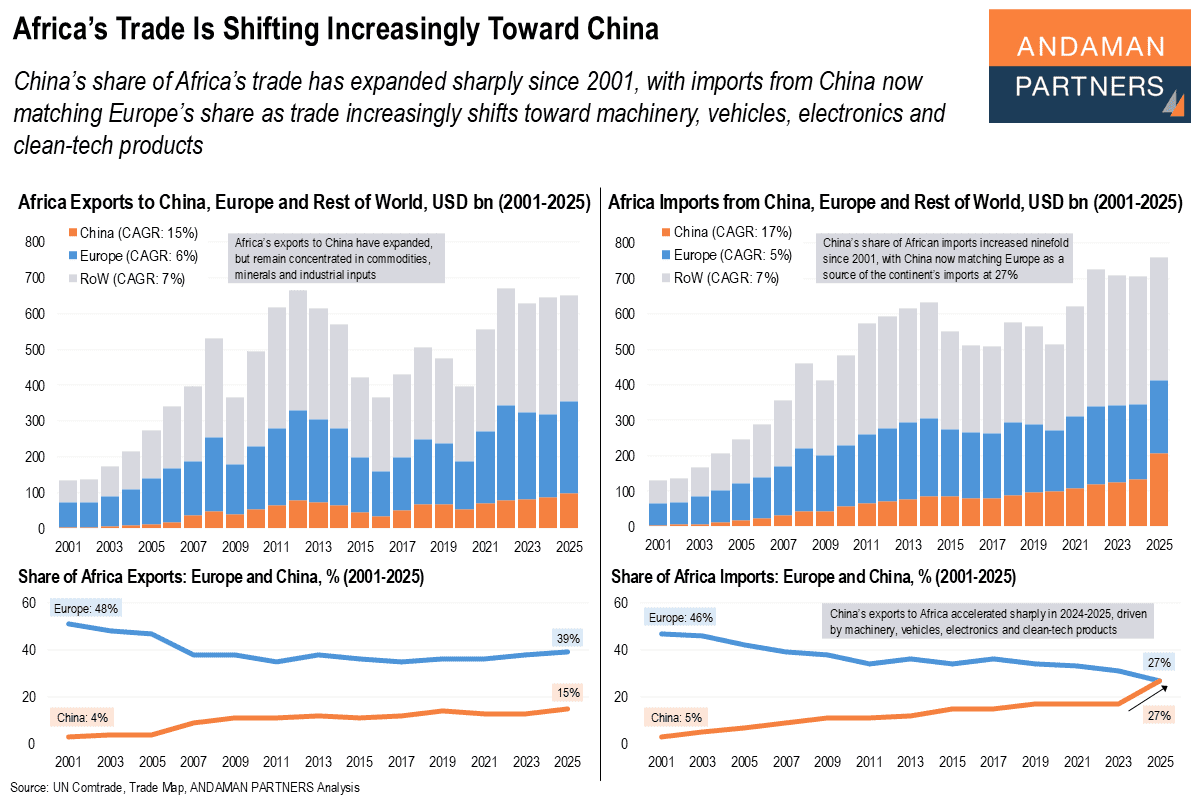
China’s share of Africa’s trade has expanded sharply since 2001, with imports from China now matching Europe’s share
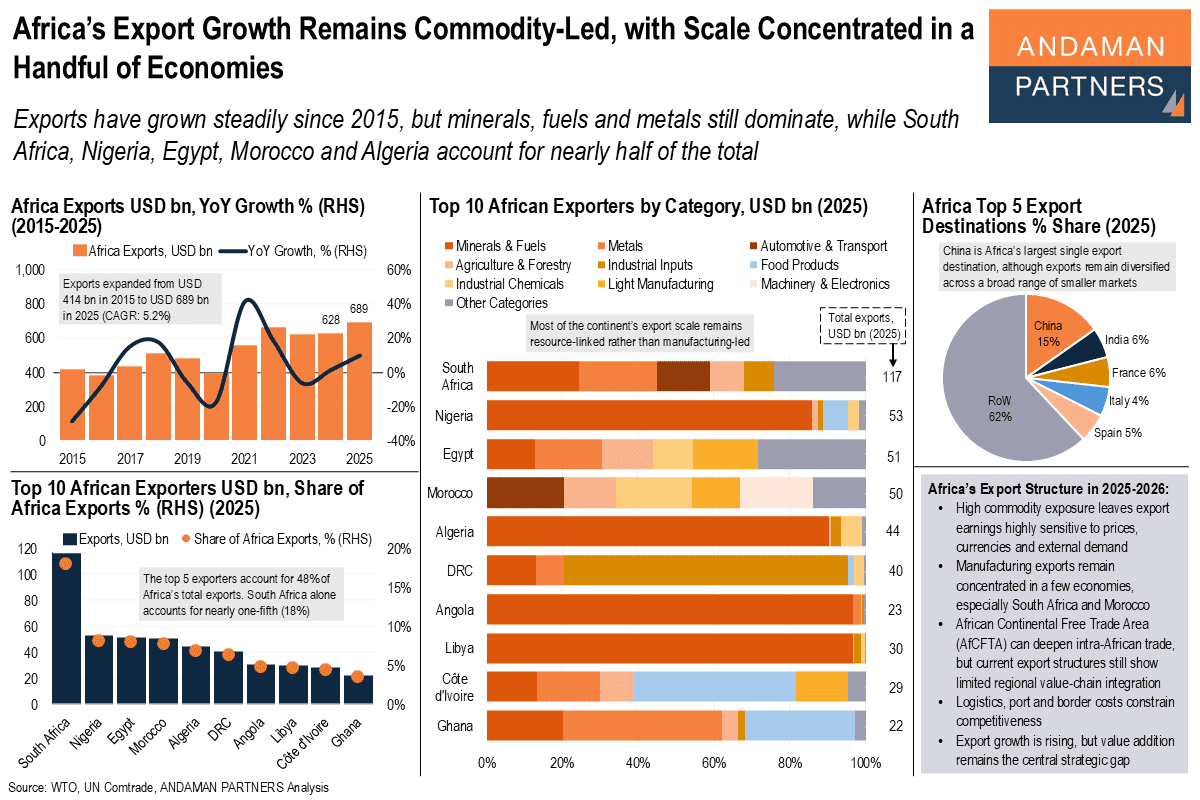
Exports have grown steadily since 2015, but minerals, fuels and metals still dominate, while five countries account for half of the total
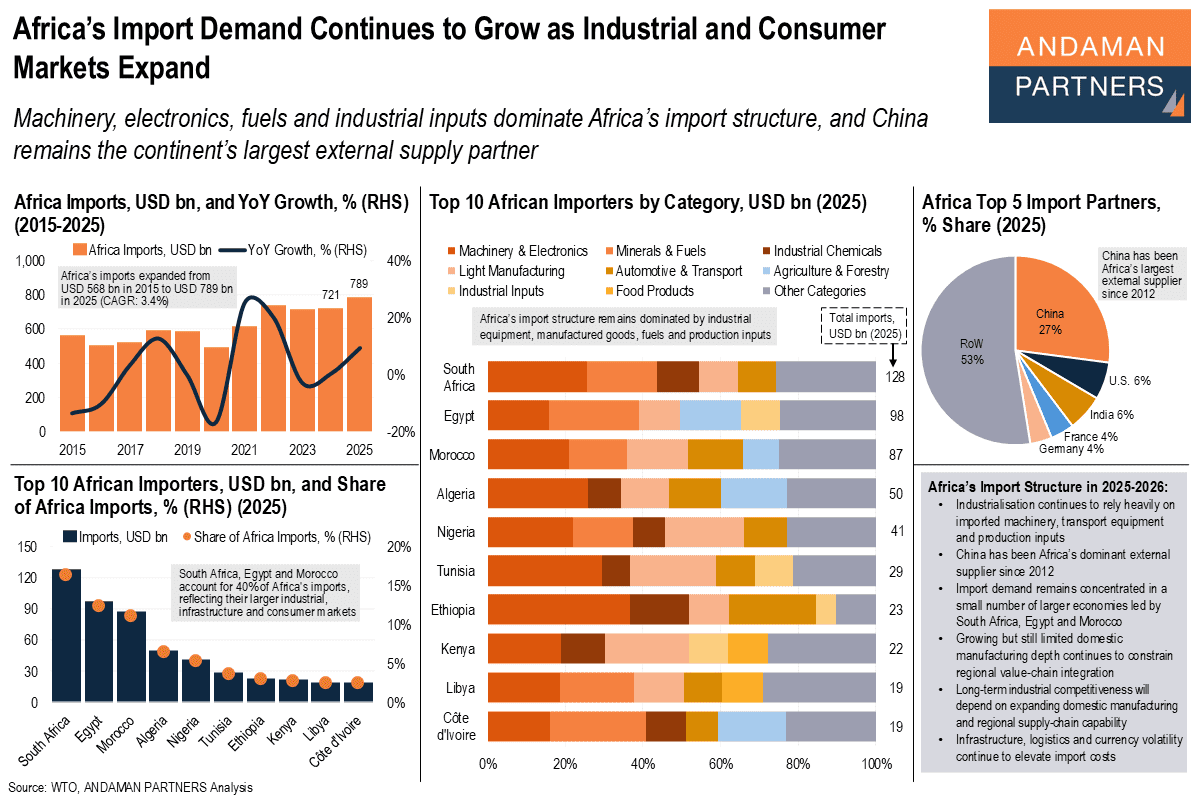
Machinery, electronics, fuels and industrial inputs dominate Africa’s imports, and China remains the continent’s largest supplier
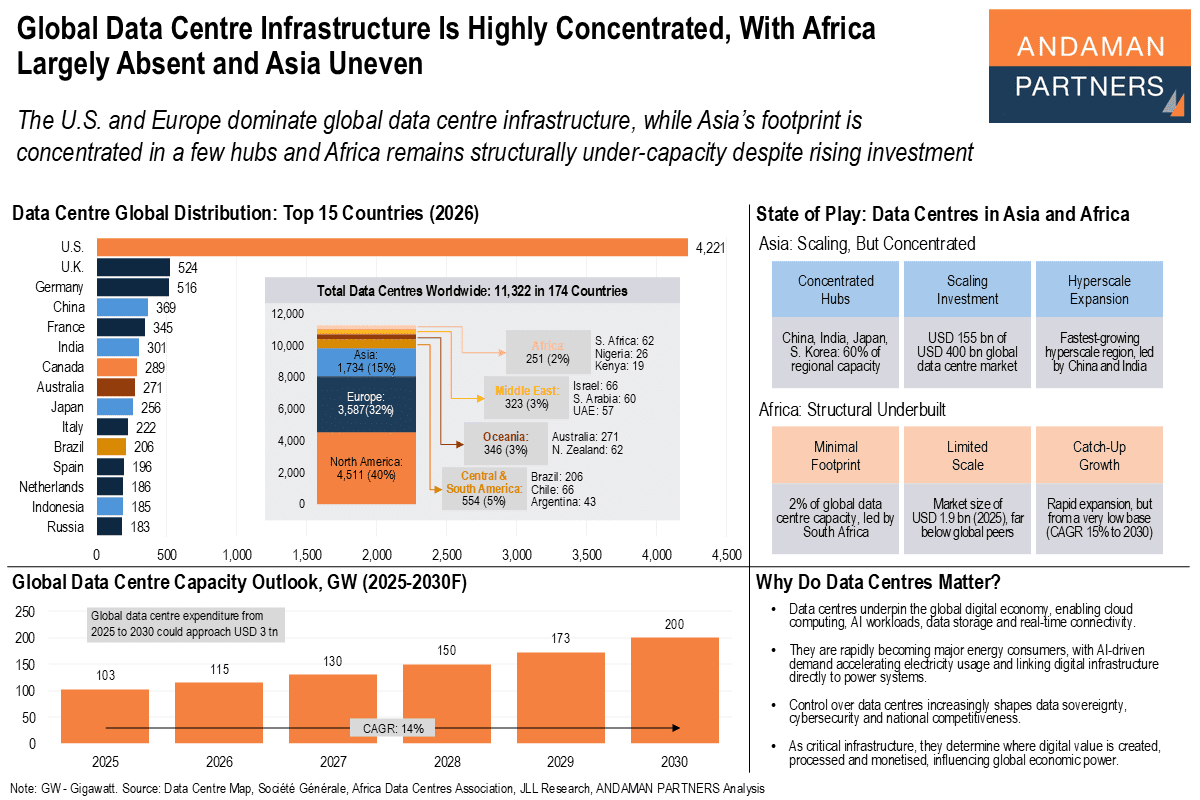
The U.S. and Europe dominate global data centre infrastructure, while Asia’s footprint is concentrated in a few hubs