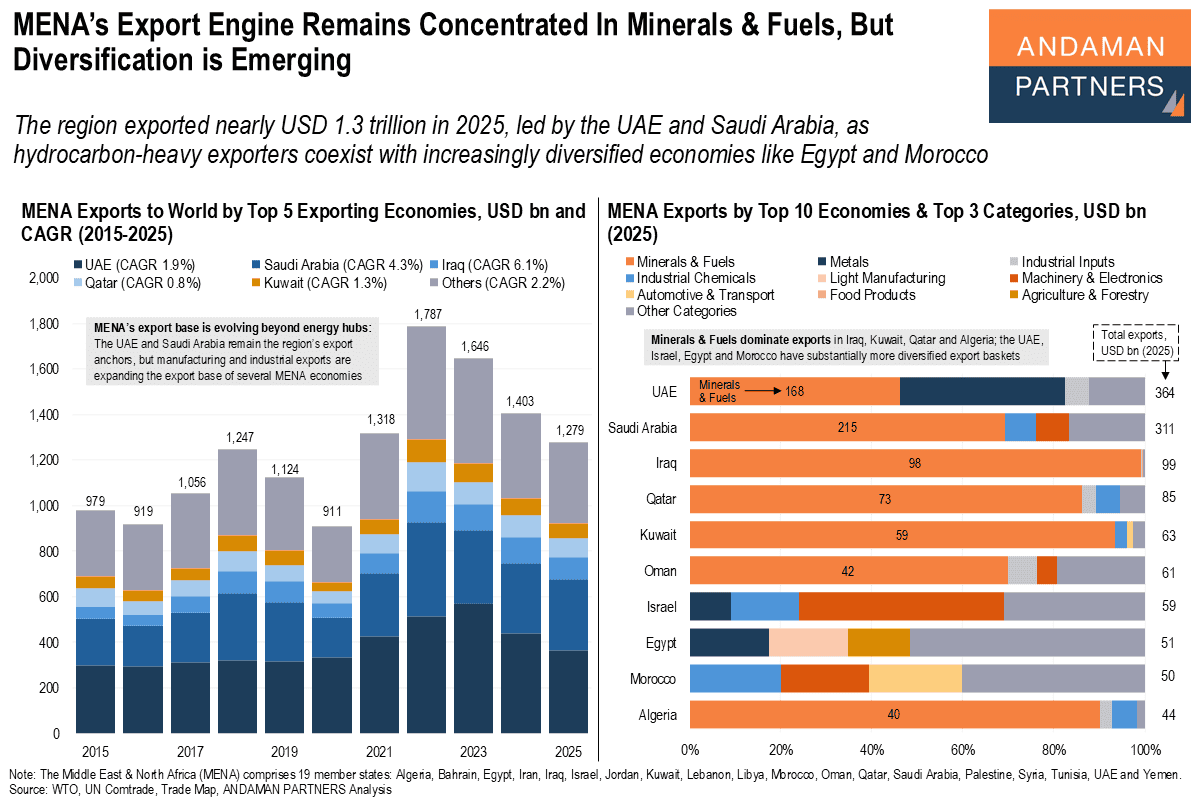
MENA’s Export Engine Remains Concentrated in Minerals & Fuels, But Diversification Is Emerging
MENA exported nearly USD 1.3 trillion in 2025, with hydrocarbon-heavy exporters coexisting with increasingly diversified economies

MENA exported nearly USD 1.3 trillion in 2025, with hydrocarbon-heavy exporters coexisting with increasingly diversified economies
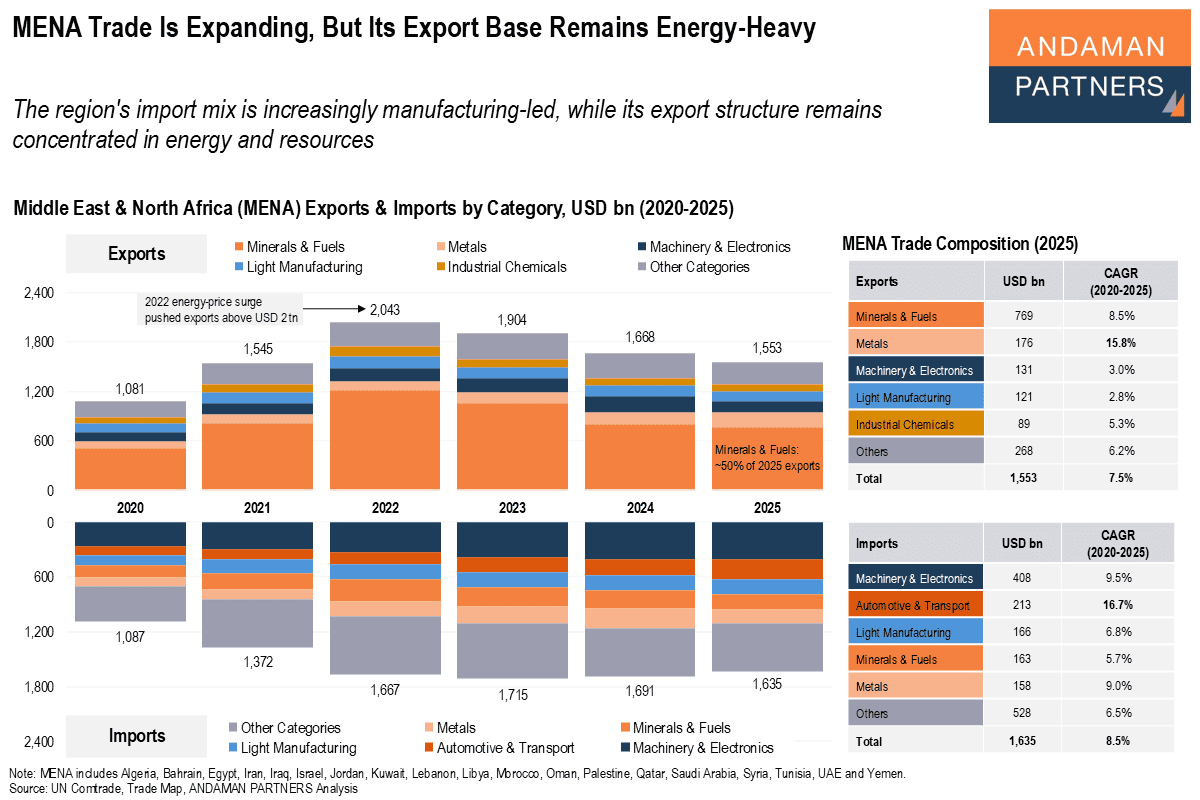
The region's import mix is increasingly manufacturing-led, while its export structure remains concentrated in energy and resources.
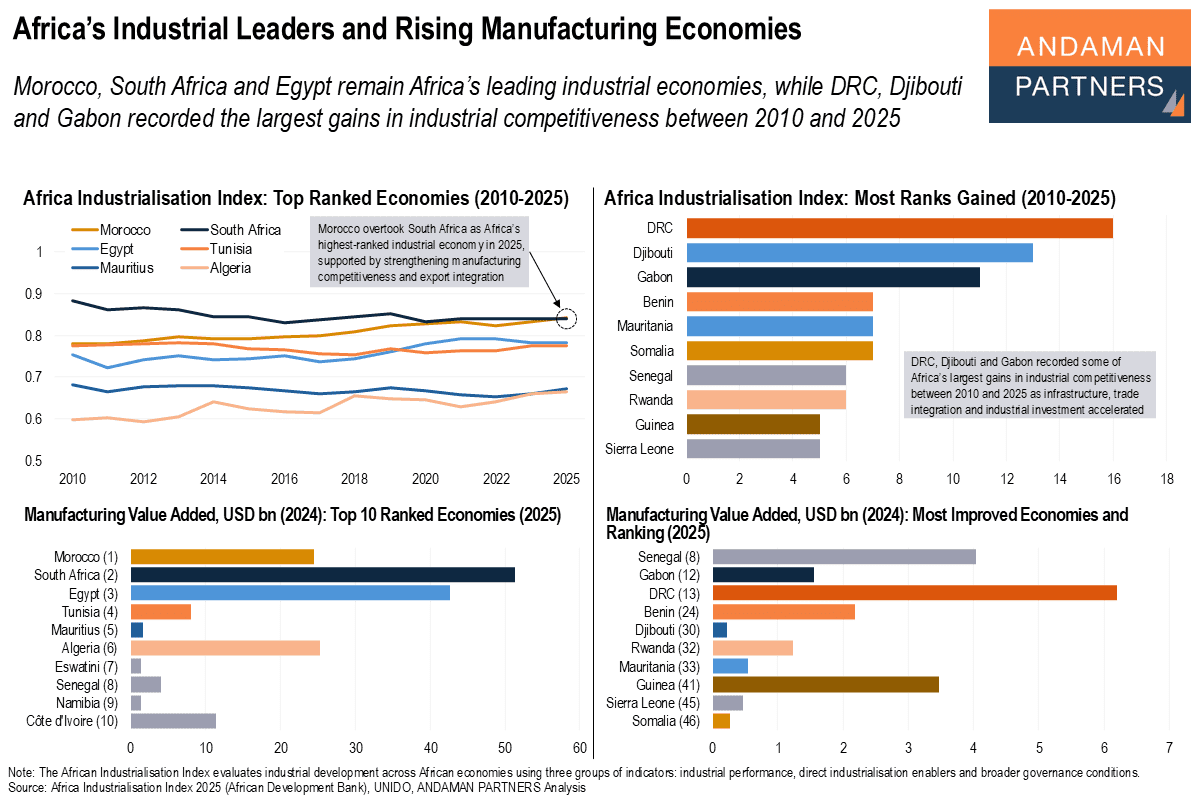
Morocco, South Africa and Egypt remain Africa’s leading industrial economies; DRC, Djibouti and Gabon recorded the largest gains in competitiveness
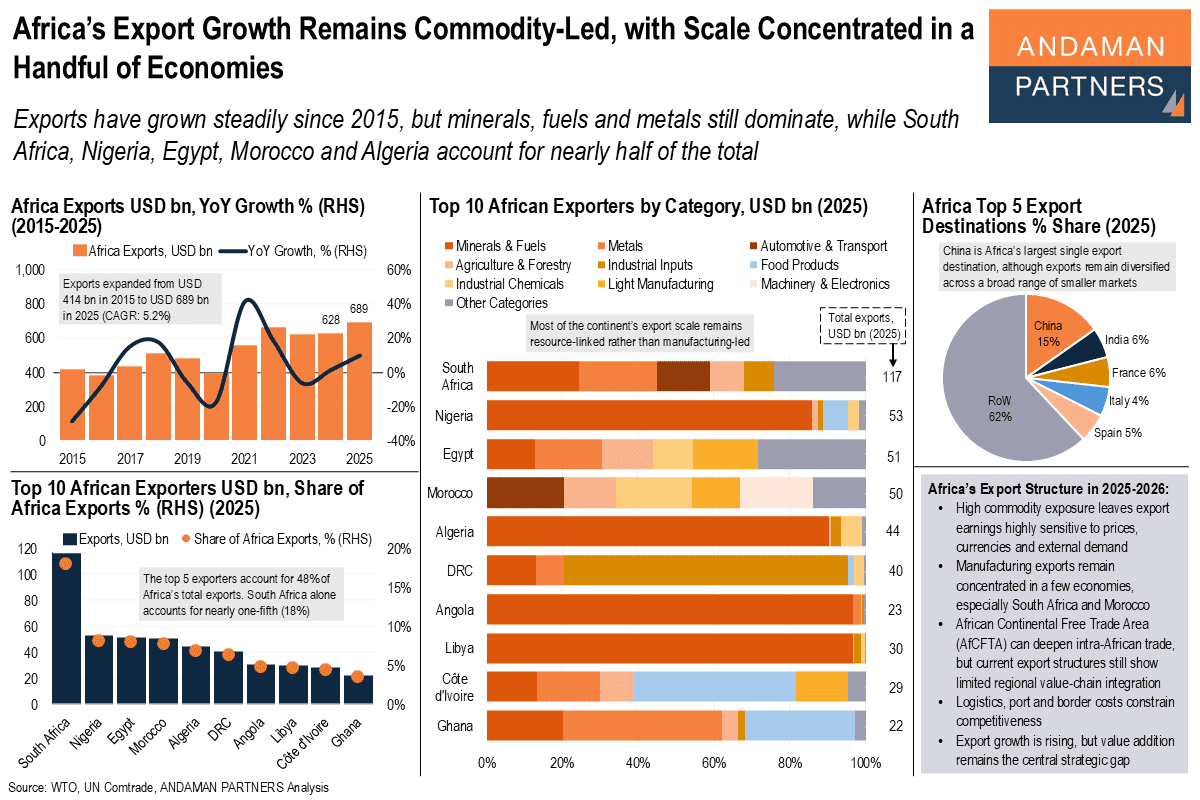
Exports have grown steadily since 2015, but minerals, fuels and metals still dominate, while five countries account for half of the total
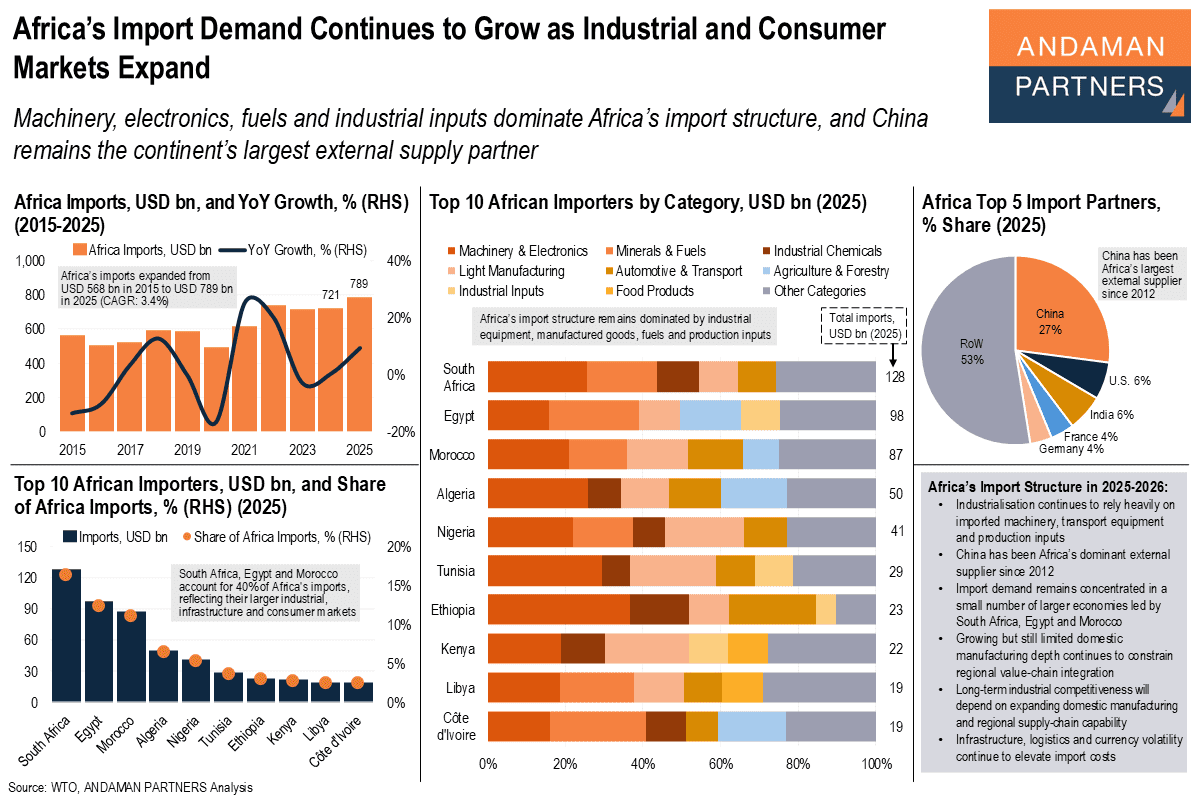
Machinery, electronics, fuels and industrial inputs dominate Africa’s imports, and China remains the continent’s largest supplier
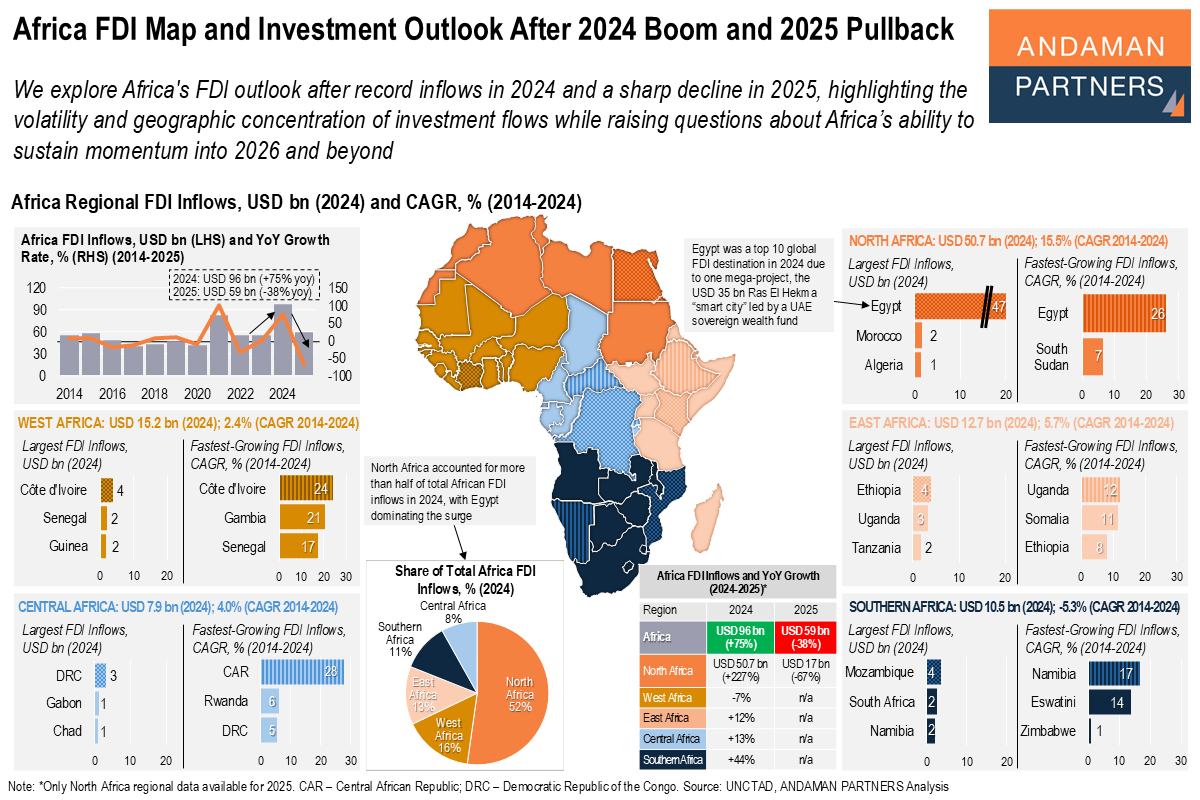
The volatility and geographic concentration of investment flows raises questions about Africa’s ability to sustain momentum into 2026 and beyond.
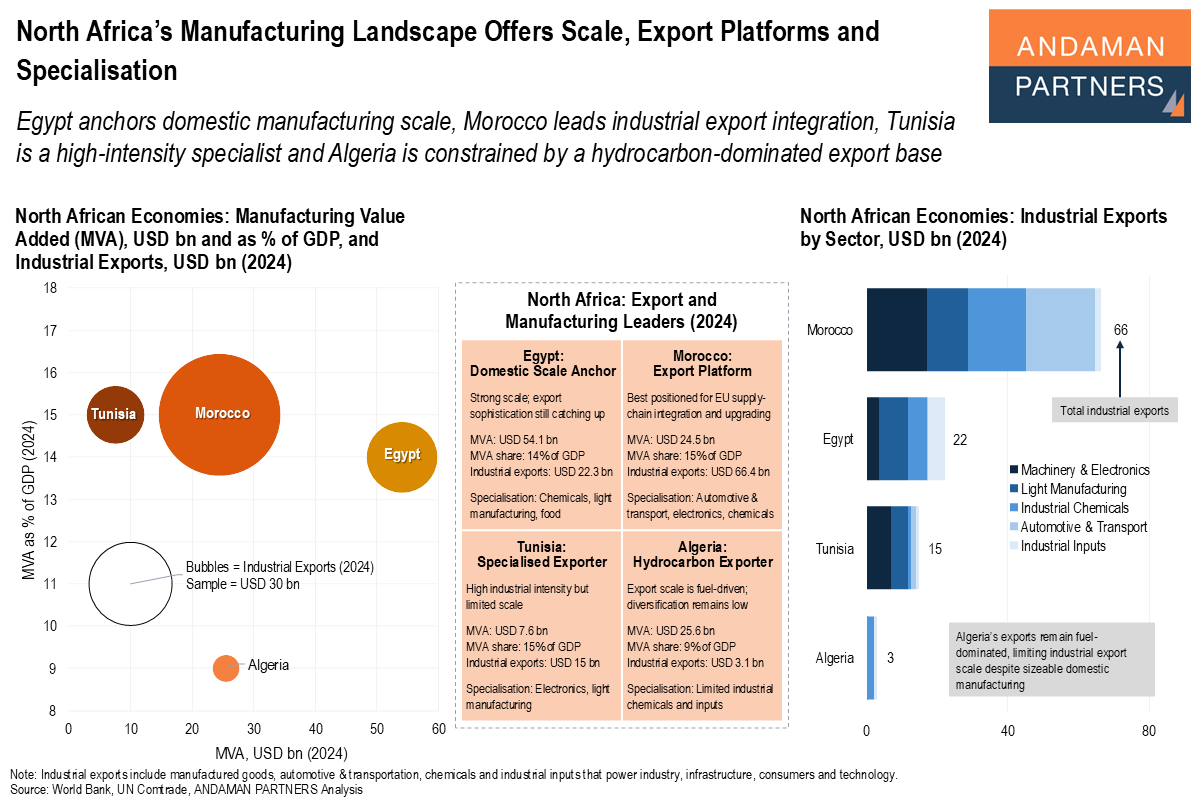
Egypt anchors domestic manufacturing scale, Morocco leads industrial export integration and Tunisia is a high-intensity specialist.

Scale is in North and Southern Africa, but the continent’s economic dynamism emanates from the West and the East.

African manufacturing value added dropped overall in 2024, including significant currency-related decreases in Egypt, Ghana and Nigeria.