
The Engines of Indonesia’s Economy
Java, Palm Oil, Nickel and Bali: The Engines of Indonesia’s Economy
Indonesia’s USD 1.39 trillion economy is powered by Java’s people and industry, Sumatra’s palm oil and rubber, Kalimantan’s coal, Sulawesi’s nickel and Bali’s global tourism appeal.
In 2000, with a GDP of just under USD 180 billion, Indonesia was the world’s 26th-largest economy. By 2010, the country’s GDP had risen to over USD 755 billion. By 2024, GDP reached USD 1.39 trillion, the world’s 16th-largest economy, with a CAGR of 4.5% from 2010 to 2024.
The core of Indonesia’s remarkable growth story is the island of Java, home to the nation’s capital, Jakarta. With an economy of USD 791 billion, Java accounted for 57% of Indonesia’s GDP in 2024 and 39% (USD 103 billion) of the country’s total exports, which amounted to USD 266.5 billion. With a population of around 155 million people, Java is home to 56% of Indonesia’s total population of 277 million, making it the world’s most populous island and a significant driver of production, services and investment.
As the country’s political and financial centre, Java hosts the majority of Indonesia’s manufacturing capacity and higher-value industries. The island is situated along the main east-west maritime corridor linking the Indian and Pacific Oceans, placing the island at the confluence of major regional and global trade routes. Java is also home to Indonesia’s busiest ports and largest international airports in Jakarta and Surabaya.
While Java is the centre of people, power and industry, the islands of Sumatra and Kalimantan are Indonesia’s agricultural and energy frontiers. With an economy of USD 307 billion, Sumatra accounted for 22% of Indonesia’s GDP in 2024 and 25% of the country’s exports. The island has reserves of palm oil, rubber, coffee, tin, gold, bauxite, oil and gas, and is a major producer of cash crops, including rubber, coffee, palm oil, tea and tobacco.
The island of Kalimantan had an economy of USD 114 billion in 2024, accounting for 8% of total GDP and 16% of total exports. The region’s economy is primarily driven by natural resource extraction, agriculture and forestry. The island is the centre of Indonesia’s coal industry, supplying both domestic power plants and export markets.
Beyond these three core islands, Indonesia’s four other regions—Sulawesi, Lesser Sunda Islands, Western New Guinea, and Maluku Islands—had a combined economy of USD 175 billion in 2024, accounting for 13% of the national GDP and 20% of exports. Sulawesi is the centre of nickel mining in Indonesia, and also produces cocoa, coffee, and fisheries.
The economy of the Lesser Sunda Islands is based on tourism, especially in Bali, as well as agriculture and fisheries. Western New Guinea is a mining-driven economy, with a focus on gold and copper, while the Maluku Islands produce nutmeg, cloves and plantation crops.
The more sparsely populated eastern regions of Indonesia contribute the least to the economy, but are growing the fastest, albeit from a low base. For example, from 2010 to 2024, Sulawesi’s GDP expanded at an annual rate of about 6%—double the pace of Java and Sumatra—while its exports grew by 28% between 2010 and 2024. Western New Guinea’s exports rose 21% over the same timeframe, compared with 9% for Java and 10% for Sumatra.
Also by ANDAMAN PARTNERS:
ANDAMAN PARTNERS supports international business ventures and growth. We help launch global initiatives and accelerate successful expansion across borders. If your business, operations or project requires cross-border support, contact connect@andamanpartners.com.

ANDAMAN PARTNERS Co-Founder Rachel Wu to Deliver Talk at SEP Global Reunion 2026 in Shanghai, China
Rachel will deliver a talk at the event entitled ‘Two SEPers in the Family – Building in China for 20+ Years’

ANDAMAN PARTNERS to Attend Stanford Executive Programme Global Reunion 2026 in Shanghai, China
ANDAMAN PARTNERS will attend the SEP Global Reunion 2026 in Shanghai, China, from 28 October to 1 November 2026
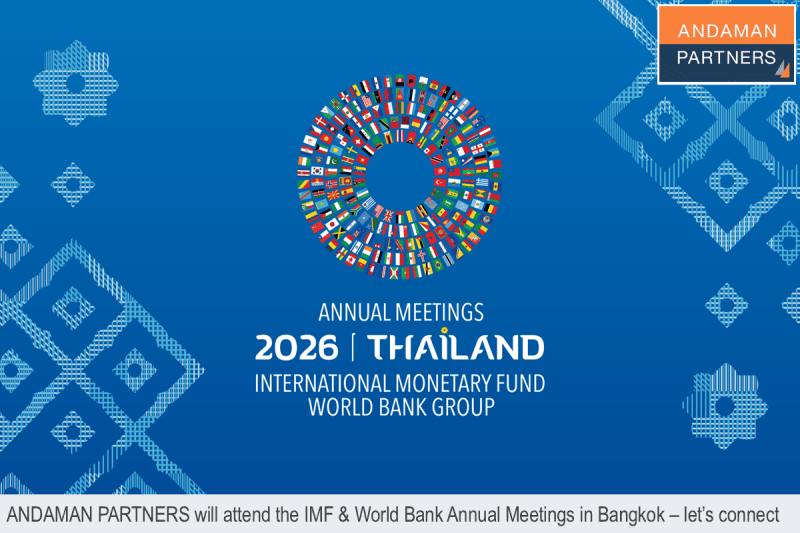
ANDAMAN PARTNERS to Attend 2026 IMF & World Bank Annual Meetings in Bangkok, Thailand
ANDAMAN PARTNERS will attend the IMF & World Bank Annual Meetings in Bangkok on 12-18 October 2026
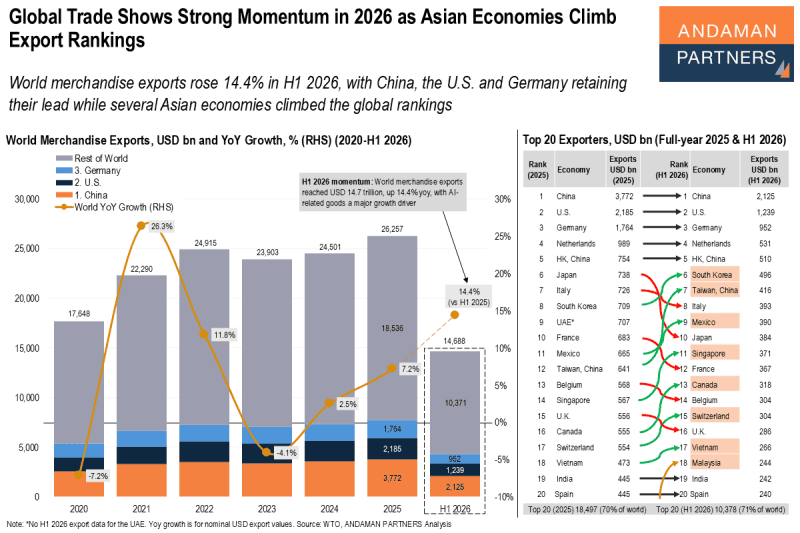
Global Trade Shows Strong Momentum in 2026 as Asian Economies Climb Export Rankings
World merchandise exports rose 14.4% in H1 2026, with several Asian economies climbing the global rankings
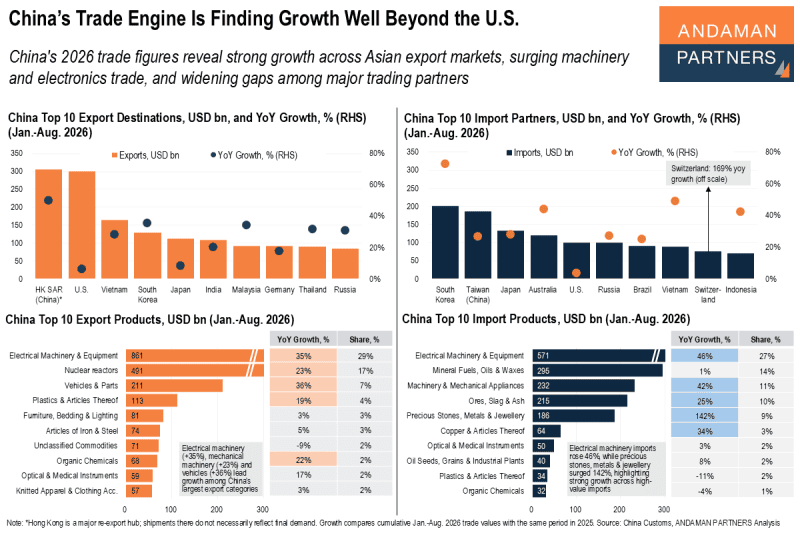
China’s Trade Engine Is Finding Growth Well Beyond the U.S.
China’s 2026 trade figures reveal strong growth across Asian export markets and surging machinery and electronics trade
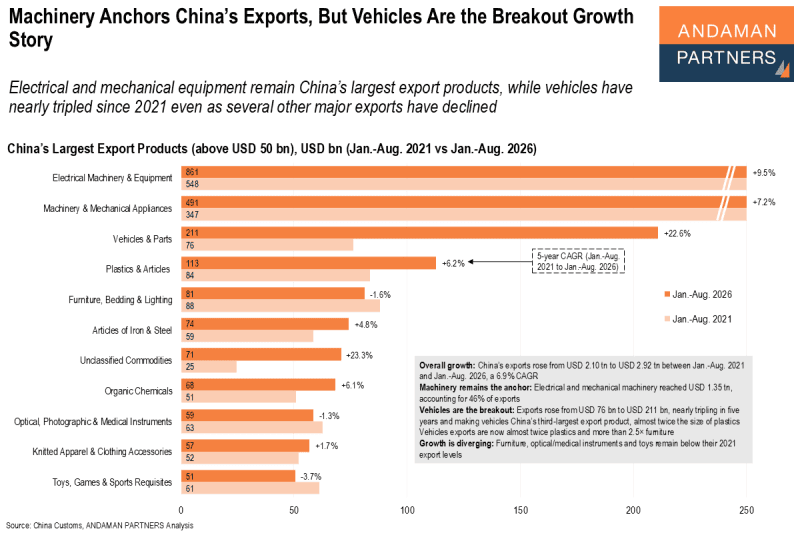
Machinery Anchors China’s Exports, But Vehicles Are the Breakout Growth Story
Electrical and mechanical equipment remain China’s largest export products, while vehicles have nearly tripled since 2021