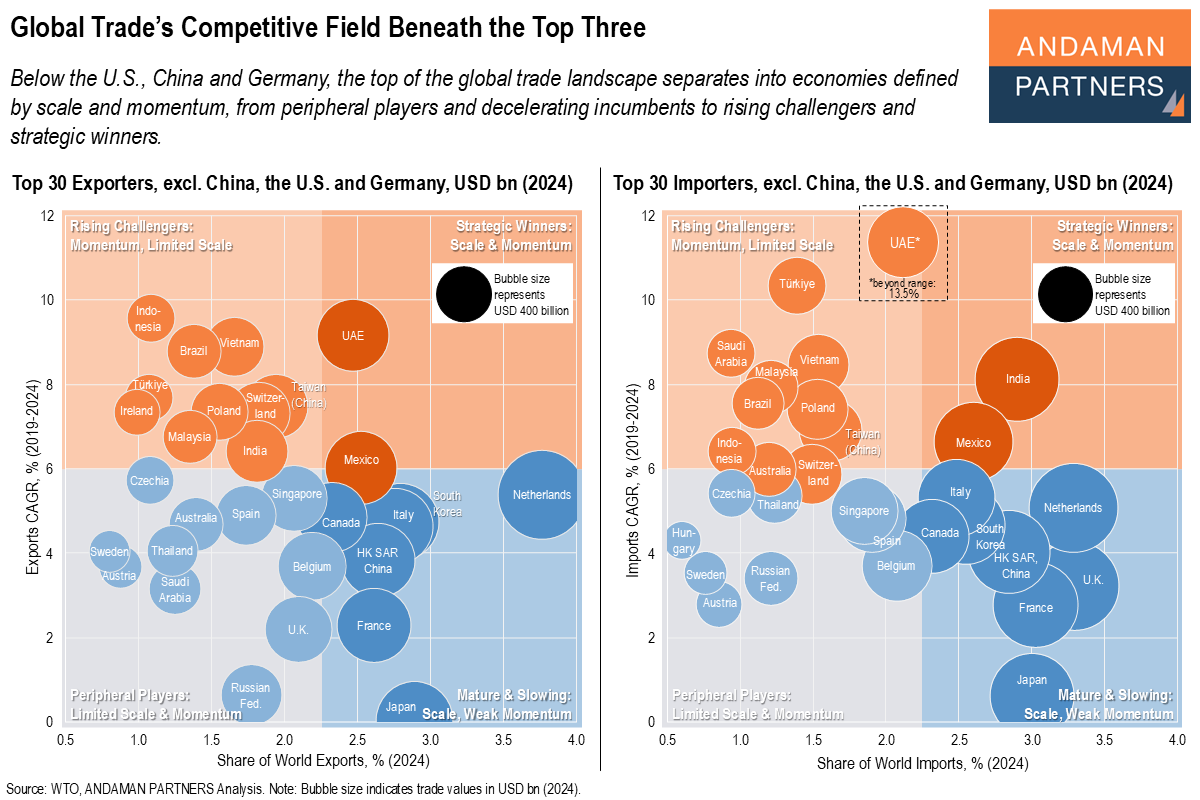
Global Trade’s Competitive Field Beneath the Top Three
The top of the global trade landscape separates into economies defined by scale and momentum.

The top of the global trade landscape separates into economies defined by scale and momentum.
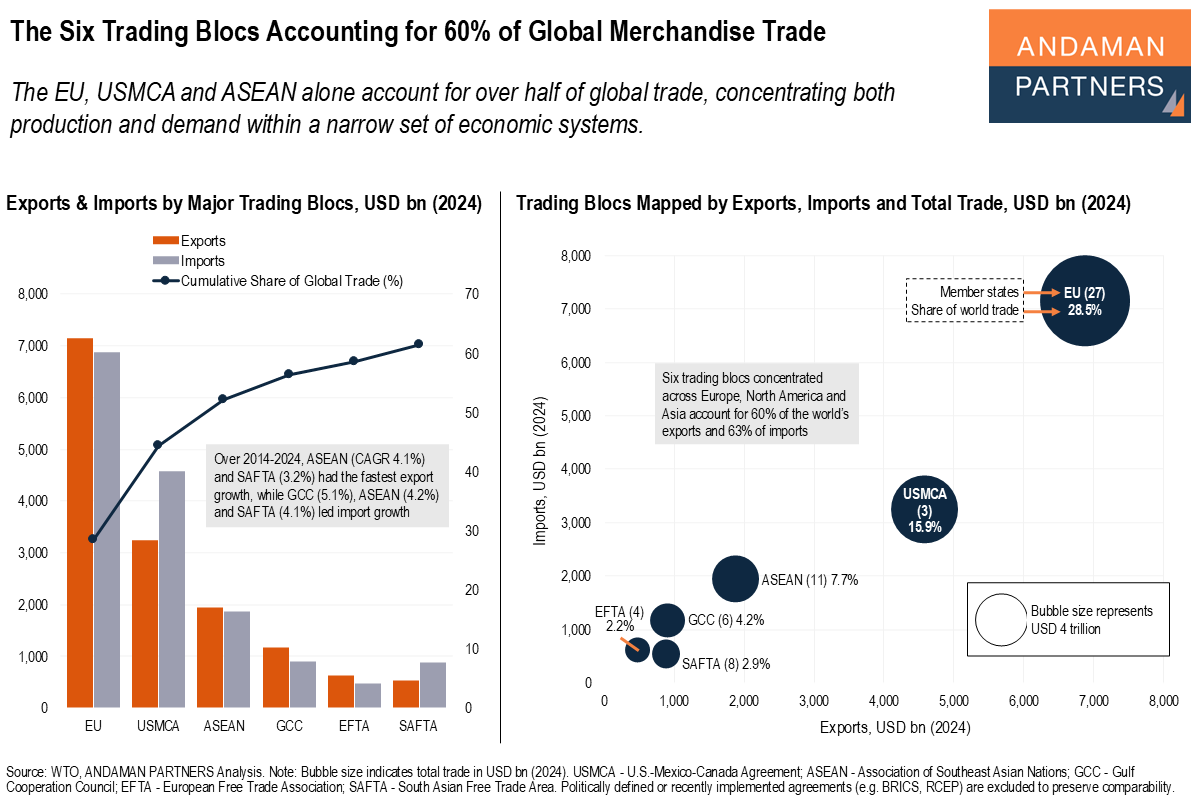
The EU, USMCA and ASEAN alone account for over half of global trade, concentrating both production and demand within a narrow set of economic systems.
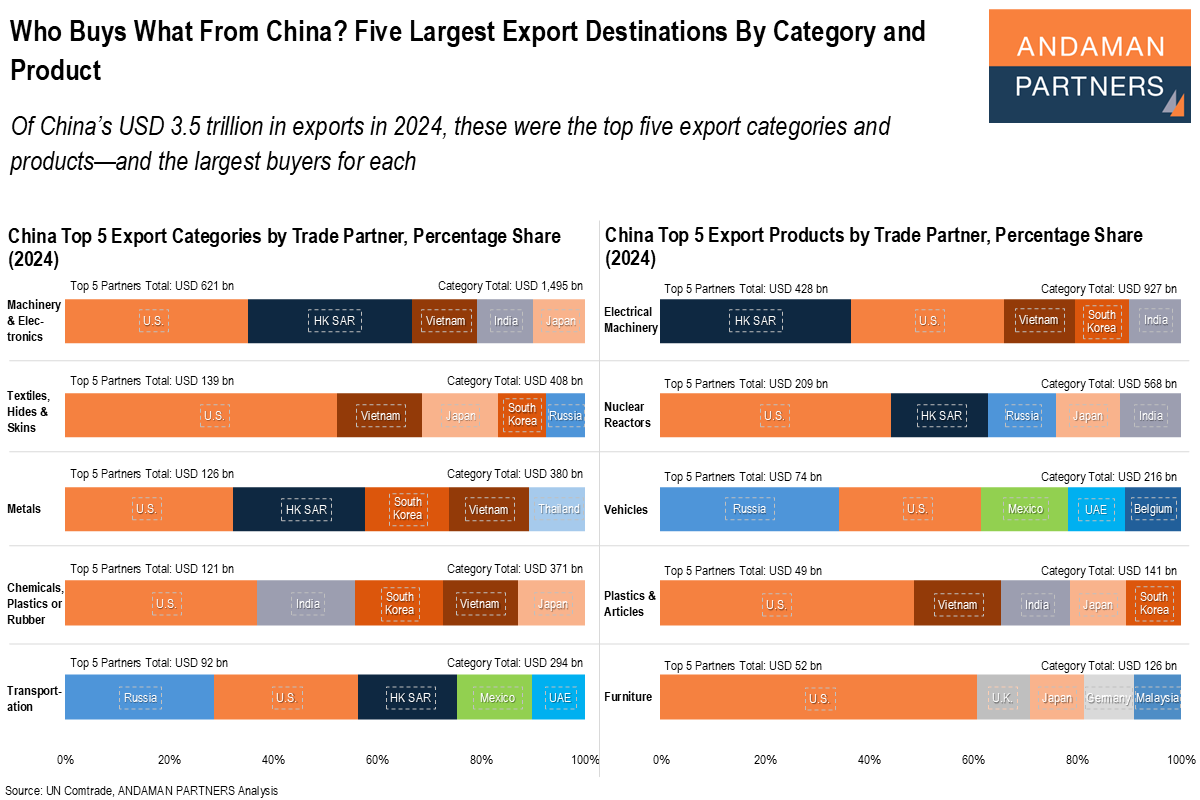
Of China’s USD 3.6 trillion in exports in 2024, these were the top five export categories and products—and the largest buyers for each.
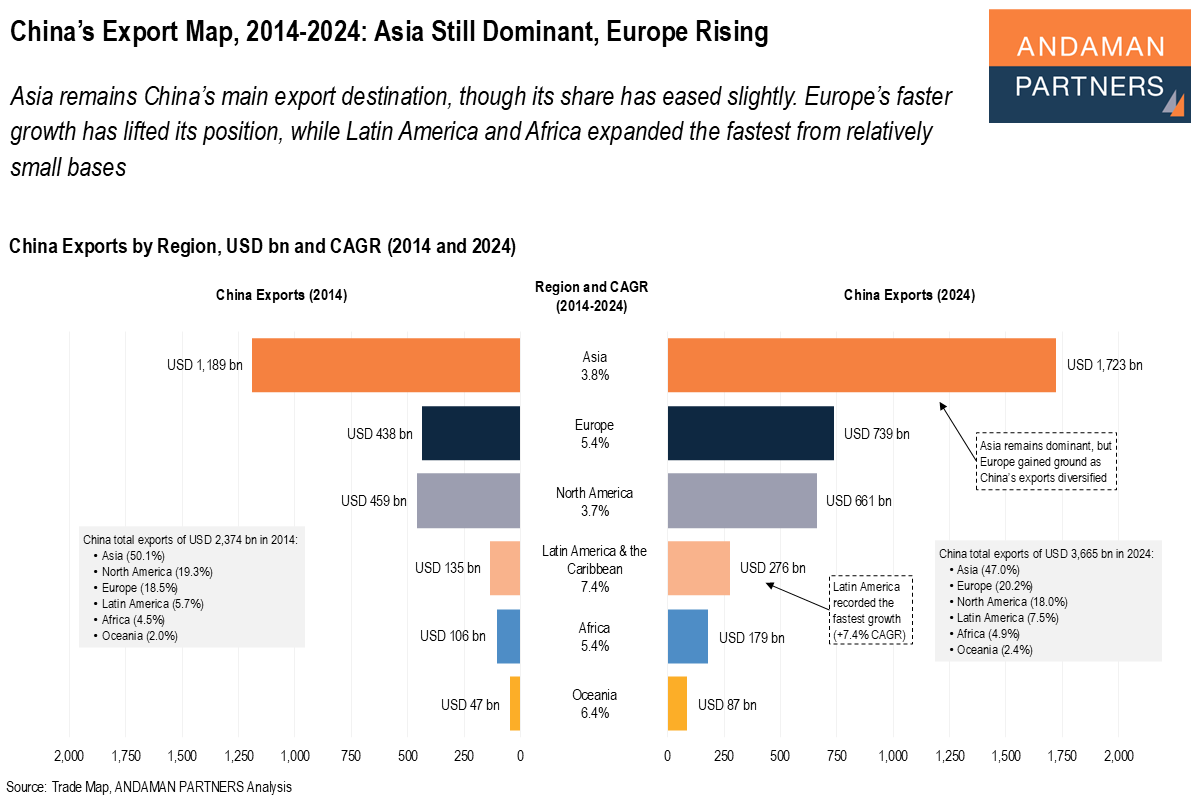
Asia remains China’s main export destination, though its share has eased slightly.
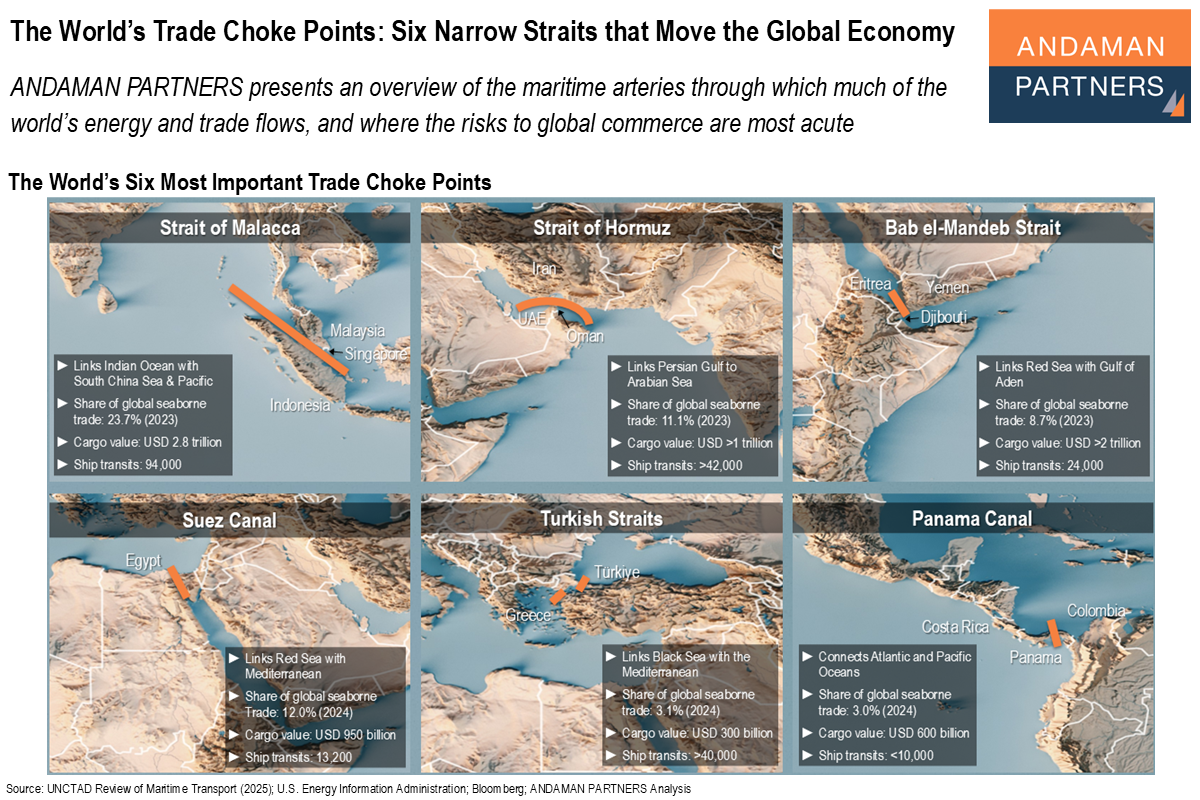
ANDAMAN PARTNERS presents an overview of the maritime arteries through which much of the world’s energy and trade flows.
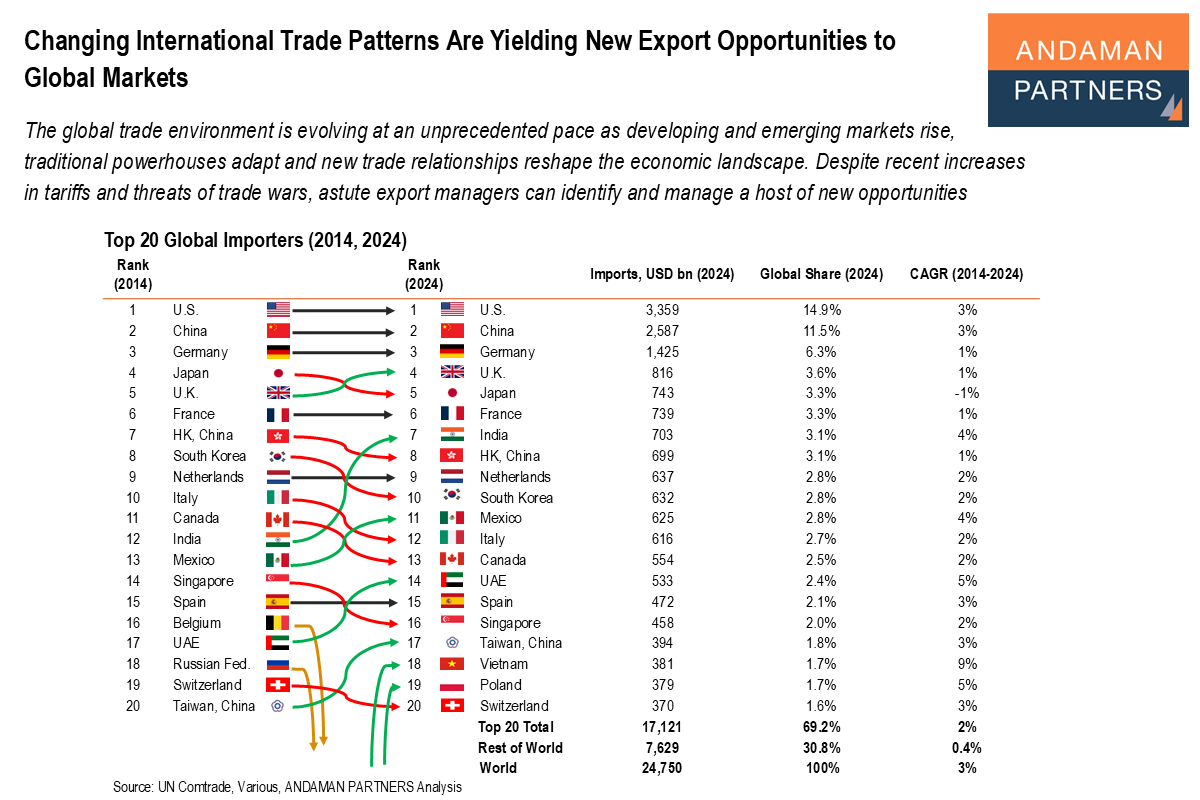
The global trade environment is evolving at an unprecedented pace. Astute export managers must identify and manage a host of new opportunities.
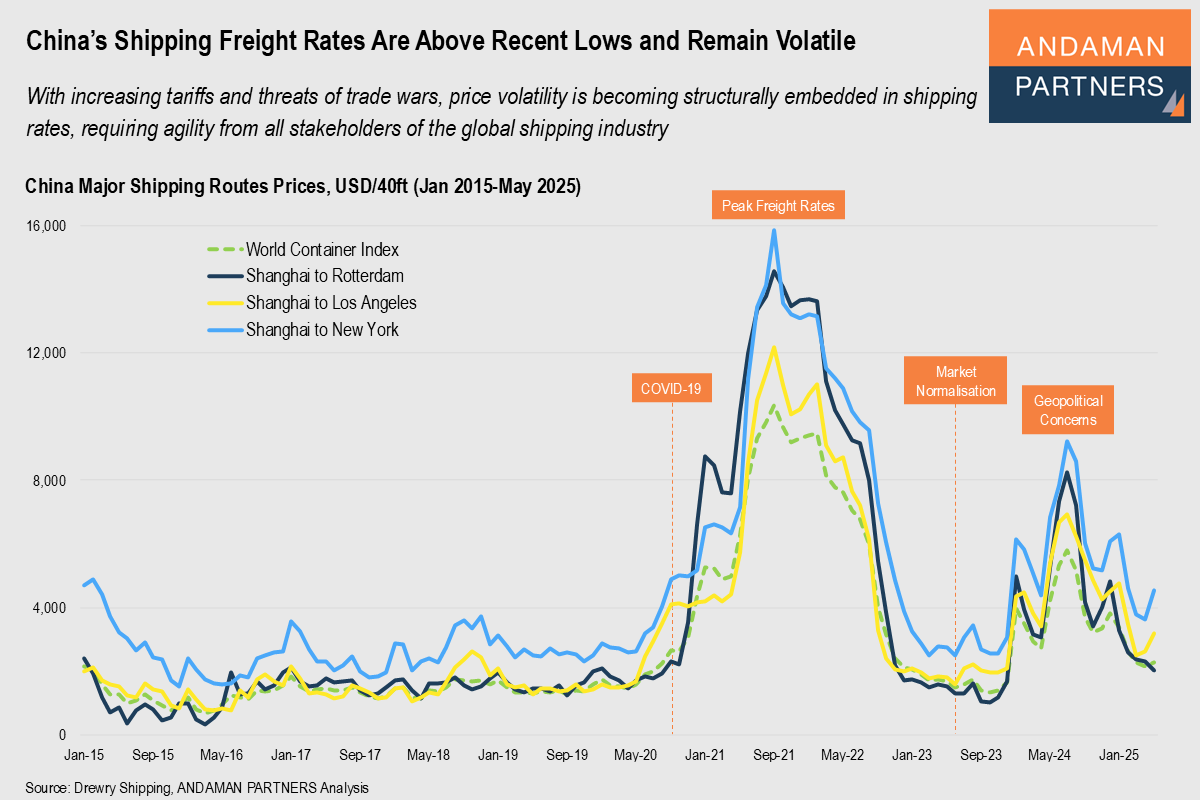
With increasing tariffs and threats of trade wars, price volatility is becoming structurally embedded in shipping rates.
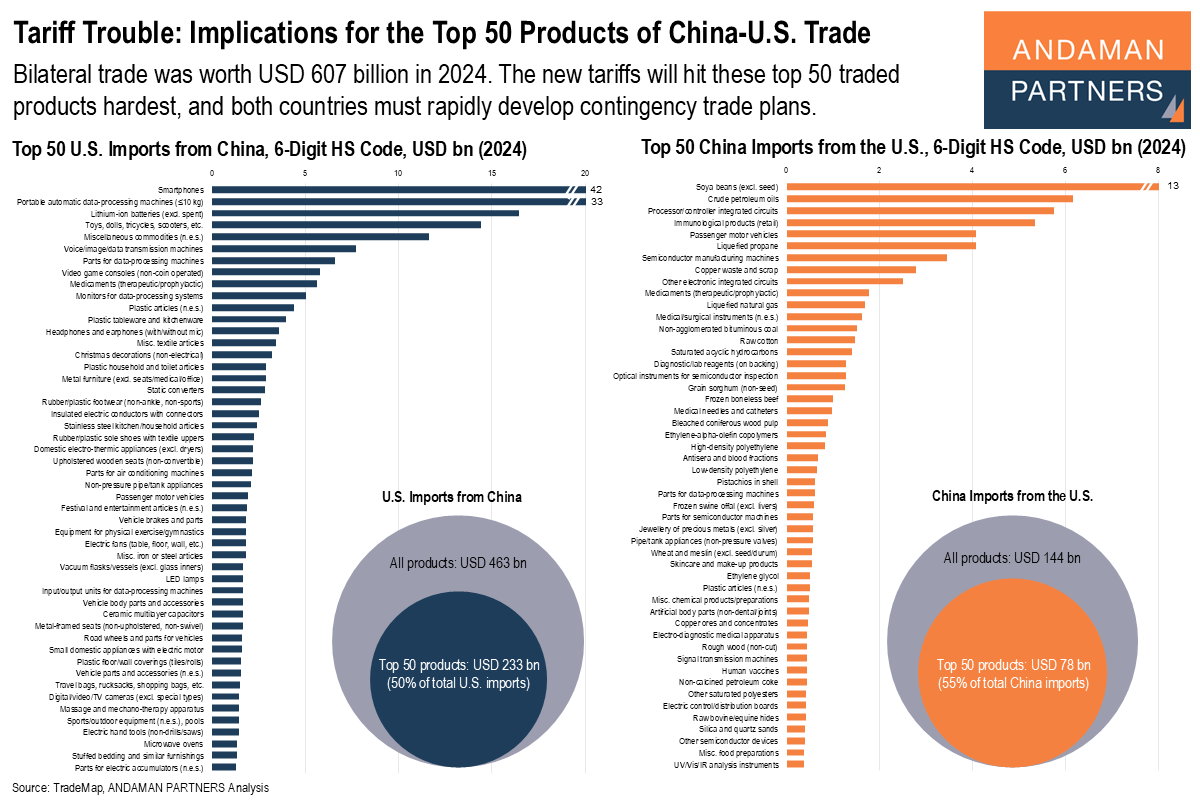
The new tariffs will hit these top 50 traded products hardest, and both countries must rapidly develop contingency trade plans.
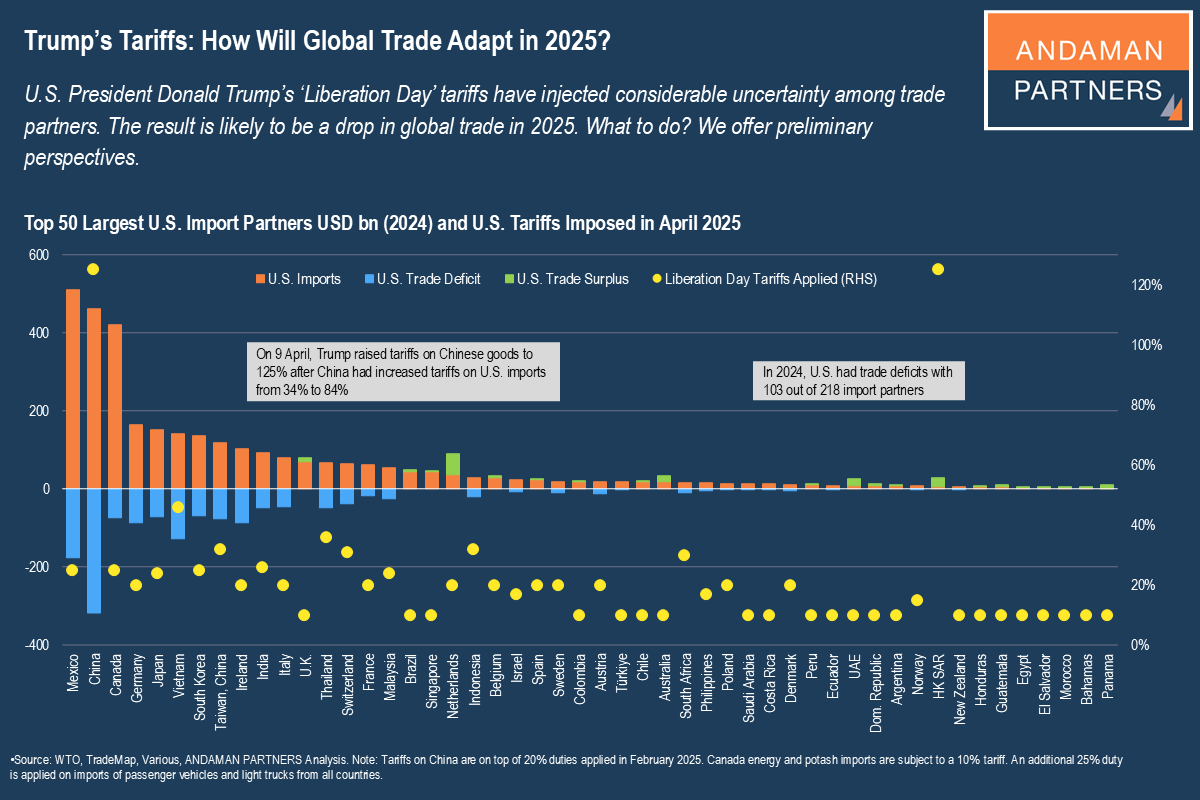
Trump’s tariffs are injecting uncertainty into global trade patterns, which could become more complex, fragmented and regionalised in 2025.
Global exports are concentrated in a few major economies but developing countries have made great strides in their export performance. This creates opportunities for astute global supply chain managers.