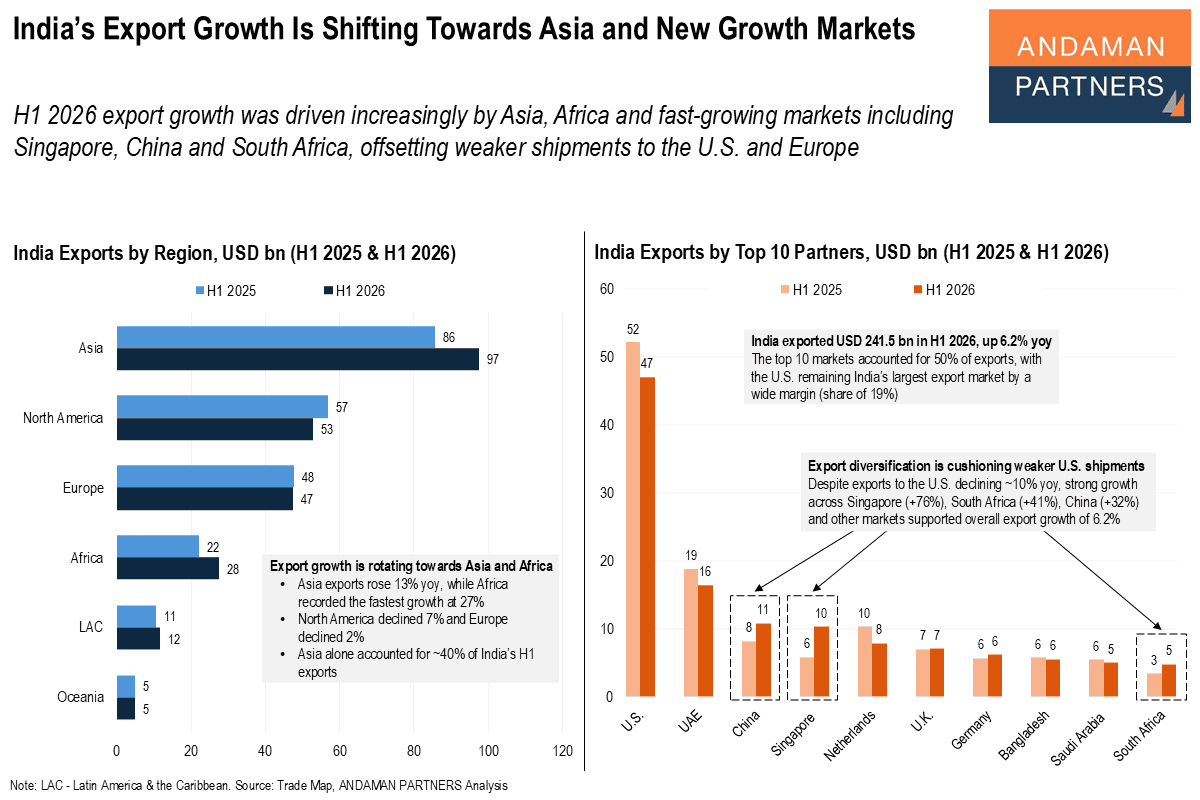
India’s Export Growth Is Shifting Towards Asia and New Growth Markets
H1 2026 export growth was driven increasingly by Asia, Africa and fast-growing markets including Singapore, China and South Africa

H1 2026 export growth was driven increasingly by Asia, Africa and fast-growing markets including Singapore, China and South Africa
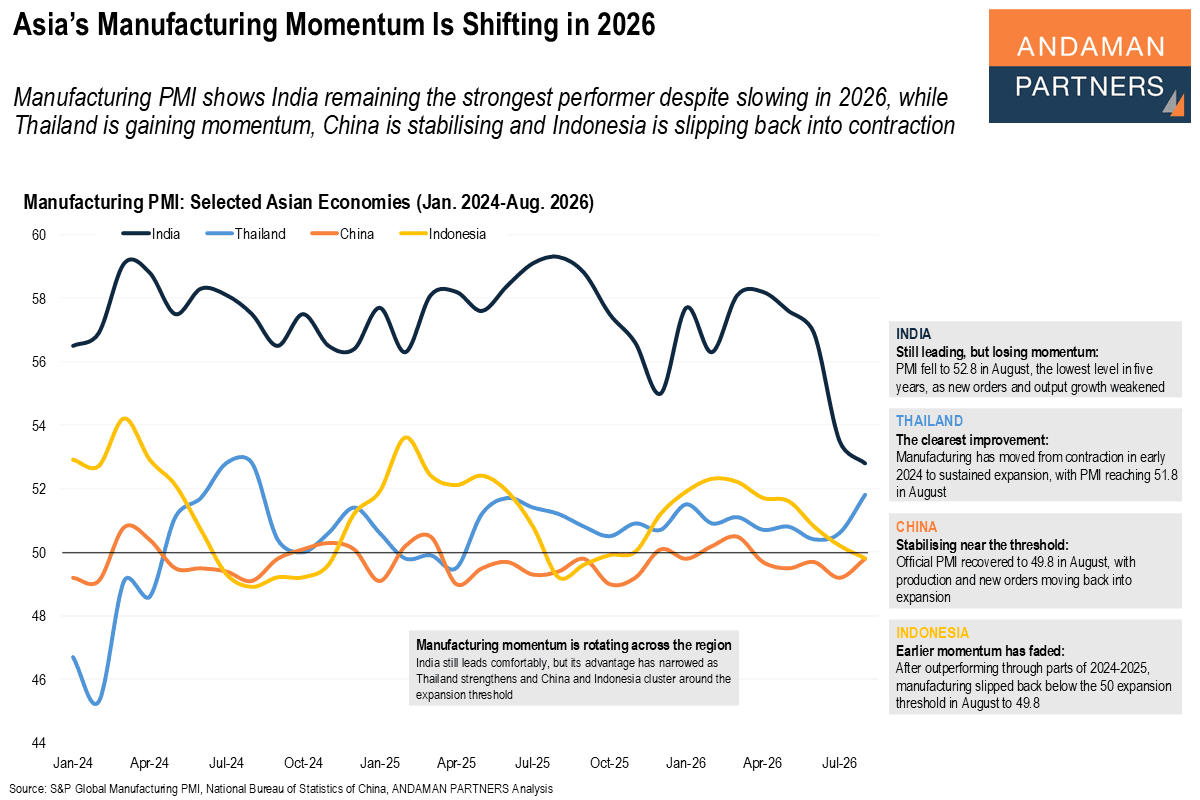
India leads despite slowing in 2026; Thailand is gaining momentum; China is stabilising and Indonesia is slipping back into contraction
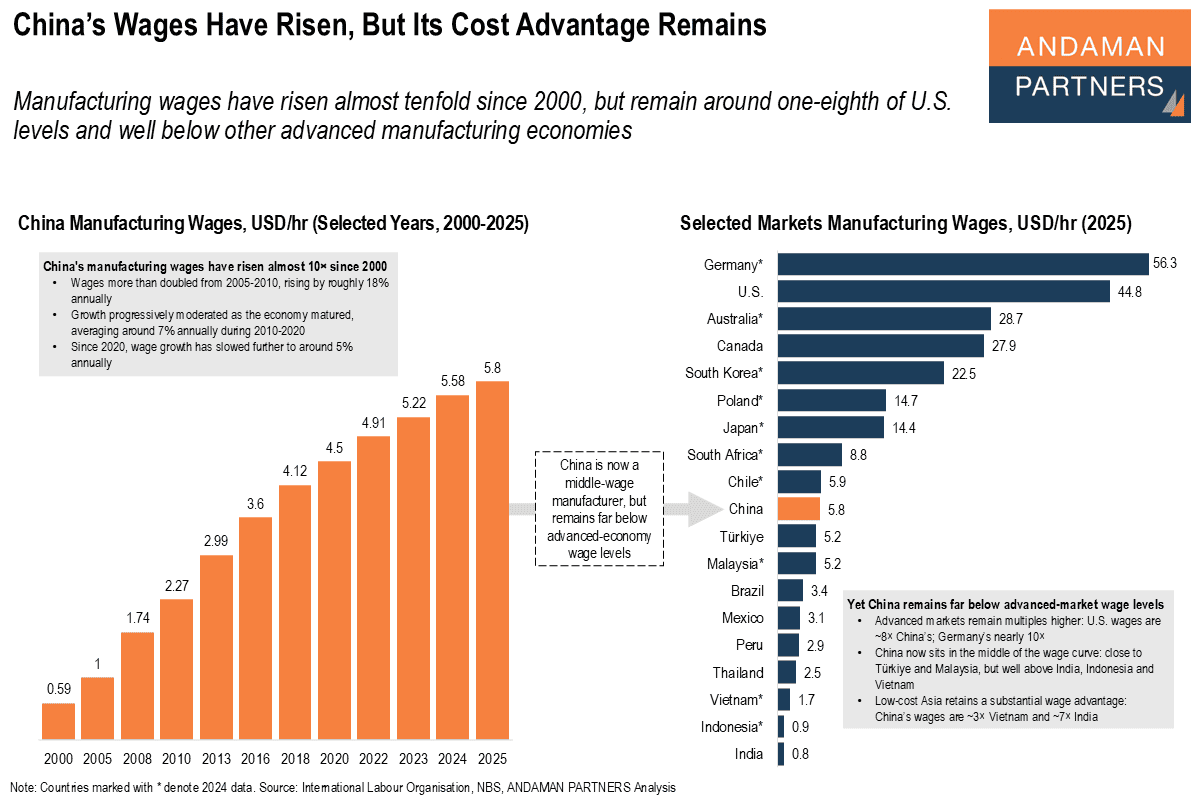
Manufacturing wages have risen almost tenfold since 2000, but remain well below advanced manufacturing economies
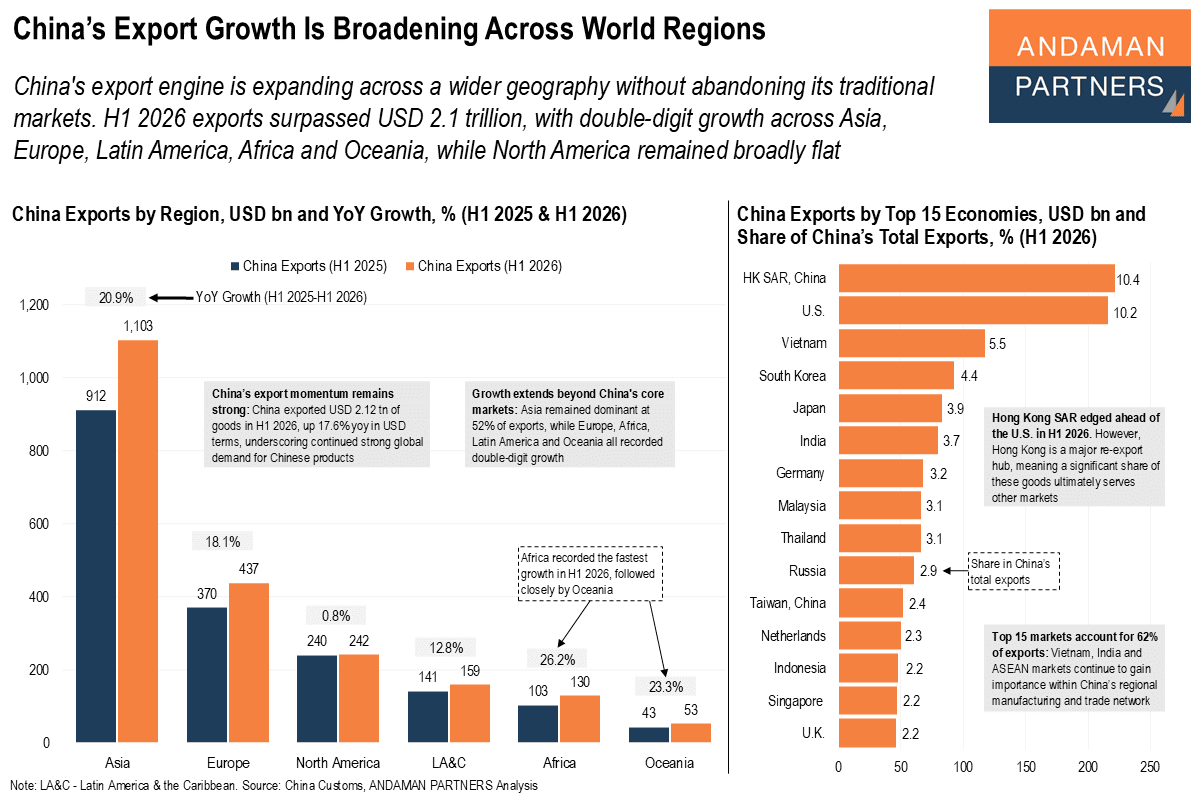
China's export engine is expanding across a wider geography without abandoning its traditional markets

ANDAMAN PARTNERS at the Singapore Institute of Directors Conference 2026 in Singapore on 28 August 2026
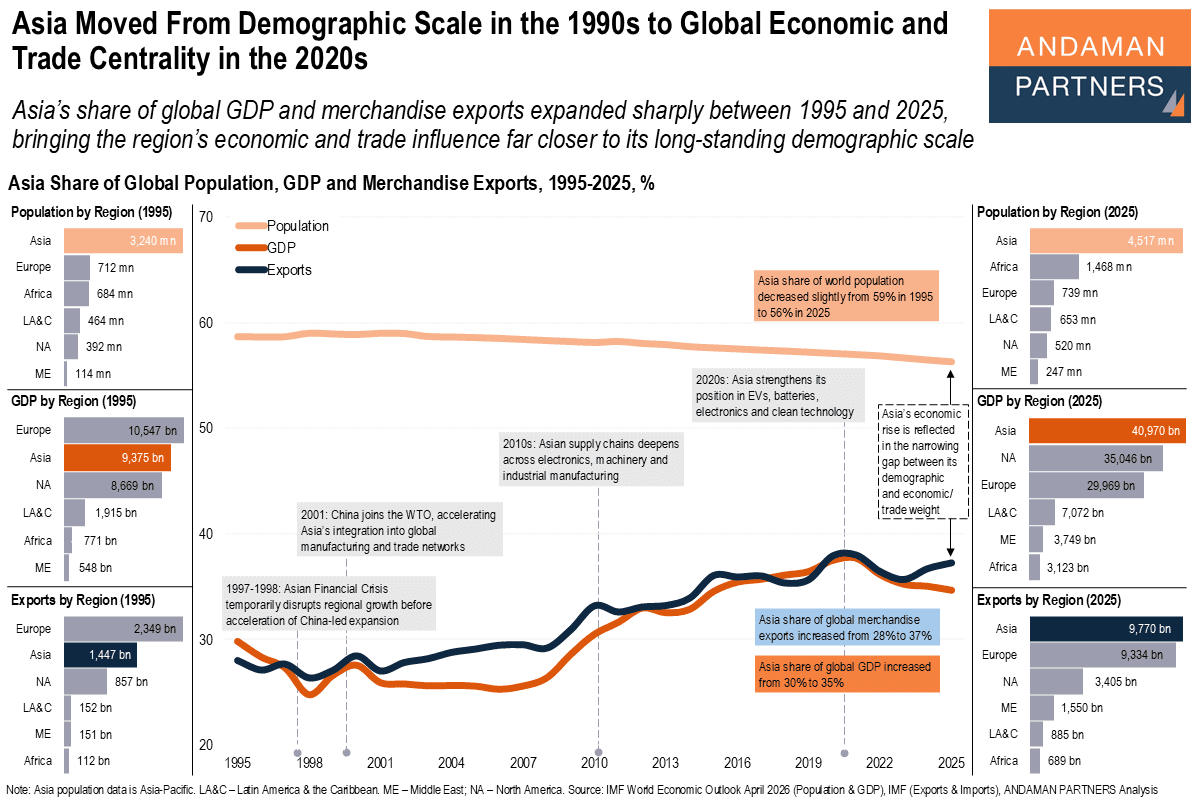
Asia’s share of global GDP and exports expanded sharply to 2025, bringing the region’s influence closer to its demographic scale.
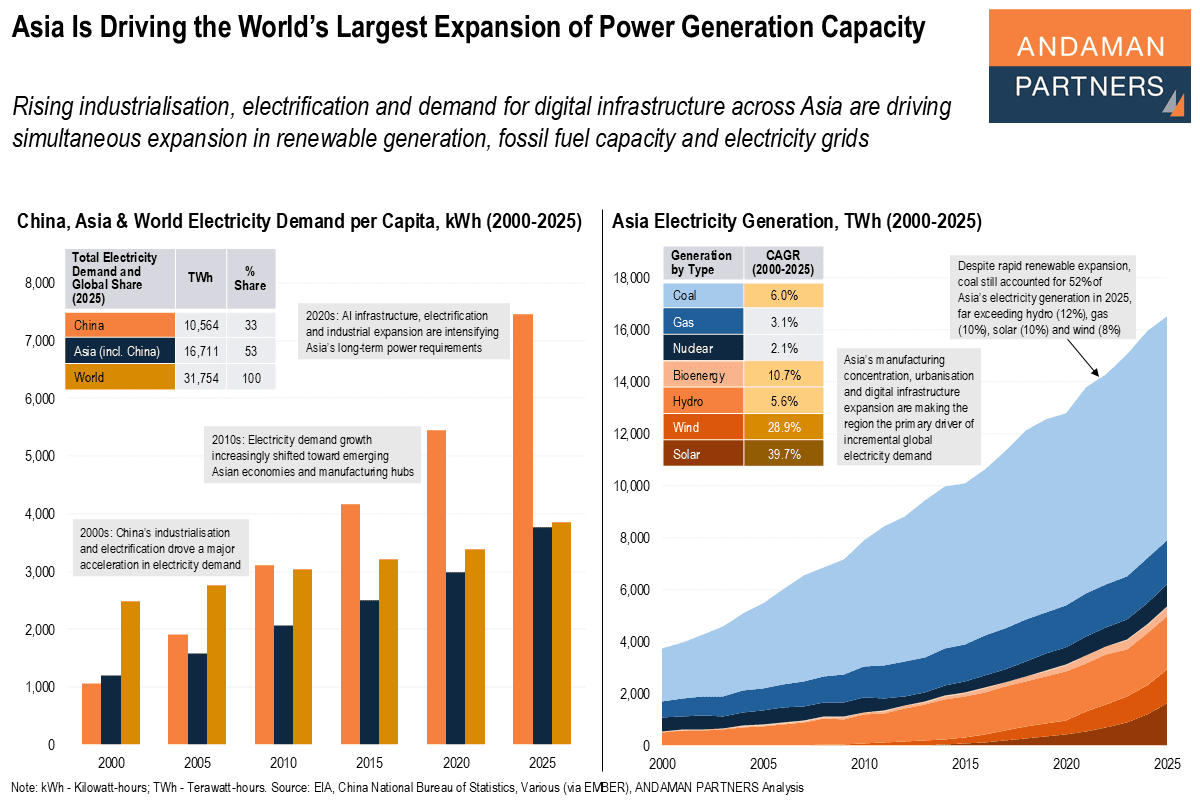
Demand across Asia is driving simultaneous expansion in renewable generation, fossil fuel capacity and electricity grids
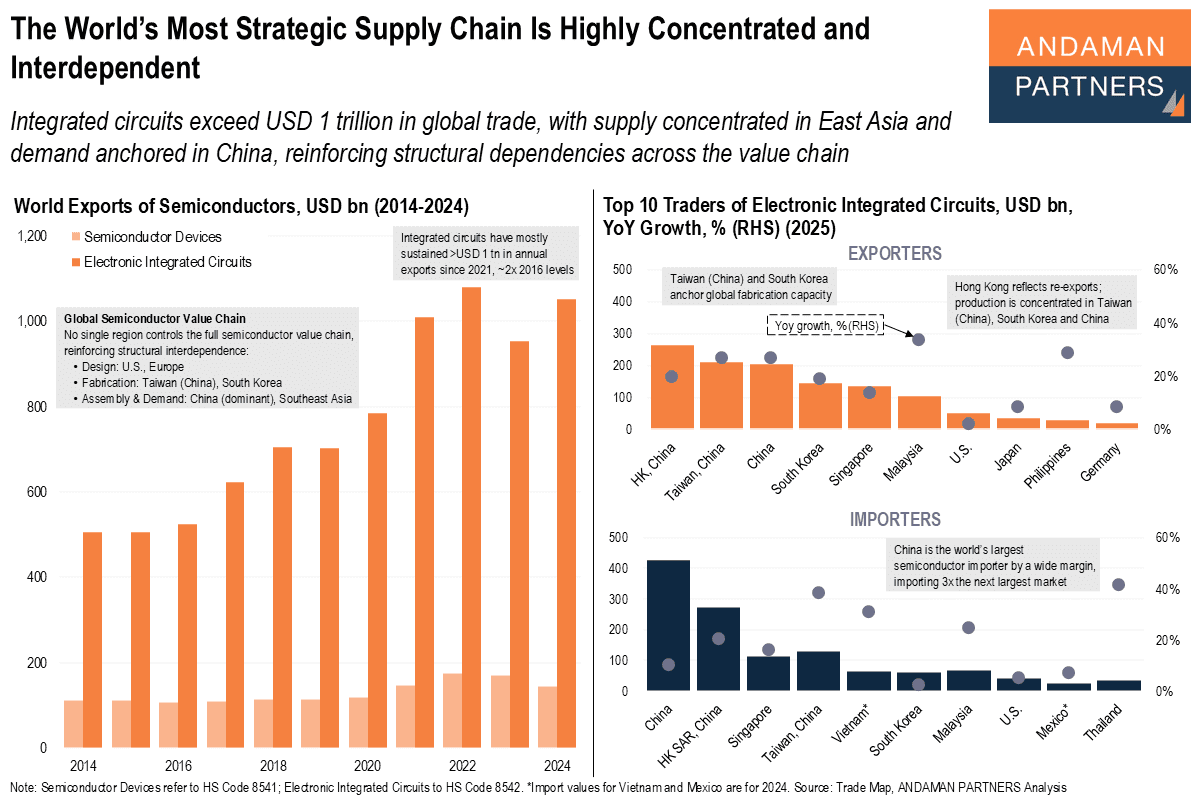
Integrated circuits exceed USD 1 trillion in global trade, with supply concentrated in Asia and demand in China, reinforcing structural dependencies.
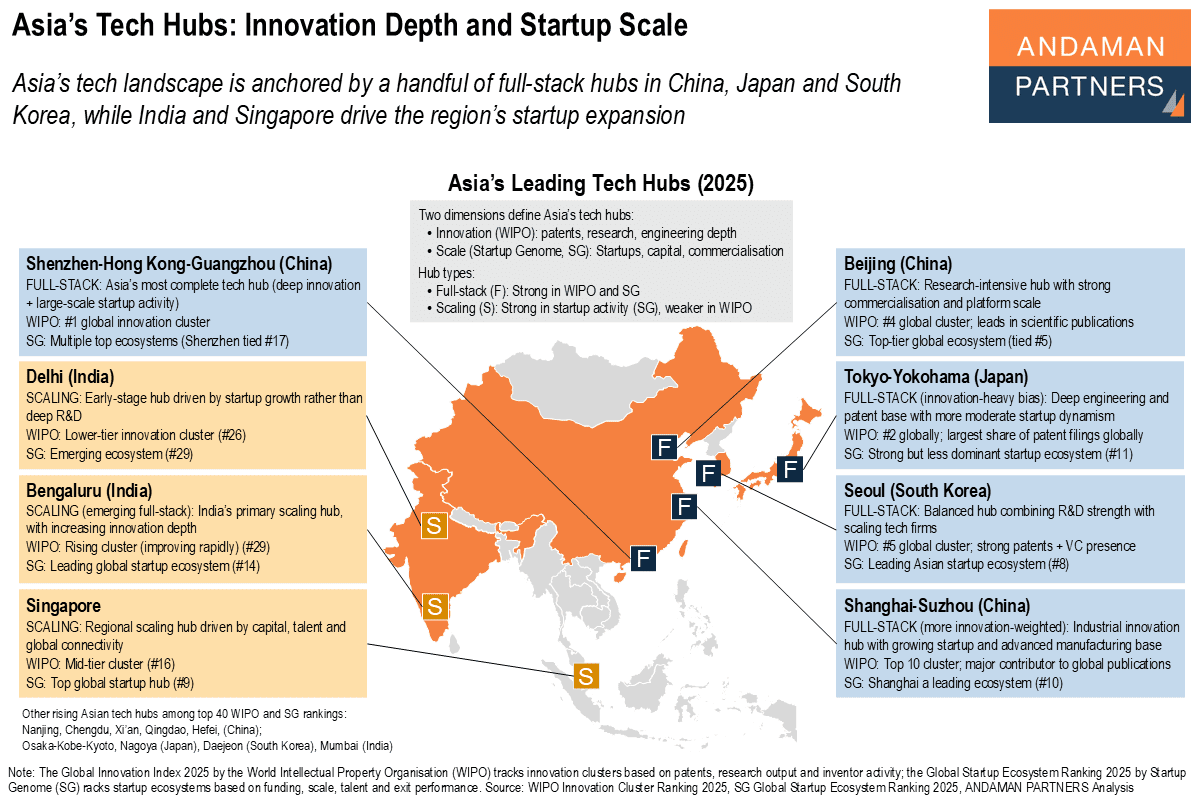
Asia’s tech landscape is anchored by a handful of full-stack hubs in China, Japan and South Korea, while India and Singapore drive startup expansion.
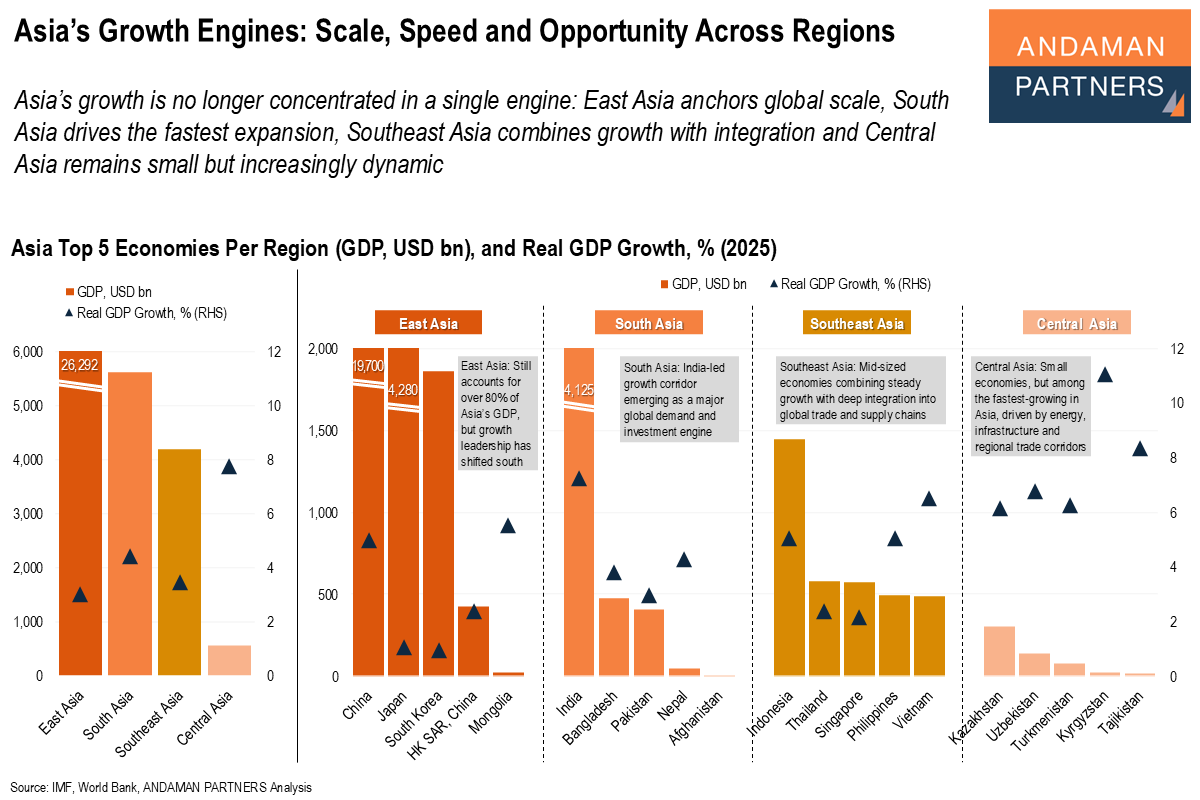
Asia's scale, speed and integration are no longer concentrated in a single core, but spread across multiple, complementary engines.