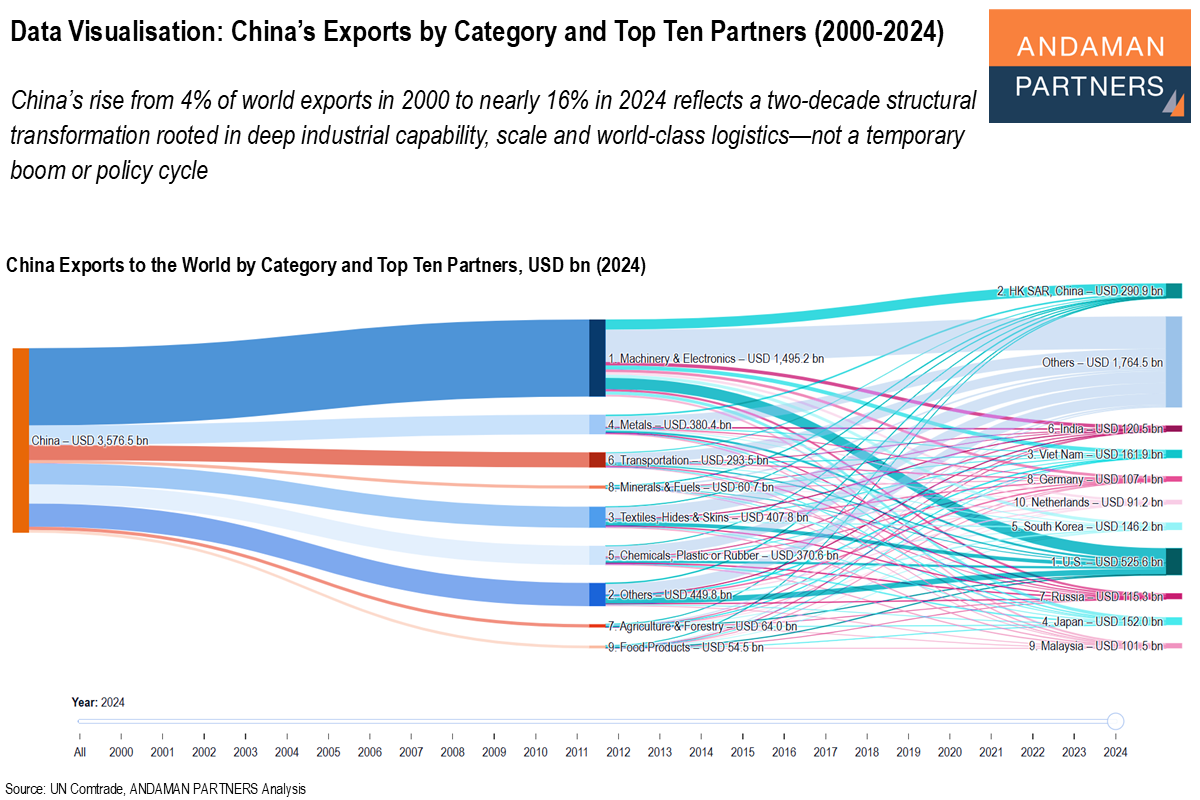
Data Visualisation: China’s Exports by Category and Top Ten Partners (2000-2024)
China’s rise from 4% of world exports in 2000 to nearly 16% in 2024 reflects a two-decade structural transformation.

China’s rise from 4% of world exports in 2000 to nearly 16% in 2024 reflects a two-decade structural transformation.
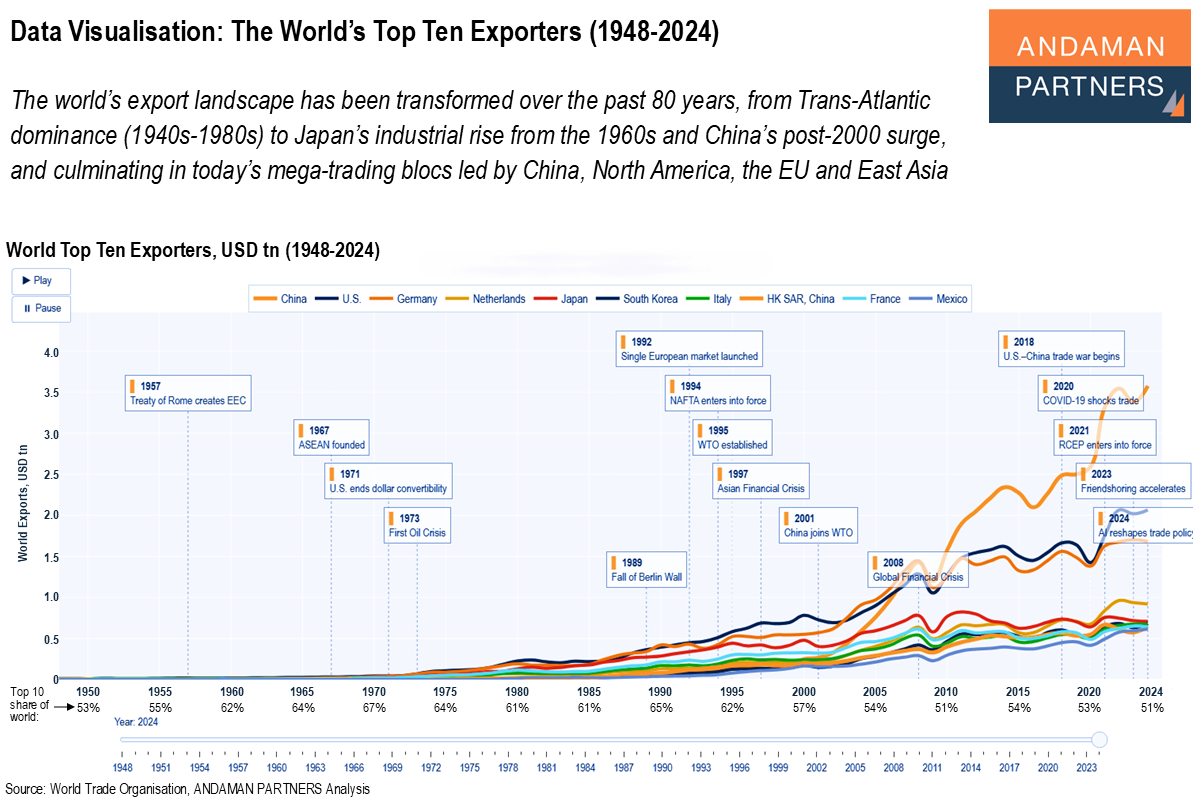
The world’s export landscape has been transformed over the past 80 years, from Trans-Atlantic dominance to Japan’s and China's rise and mega-trading blocs.
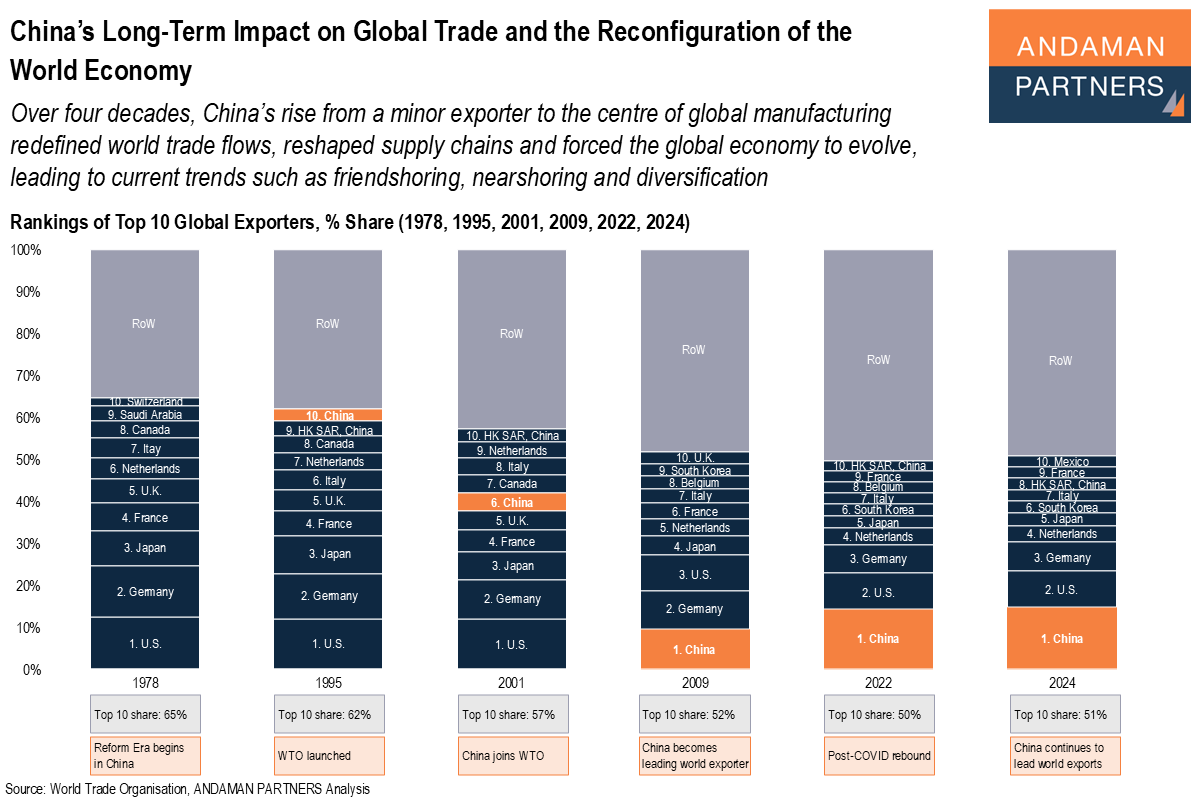
China’s rise from a minor exporter to the centre of global manufacturing redefined world trade flows, reshaped supply chains and forced the global economy to evolve.
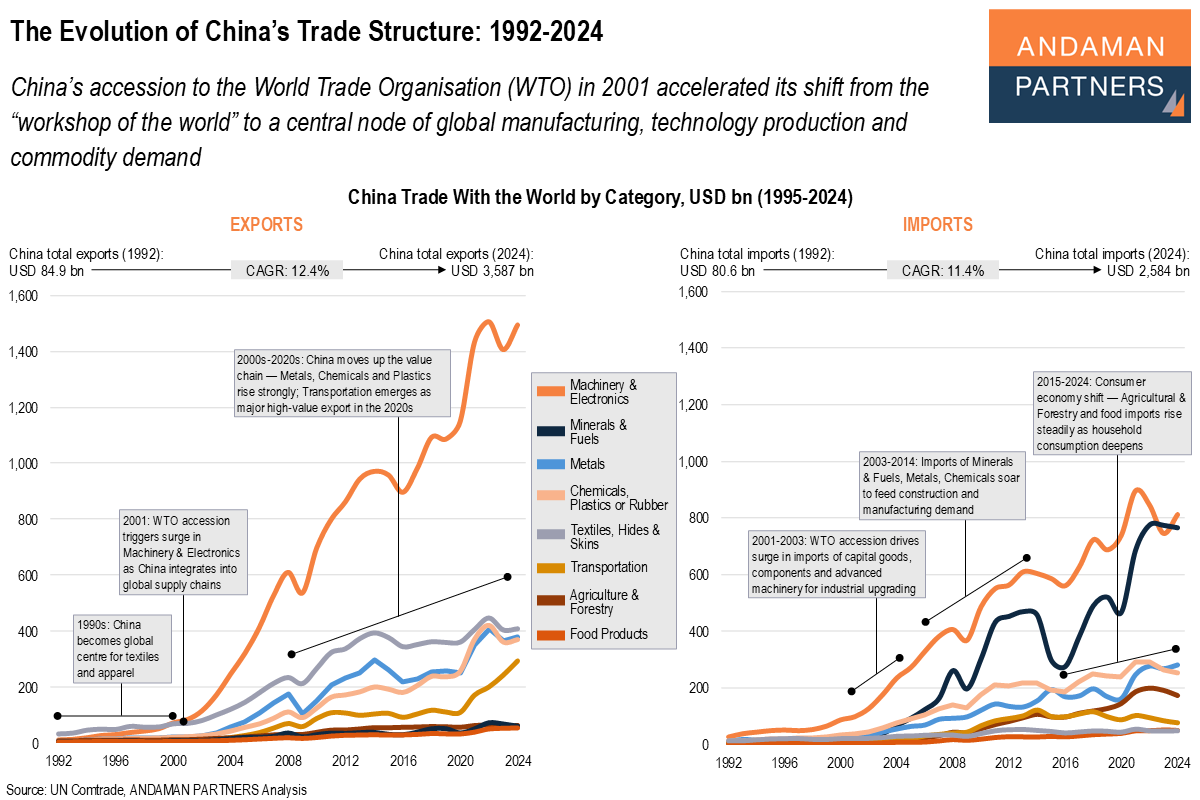
China’s accession to the WTO accelerated its shift from the “workshop of the world” to a central node of manufacturing, production and demand.
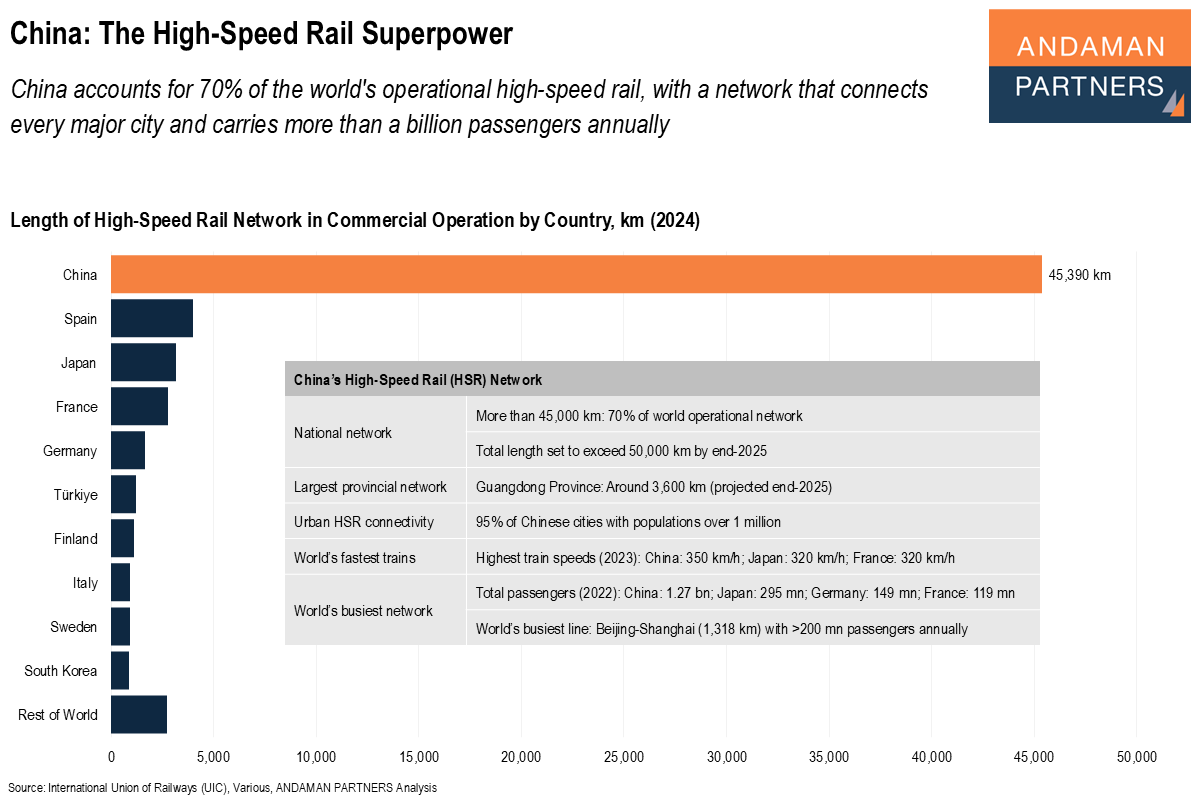
China accounts for 70% of the world's operational high-speed rail, with a network that connects every major city and carries a billion passengers.
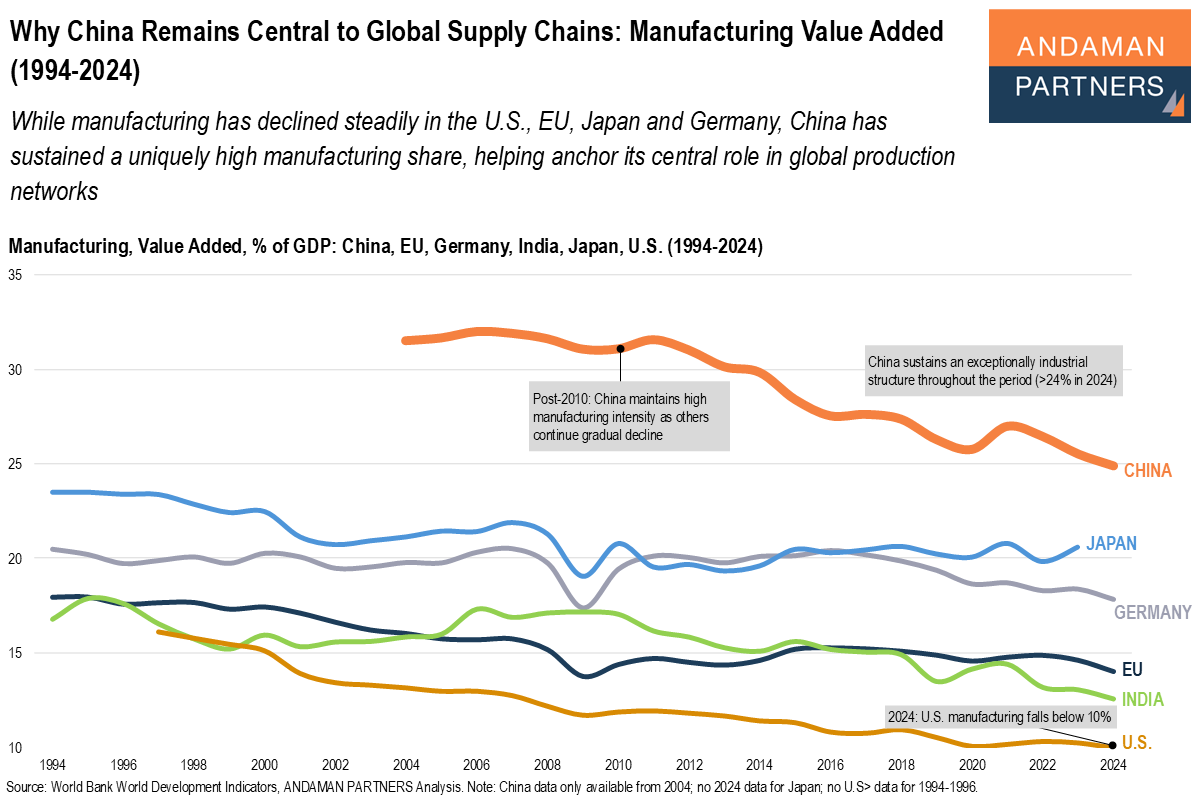
While manufacturing has declined steadily in the U.S., EU, Japan and Germany, China has sustained a uniquely high manufacturing share.
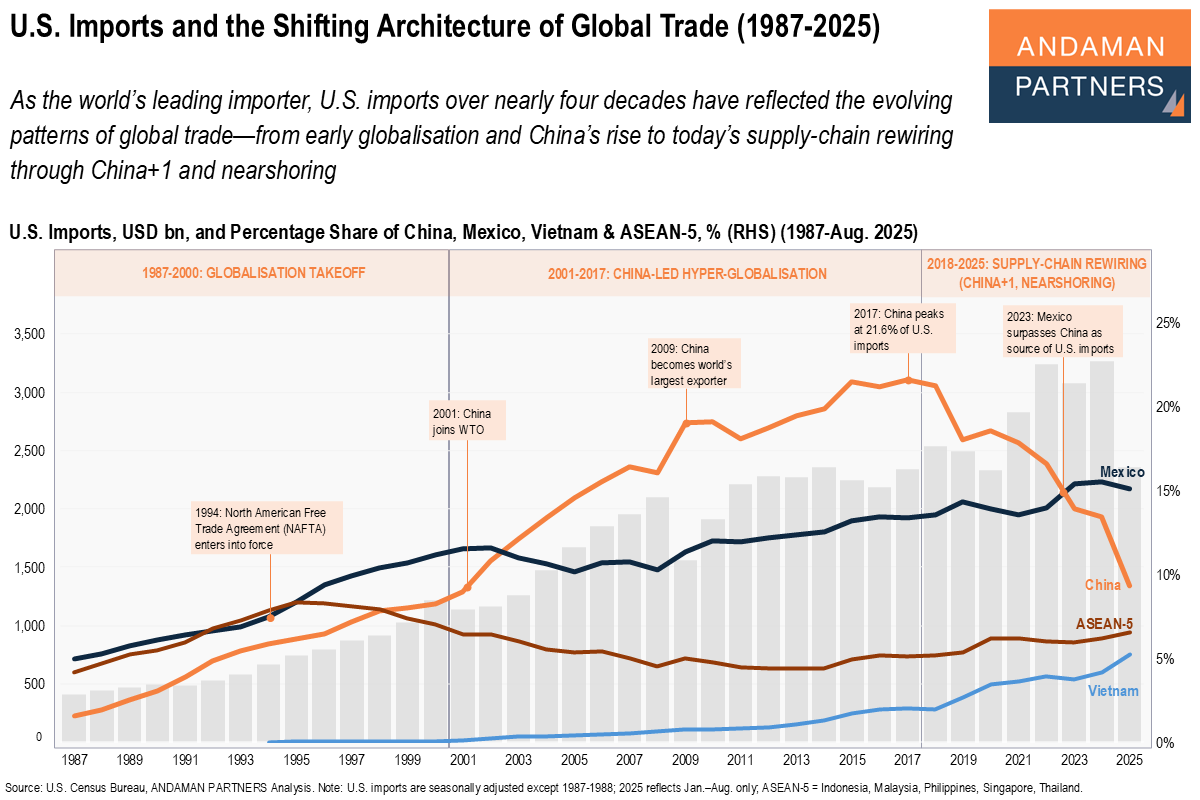
As the world’s leading importer, U.S. imports over nearly four decades have reflected the evolving patterns of global trade.
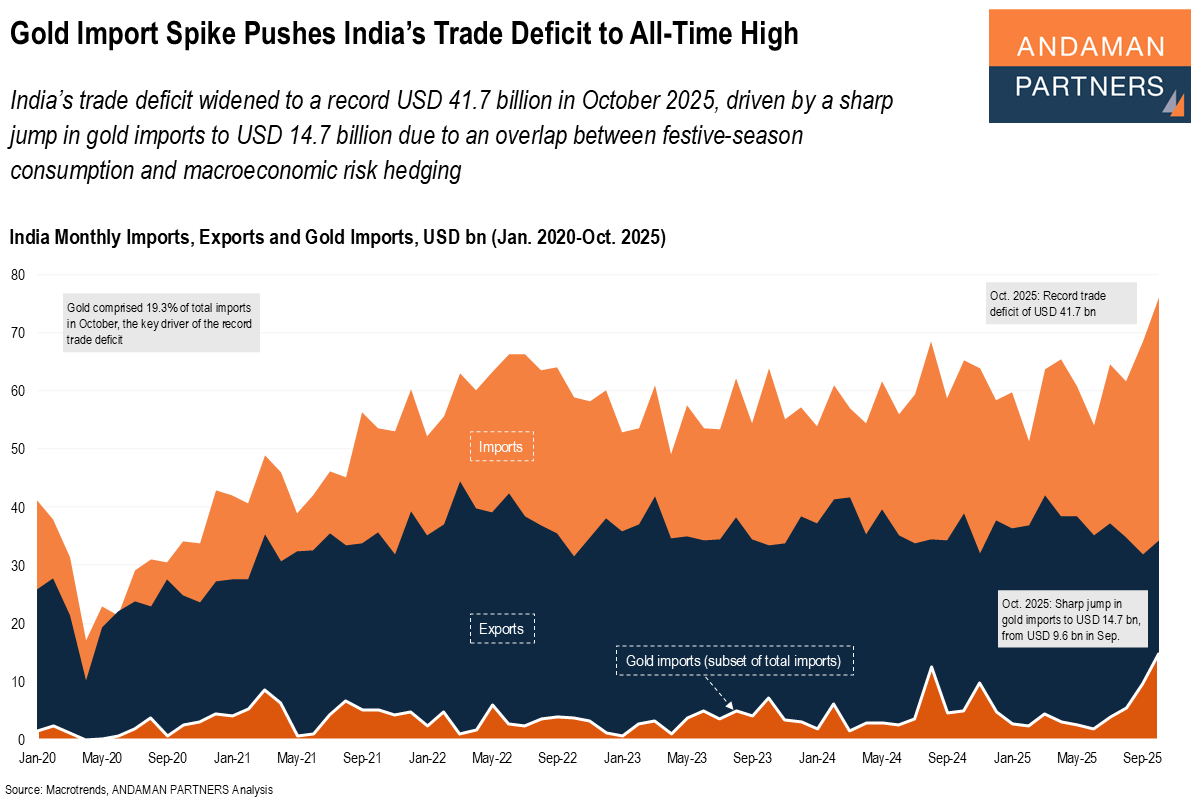
India’s trade deficit widened to a record USD 41.7 billion in October 2025, driven by a sharp jump in gold imports to USD 14.7 billion.
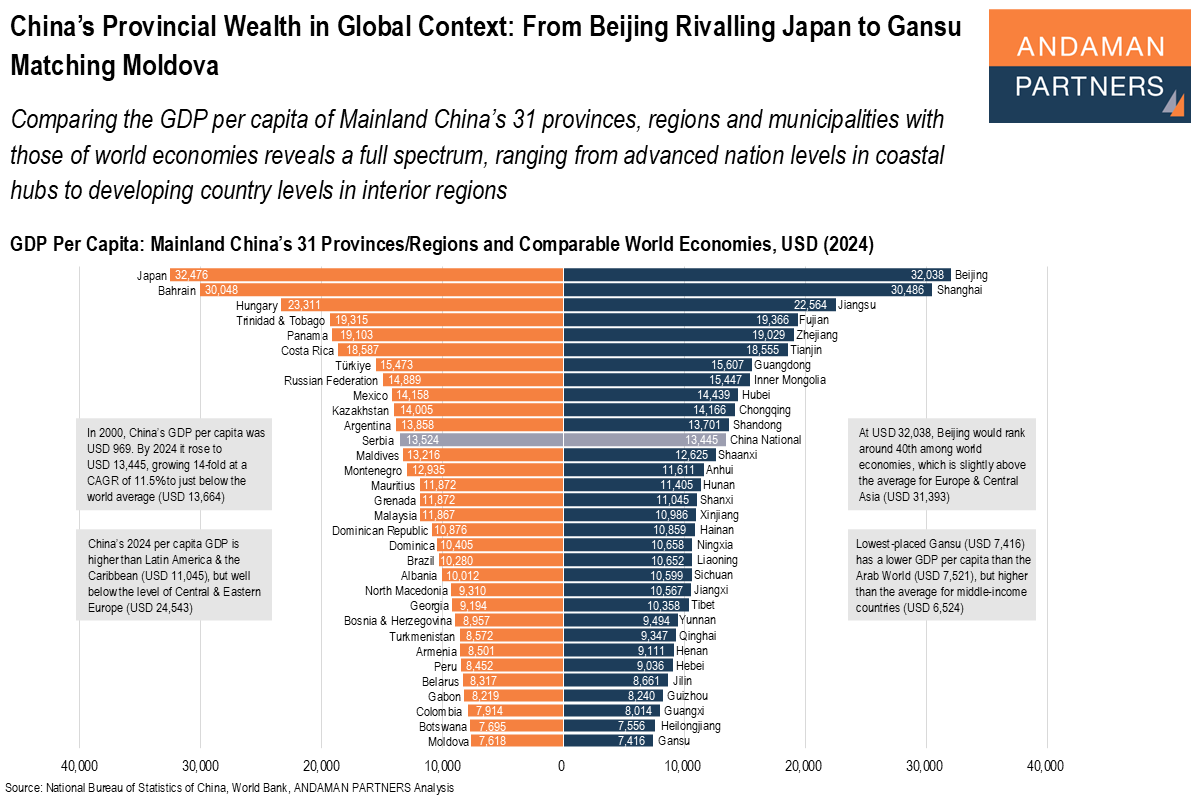
Comparing the GDP per capita of China’s provinces with those of world economies reveals a full spectrum, from advanced to developing country levels.
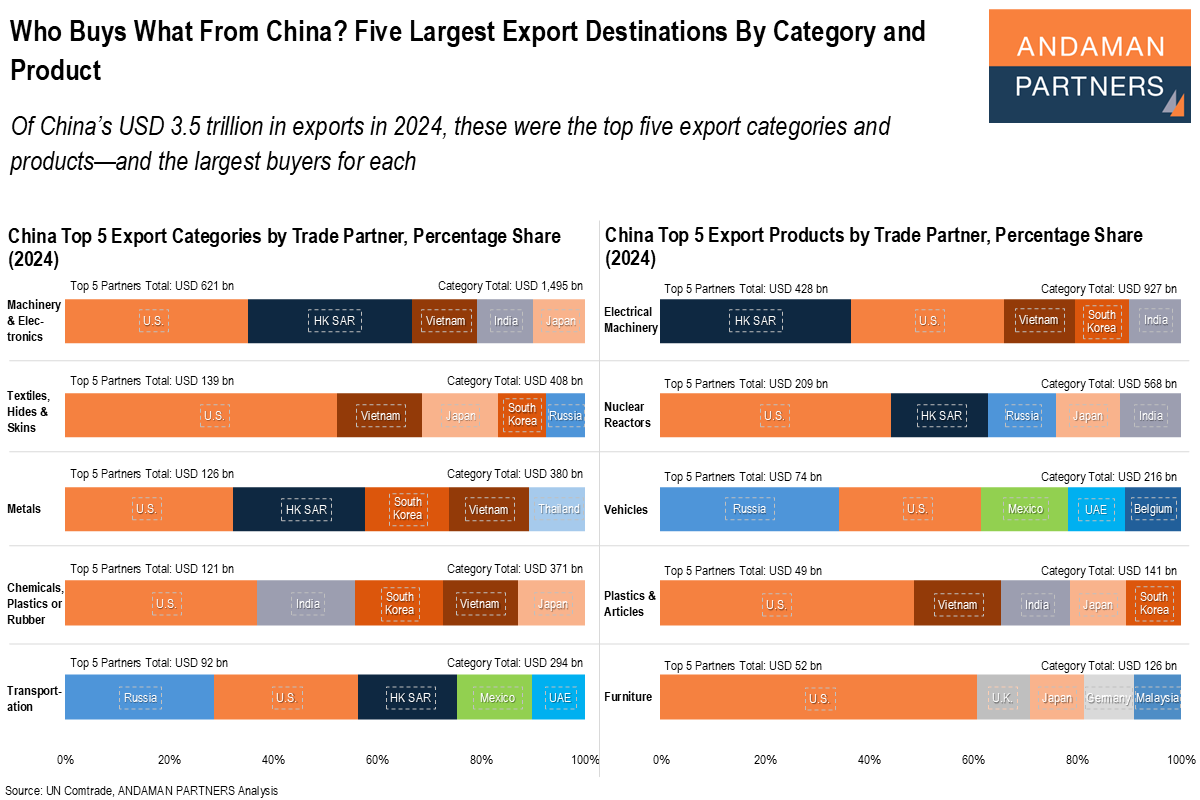
Of China’s USD 3.6 trillion in exports in 2024, these were the top five export categories and products—and the largest buyers for each.