
Gold Import Spike Pushes India’s Trade Deficit to All-Time High
Gold Import Spike Pushes India’s Trade Deficit
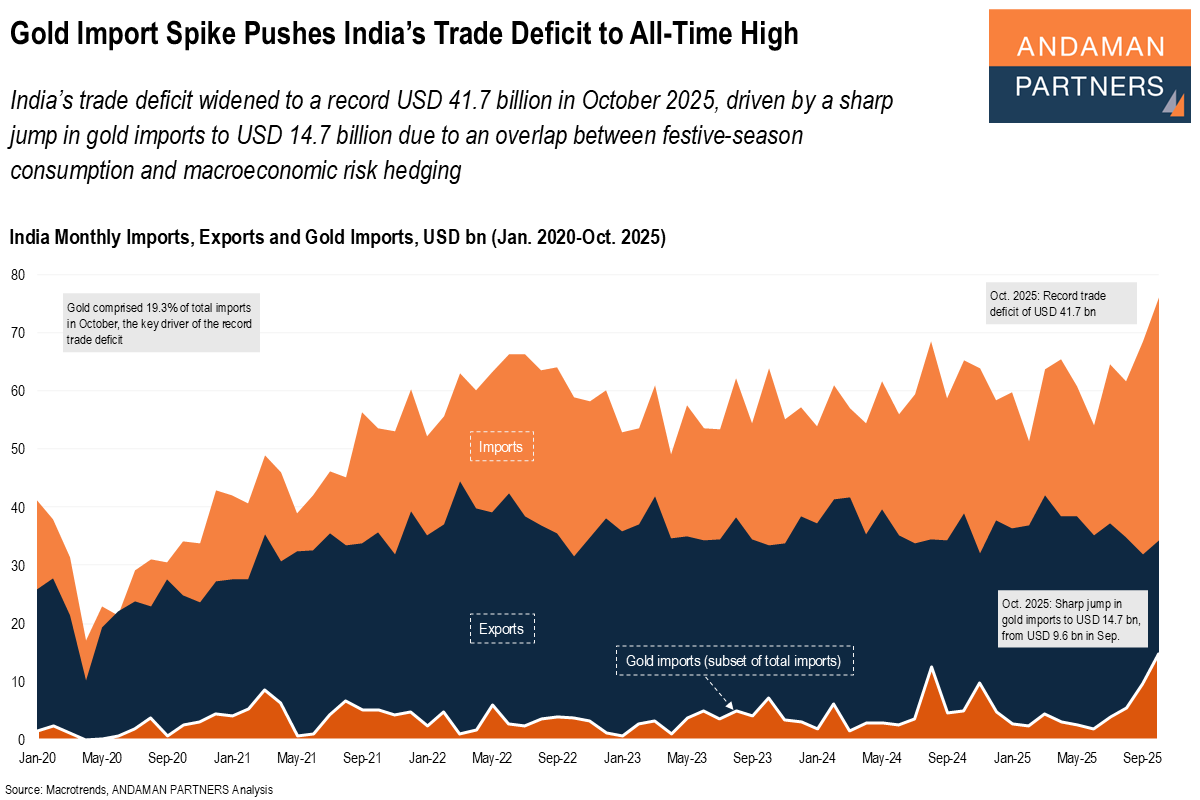
India’s trade deficit widened to a record USD 41.7 billion in October 2025, driven by a sharp jump in gold imports to USD 14.7 billion due to an overlap between festive-season consumption and macroeconomic risk hedging.
India’s merchandise trade deficit reached a record high of USD 41.7 billion in October, mainly due to surging gold imports of USD 14.7 billion.
During the five-day Diwali festive period of October 18-23, as much as USD 11 billion worth of gold was sold in India, according to the India Bullion and Jewellers Association (IBJA) and the All India Gem and Jewellery Domestic Council (GJC).
Much of this demand came from purchases of gold bars and coins rather than jewellery, indicating that consumers were treating gold primarily as an investment asset rather than a consumption good. Since 2022, the escalation of war, inflation and fiscal strain has lifted the international gold price beyond USD 4,000 per fine ounce, marking one of the steepest and most prolonged surges in gold.
India’s gold imports in October (USD 14.7 billion) were nearly 200% higher than a year earlier (USD 4.9 billion). Gold imports surged particularly in 2025 due to a combination of exceptionally high global gold prices, investment-driven demand during Diwali and a weakening rupee that encouraged early purchases. The overlap between festive-season consumption and macroeconomic risk hedging led to an unusually large spike in demand.
More broadly, India’s imports expanded almost thirteenfold between 2000 and 2024, rising from around
USD 50 billion at the start of the century to nearly USD 700 billion in 2024. This long-term surge reflects the structural transformation of India’s economy, with rapid GDP growth, rising household consumption, a deepening industrial base and tighter integration with global value chains.
India has recorded an annual trade deficit every year since 2010, except for four years, with the deficit peaking at USD 280 billion in 2022.
Also by ANDAMAN PARTNERS:
ANDAMAN PARTNERS supports international business ventures and growth. We help launch global initiatives and accelerate successful expansion across borders. If your business, operations or project requires cross-border support, contact connect@andamanpartners.com.

A Glance at China’s Consumer Market from Nanjing West Road by ANDAMAN PARTNERS Co-Founder Rachel Wu
Analysis by ANDAMAN PARTNERS Co-Founder Rachel Wu on China’s consumer economy

China Keeps Shopping for Services. Are You Selling? By ANDAMAN PARTNERS Co-Founder Rachel Wu
Analysis by ANDAMAN PARTNERS Co-Founder Rachel Wu on Shanghai’s services economy

Shenzhen: Where Entrepreneurs Land and Ideas Take Off by ANDAMAN PARTNERS Co-Founder Rachel Wu
Analysis by ANDAMAN PARTNERS Co-Founder Rachel Wu on what makes the city of Shenzhen different
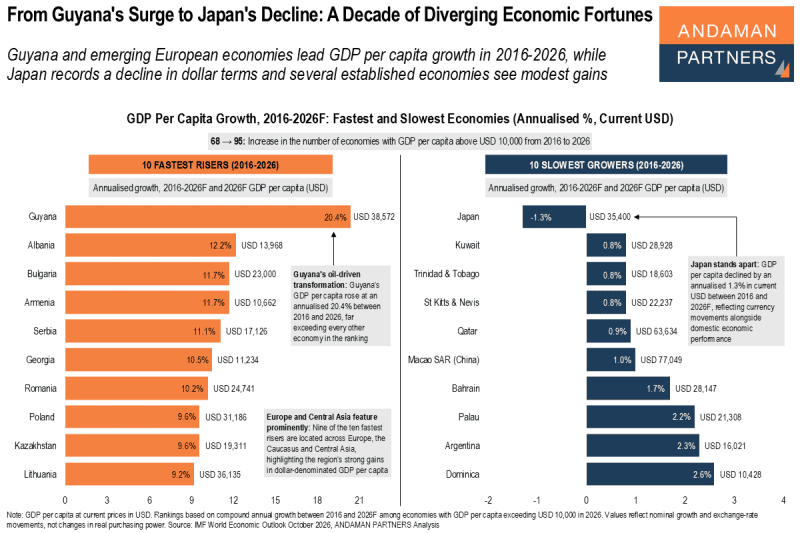
From Guyana’s Surge to Japan’s Decline: A Decade of Diverging Economic Fortunes
Guyana and emerging European economies lead GDP per capita growth in 2016-2026, while Japan records a decline
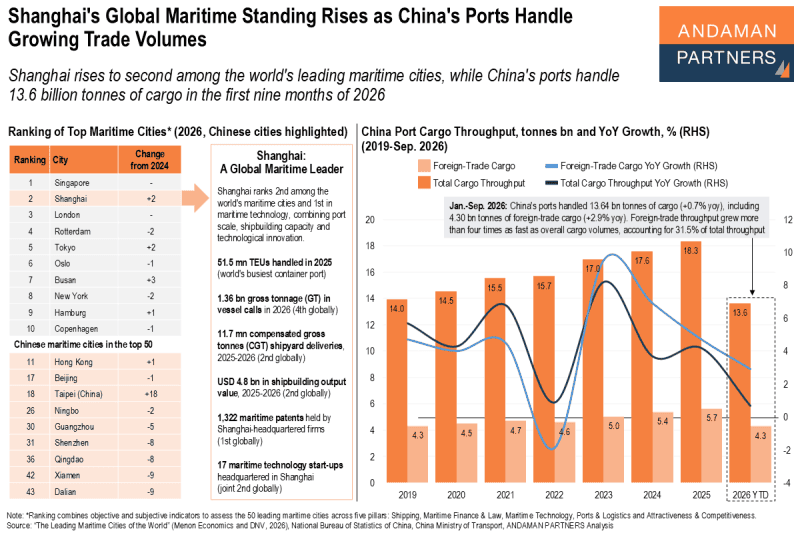
Shanghai’s Global Maritime Standing Rises as China’s Ports Handle Growing Trade Volumes
Shanghai rises to second among the world’s leading maritime cities, while China’s ports handle 13.6 billion tonnes of cargo in 2026
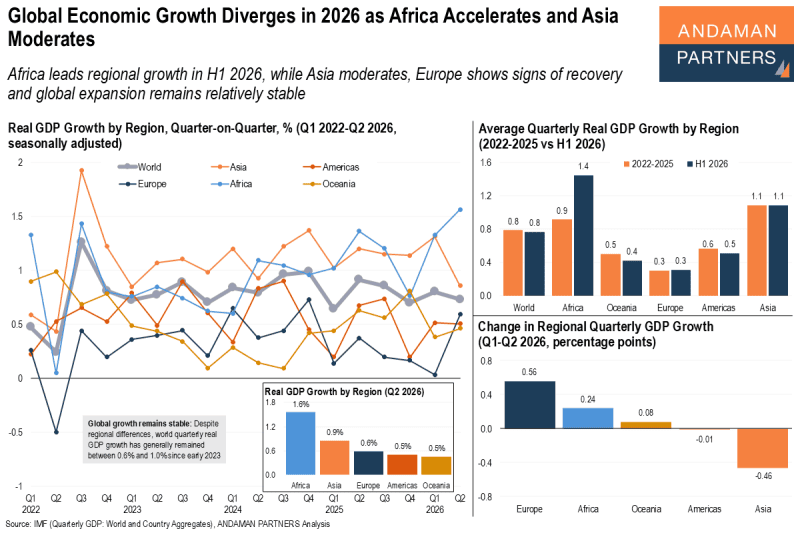
Global Economic Growth Diverges in 2026 as Africa Accelerates and Asia Moderates
Africa leads regional growth in H1 2026, while Asia moderates and Europe shows signs of recovery