Vietnam’s Rapidly Scaling Economy
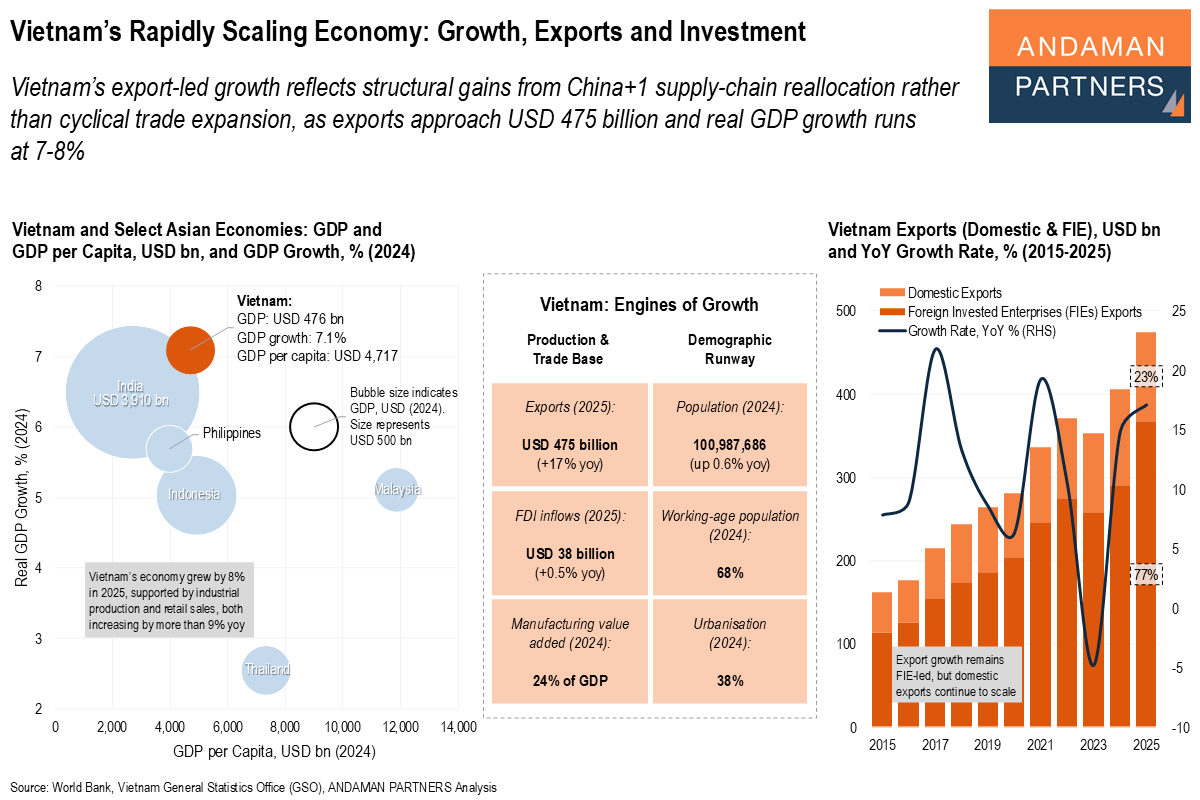
Vietnam’s Rapidly Scaling Economy: Growth, Exports and Investment
Vietnam’s export-led growth reflects structural gains from China+1 supply-chain reallocation rather than cyclical trade expansion, as exports approach USD 475 billion and real GDP growth runs at 7-8%.
Vietnam stands out as one of Asia’s fastest-scaling economies, combining fast economic growth with rapidly expanding export capacity and sustained investment inflows. In 2024, real GDP growth was just above 7%, outperforming most regional peers despite Vietnam’s still modest income level of roughly USD 4,700 per capita. This positioning highlights an economy that is both growing quickly and retaining substantial development headroom.
Crucially, Vietnam’s recent expansion reflects structural gains rather than cyclical trade dynamics. Merchandise exports have risen steadily to around USD 475 billion, underscoring Vietnam’s deepening integration into global manufacturing and supply-chain networks. Export growth remains led by foreign-invested enterprises, consistent with Vietnam’s role as a key destination for multinational manufacturers reallocating production under China+1 strategies. At the same time, the continued scaling of domestic exports points to a gradual broadening of local industrial capacity.
Investment trends reinforce this structural interpretation. FDI inflows of roughly USD 38 billion signal long-term capital commitment rather than short-term positioning, lifting manufacturing value added to around 24% of GDP. This reflects capacity expansion in export-oriented industries, not a temporary response to global demand fluctuations.
Underlying demographics further strengthen the outlook. A working-age population share of nearly 70%, a median age in the low-30s, and rising urbanisation provide both labour availability and domestic absorption capacity as industrial activity scales.
Taken together, the data show that Vietnam’s export-led growth is anchored in durable supply-chain reallocation and investment-driven capacity building, positioning the economy for sustained expansion rather than a cyclical trade rebound.
Also by ANDAMAN PARTNERS:
ANDAMAN PARTNERS supports international business ventures and growth. We help launch global initiatives and accelerate successful expansion across borders. If your business, operations or project requires cross-border support, contact connect@andamanpartners.com.

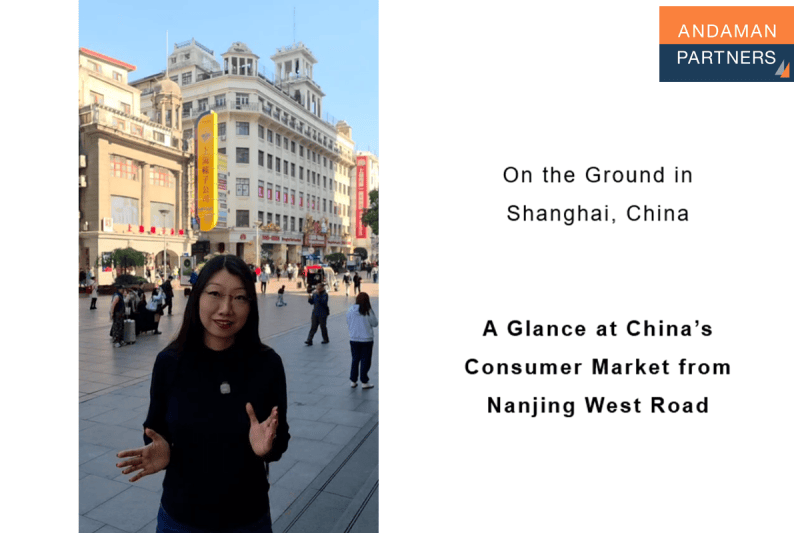
A Glance at China’s Consumer Market from Nanjing West Road by ANDAMAN PARTNERS Co-Founder Rachel Wu
Analysis by ANDAMAN PARTNERS Co-Founder Rachel Wu on China’s consumer economy

China Keeps Shopping for Services. Are You Selling? By ANDAMAN PARTNERS Co-Founder Rachel Wu
Analysis by ANDAMAN PARTNERS Co-Founder Rachel Wu on Shanghai’s services economy

Shenzhen: Where Entrepreneurs Land and Ideas Take Off by ANDAMAN PARTNERS Co-Founder Rachel Wu
Analysis by ANDAMAN PARTNERS Co-Founder Rachel Wu on what makes the city of Shenzhen different
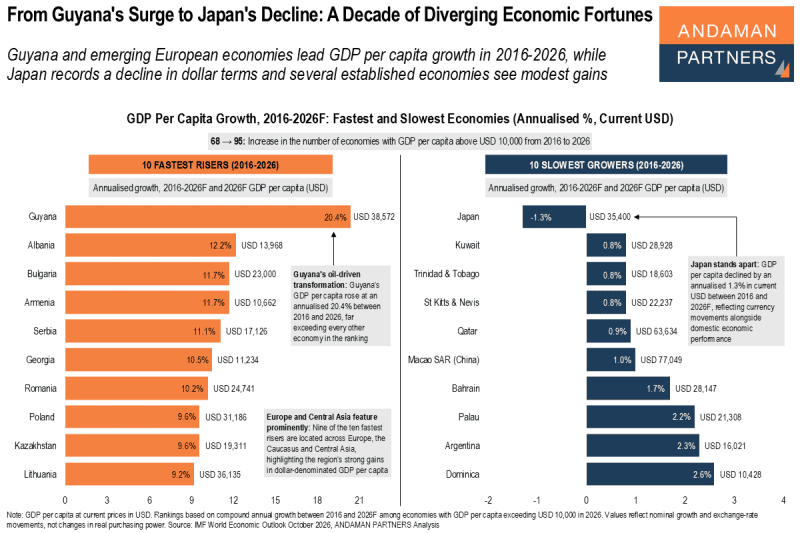
From Guyana’s Surge to Japan’s Decline: A Decade of Diverging Economic Fortunes
Guyana and emerging European economies lead GDP per capita growth in 2016-2026, while Japan records a decline
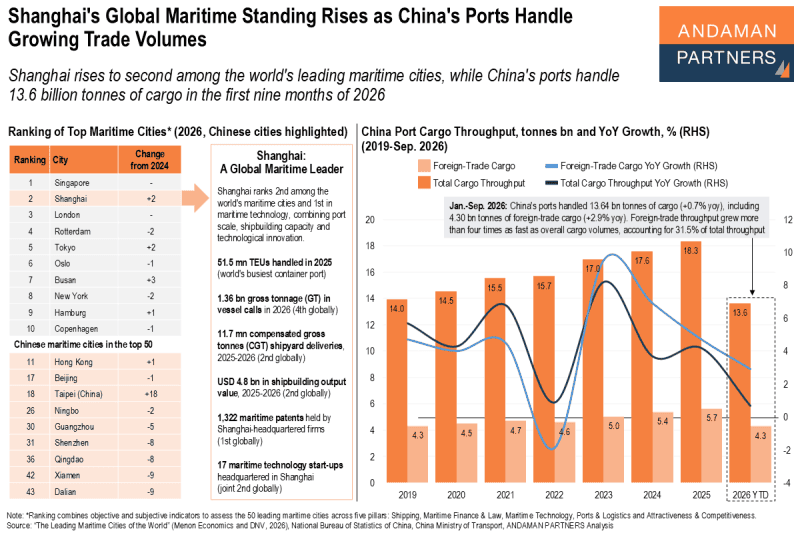
Shanghai’s Global Maritime Standing Rises as China’s Ports Handle Growing Trade Volumes
Shanghai rises to second among the world’s leading maritime cities, while China’s ports handle 13.6 billion tonnes of cargo in 2026
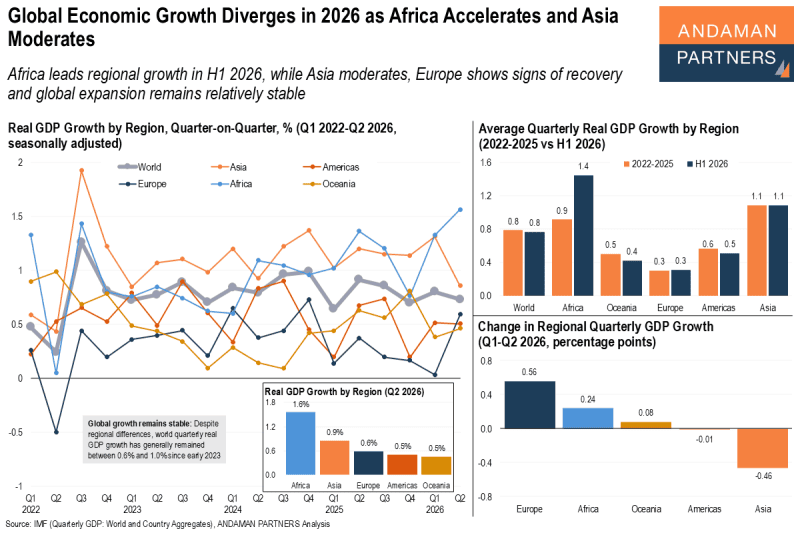
Global Economic Growth Diverges in 2026 as Africa Accelerates and Asia Moderates
Africa leads regional growth in H1 2026, while Asia moderates and Europe shows signs of recovery
Pingback: Vietnam’s Rapid Economic Growth| ANDAMAN PARTNERS