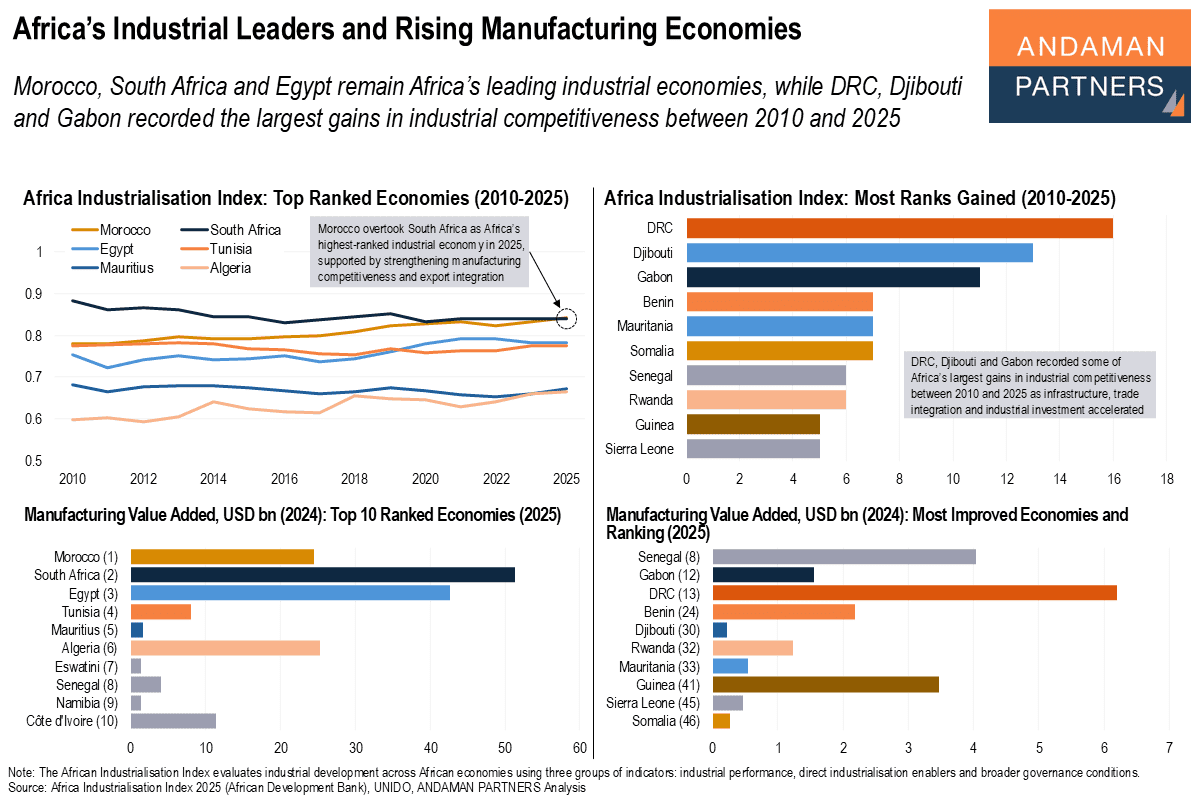
Africa’s Industrial Leaders and Rising Manufacturing Economies
Morocco, South Africa and Egypt remain Africa’s leading industrial economies; DRC, Djibouti and Gabon recorded the largest gains in competitiveness

Morocco, South Africa and Egypt remain Africa’s leading industrial economies; DRC, Djibouti and Gabon recorded the largest gains in competitiveness
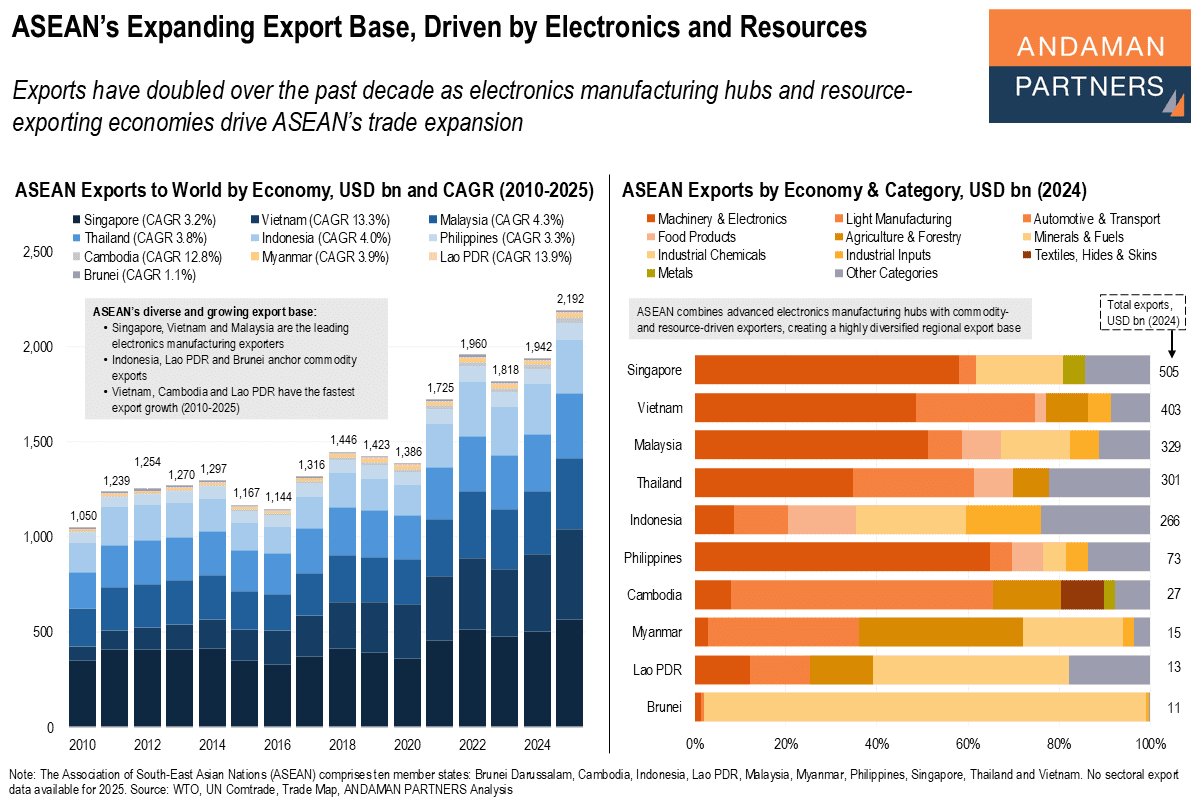
Exports have doubled over the past decade as electronics manufacturing hubs and resource-exporting economies drive ASEAN’s trade expansion.
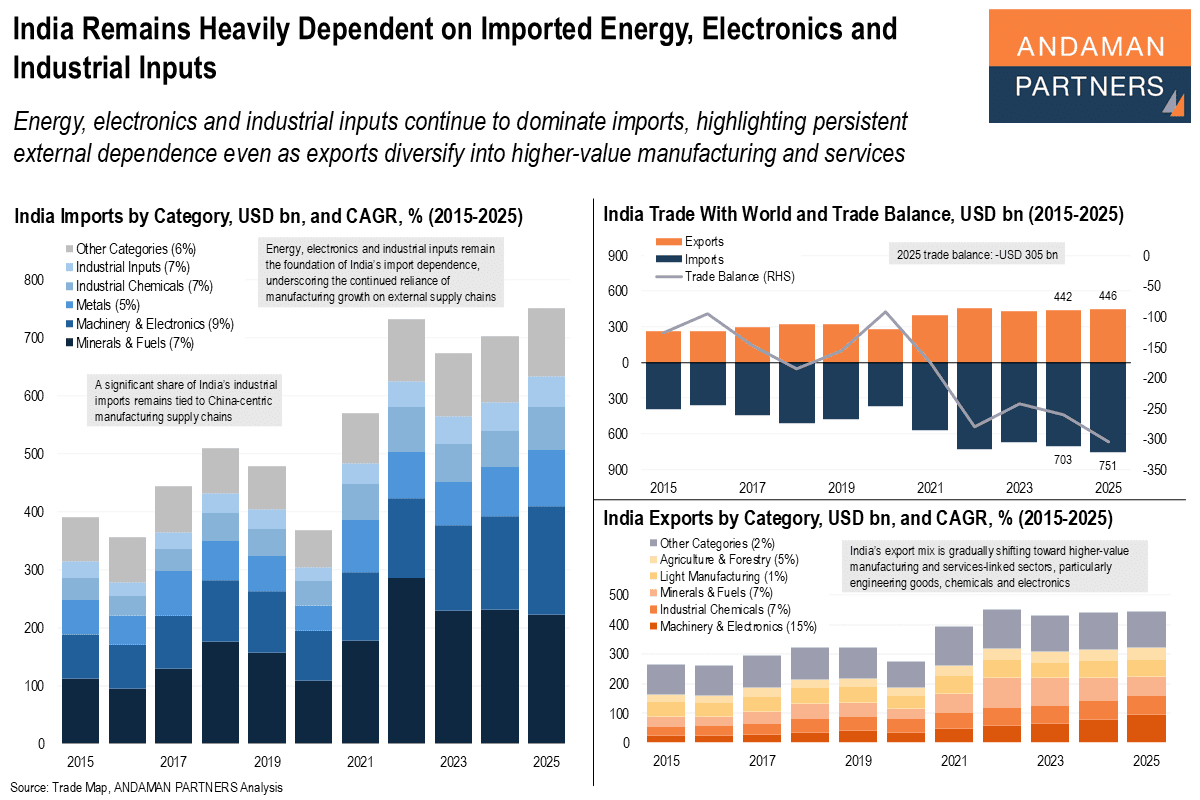
Energy, electronics and industrial inputs continue to dominate India's imports, highlighting persistent external dependence.
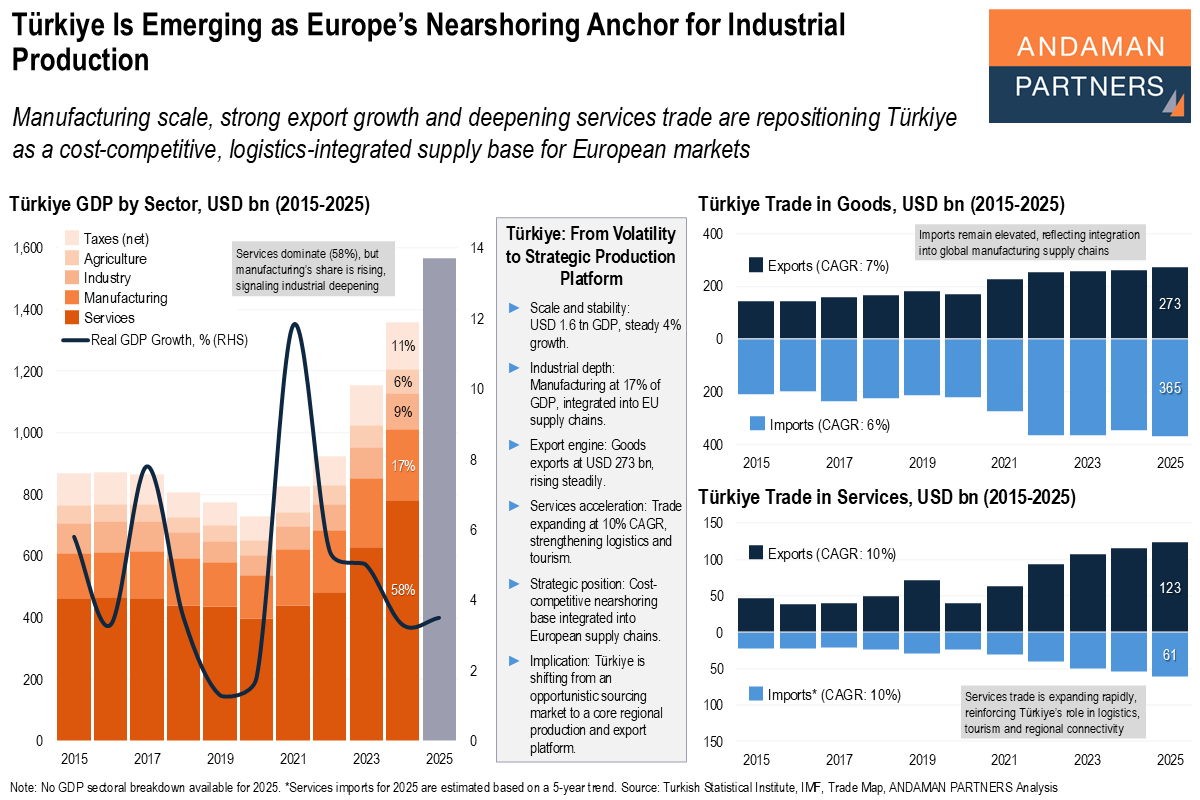
Manufacturing scale, strong export growth and deepening services trade are repositioning Türkiye as a cost-competitive supply base for Europe.
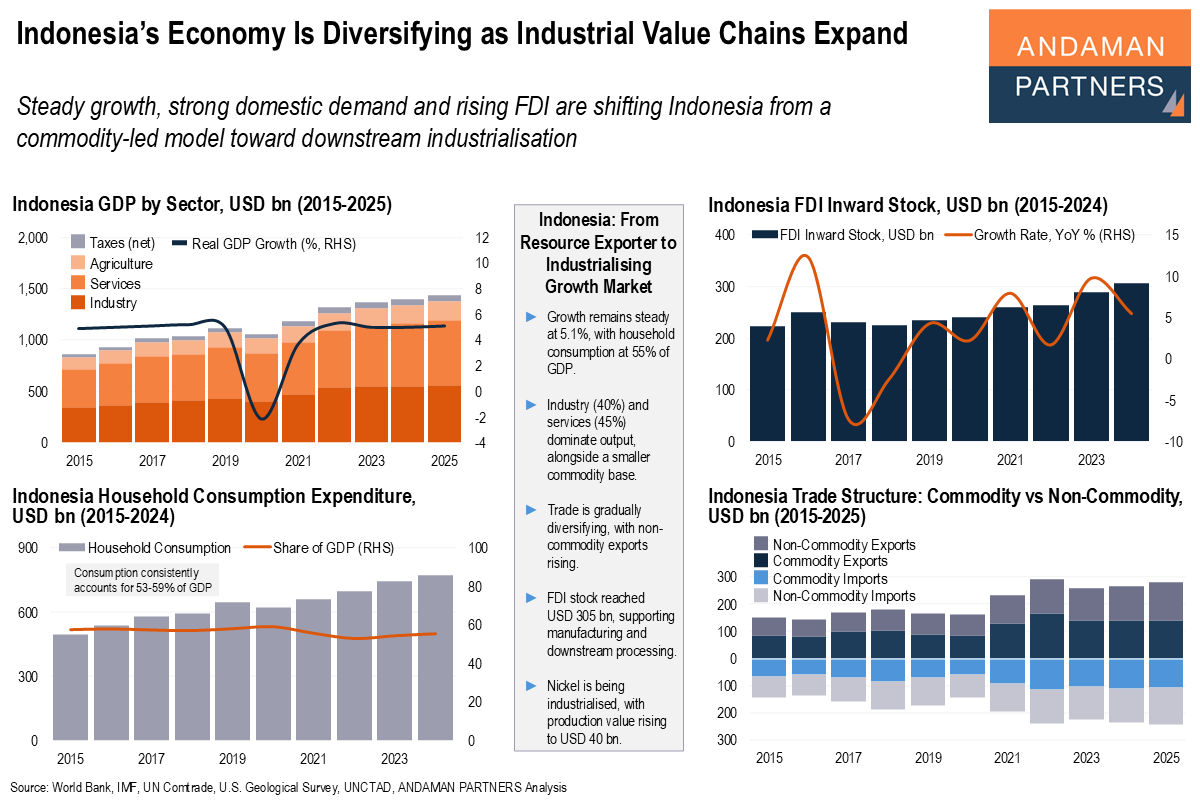
Steady growth, strong domestic demand and rising FDI are shifting Indonesia from a commodity-led model toward downstream industrialisation.

India provides the region's industrial scale and Bangladesh is driving the fastest export-led expansion.
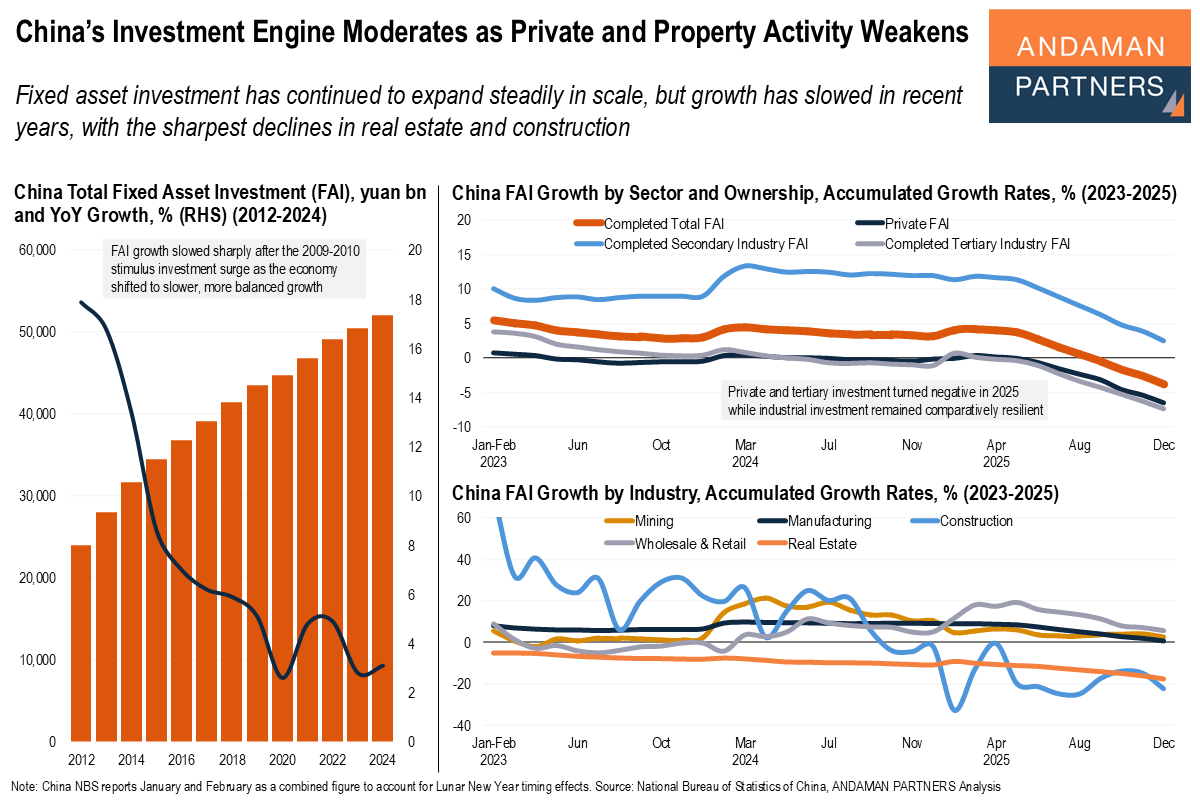
Fixed asset investment has continued to expand steadily, but growth has slowed in recent years, with the sharpest declines in real estate and construction.
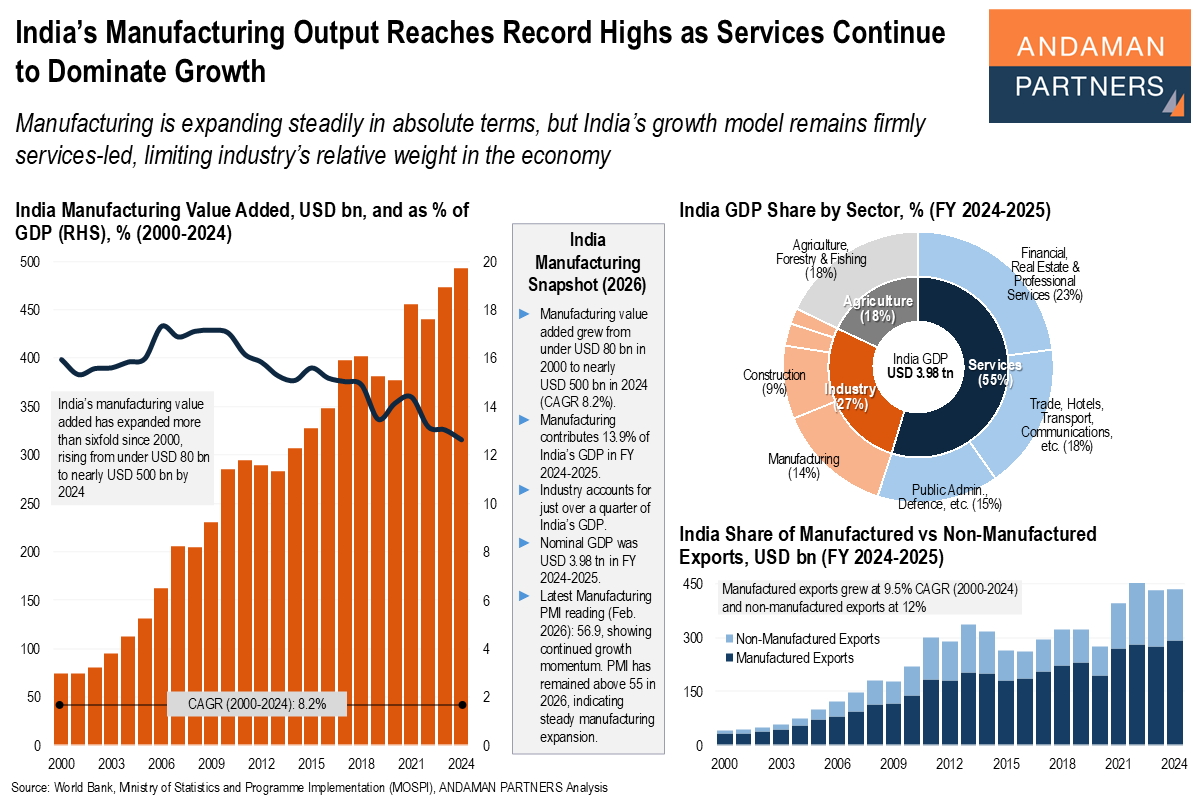
Manufacturing is expanding steadily in absolute terms, but India’s growth model remains firmly services-led.
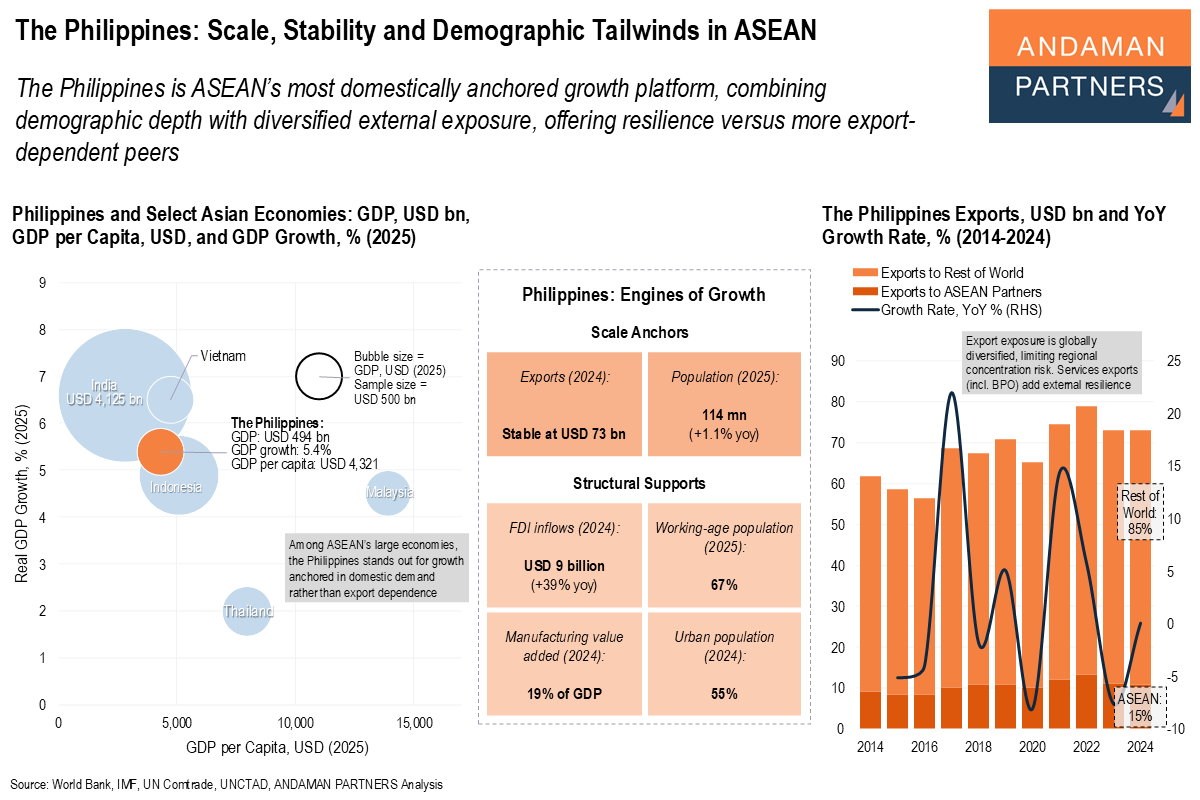
The Philippines is ASEAN’s most domestically anchored growth platform, combining demographic depth with diversified external exposure.
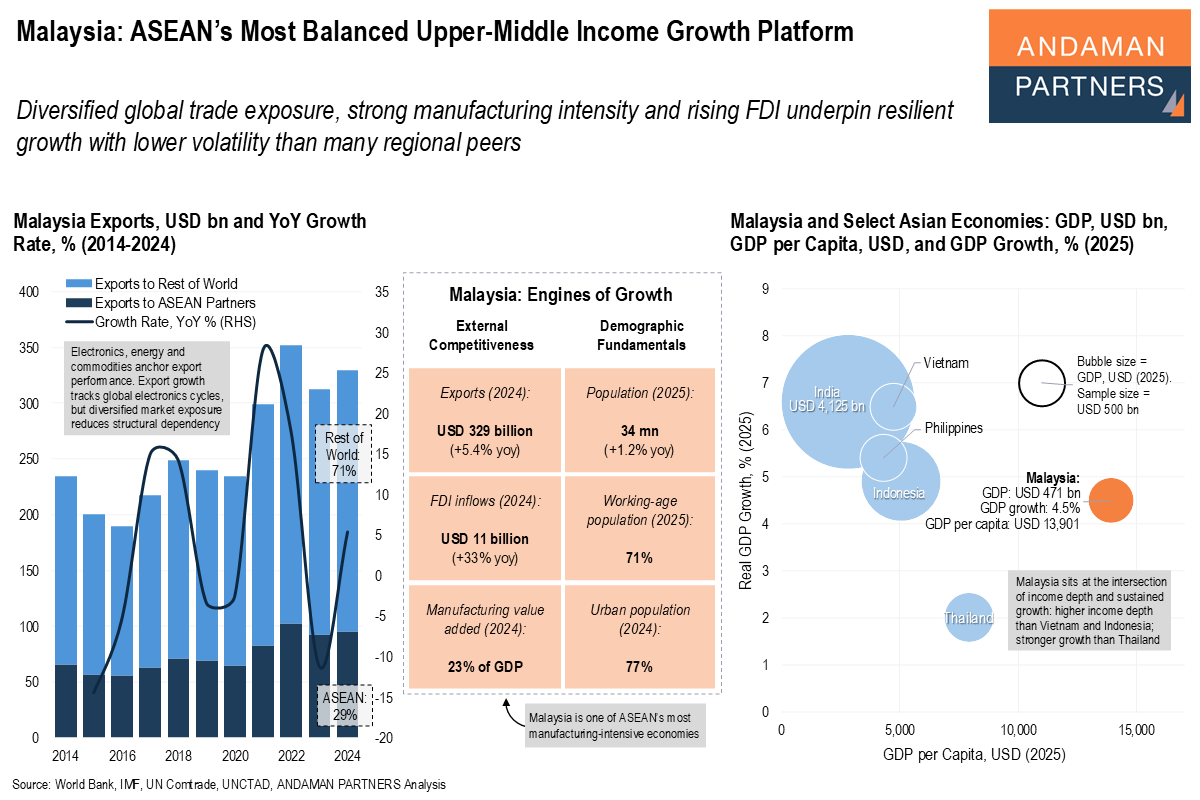
Diversified global trade exposure, strong manufacturing intensity and rising FDI underpin resilient growth with lower volatility than many regional peers.