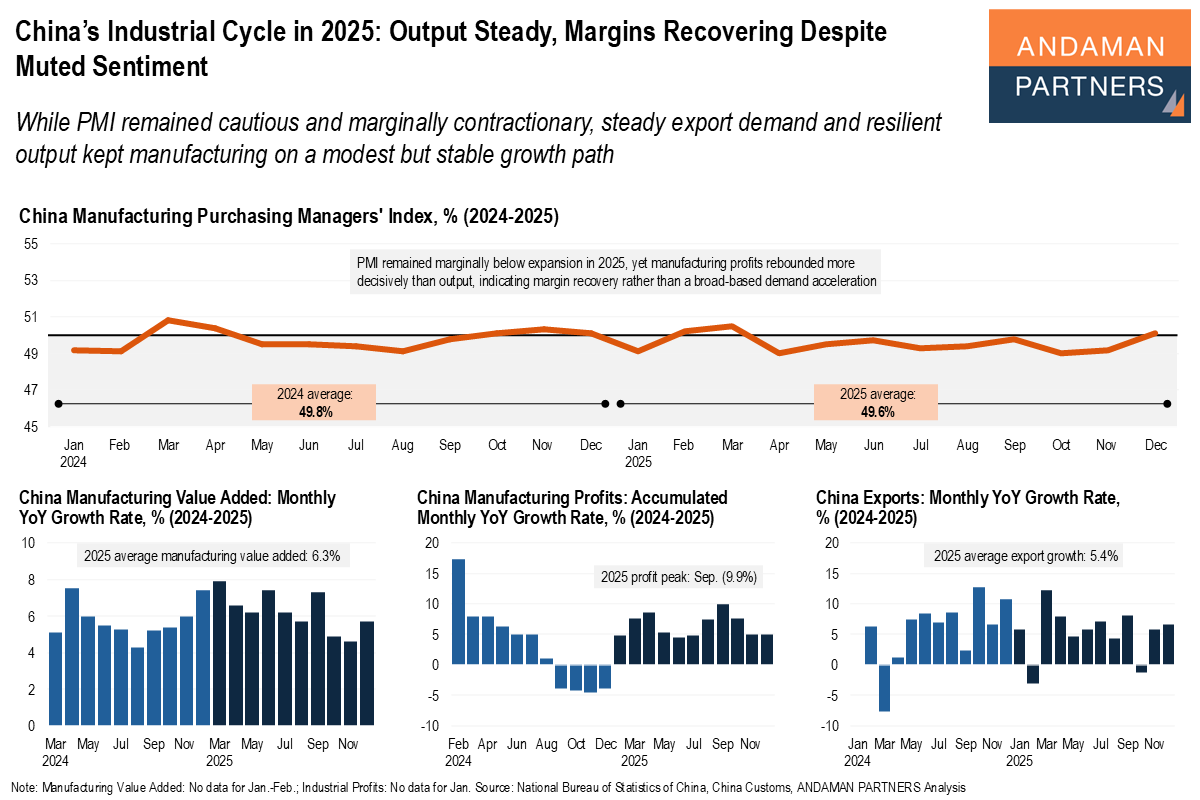
China’s Industrial Cycle in 2025: Output Steady, Margins Recovering Despite Muted Sentiment
While PMI remained cautious and marginally contractionary, steady export demand and resilient output kept manufacturing on a modest but stable growth path.

While PMI remained cautious and marginally contractionary, steady export demand and resilient output kept manufacturing on a modest but stable growth path.
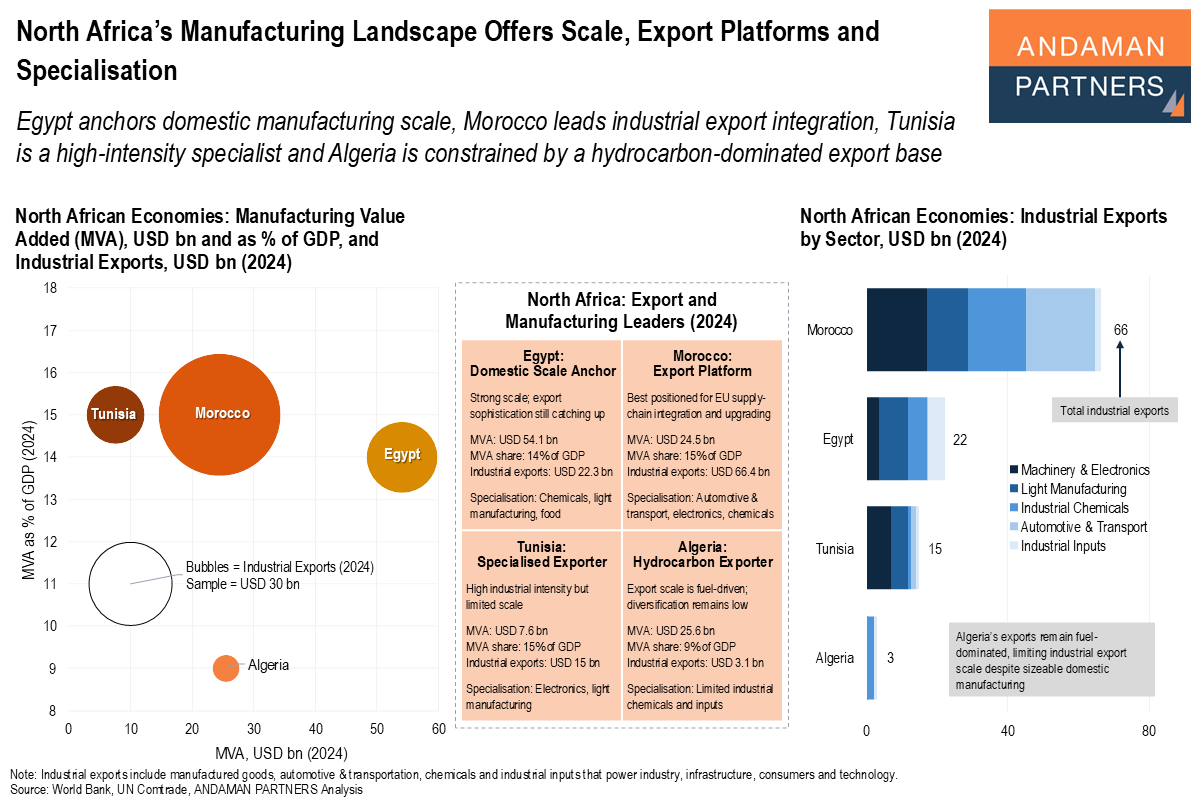
Egypt anchors domestic manufacturing scale, Morocco leads industrial export integration and Tunisia is a high-intensity specialist.
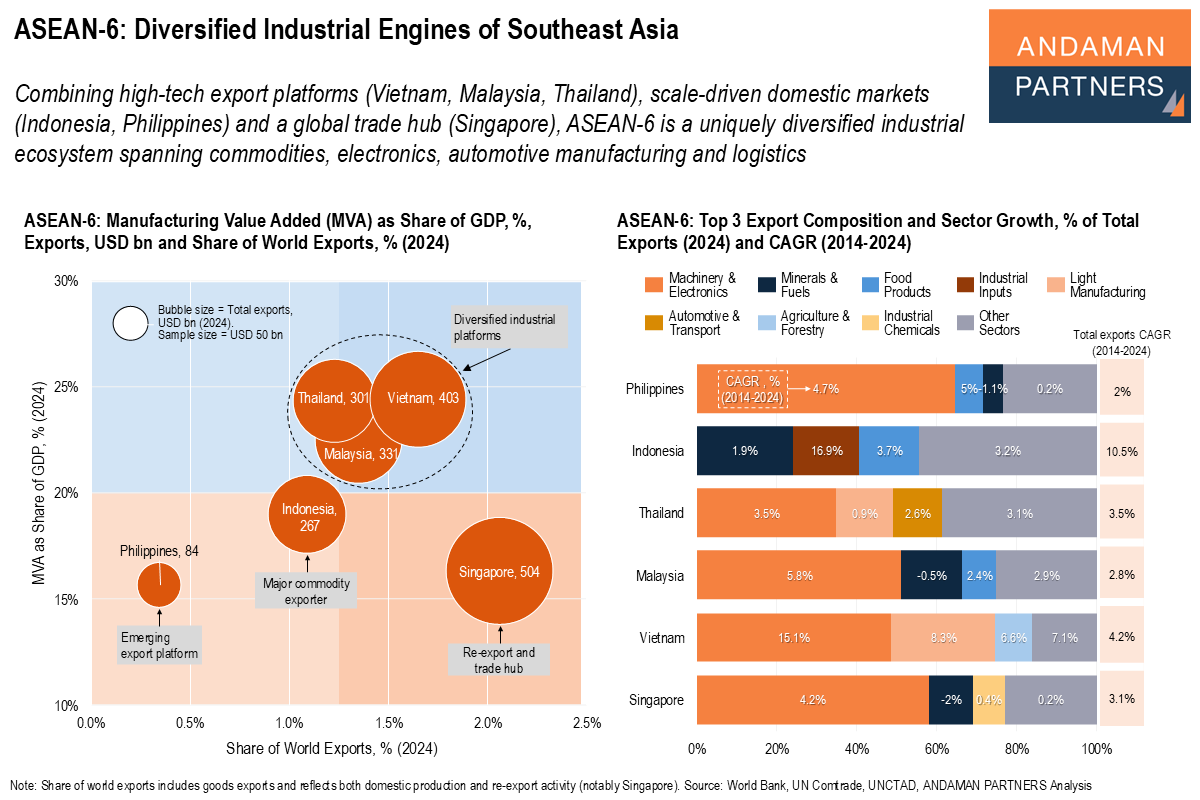
Combining high-tech export platforms, scale-driven domestic markets and a global trade hub, ASEAN-6 is a uniquely diversified industrial ecosystem.
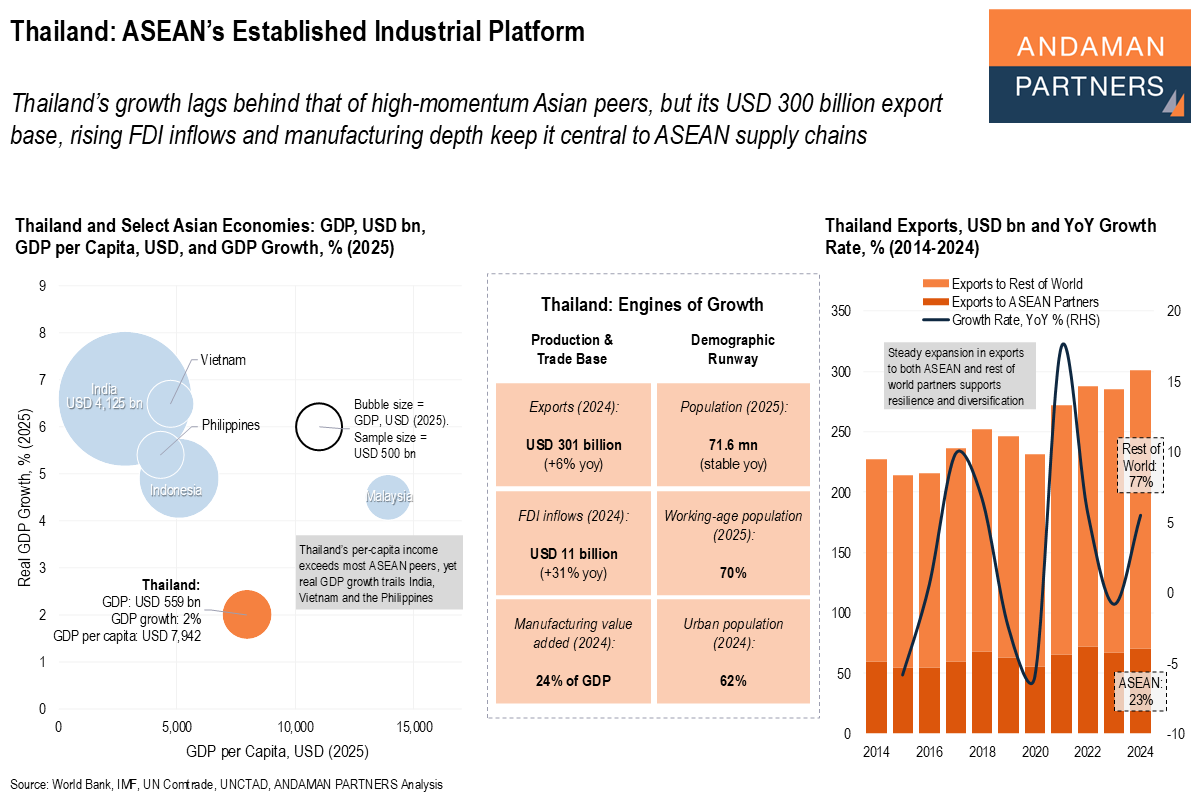
Thailand’s USD 300 billion export base, rising FDI inflows and manufacturing depth keep it central to ASEAN supply chains.
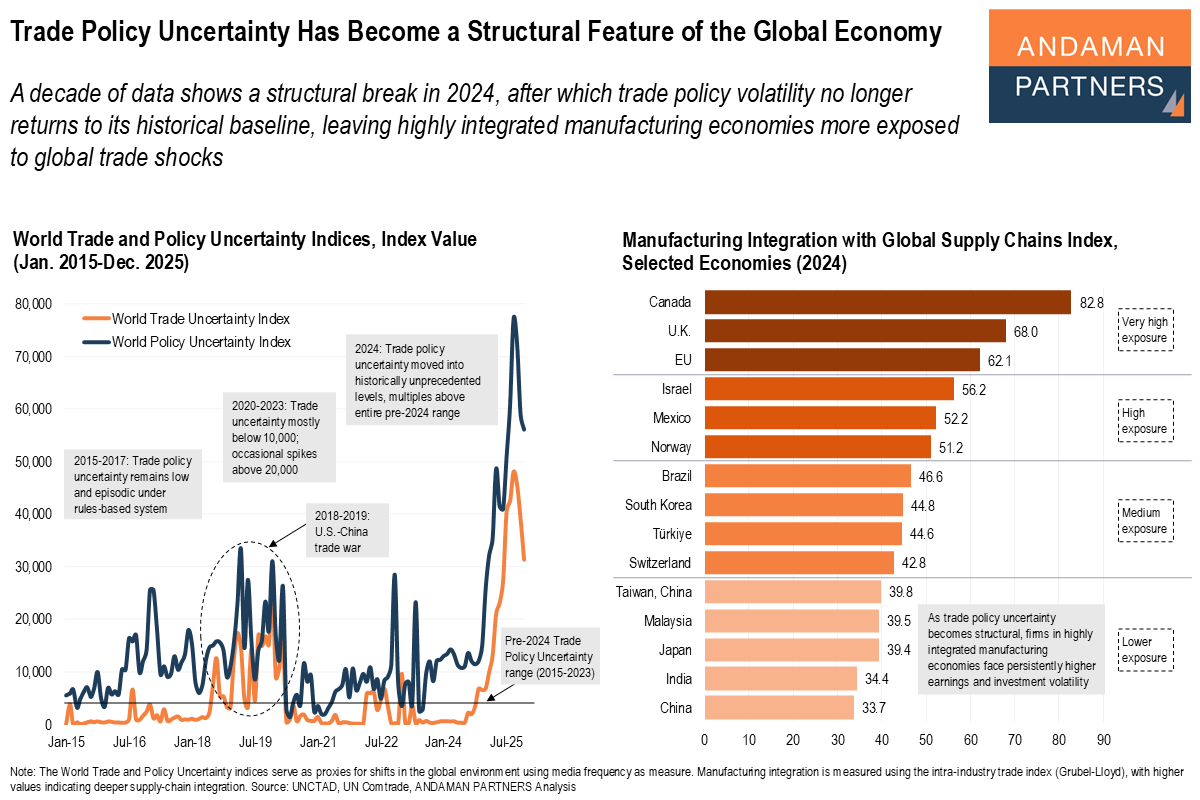
A decade of data shows a structural break in 2024, after which trade policy volatility no longer returns to its historical baseline.
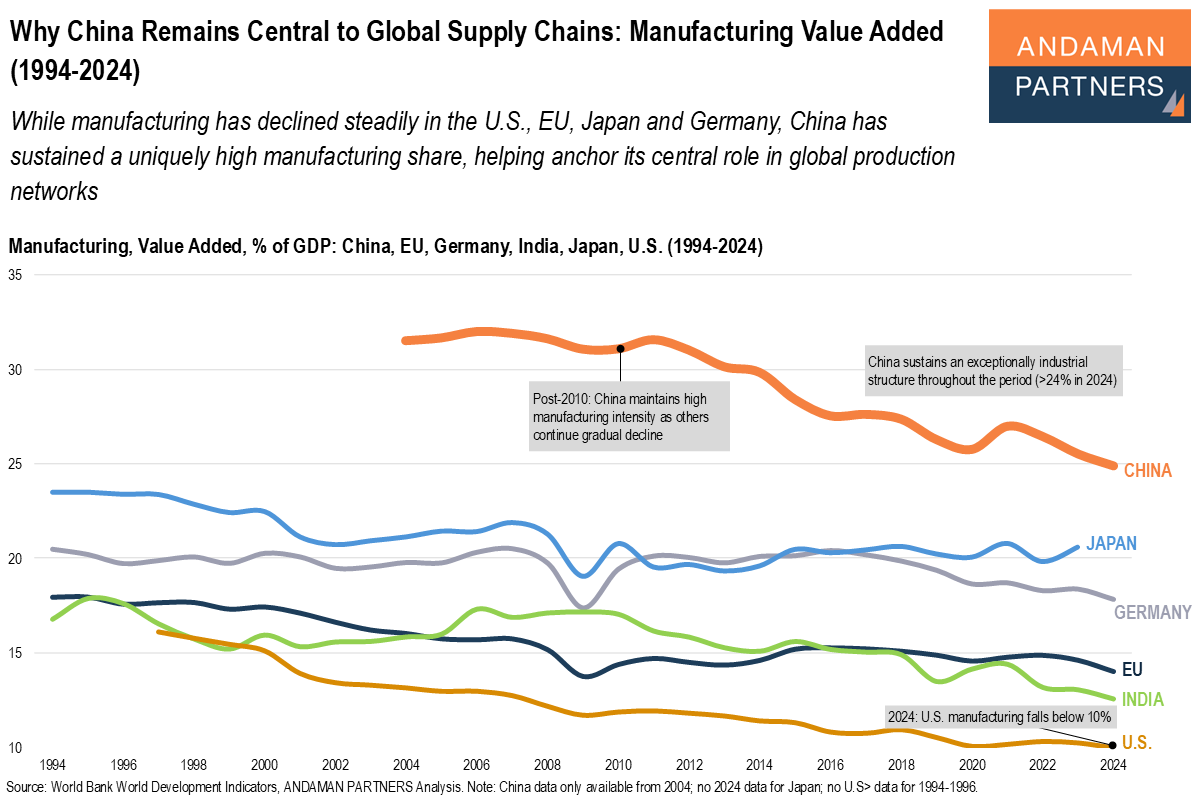
While manufacturing has declined steadily in the U.S., EU, Japan and Germany, China has sustained a uniquely high manufacturing share.

African manufacturing value added dropped overall in 2024, including significant currency-related decreases in Egypt, Ghana and Nigeria.
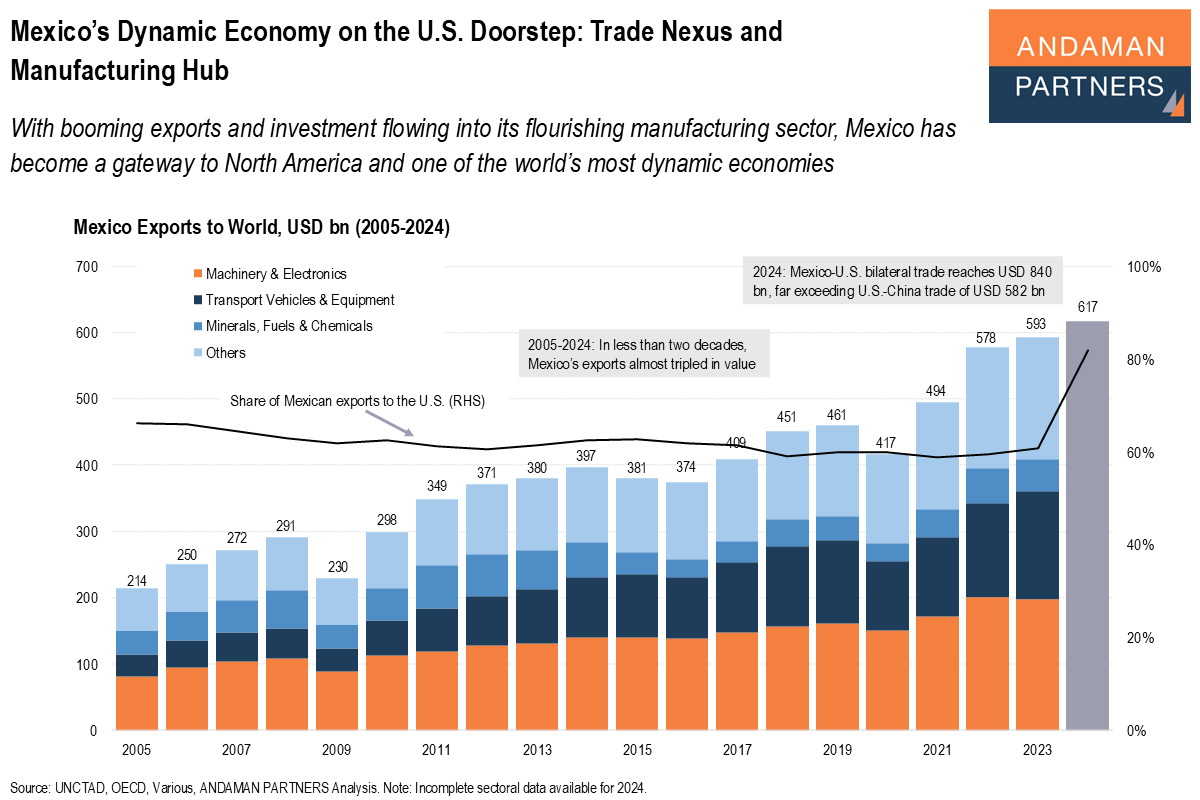
With booming exports and investment flowing into a flourishing manufacturing sector, Mexico has become a gateway to North America.
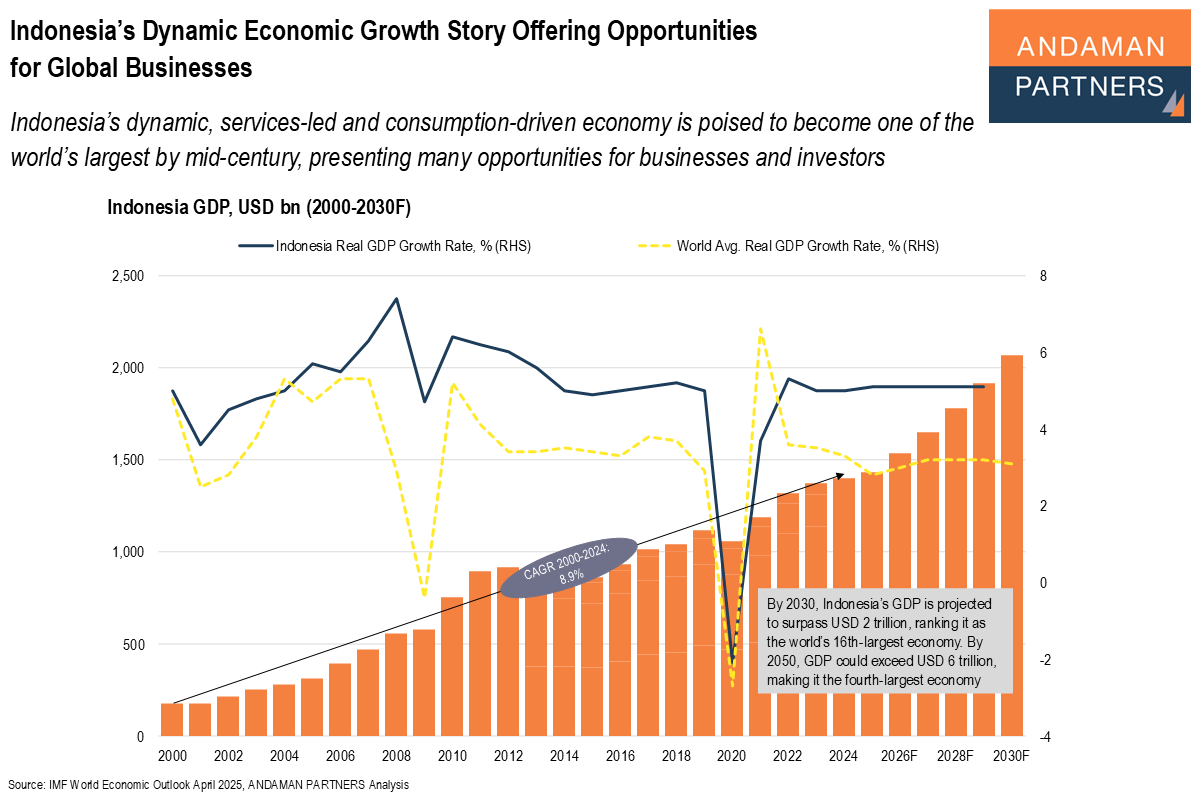
Indonesia’s dynamic, services-led and consumption-driven economy is poised to become one of the world’s largest by mid-century, presenting many opportunities for businesses and investors.
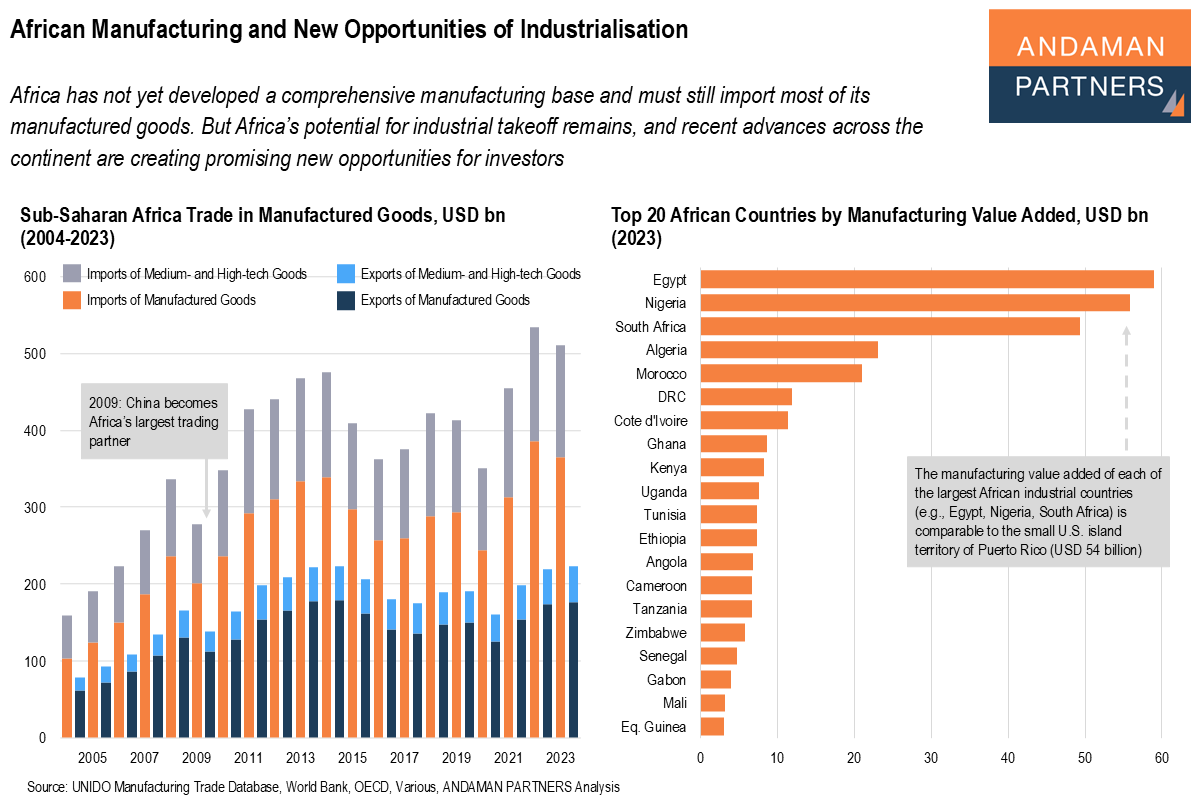
Africa has not yet developed a comprehensive manufacturing base and must still import most of its manufactured goods. But Africa’s potential for industrial takeoff remains, and recent advances across the continent are creating promising new opportunities for investors.