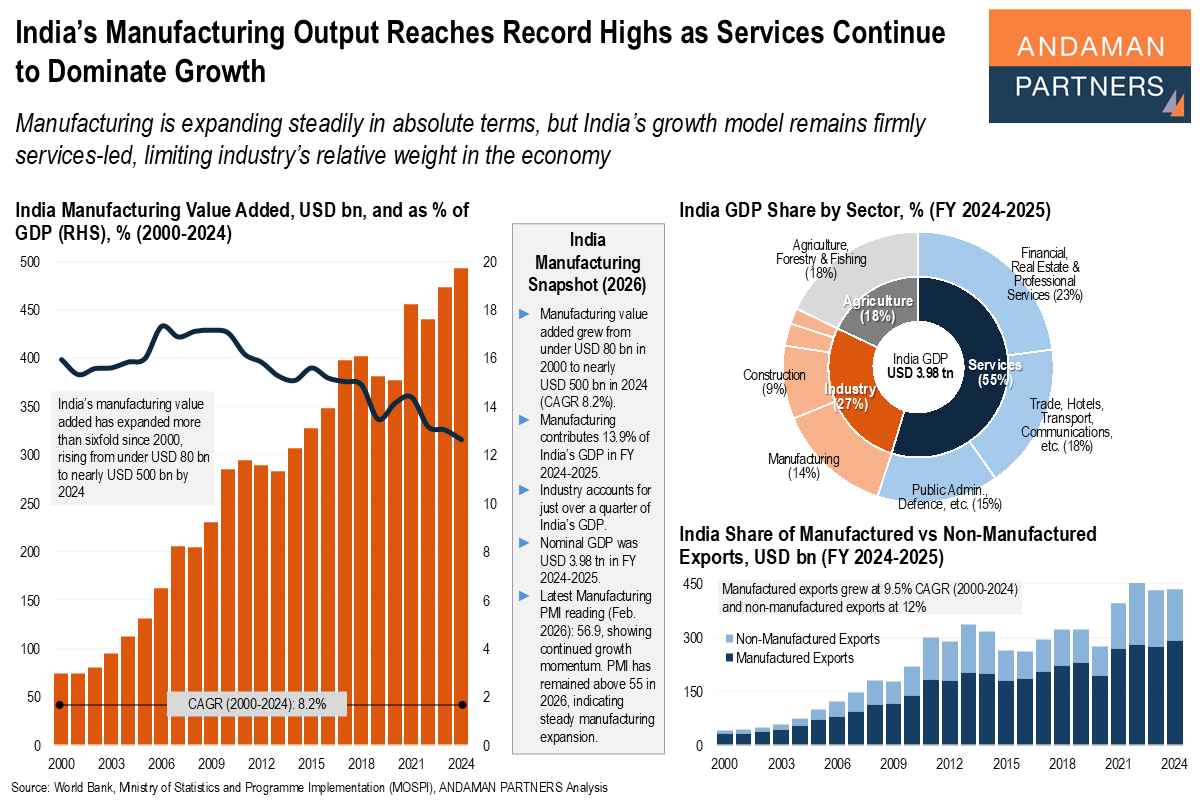
Manufacturing is expanding steadily in absolute terms, but India’s growth model remains firmly services-led, limiting industry’s relative weight in the economy.
India’s manufacturing sector has expanded dramatically over the past two decades, even as services have consolidated their position as the dominant engine of the economy. Manufacturing value added has risen more than sixfold since 2000, increasing from under USD 80 billion to nearly USD 500 billion by 2024. This steady expansion reflects the gradual deepening of India’s industrial base, supported by rising domestic demand, expanding production capacity and policy initiatives aimed at strengthening local manufacturing capabilities.
The data highlights a defining feature of India’s development model: services have grown even faster than industry. As a result, manufacturing’s share of GDP has gradually declined from its mid-2000s peak to around 13-14% in recent years. The broader industrial sector accounts for just over a quarter of the economy, while services represent roughly 55% of GDP, underscoring India’s distinctive services-led growth trajectory compared with the manufacturing-heavy development paths seen in East Asia.
Trade patterns reinforce this structural dynamic. India’s manufactured exports have expanded steadily at 9.5% CAGR over the past two decades, but non-manufactured exports (including commodities and other goods) have grown even faster at 12%. While manufacturing is gaining scale, the country has yet to develop the large export-oriented industrial base that characterizes major global manufacturing hubs.
For businesses and supply chain planners, India’s manufacturing sector is expanding and will continue to offer growing opportunities as domestic demand rises. However, the country’s economic structure remains fundamentally services-led, meaning industrial growth is likely to be gradual rather than transformational in the near term, with domestic market expansion remaining the primary driver of manufacturing activity.
Also by ANDAMAN PARTNERS:
ANDAMAN PARTNERS supports international business ventures and growth. We help launch global initiatives and accelerate successful expansion across borders. If your business, operations or project requires cross-border support, contact connect@andamanpartners.com.

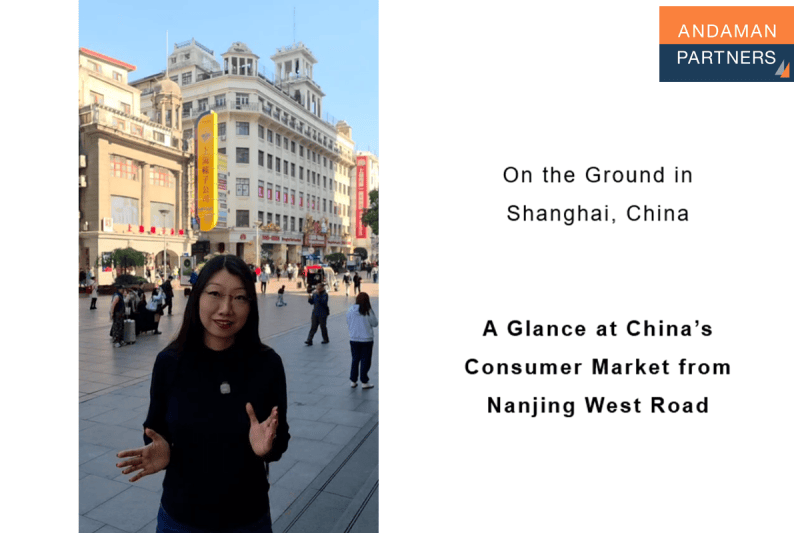
A Glance at China’s Consumer Market from Nanjing West Road by ANDAMAN PARTNERS Co-Founder Rachel Wu
Analysis by ANDAMAN PARTNERS Co-Founder Rachel Wu on China’s consumer economy

China Keeps Shopping for Services. Are You Selling? By ANDAMAN PARTNERS Co-Founder Rachel Wu
Analysis by ANDAMAN PARTNERS Co-Founder Rachel Wu on Shanghai’s services economy

Shenzhen: Where Entrepreneurs Land and Ideas Take Off by ANDAMAN PARTNERS Co-Founder Rachel Wu
Analysis by ANDAMAN PARTNERS Co-Founder Rachel Wu on what makes the city of Shenzhen different
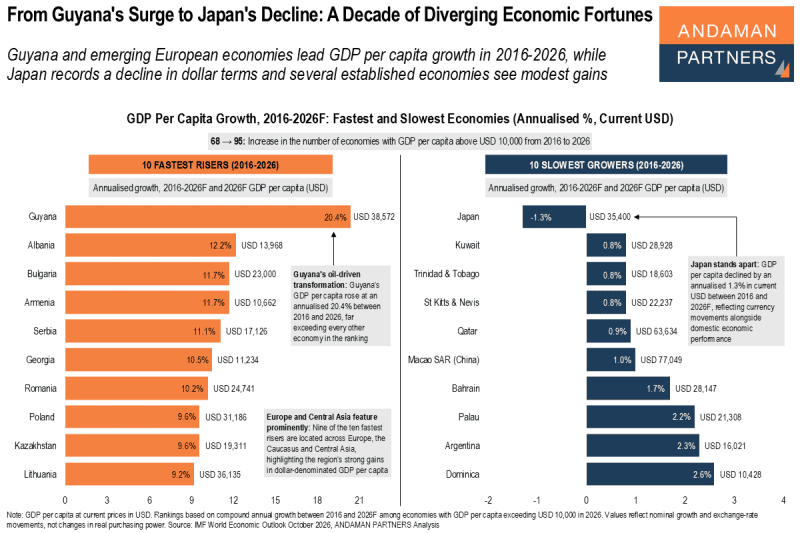
From Guyana’s Surge to Japan’s Decline: A Decade of Diverging Economic Fortunes
Guyana and emerging European economies lead GDP per capita growth in 2016-2026, while Japan records a decline
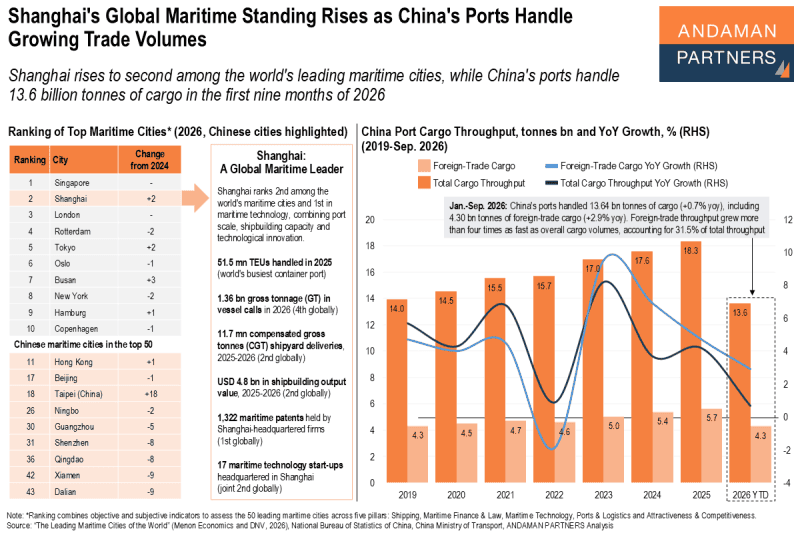
Shanghai’s Global Maritime Standing Rises as China’s Ports Handle Growing Trade Volumes
Shanghai rises to second among the world’s leading maritime cities, while China’s ports handle 13.6 billion tonnes of cargo in 2026
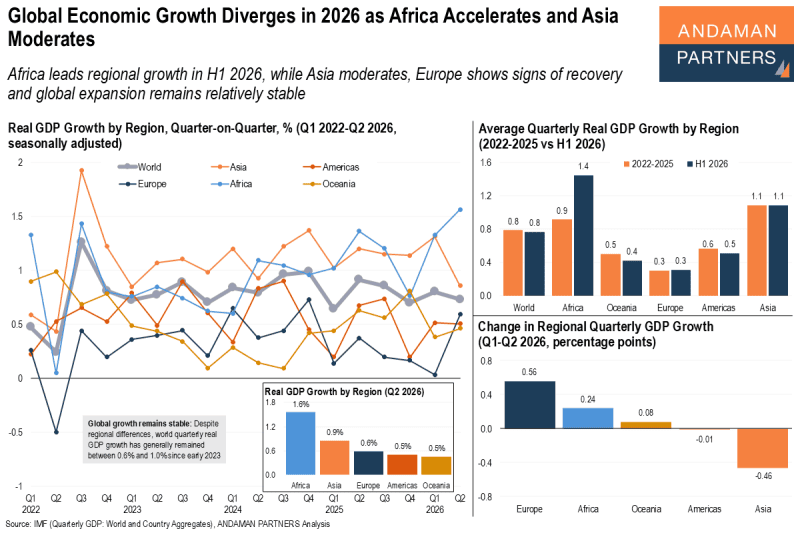
Global Economic Growth Diverges in 2026 as Africa Accelerates and Asia Moderates
Africa leads regional growth in H1 2026, while Asia moderates and Europe shows signs of recovery
Pingback: India’s Trade Deficit Widens | ANDAMAN PARTNERS