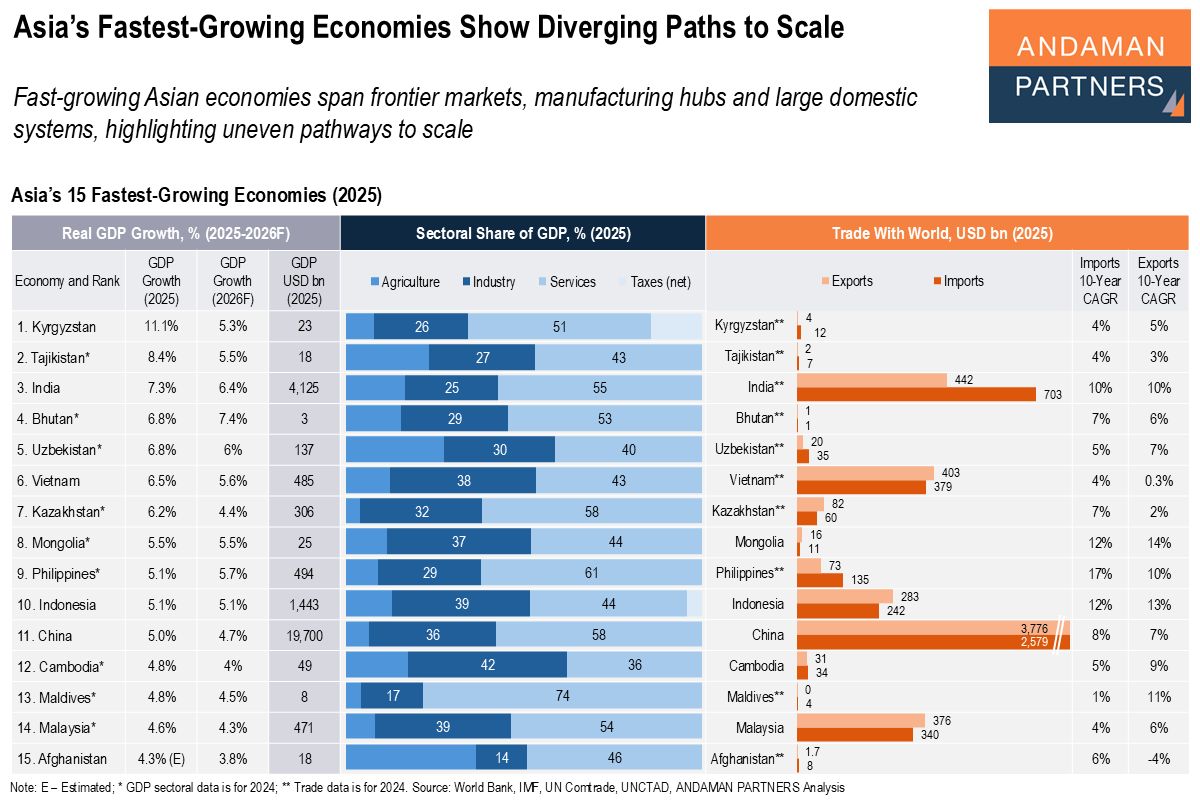

Asia’s Fastest-Growing Economies Show Diverging Paths to Scale
Fast-growing Asian economies span frontier markets, manufacturing hubs and large domestic systems, highlighting uneven pathways to scale.
Asia’s 15 fastest-growing economies in 2025 present a diverse but uneven landscape, where strong headline growth does not necessarily translate into scalable economic power. The highest growth rates are concentrated in smaller frontier markets such as Kyrgyzstan and Tajikistan, where expansion reflects low-base effects, domestic demand recovery and selective investment inflows rather than broad-based industrialisation. These economies remain relatively limited in scale, with modest trade integration and narrow production structures.
A second group of mid-sized economies, including Vietnam, Uzbekistan and Cambodia, shows a more compelling trajectory. These markets combine solid growth with rising industrial capacity, particularly in manufacturing and export-oriented sectors. Vietnam stands out, with a high industry share and deep integration into global trade, positioning it as one of the few economies in this group capable of scaling within existing supply chains.
Larger economies such as India, Indonesia and China present a different profile. Growth rates are more moderate, but these markets offer scale, diversified economic structures and significant trade volumes. India’s services-driven expansion and Indonesia’s balanced industrial base highlight their long-term potential. China remains the dominant trading system despite slower growth, underscoring its continued centrality in regional and global supply chains.
Across the region, sectoral composition varies widely, with services dominating in some economies and industry in others, reinforcing that growth pathways are not uniform. The key differentiator is not growth alone, but whether economies can build industrial depth and sustain trade integration. For global companies, Asia’s growth story is broadening, but the ability to scale operations, secure supply chains and access reliable production bases will differ sharply across markets.
Also by ANDAMAN PARTNERS:
ANDAMAN PARTNERS supports international business ventures and growth. We help launch global initiatives and accelerate successful expansion across borders. If your business, operations or project requires cross-border support, contact connect@andamanpartners.com.

ANDAMAN PARTNERS to Attend China Mining 2026 in Tianjin, China
ANDAMAN PARTNERS will attend the China Mining Conference and Exhibition in Tianjin, China, on 10-12 September 2026

ANDAMAN PARTNERS at the Singapore Institute of Directors Annual Conference 2026
ANDAMAN PARTNERS at the Singapore Institute of Directors Conference 2026 in Singapore on 28 August 2026

ANDAMAN PARTNERS Attended the Australia Governance Summit 2026 in Sydney
ANDAMAN PARTNERS Co-Founder Kobus van der Wath attended the Australia Governance Summit (AGS26) in Sydney, Australia.
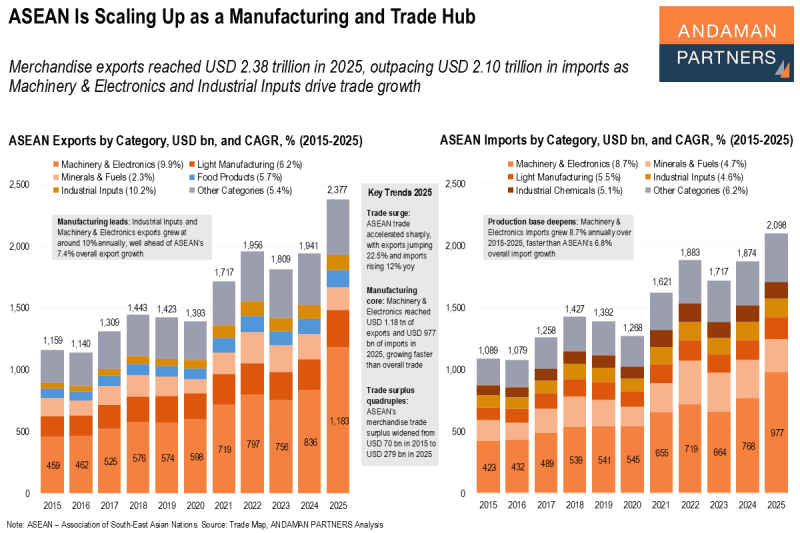
ASEAN Is Scaling Up as a Manufacturing and Trade Hub
Merchandise exports reached USD 2.38 trillion in 2025, outpacing USD 2.10 trillion in imports
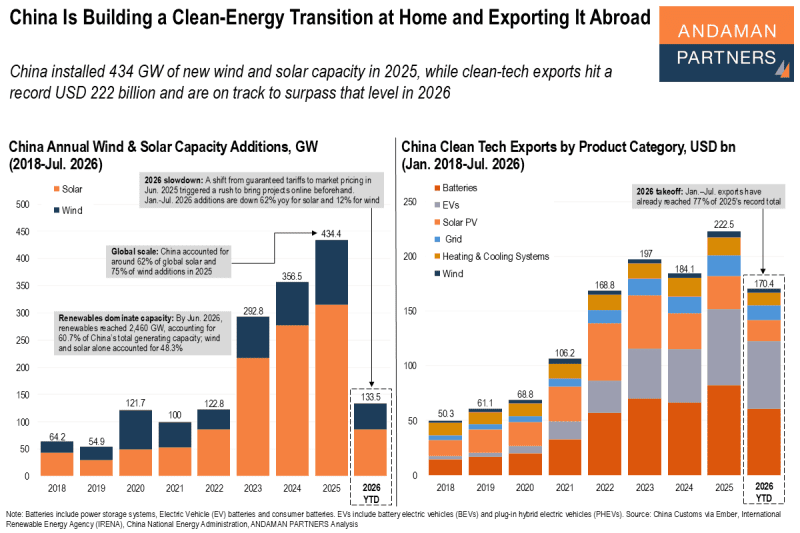
China Is Building a Clean-Energy Transition at Home and Exporting It Abroad
China installed 434 GW of new wind and solar capacity in 2025, while clean-tech exports hit a record level in 2026
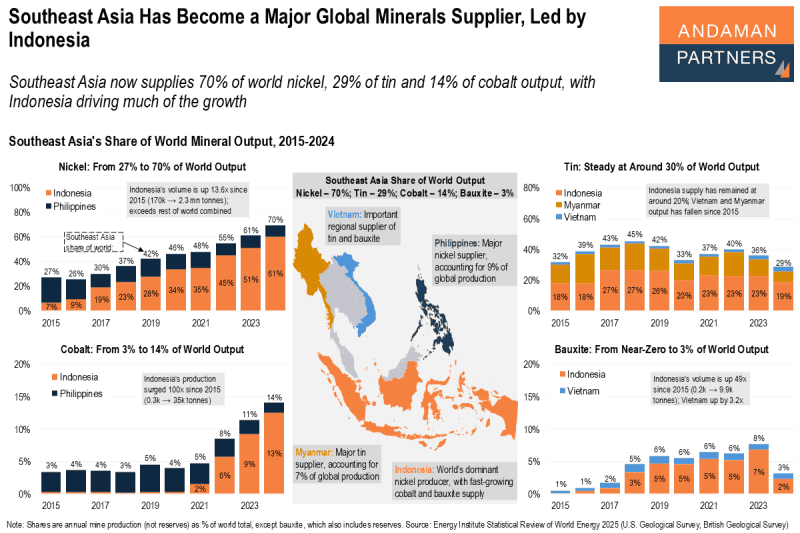
Southeast Asia Has Become a Major Global Minerals Supplier, Led by Indonesia
Southeast Asia now supplies 70% of world nickel, 29% of tin and 14% of cobalt output, with Indonesia driving much of the growth