
China’s Provincial Wealth in Global Context
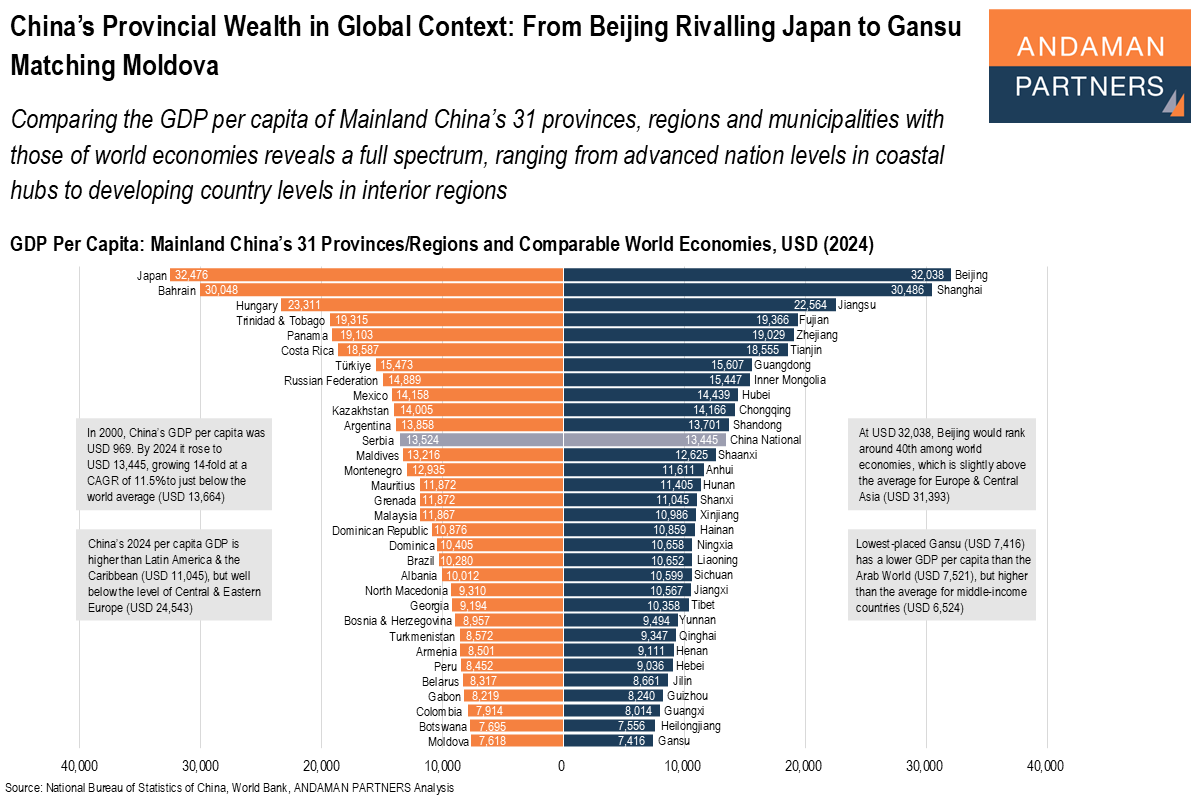
China’s Provincial Wealth in Global Context: From Beijing Rivalling Japan to Gansu Matching Moldova
Comparing the GDP per capita of Mainland China’s 31 provinces, regions and municipalities with those of world economies reveals a full spectrum, ranging from advanced nation levels in coastal hubs to developing country levels in interior regions.
China’s current level of development underscores a dual reality: the country is both developed and developing, depending on provincial and regional lines.
In 2024, Beijing’s GDP per capita, the highest among China’s provinces, regions and municipalities, reached
USD 32,038, roughly the same as Japan’s, while Shanghai followed closely at USD 30,486, comparable to Bahrain. If compared to world economies, Beijing and Shanghai would rank around 40th worldwide, similar to the average for Europe & Central Asia.
Jiangsu, at USD 22,564, is slightly below the level of Hungary, while Fujian (USD 19,366) matches Trinidad & Tobago, and Zhejiang (USD 19,029) is comparable to Panama.
At the other end of the spectrum, Gansu’s GDP per capita of USD 7,416 aligns with Moldova, and Heilongjiang’s USD 7,556 matches Botswana, underlining the large spread between China’s most affluent and poorest regions.
The data shows a clear geographic divide: the GDP per capita of coastal and urbanised regions such as Jiangsu, Fujian and Zhejiang cluster near upper-middle-income global peers like Hungary and Panama, while most western provinces, including Gansu, Guizhou and Qinghai, are near the income levels of lower-middle-income economies such as Armenia or Georgia. This divide reflects decades of export-led industrialisation concentrated along China’s eastern seaboard.
Despite these internal variations, China’s overall GDP per capita reached USD 13,445 in 2024, almost 14 times its 2000 level of USD 969, growing at a CAGR of 11.5%. That places China slightly below the world average
(USD 13,664) but above Latin America & the Caribbean (USD 11,045). Few countries have achieved such a rapid rise from low-income to near-global-average levels within a single generation.
Also by ANDAMAN PARTNERS:
ANDAMAN PARTNERS supports international business ventures and growth. We help launch global initiatives and accelerate successful expansion across borders. If your business, operations or project requires cross-border support, contact connect@andamanpartners.com.

ANDAMAN PARTNERS Co-Founder Rachel Wu to Deliver Talk at SEP Reunion 2026 in Shanghai, China
ANDAMAN PARTNERS will attend the SEP Reunion 2026 in Shanghai, China, from 28 October to 1 November 2026

ANDAMAN PARTNERS to Attend Stanford Executive Programme Reunion 2026 in Shanghai, China
ANDAMAN PARTNERS will attend the SEP Reunion 2026 in Shanghai, China, from 28 October to 1 November 2026
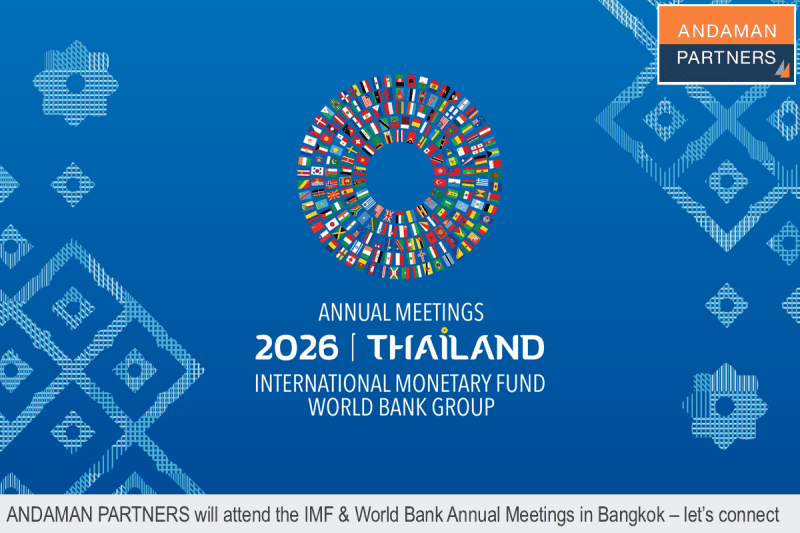
ANDAMAN PARTNERS to Attend 2026 IMF & World Bank Annual Meetings in Bangkok, Thailand
ANDAMAN PARTNERS will attend the IMF & World Bank Annual Meetings in Bangkok on 12-18 October 2026
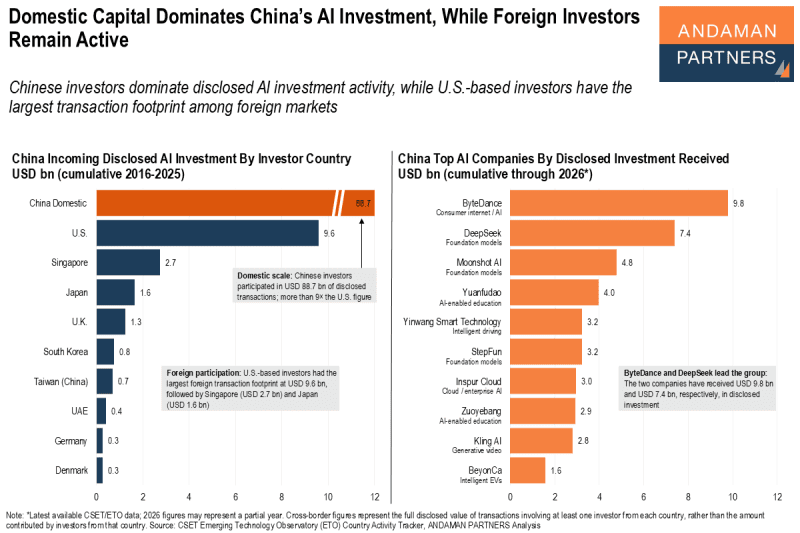
Domestic Capital Dominates China’s AI Investment, While Foreign Investors Remain Active
Chinese investors dominate disclosed AI investment activity, while U.S.-based investors have the largest transaction footprint among foreign markets
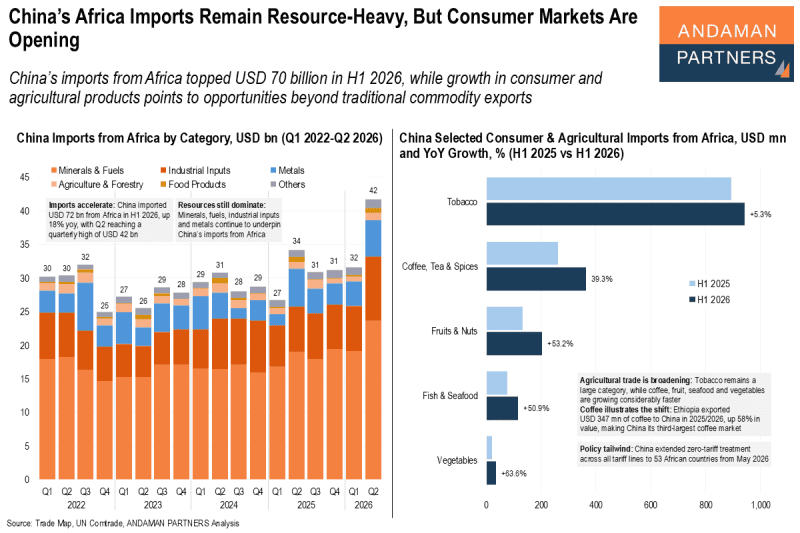
China’s Africa Imports Remain Resource-Heavy, But Consumer Markets Are Opening
China’s imports from Africa topped USD 70 billion in H1 2026, while consumer and agricultural products point to new opportunities for growth
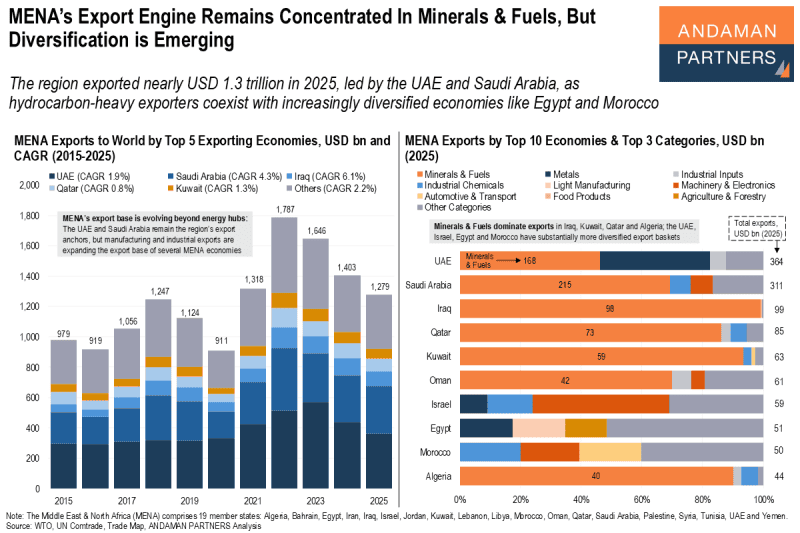
MENA’s Export Engine Remains Concentrated in Minerals & Fuels, But Diversification Is Emerging
MENA exported nearly USD 1.3 trillion in 2025, with hydrocarbon-heavy exporters coexisting with increasingly diversified economies