
The Imports Powering Chile’s Economy
Energy, mobility and industrial equipment—led by imports from China and strong U.S. supply—underpin Chile’s industrial and consumer economy.
In 2024, Chile’s total imports amounted to USD 84 billion, a slight decrease of 1.2% from 2023. With exports of USD 99 billion, the country recorded a trade surplus of about USD 15 billion. From 2004 to 2024, Chile’s imports increased at a CAGR of 6%.
Chile’s largest import categories in 2024 were Machinery & Electronics at USD 18.7 billion (22% of total imports) and Minerals & Fuels at USD 17.3 billion (21%). Other notable categories were Chemicals, Plastics or Rubber (15%), Transportation (10%) and Textiles, Hides & Skins (7%).
Chile’s largest import products in 2024 were refined petroleum oils (USD 7 billion) and crude petroleum oils (USD 5 billion). Other Minerals & Fuels products among the top 20 imports were petroleum gases, molybdenum ores and coal.
Chile’s third- and fifth-largest imports were transport-related, namely passenger vehicles (USD 3.3 billion) and goods vehicles (USD 2.6 billion). Many of the imported passenger vehicles were electric vehicles (EVs), as sales of EVs in Chile increased by 183% in 2024 compared to 2023, reaching 4,500 units, according to the National Automotive Association of Chile (ANAC).
The various products in the Machinery & Electronics category among Chile’s top 20 imports included telephones (USD 2.8 billion), data-processing machines, self-propelled machines, electric accumulators, centrifuges, machinery parts and electric motors.
Chemicals, Plastics or Rubber products among the top 20 imports included medicaments, pneumatic tyres and vaccines.
China is Chile’s leading source of imports, accounting for 24% in 2024, followed closely by U.S. imports at 19%. Other notable import partners are Brazil (9%), Argentina (9%) and Germany (3%).
Also by ANDAMAN PARTNERS:
ANDAMAN PARTNERS supports international business ventures and growth. We help launch global initiatives and accelerate successful expansion across borders. If your business, operations or project requires cross-border support, contact connect@andamanpartners.com.

How an Inland City Became One of China’s Top 5 Economies by ANDAMAN PARTNERS Co-Founder Rachel Wu
Analysis by ANDAMAN PARTNERS Co-Founder Rachel Wu on how Chongqing became one of China’s top 5 economies

China’s Role in Global Capex Project Procurement by ANDAMAN PARTNERS Co-Founder Rachel Wu
Analysis by ANDAMAN PARTNERS Co-Founder Rachel Wu on how China’s role has evolved in global capex project procurement

ANDAMAN PARTNERS Co-Founder Rachel Wu to Deliver Talk at SEP Global Reunion 2026 in Shanghai, China
Rachel will deliver a talk at the event entitled ‘Two SEPers in the Family – Building in China for 20+ Years’
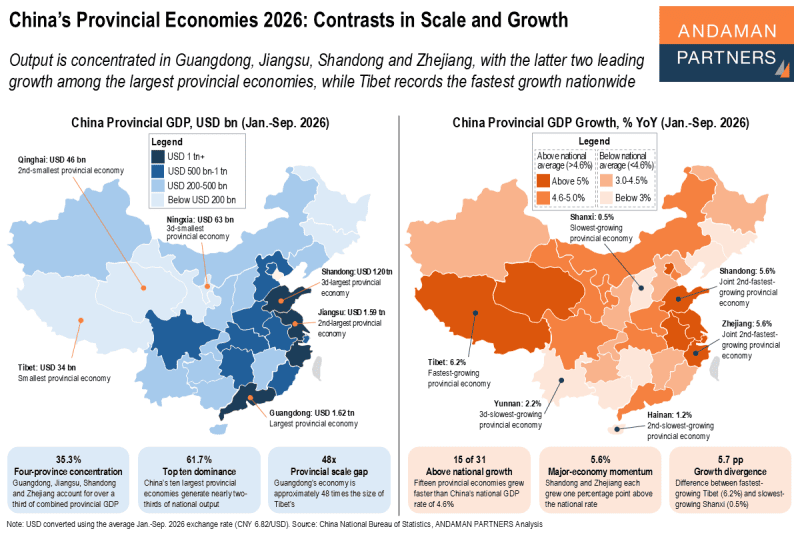
China’s Provincial Economies 2026: Contrasts in Scale and Growth
Output is concentrated in Guangdong, Jiangsu, Shandong and Zhejiang, while Tibet records the fastest growth nationwide
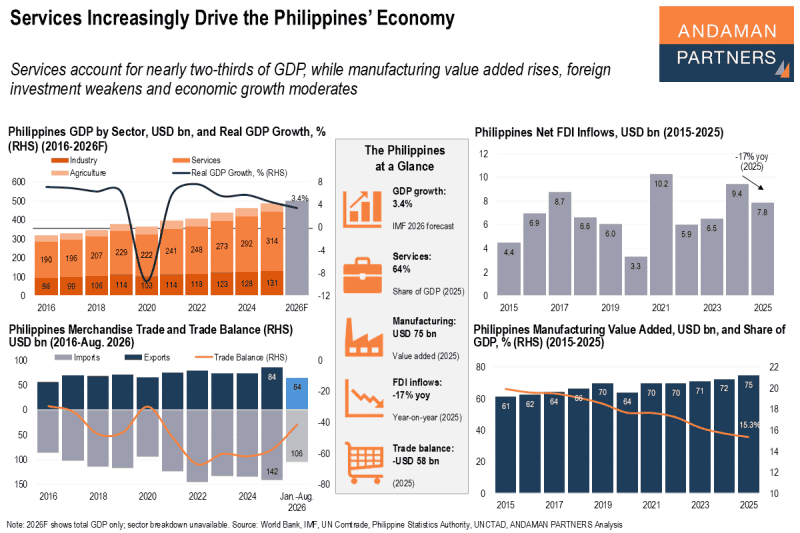
Services Increasingly Drive the Philippines’ Economy
Services account for two-thirds of GDP, while manufacturing value added rises, foreign investment weakens and growth moderates
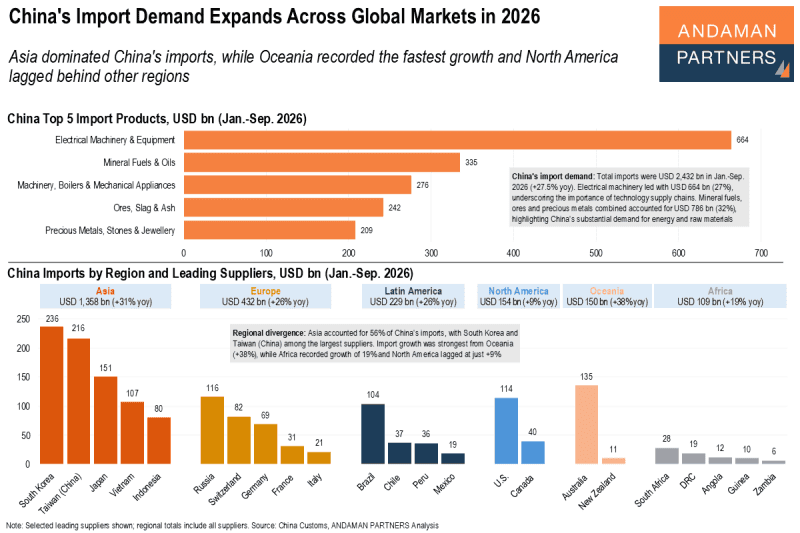
China’s Import Demand Expands Across Global Markets in 2026
Asia dominated China’s imports, while Oceania recorded the fastest growth and North America lagged behind other regions