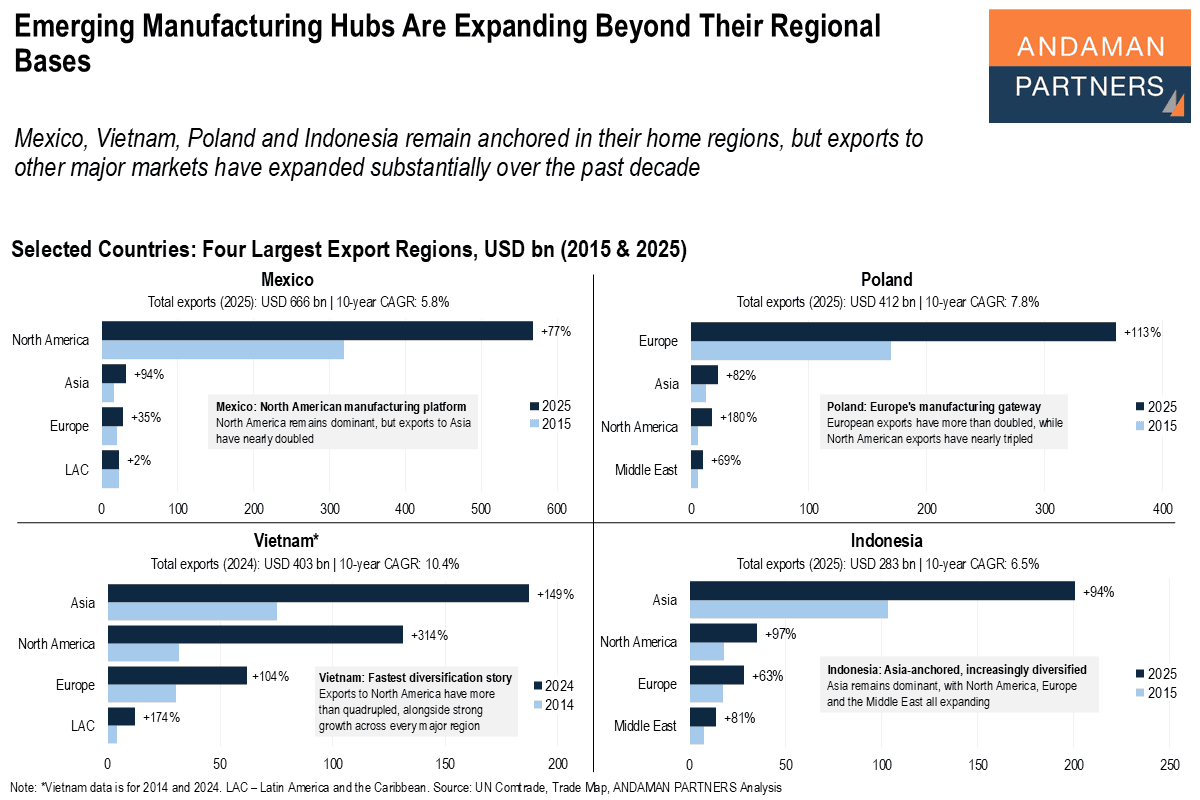
Emerging Manufacturing Hubs Are Expanding Beyond Their Regional Bases
Mexico, Vietnam, Poland and Indonesia remain anchored in their home regions, but exports to other major markets have expanded substantially

Mexico, Vietnam, Poland and Indonesia remain anchored in their home regions, but exports to other major markets have expanded substantially
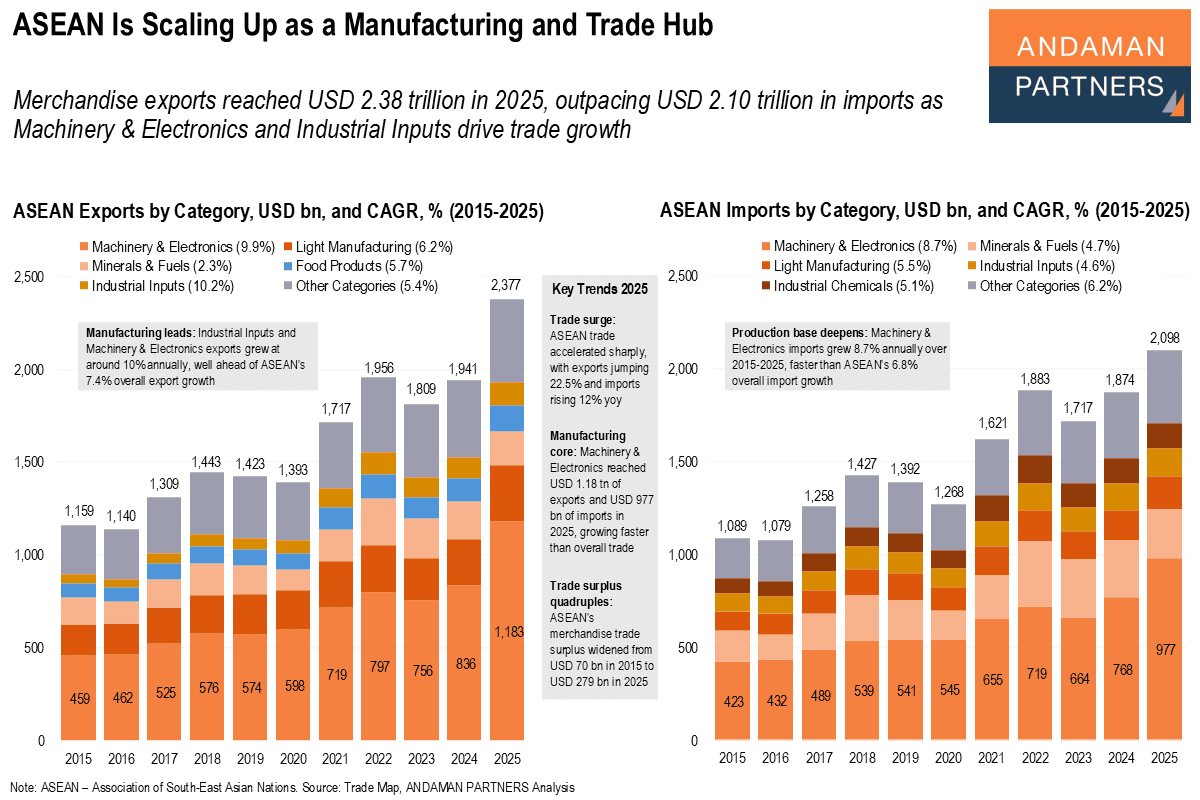
Merchandise exports reached USD 2.38 trillion in 2025, outpacing USD 2.10 trillion in imports
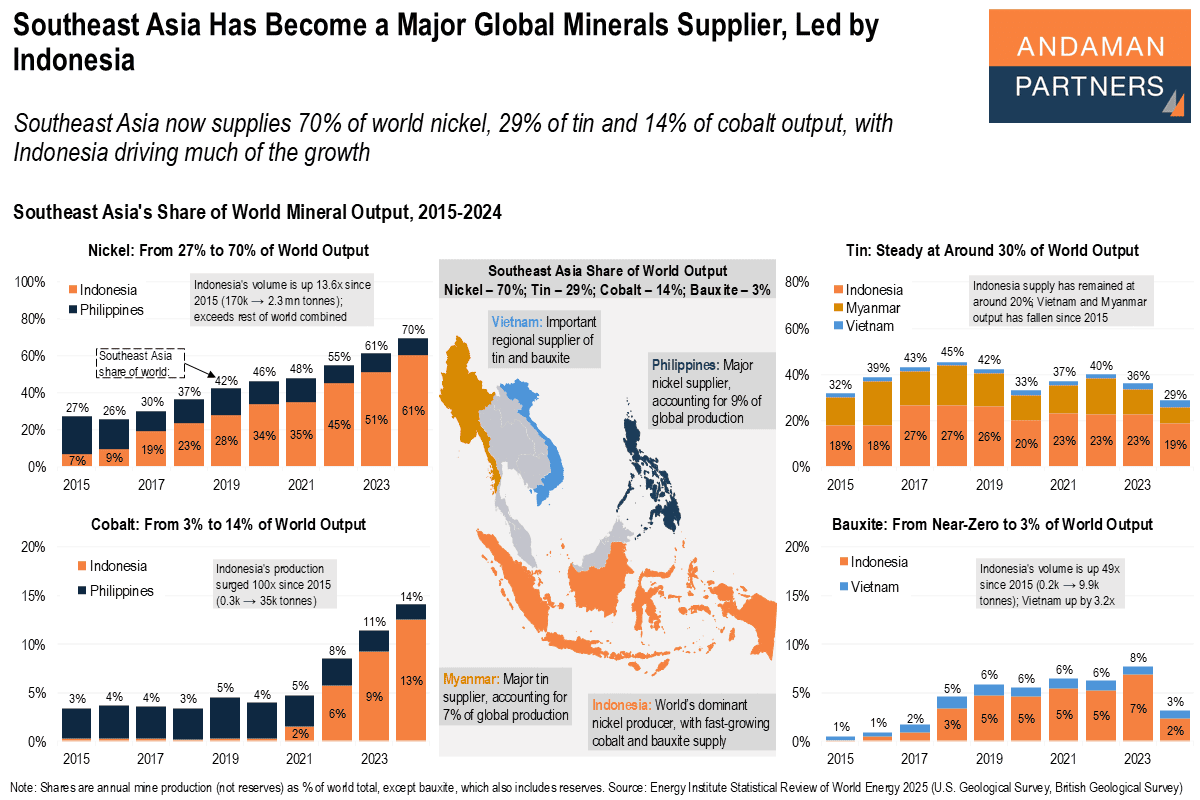
Southeast Asia now supplies 70% of world nickel, 29% of tin and 14% of cobalt output, with Indonesia driving much of the growth
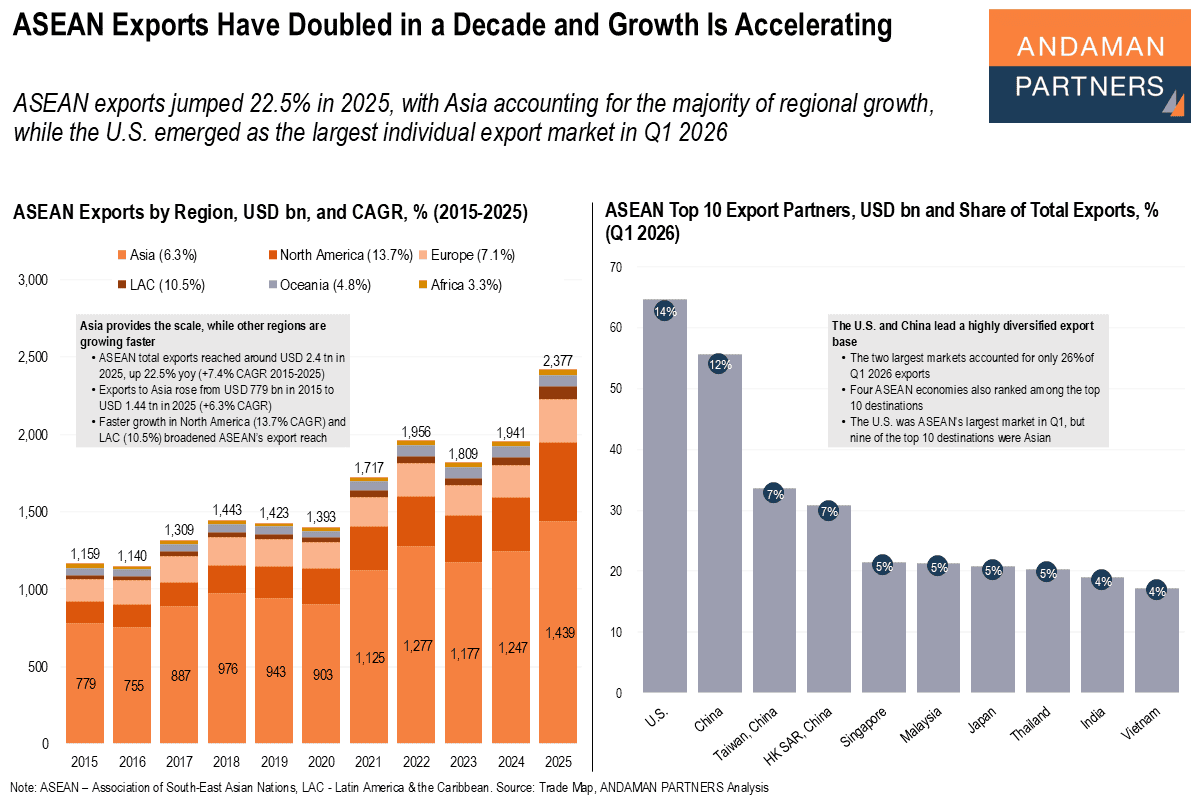
ASEAN exports jumped 22.5% in 2025, with Asia accounting for the majority of regional growth
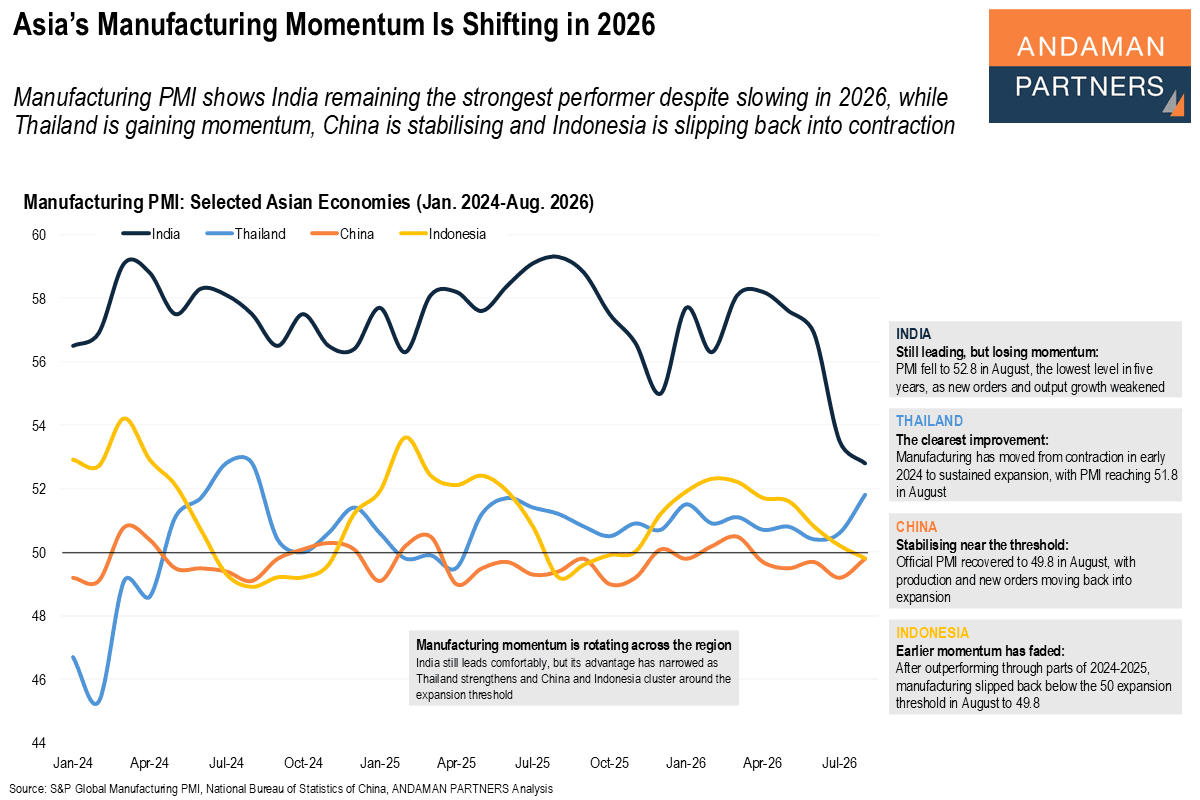
India leads despite slowing in 2026; Thailand is gaining momentum; China is stabilising and Indonesia is slipping back into contraction
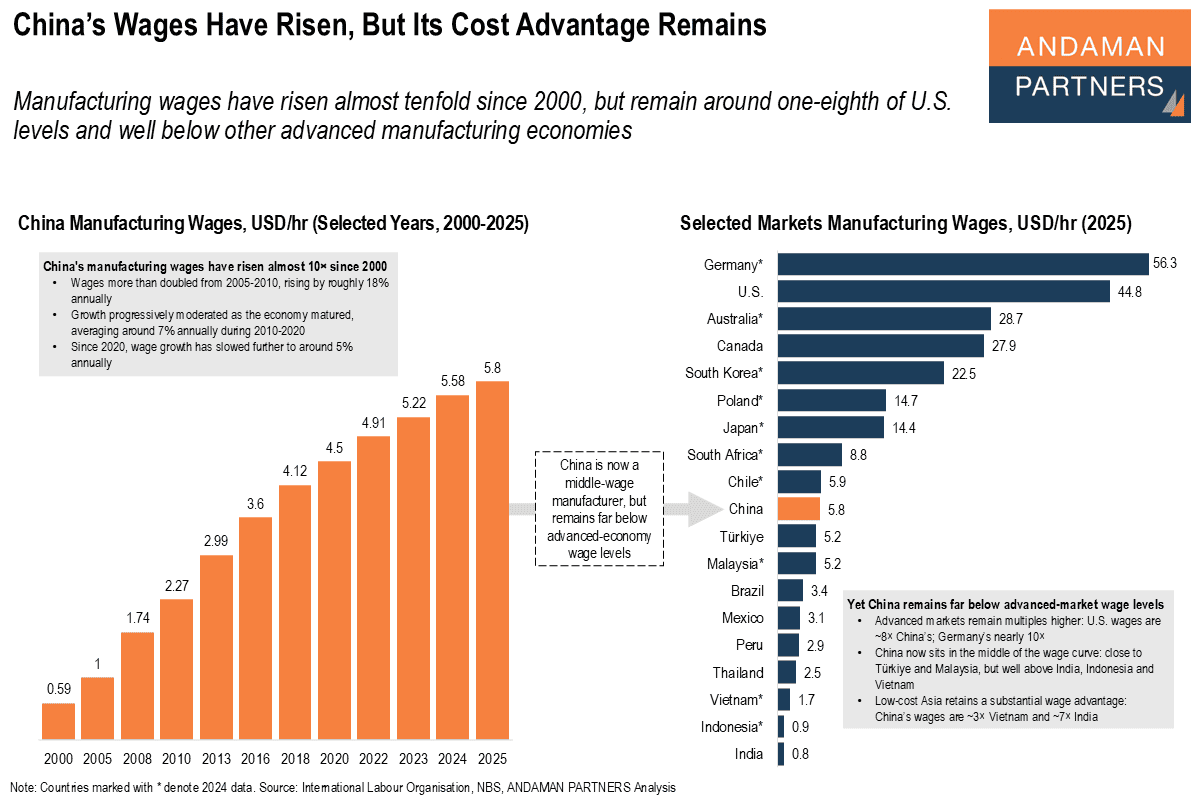
Manufacturing wages have risen almost tenfold since 2000, but remain well below advanced manufacturing economies
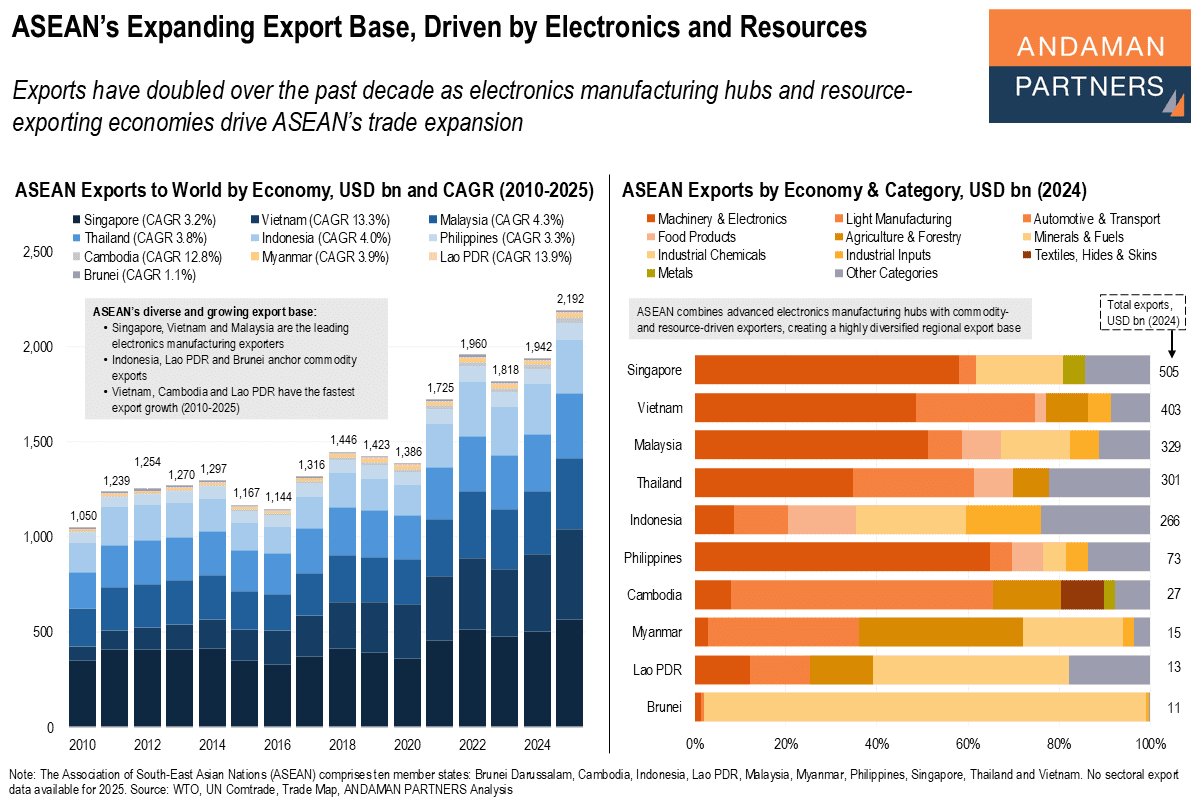
Exports have doubled over the past decade as electronics manufacturing hubs and resource-exporting economies drive ASEAN’s trade expansion.
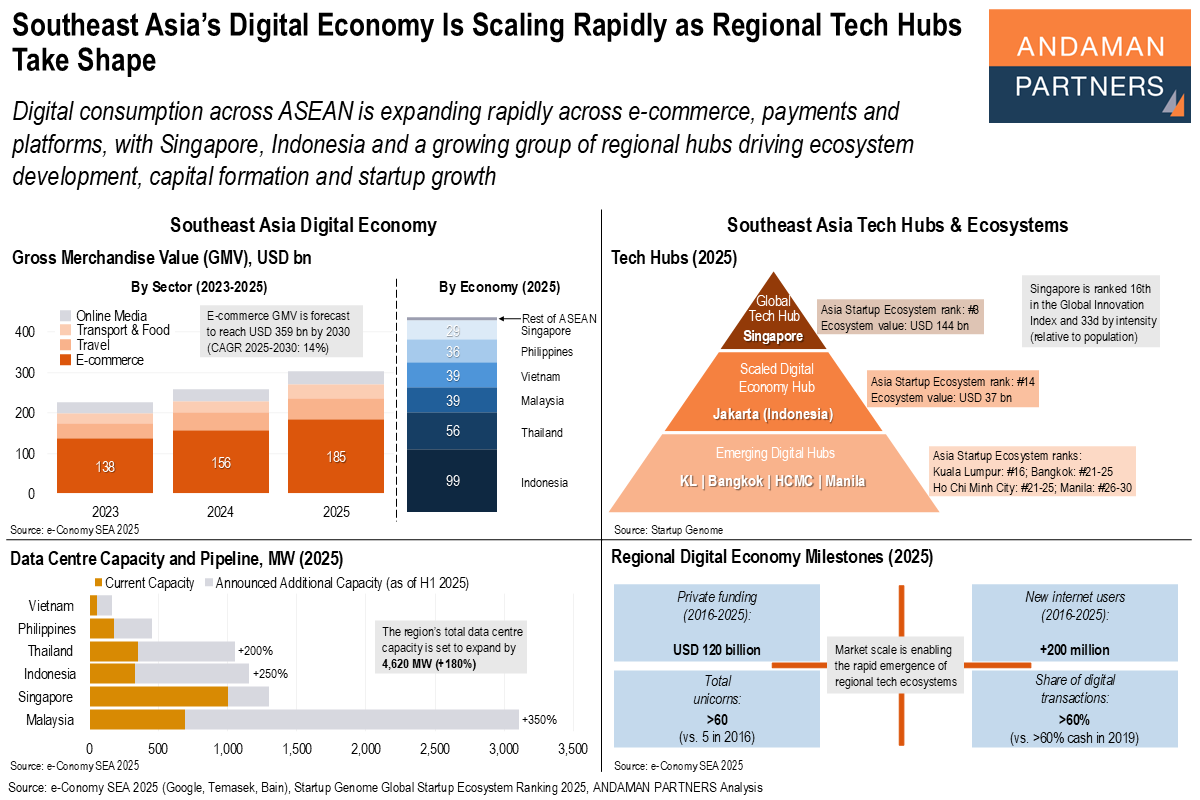
Digital consumption across Southeast Asia is expanding rapidly across e-commerce, payments and platforms.
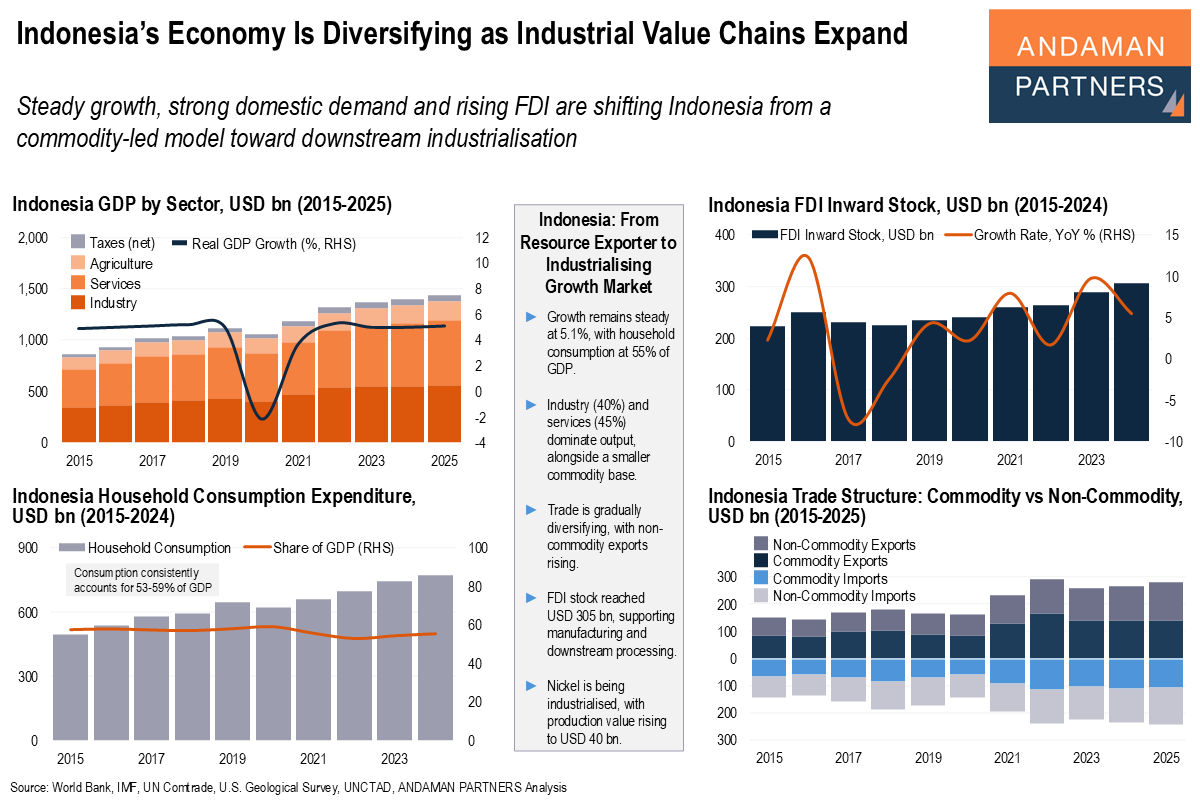
Steady growth, strong domestic demand and rising FDI are shifting Indonesia from a commodity-led model toward downstream industrialisation.
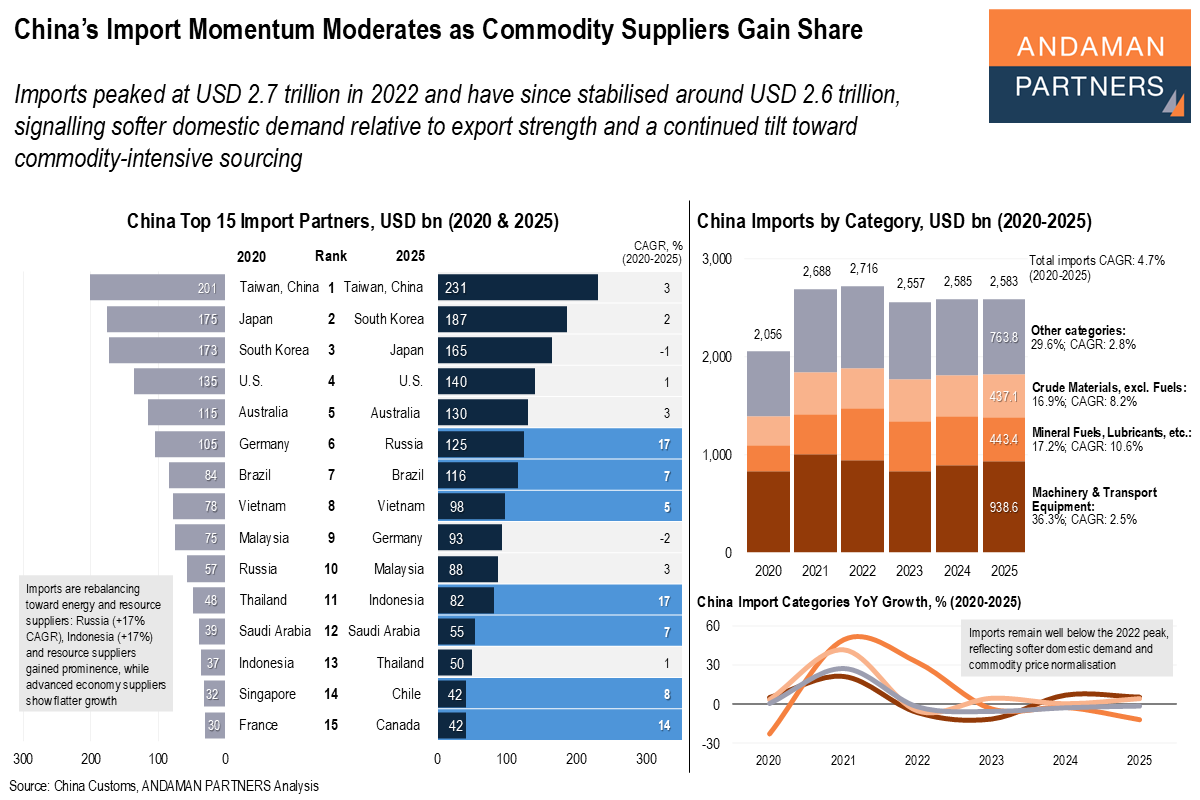
Imports have stabilised around USD 2.6 trillion, signalling softer domestic demand and a continued tilt toward commodity-intensive sourcing.