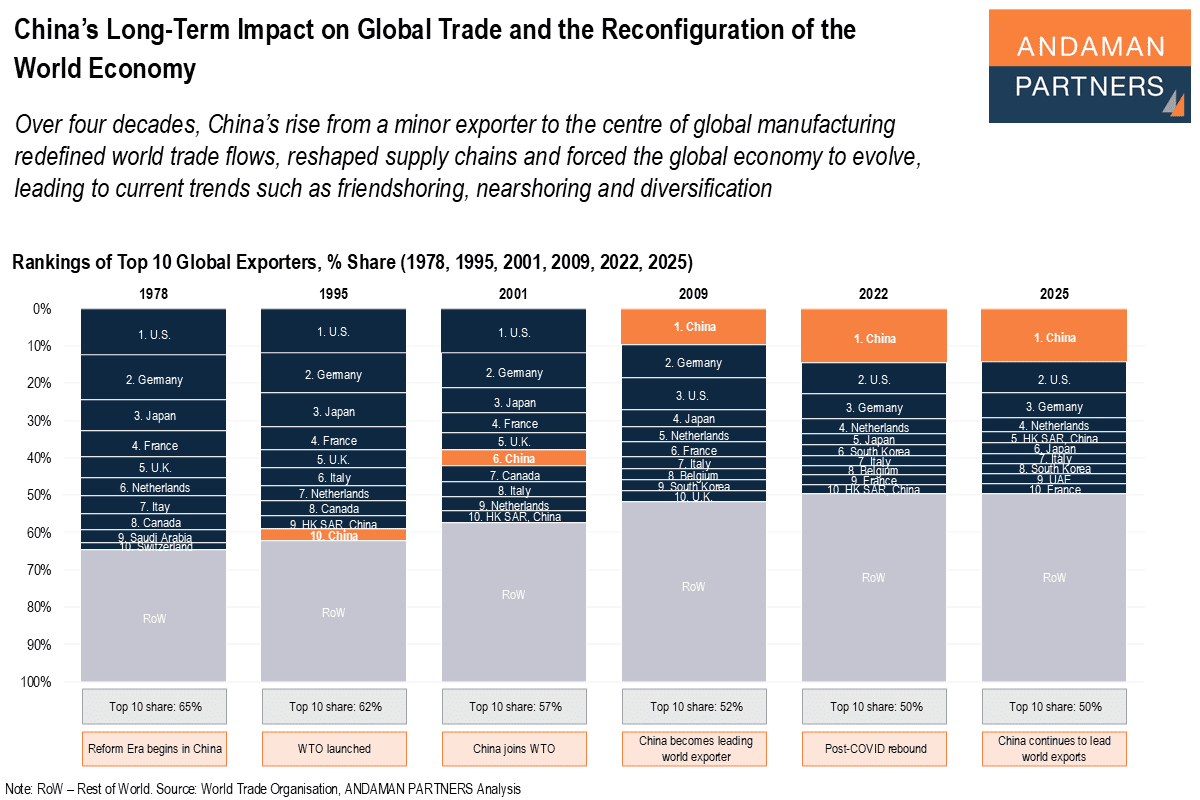
China’s Long-Term Impact on Global Trade and the Reconfiguration of the World Economy
China’s rise from a minor exporter to the centre of global manufacturing redefined trade flows, reshaped supply chains and forced the global economy to evolve.

China’s rise from a minor exporter to the centre of global manufacturing redefined trade flows, reshaped supply chains and forced the global economy to evolve.
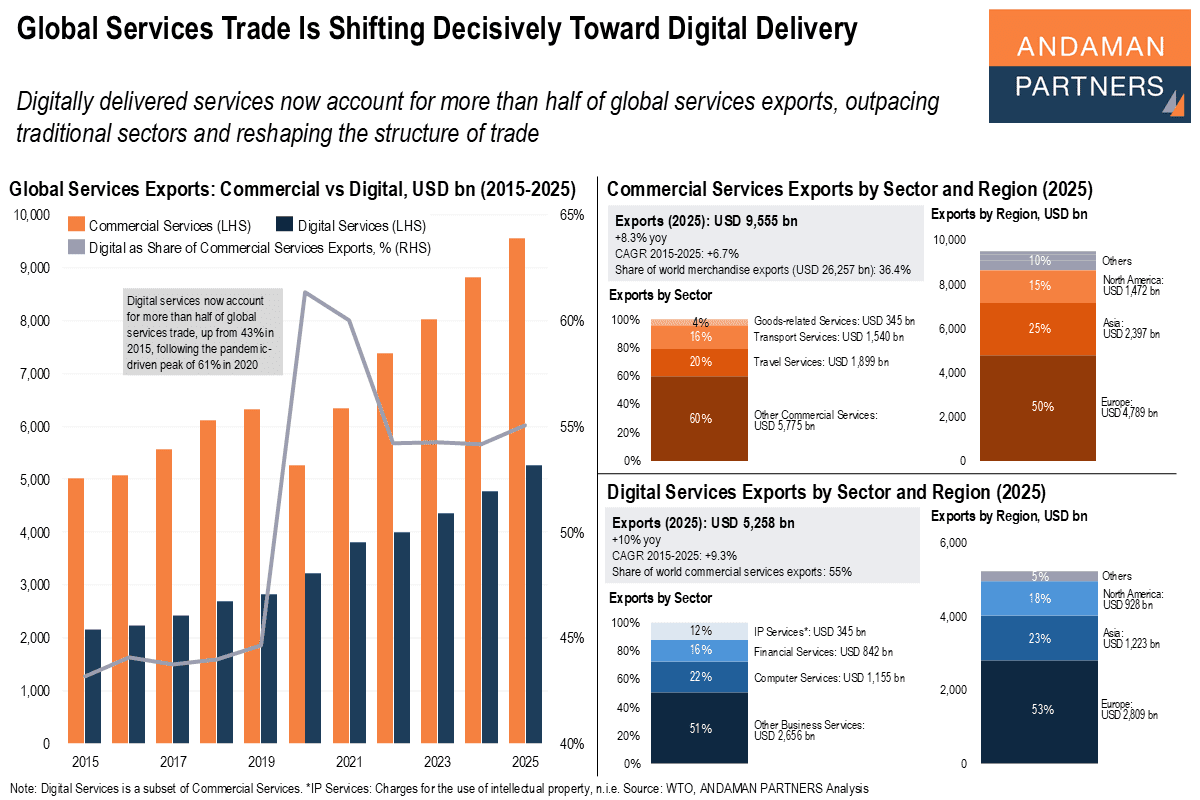
Digitally delivered services now account for more than half of global services exports, outpacing traditional sectors and reshaping the structure of trade.
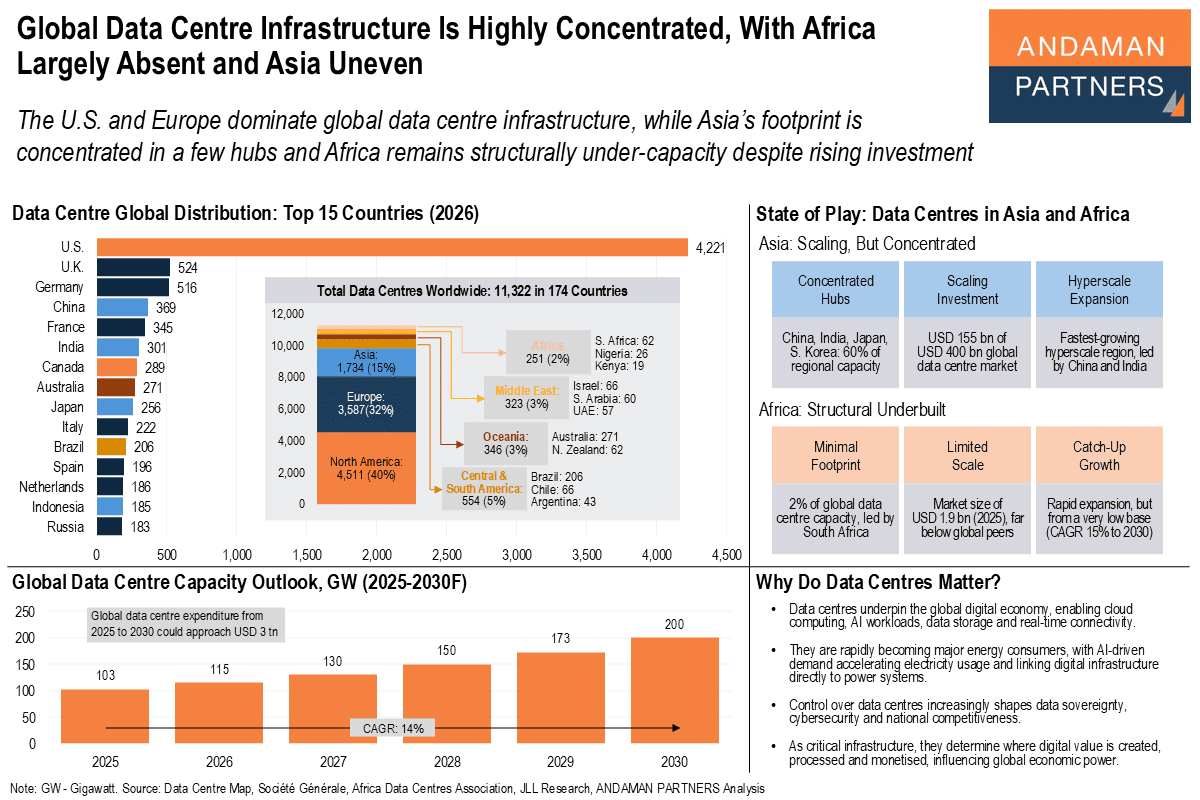
The U.S. and Europe dominate global data centre infrastructure, while Asia’s footprint is concentrated in a few hubs
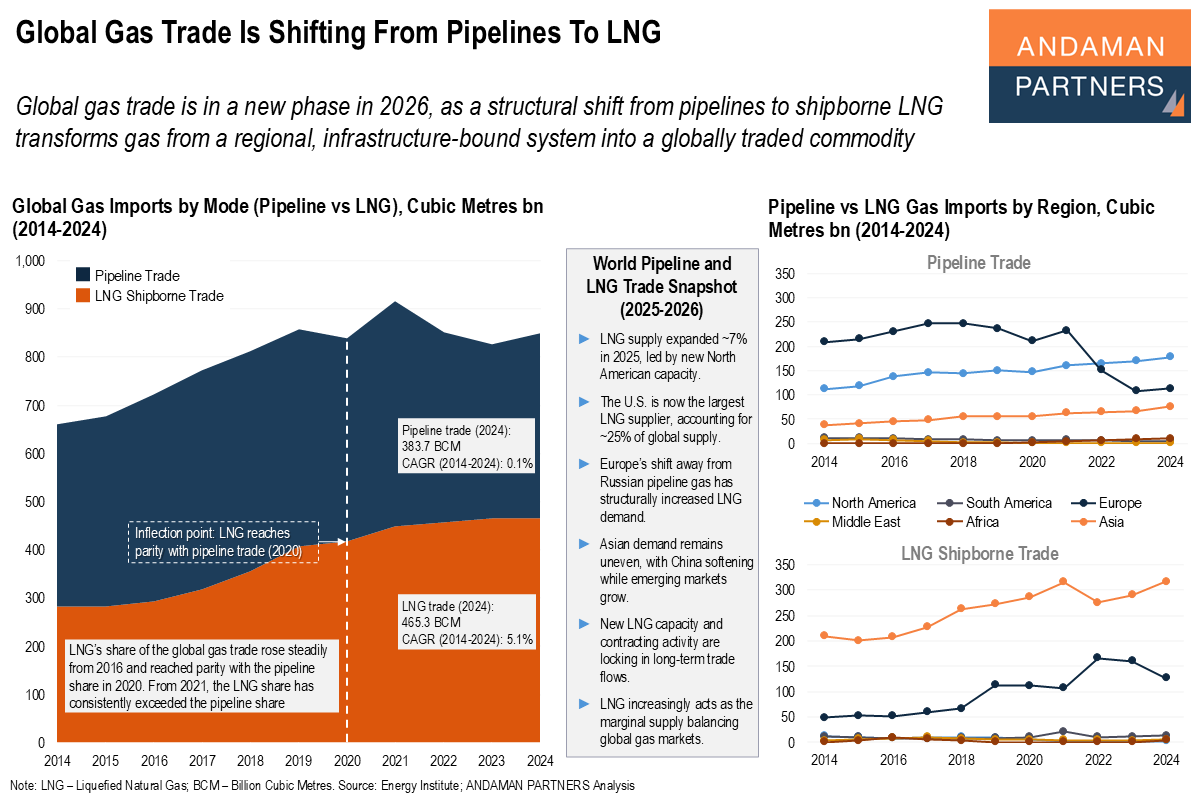
Global gas trade is in a new phase in 2026 amid a structural shift from pipelines to shipborne LNG.
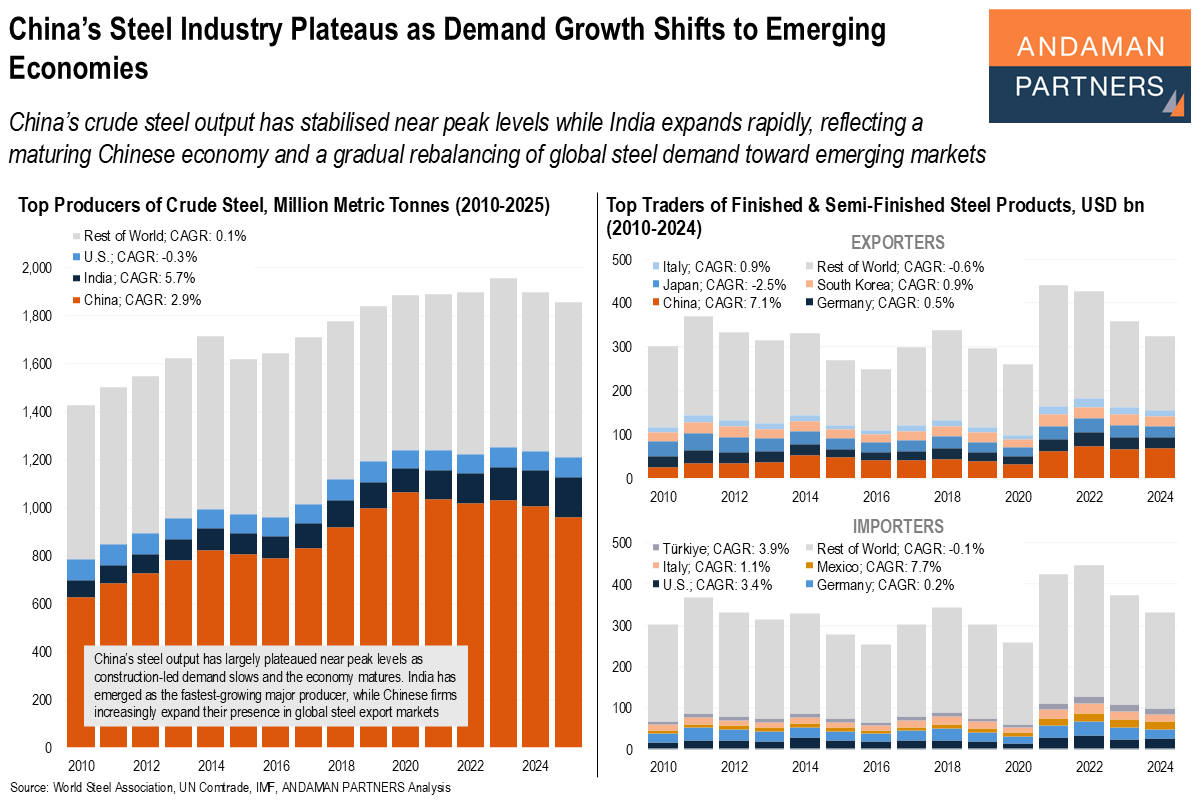
China’s crude steel output has stabilised near peak levels while India expands rapidly, reflecting a gradual rebalancing of global steel demand.
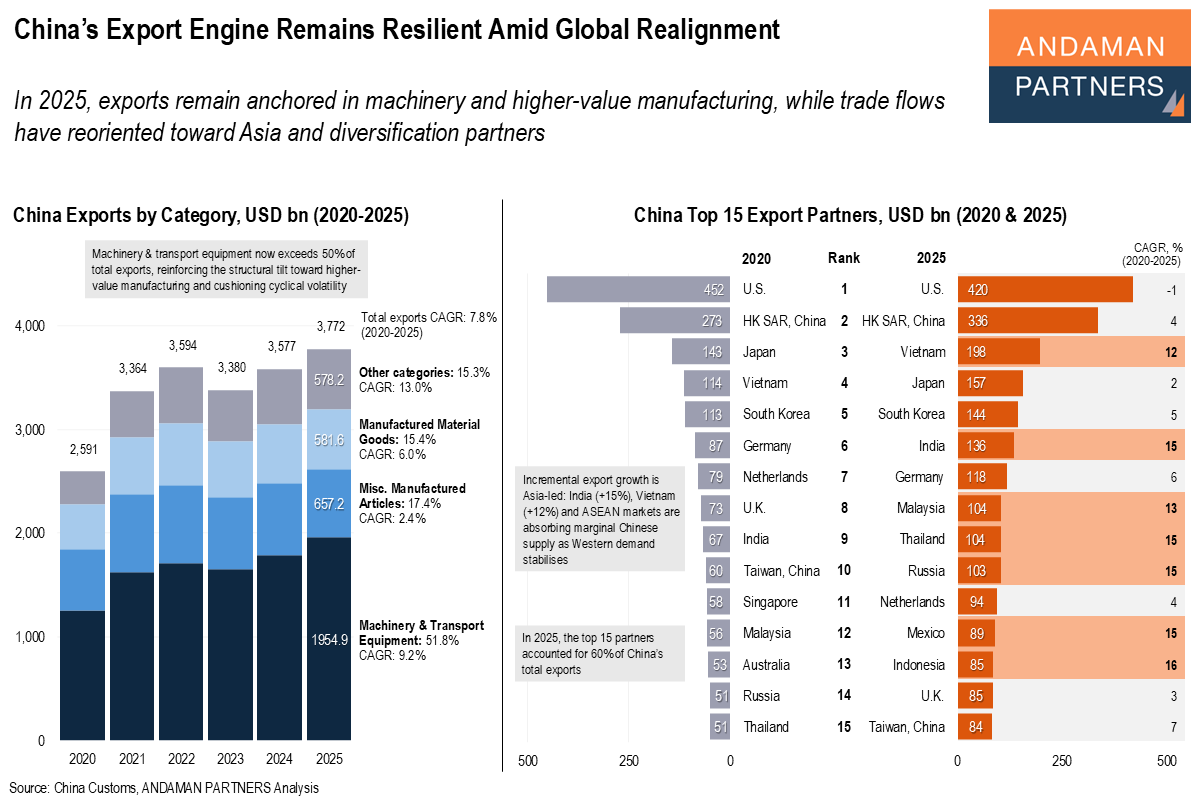
Exports remain anchored in machinery and higher-value manufacturing, while trade flows have reoriented toward Asia and diversification partners.
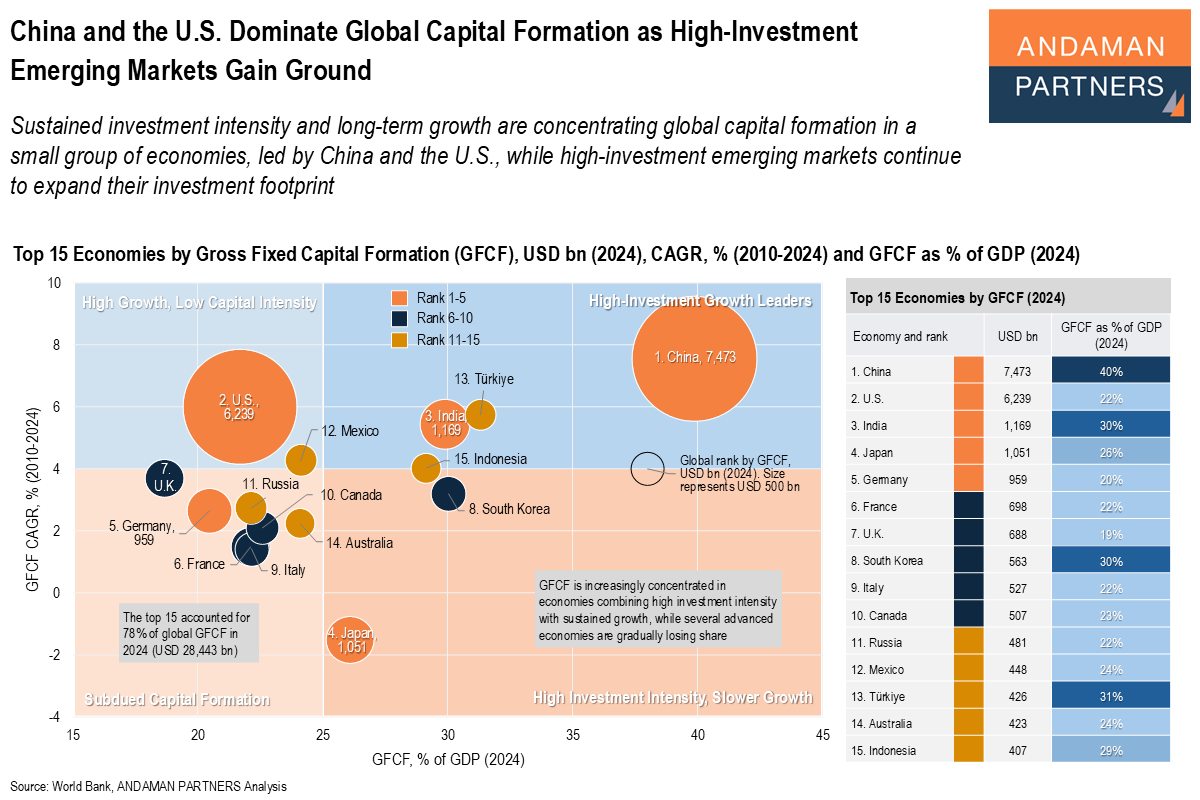
Sustained investment intensity and long-term growth are concentrating global capital formation in a small group of economies, led by China and the U.S.
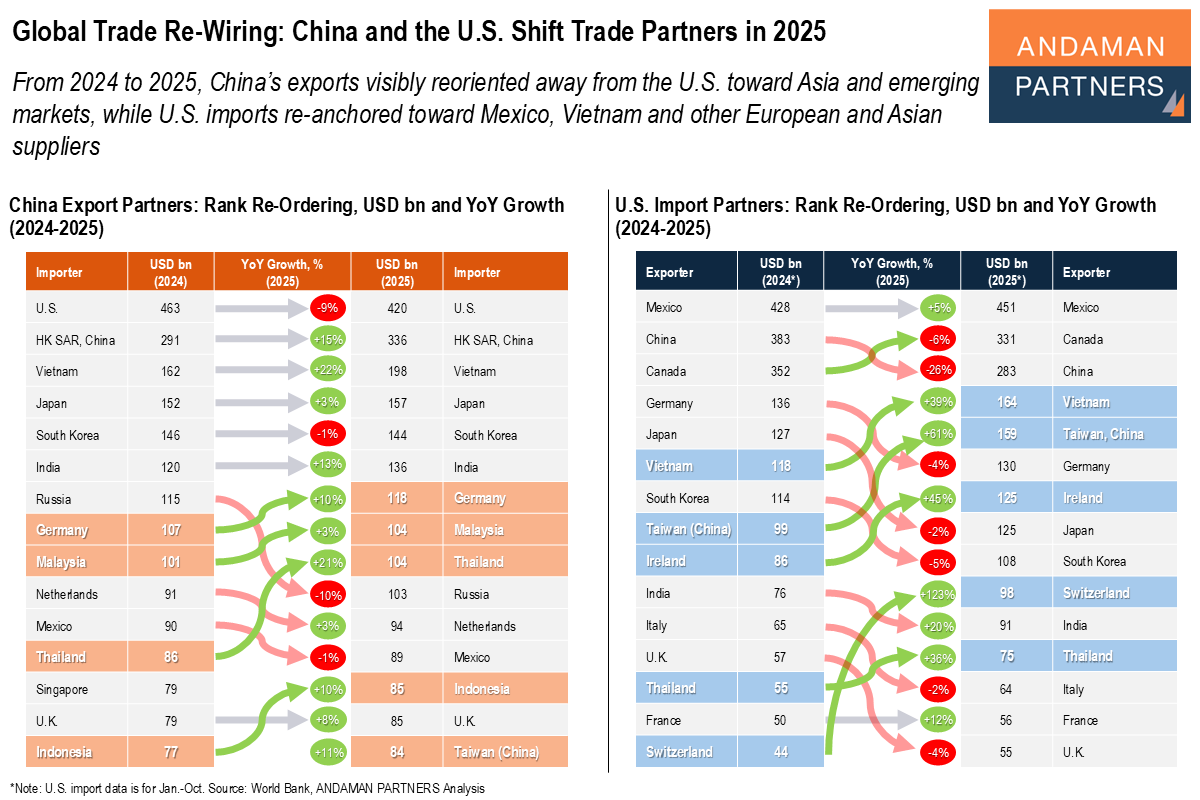
China’s exports reoriented away from the U.S. toward Asia and emerging markets, while U.S. imports re-anchored toward Mexico, Europe and Asia.
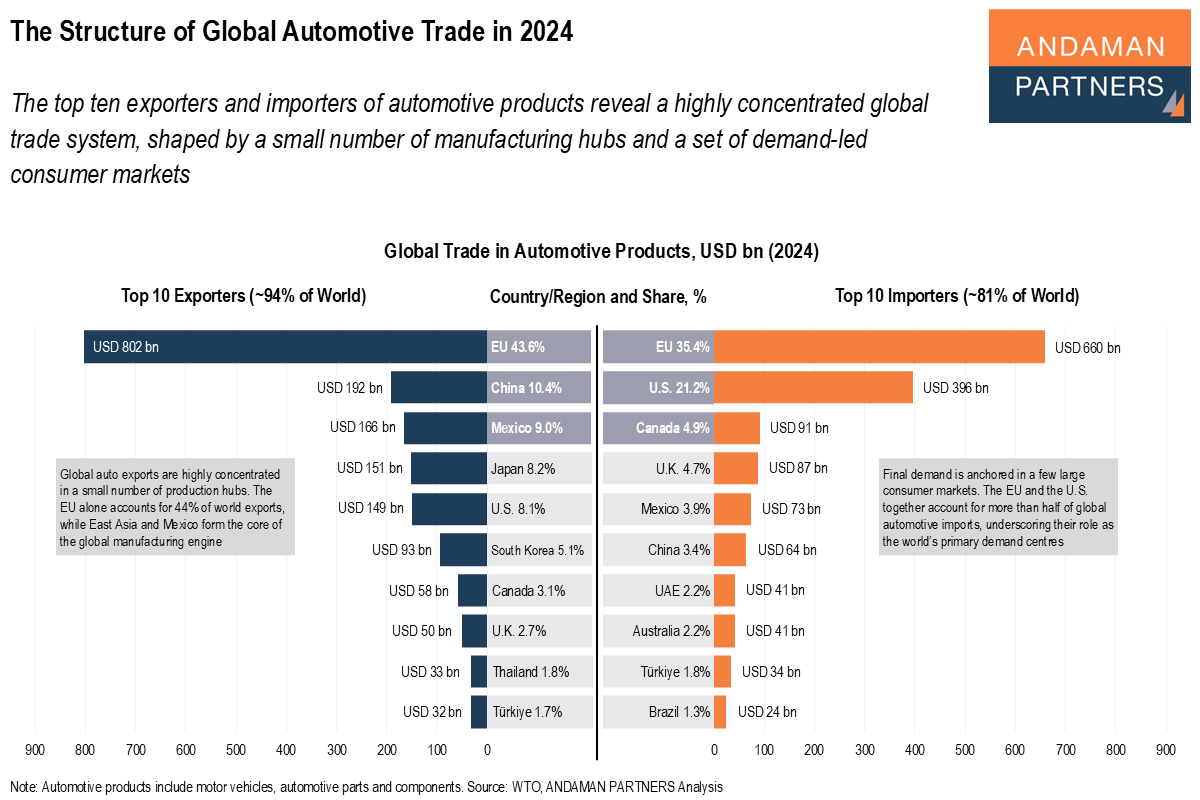
The top ten exporters and importers of automotive products reveal a highly concentrated global trade system.
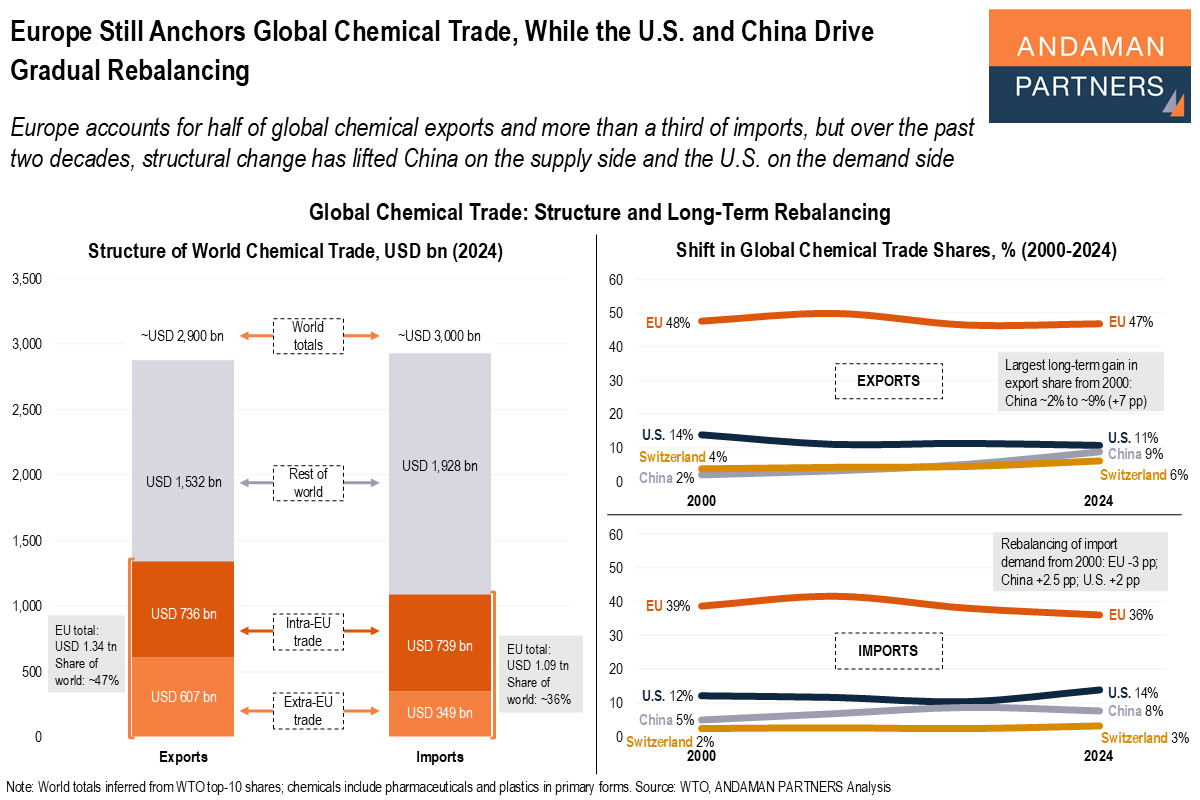
Europe accounts for half of global chemical exports and more than a third of imports, but over the past two decades, structural change has lifted China and the U.S.