
The World’s Investment Hotspots
ANDAMAN PARTNERS presents the world's investment hotspots in four clusters: Mega, Major, Scaling and Emerging.

ANDAMAN PARTNERS presents the world's investment hotspots in four clusters: Mega, Major, Scaling and Emerging.
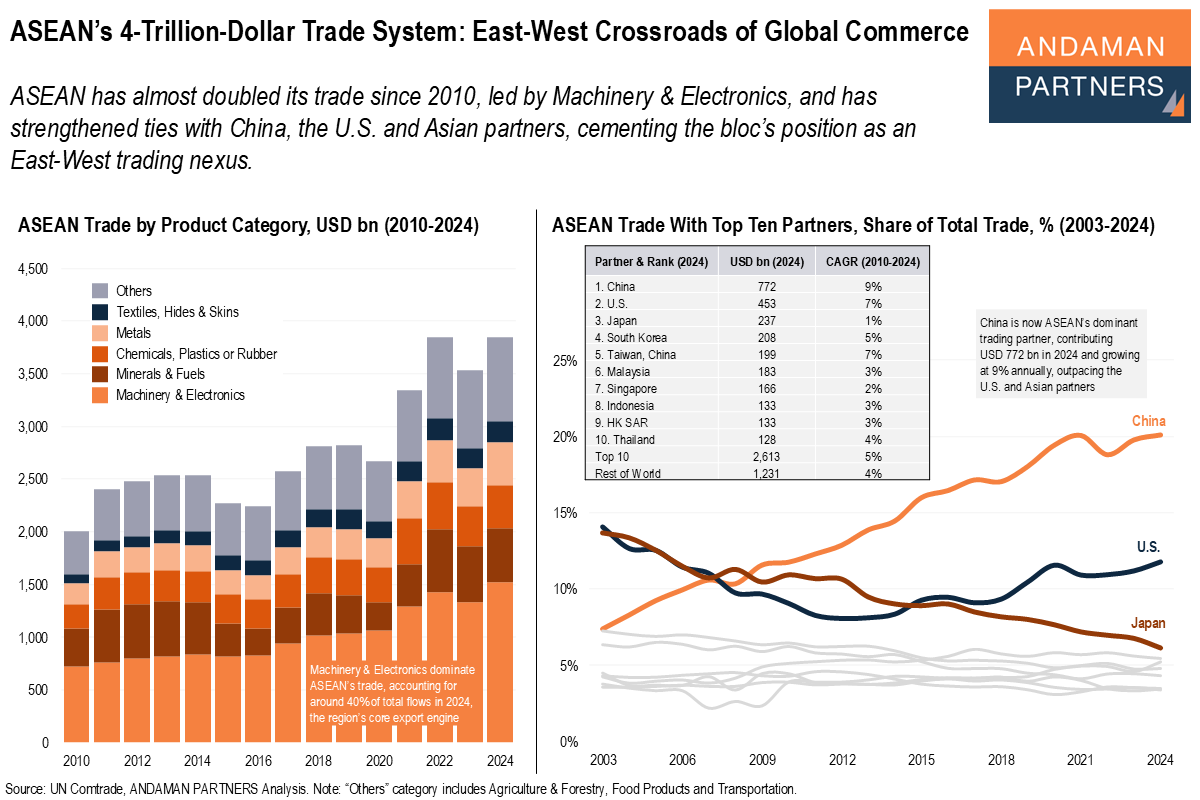
ASEAN has almost doubled its trade since 2010 and has strengthened ties with China and the U.S., cementing the bloc’s position as an East-West trading nexus.
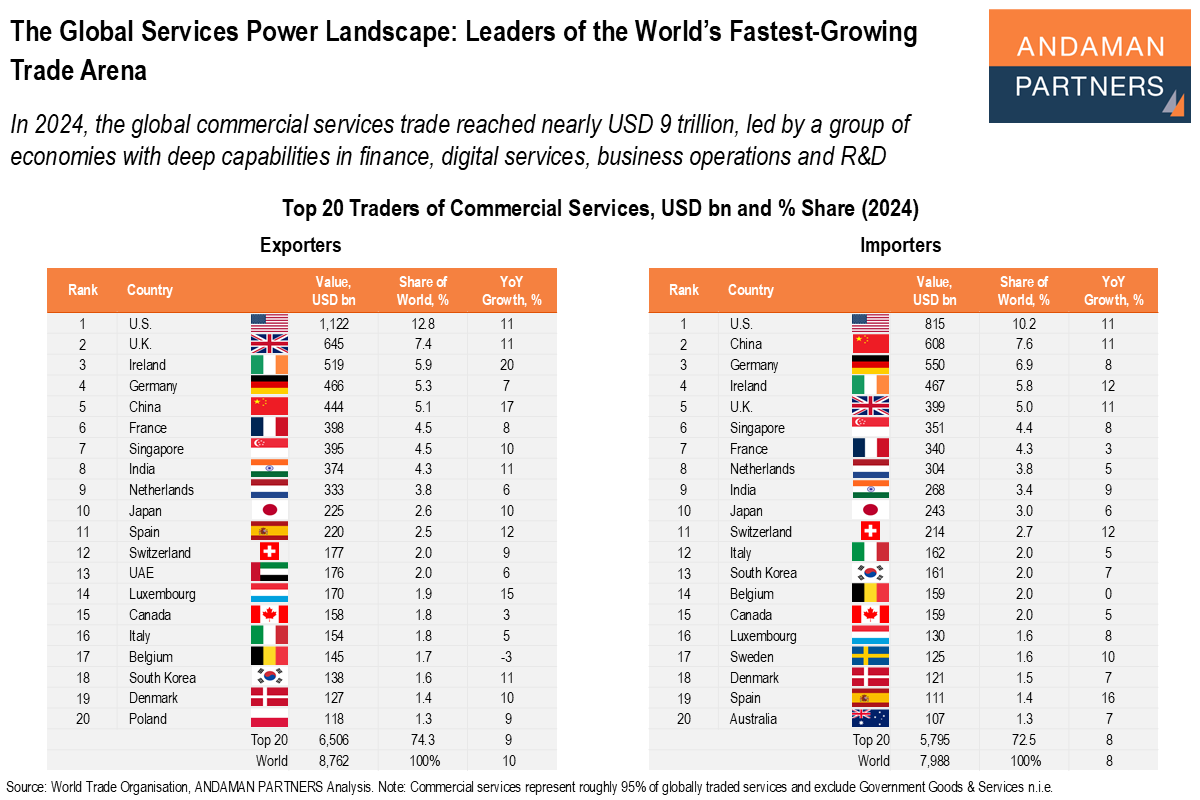
In 2024, the global commercial services trade reached nearly USD 9 trillion, led by a group of economies with deep capabilities.
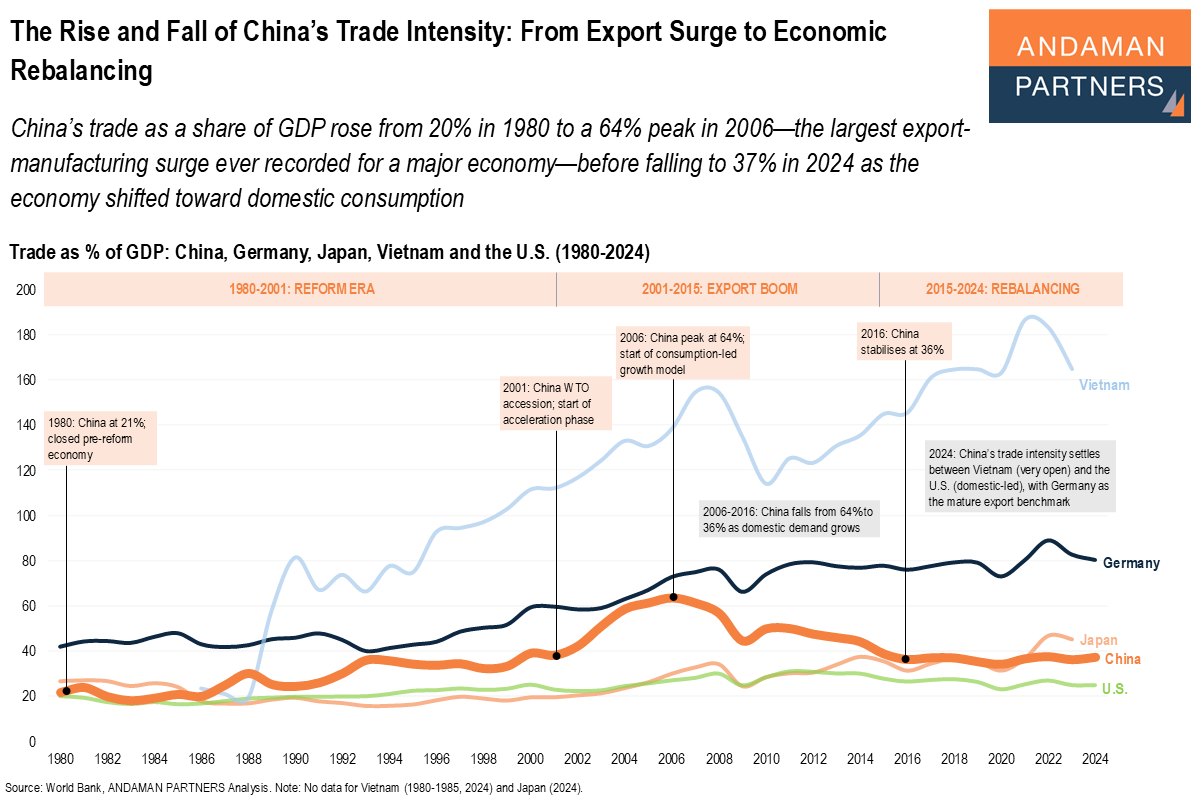
China’s trade as a share of GDP rose from 20% in 1980 to a peak of 64% in 2006 before falling to 37% in 2024 as the economy shifted toward domestic consumption.
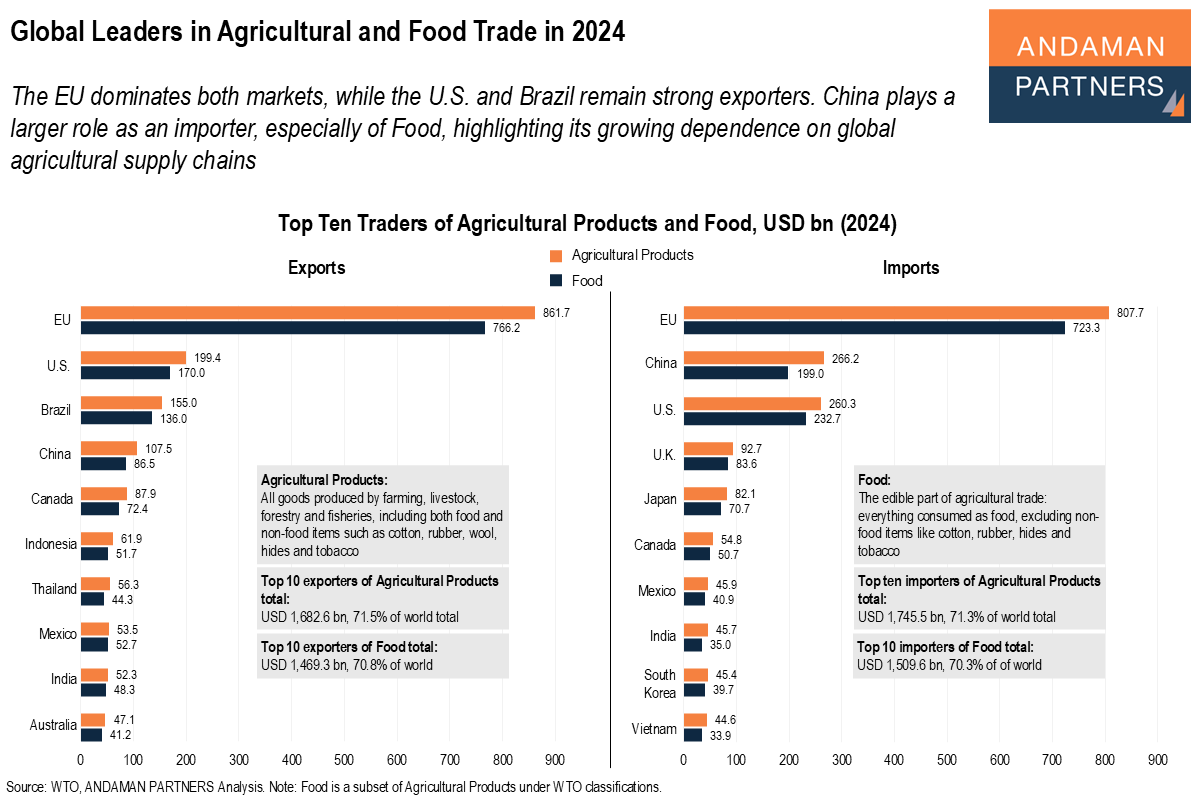
The EU dominates both markets, while the U.S. and Brazil remain strong exporters. China plays a larger role as an importer.
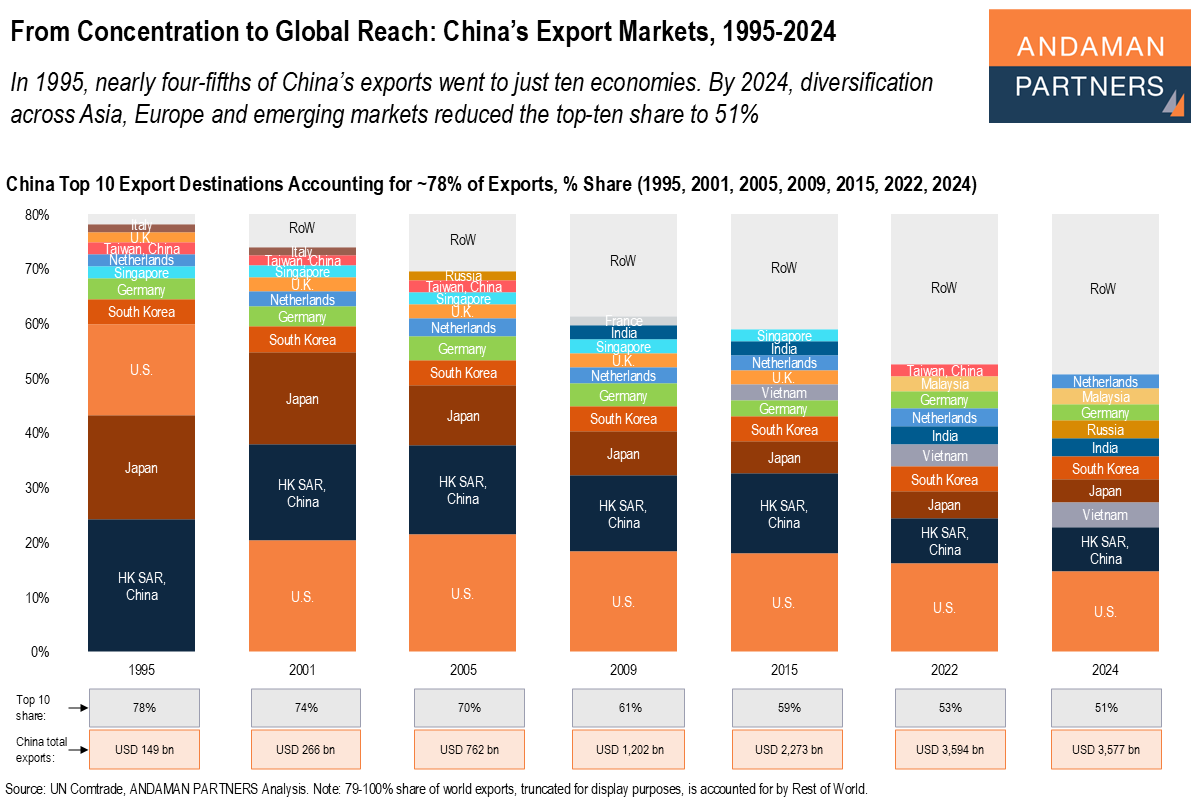
In 1995, nearly four-fifths of China’s exports went to just ten economies. By 2024, the top-ten's share was reduced to 51%.
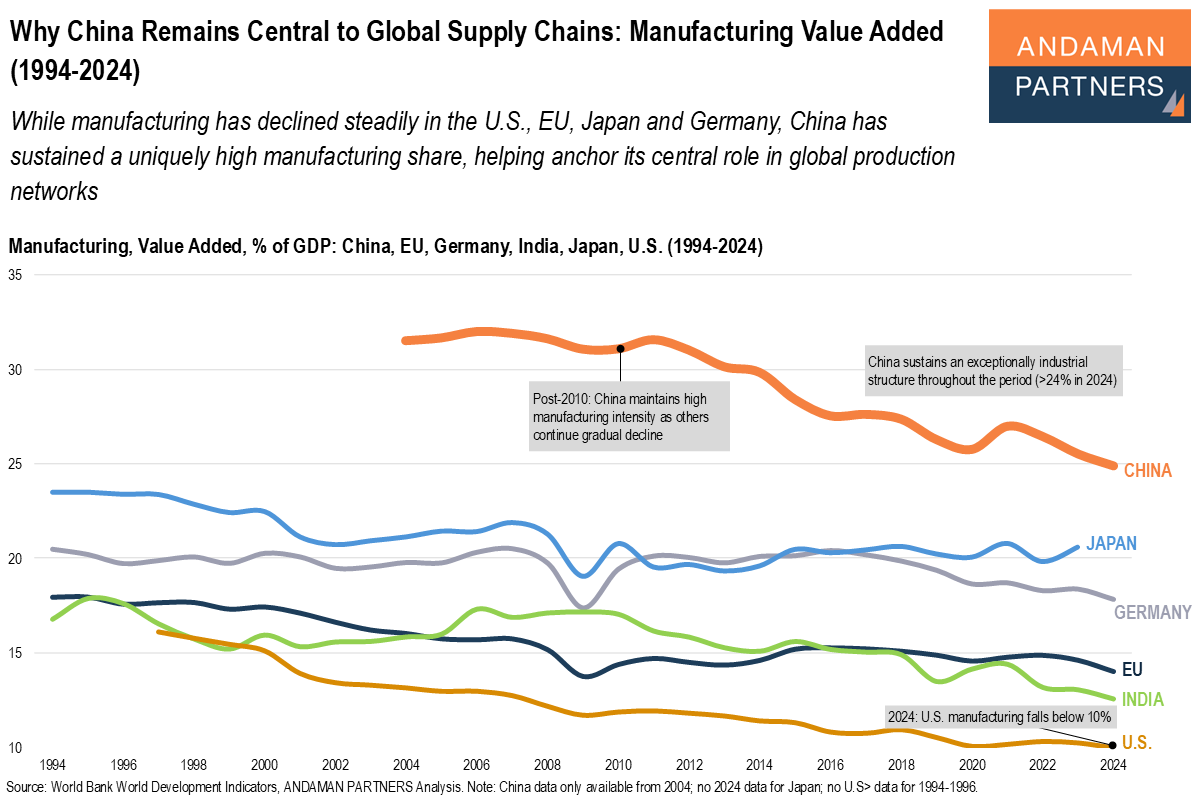
While manufacturing has declined steadily in the U.S., EU, Japan and Germany, China has sustained a uniquely high manufacturing share.
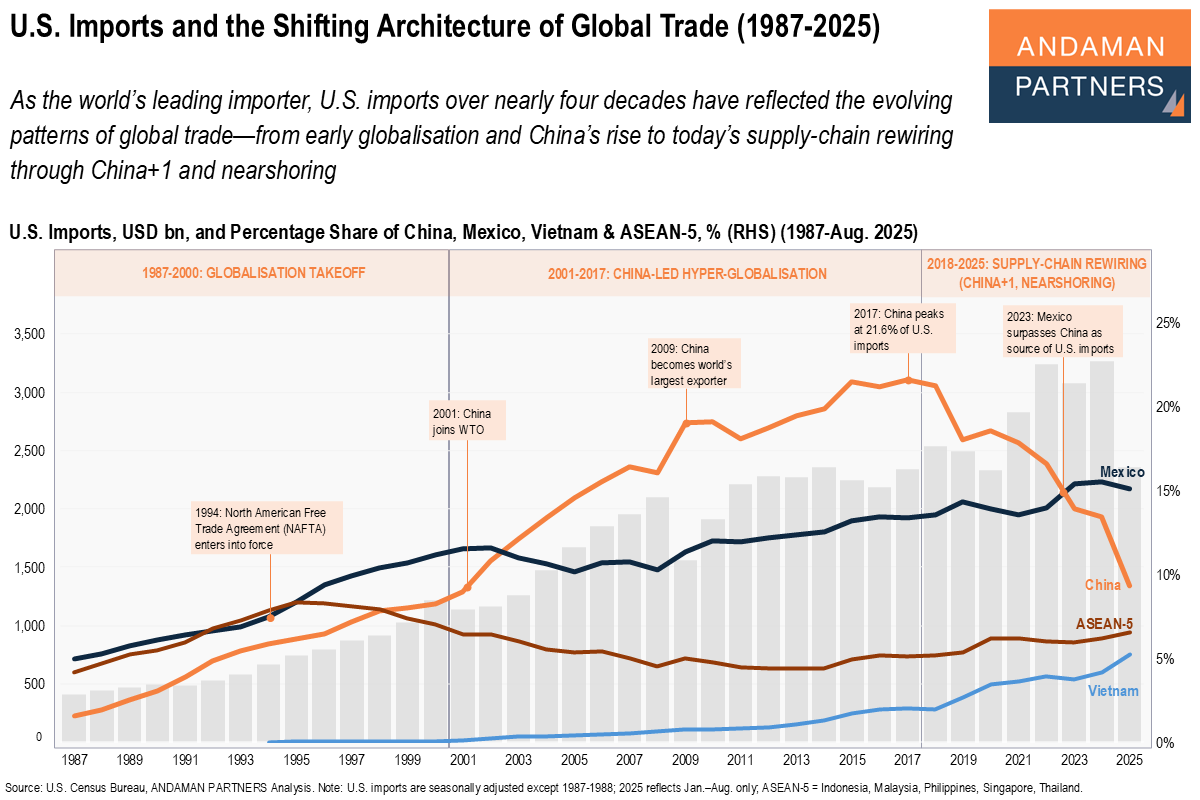
As the world’s leading importer, U.S. imports over nearly four decades have reflected the evolving patterns of global trade.
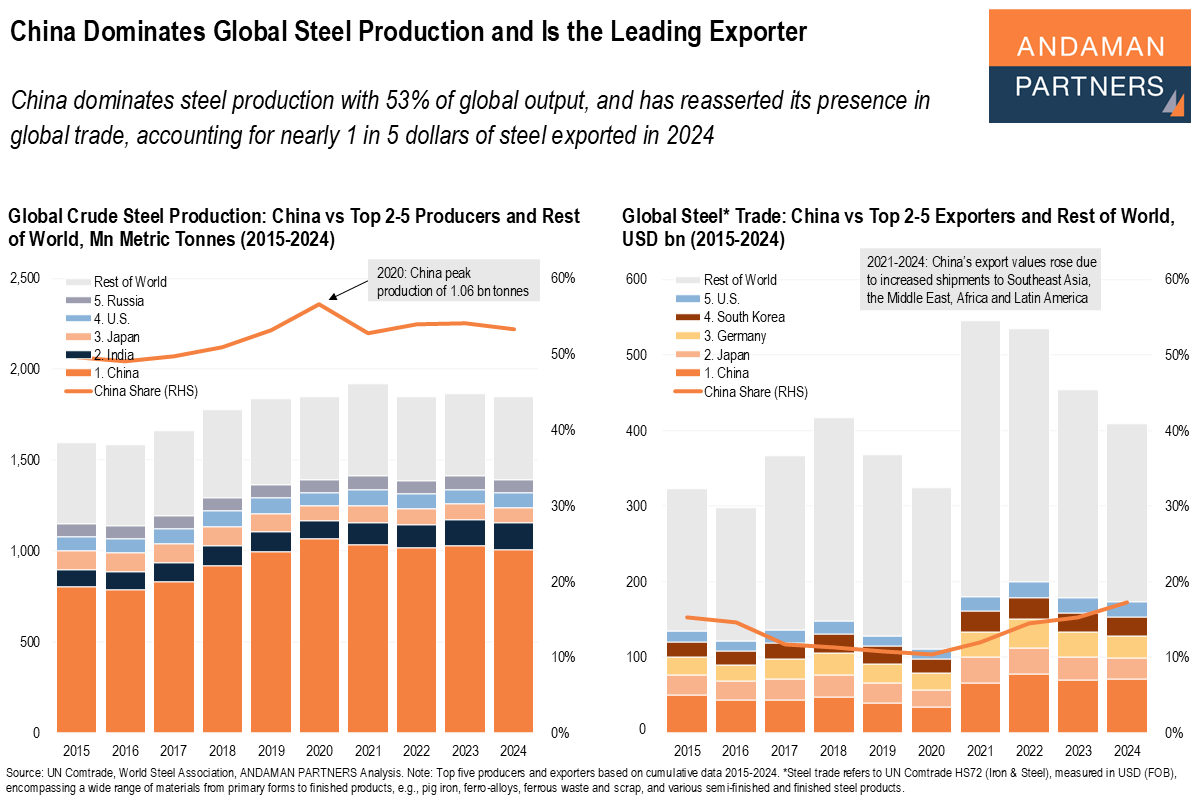
China dominates steel production, accounting for 53% of global output and nearly 1 in 5 dollars of steel exports in 2024.
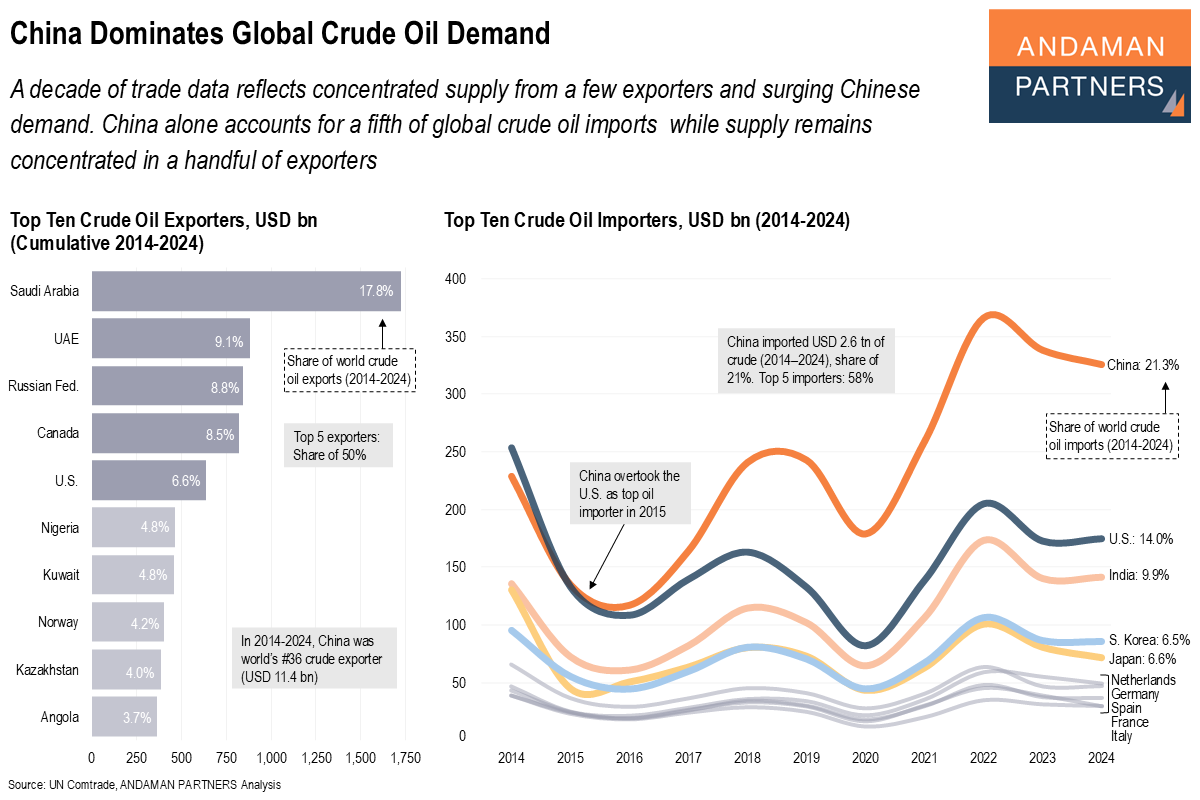
China alone accounts for a fifth of global crude oil imports while supply remains concentrated in a handful of exporters.