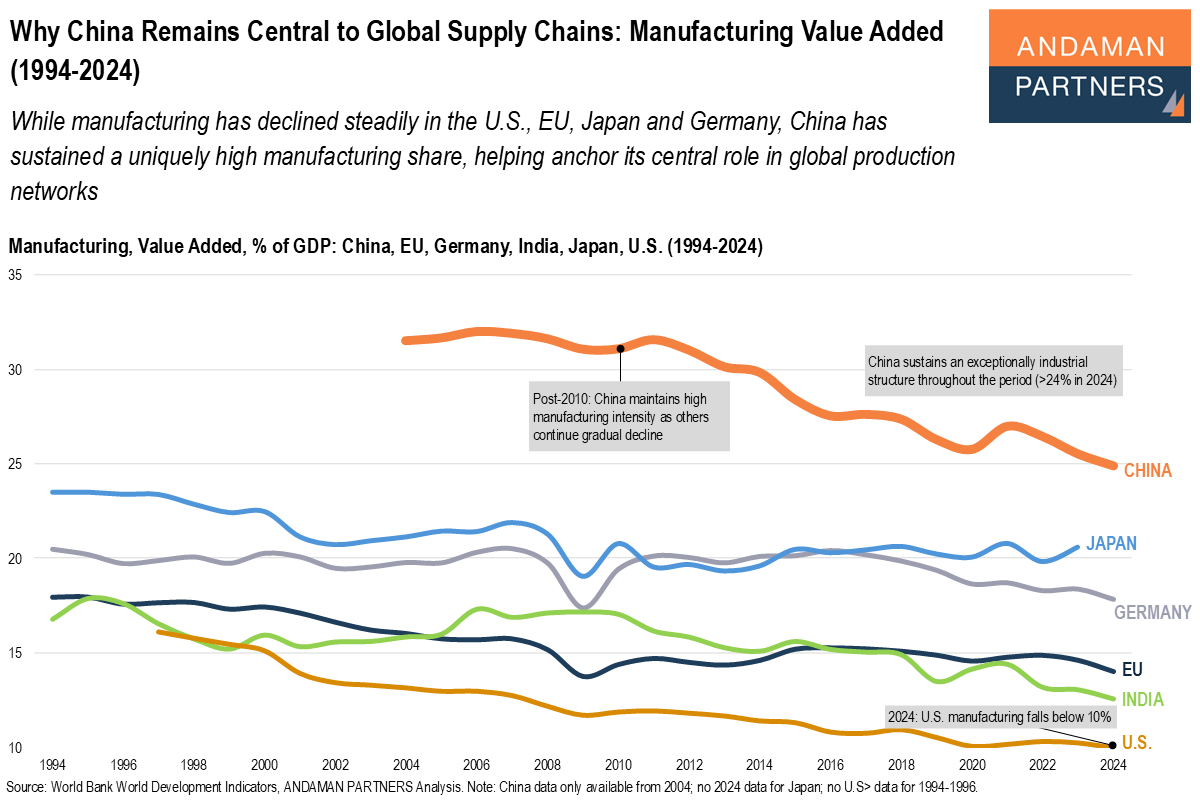
Why China Remains Central to Global Supply Chains: Manufacturing Value Added (1994-2024)
While manufacturing has declined steadily in the U.S., EU, Japan and Germany, China has sustained a uniquely high manufacturing share.

While manufacturing has declined steadily in the U.S., EU, Japan and Germany, China has sustained a uniquely high manufacturing share.
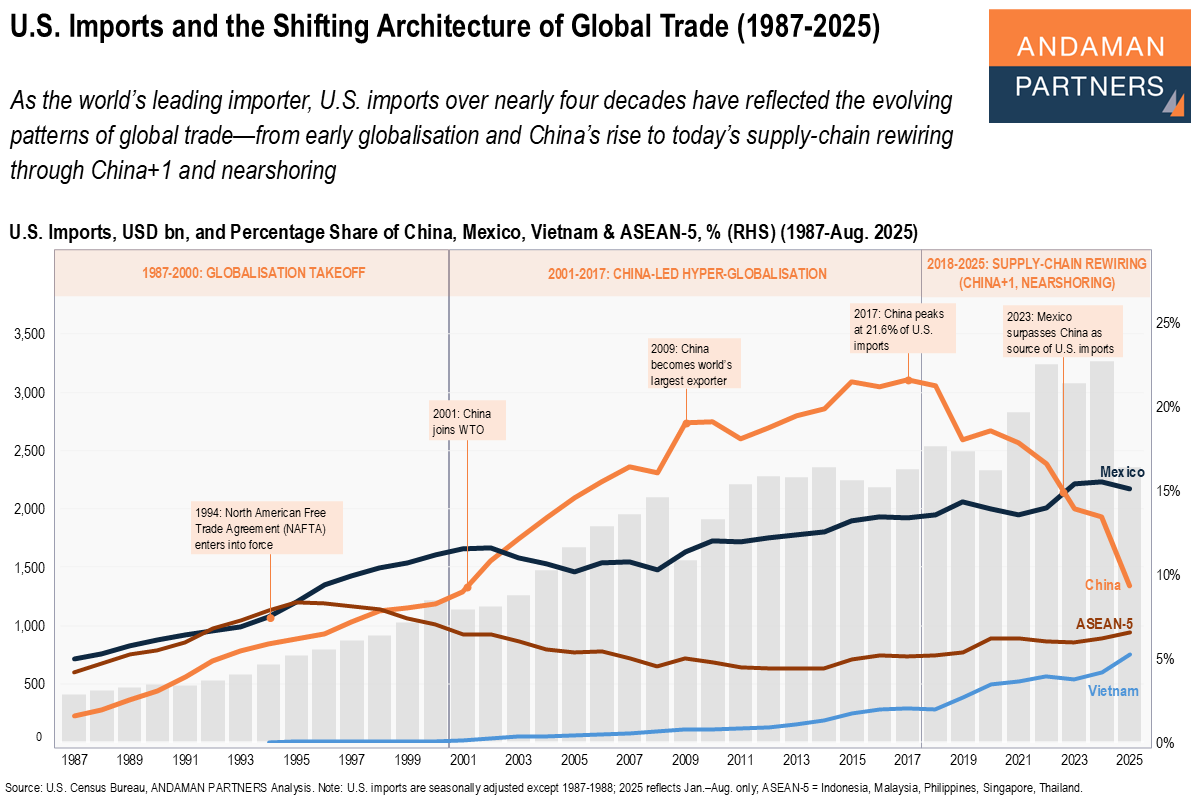
As the world’s leading importer, U.S. imports over nearly four decades have reflected the evolving patterns of global trade.
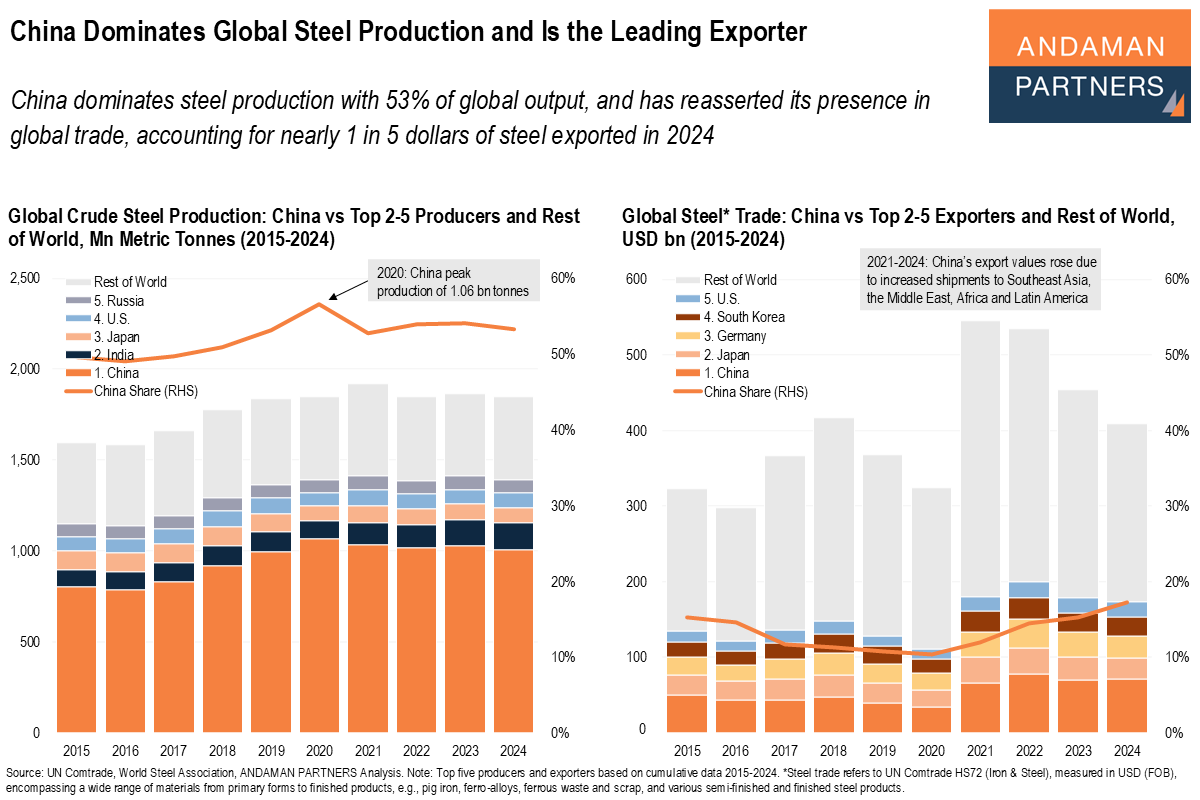
China dominates steel production, accounting for 53% of global output and nearly 1 in 5 dollars of steel exports in 2024.
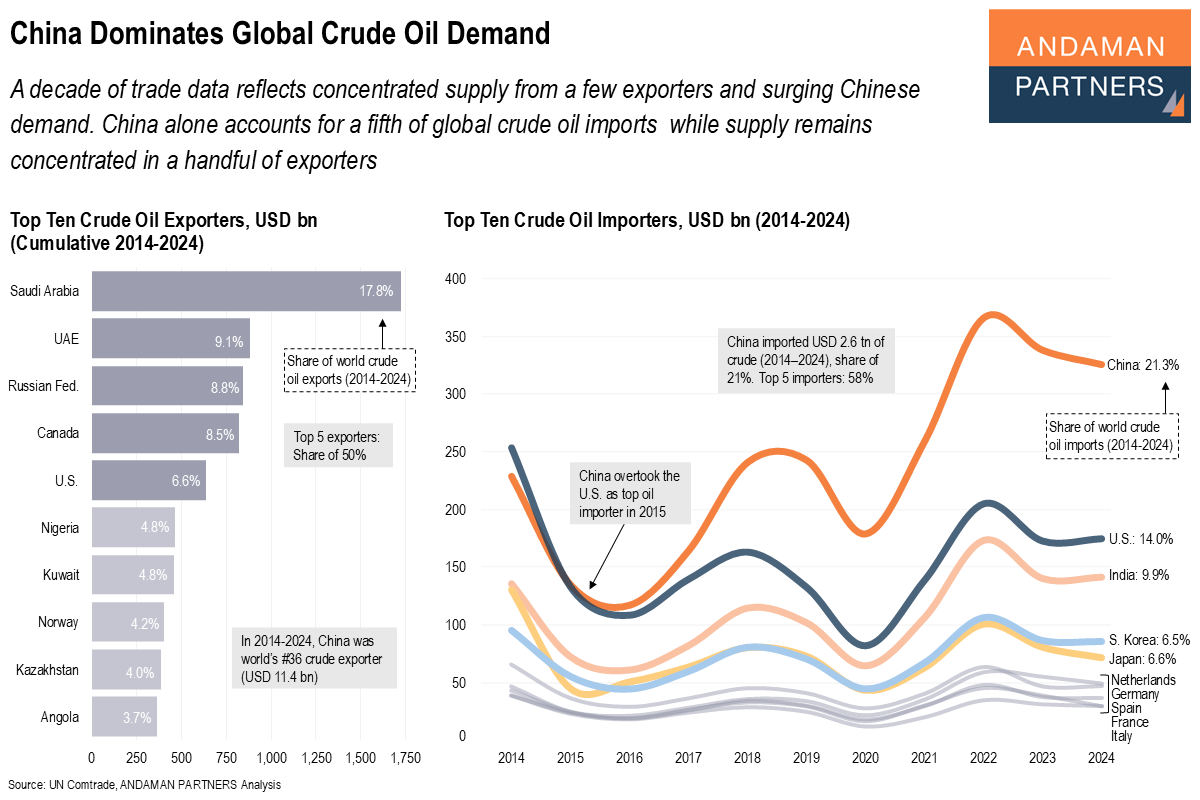
China alone accounts for a fifth of global crude oil imports while supply remains concentrated in a handful of exporters.
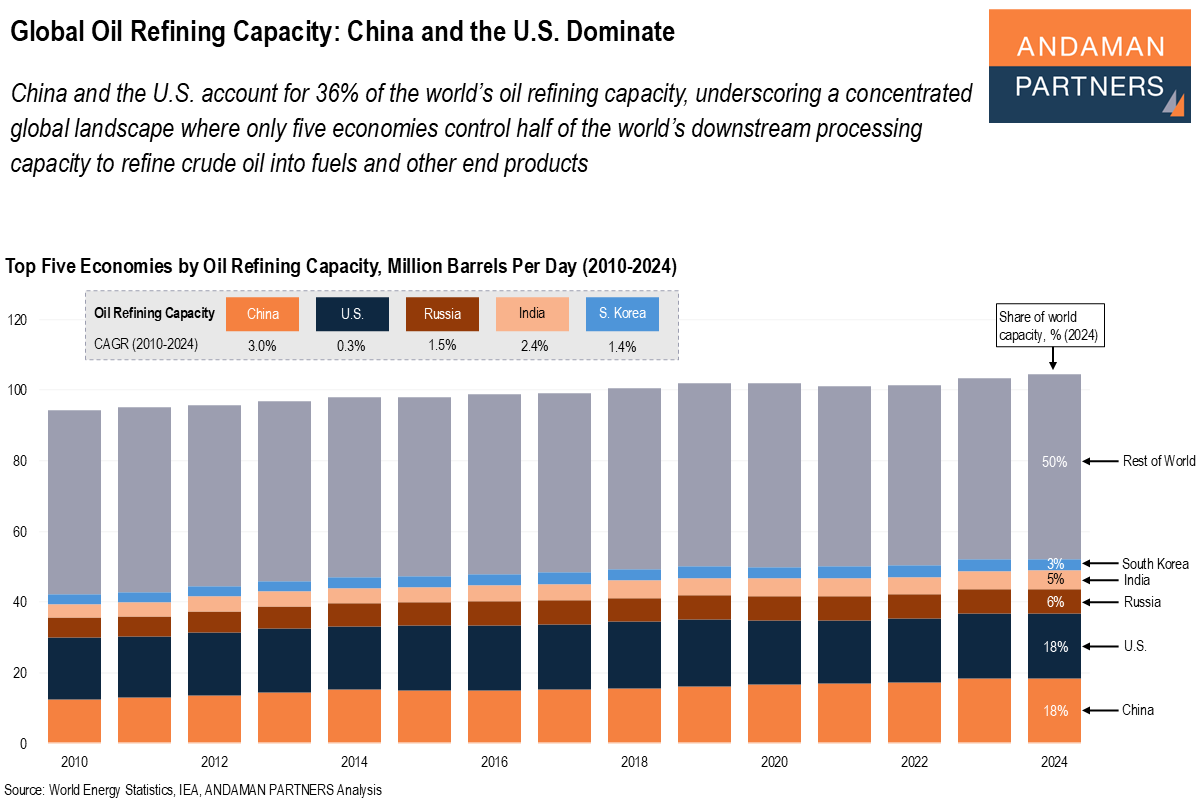
China and the U.S. account for 36% of the world’s oil refining capacity, and only five economies control half of the world’s capacity.

The world’s most dynamic economies with sustained economic growth are clustered in Africa as well as South, Central and Southeast Asia.

Beyond copper and lithium carbonate, Chile is a major supplier of fruit, fish, pulp, metals and chemicals, with China as the largest buyer.
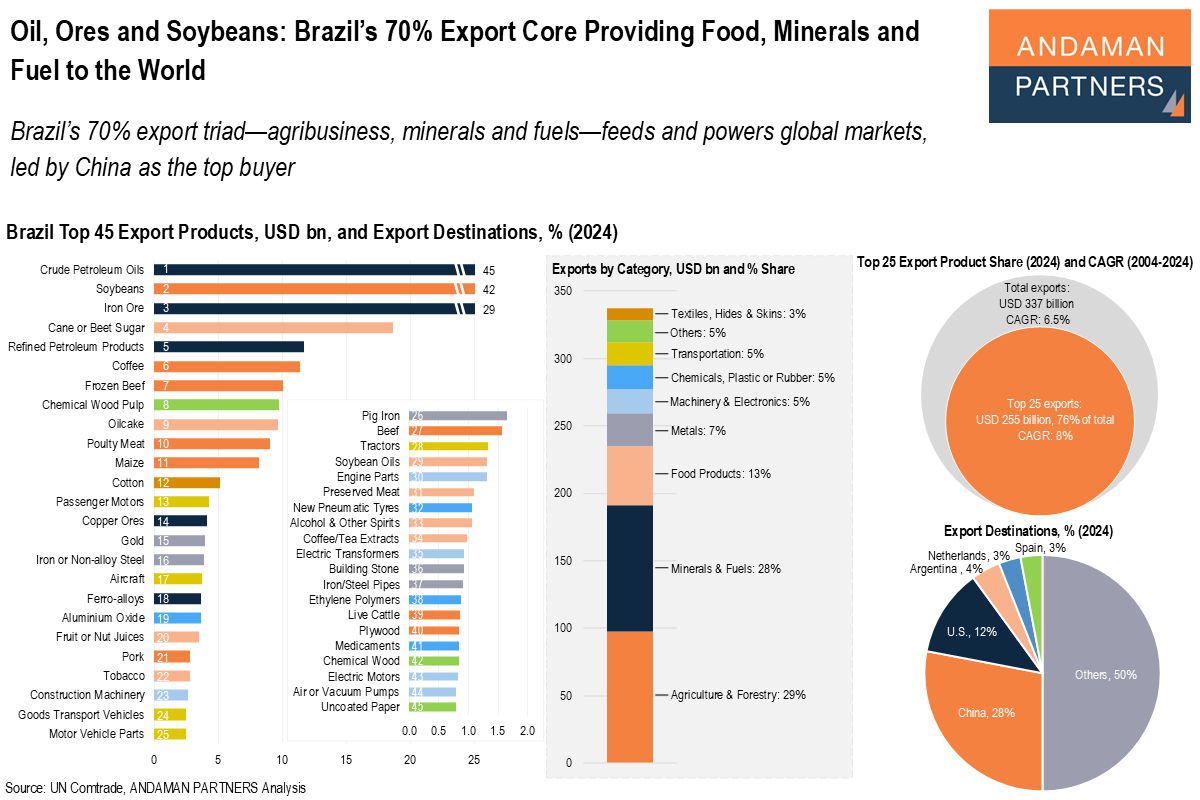
Brazil’s 70% export triad—agribusiness, minerals and fuels—feeds and powers global markets, led by China as the top buyer.
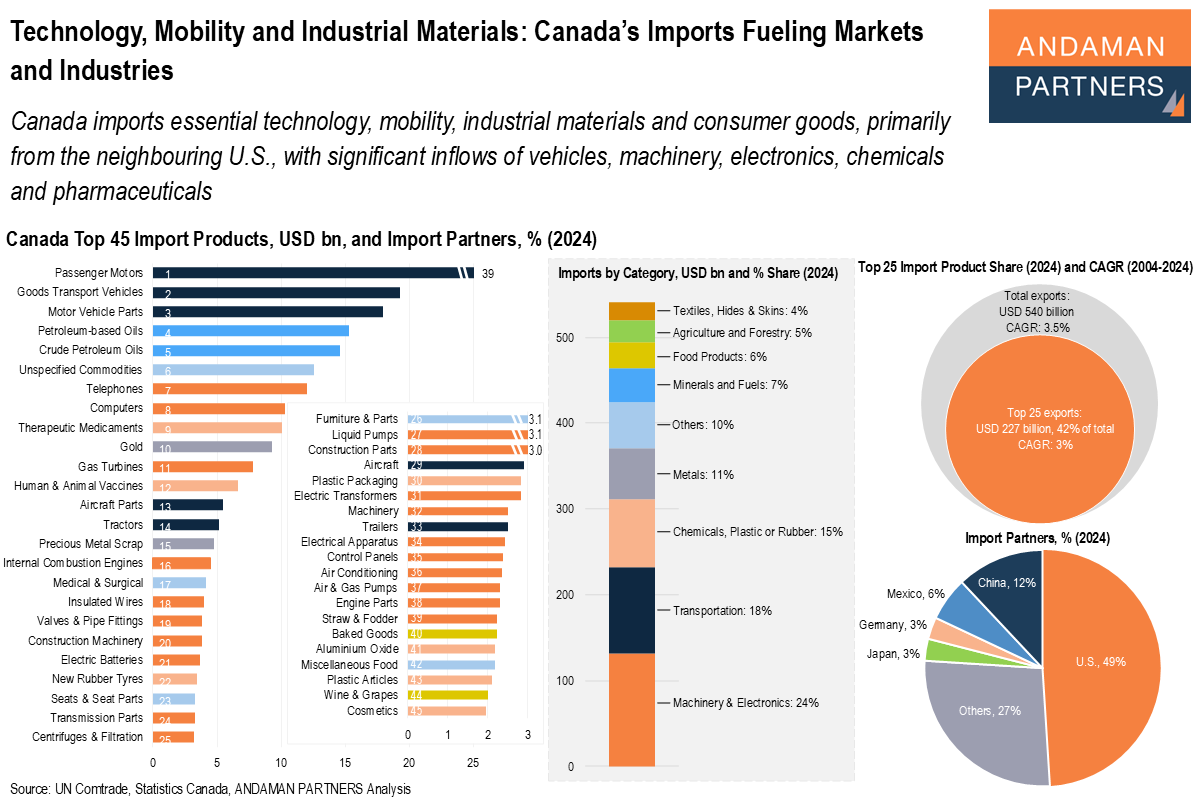
Canada imports essential technology, mobility, industrial materials and consumer goods, primarily from the neighbouring U.S.

Canada’s exports deliver energy, mobility and a variety of advanced manufacturing to the world, especially to the neighbouring U.S.