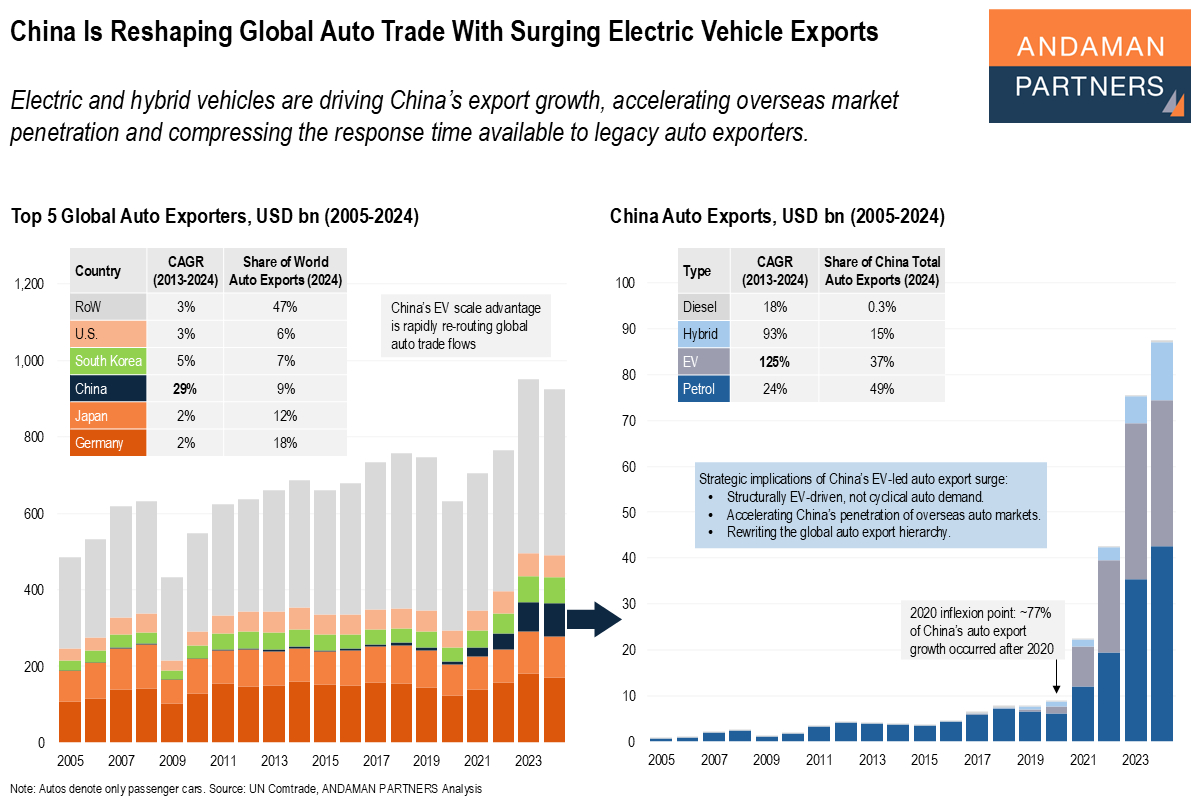
China Is Reshaping Global Auto Trade With Surging Electric Vehicle Exports
Electric and hybrid vehicles are driving China’s export growth, accelerating overseas market penetration and compressing the response time available to legacy auto exporters.

Electric and hybrid vehicles are driving China’s export growth, accelerating overseas market penetration and compressing the response time available to legacy auto exporters.
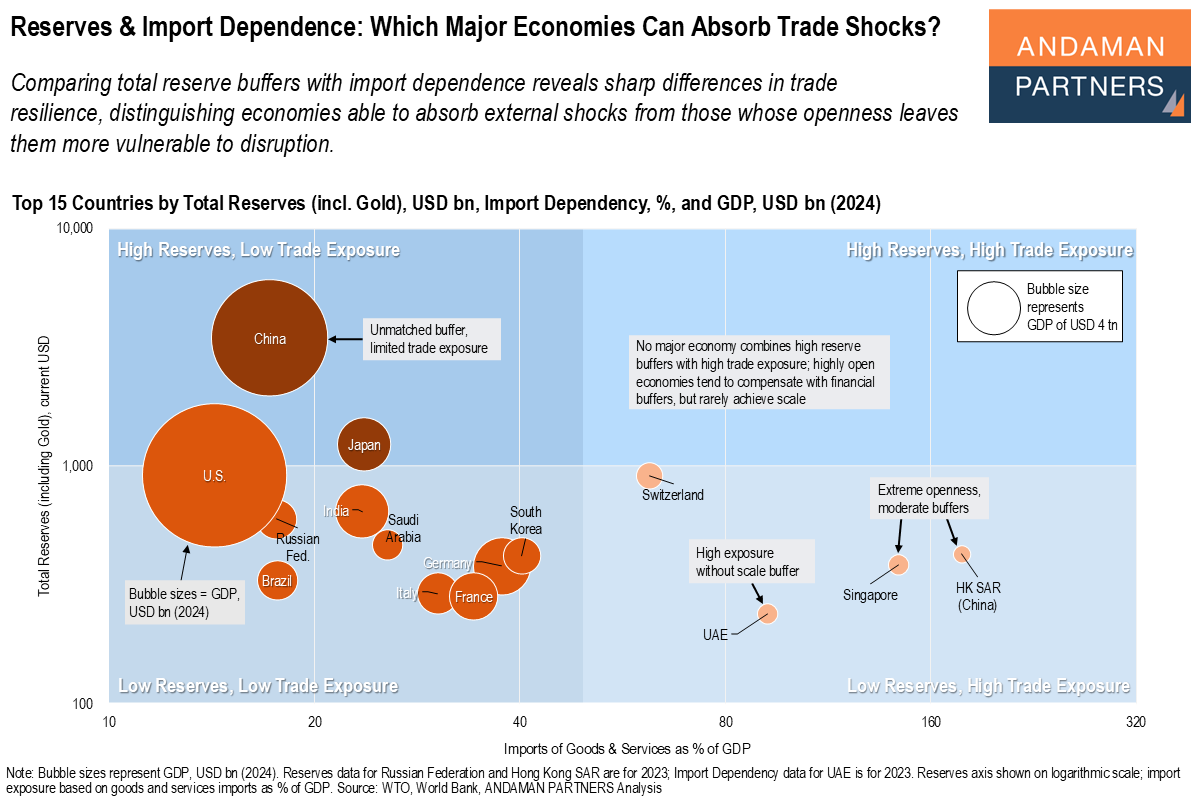
Comparing total reserve buffers with import dependence reveals sharp differences in trade resilience among major economies.
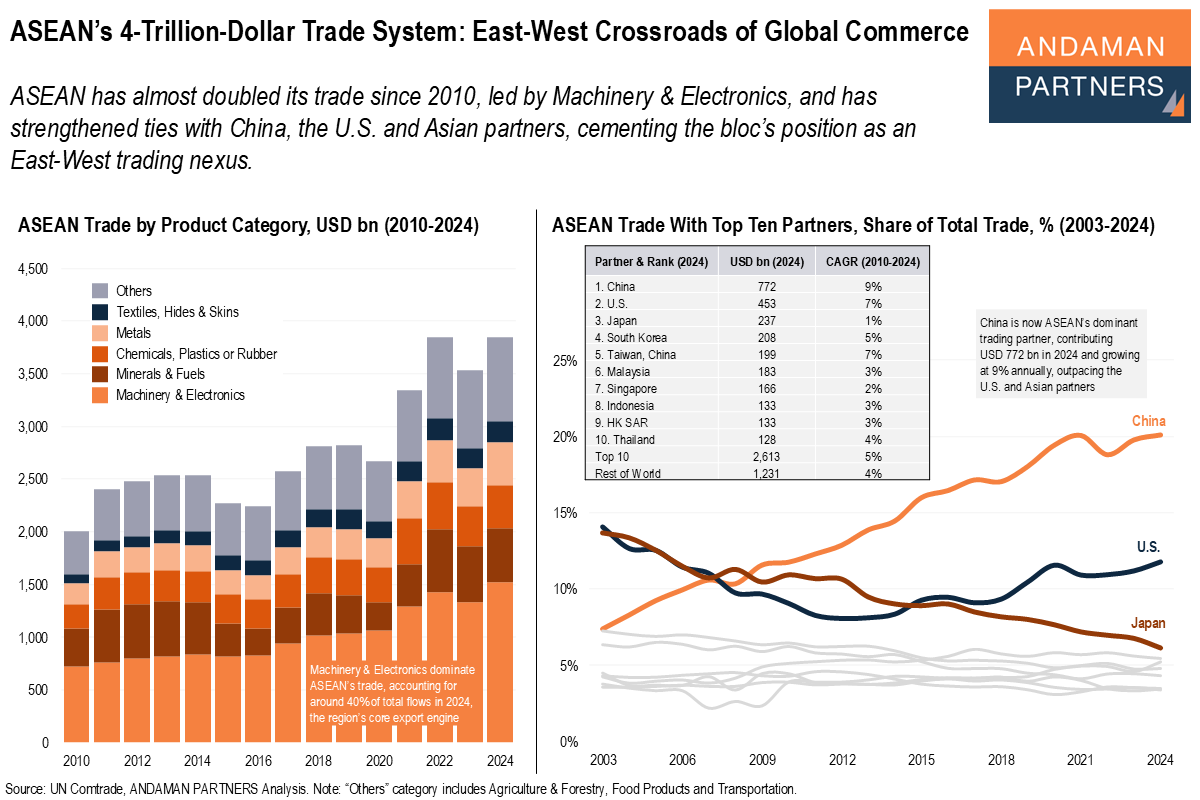
ASEAN has almost doubled its trade since 2010 and has strengthened ties with China and the U.S., cementing the bloc’s position as an East-West trading nexus.
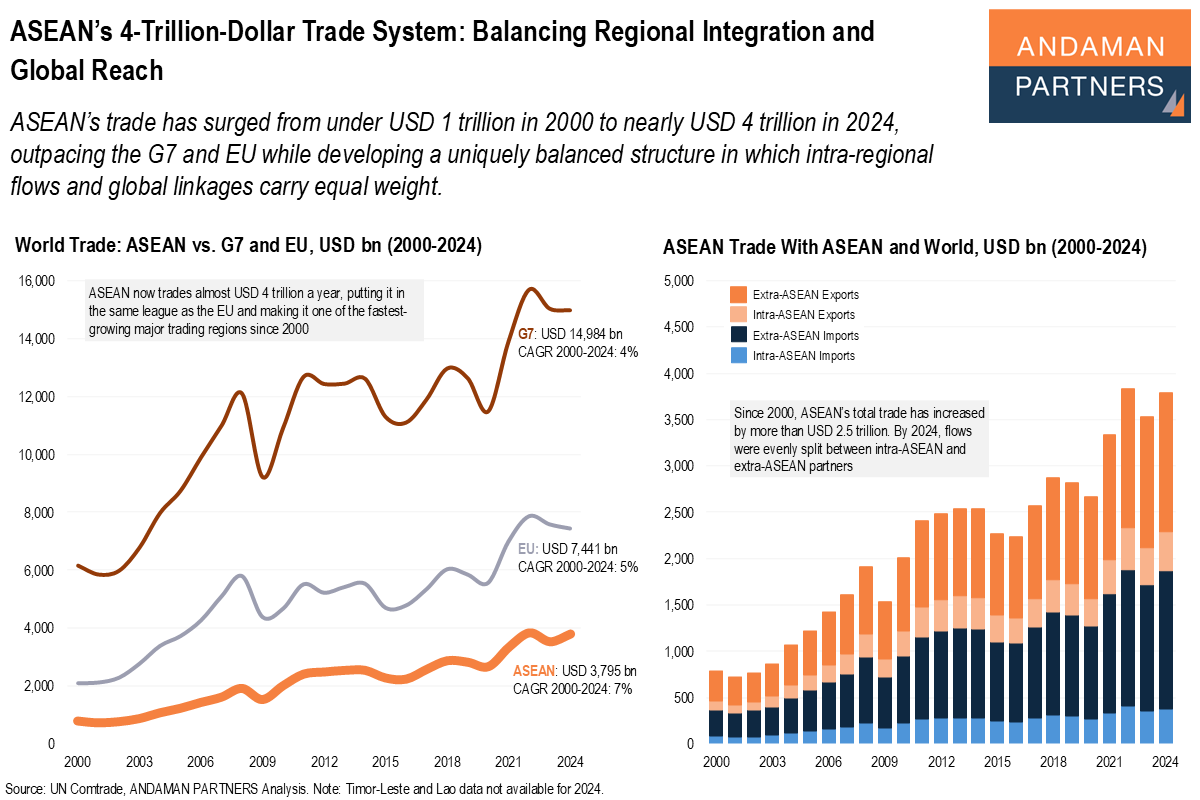
ASEAN’s trade has surged to nearly USD 4 trillion in 2024 while developing a uniquely balanced structure.
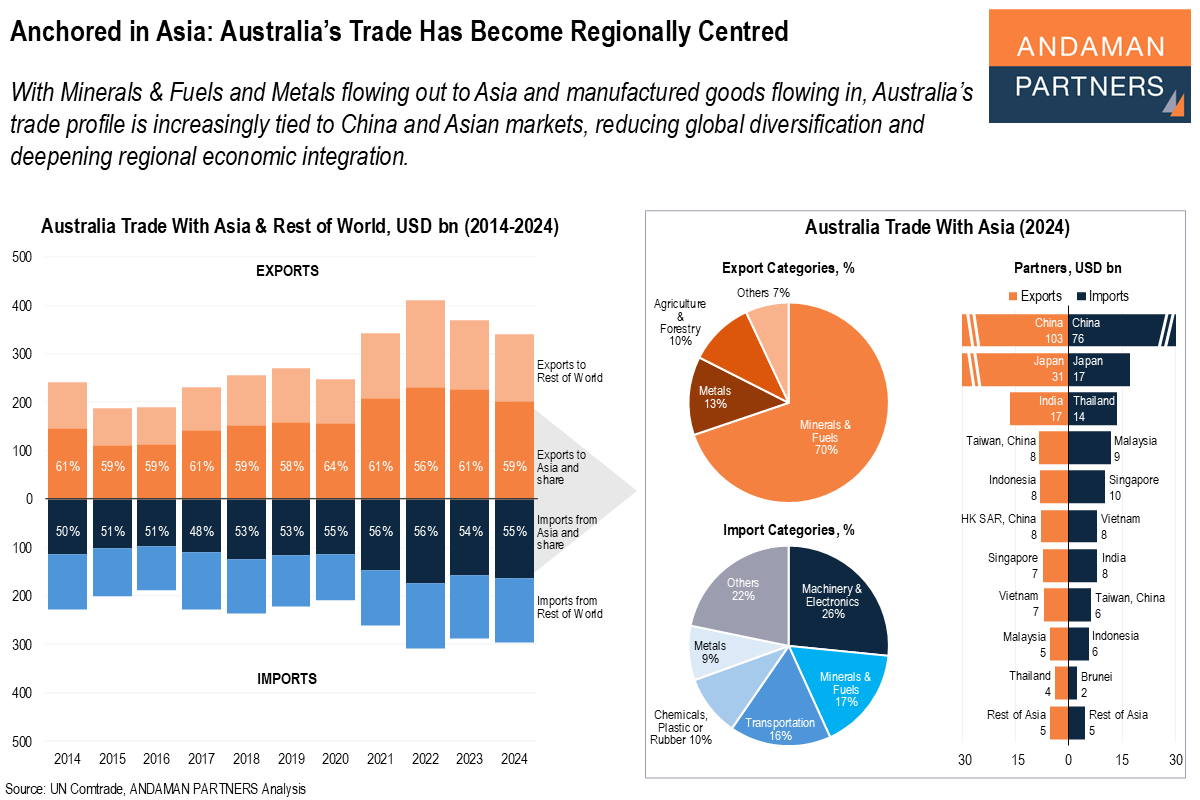
With Minerals & Fuels and Metals flowing out to Asia and manufactured goods flowing in, Australia’s trade profile is increasingly tied to China and Asian markets.
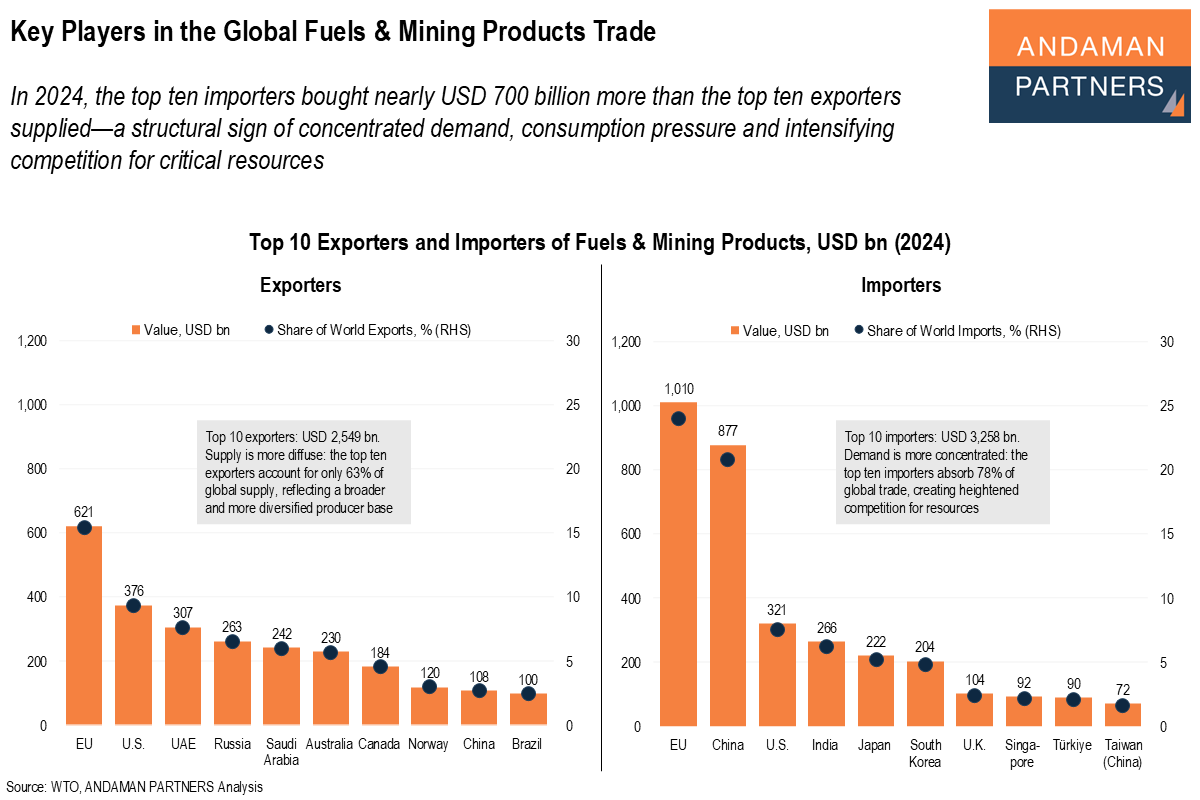
In 2024, the top ten importers bought nearly USD 700 billion more than the top ten exporters supplied.
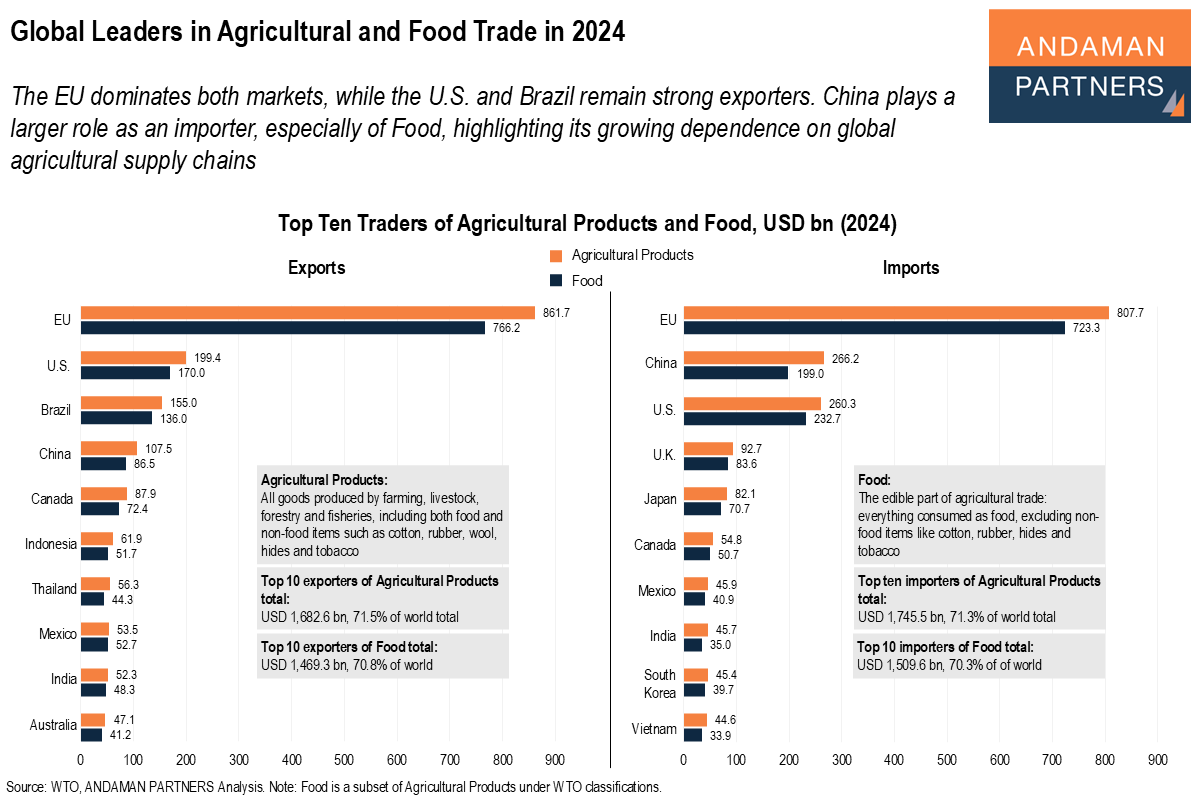
The EU dominates both markets, while the U.S. and Brazil remain strong exporters. China plays a larger role as an importer.
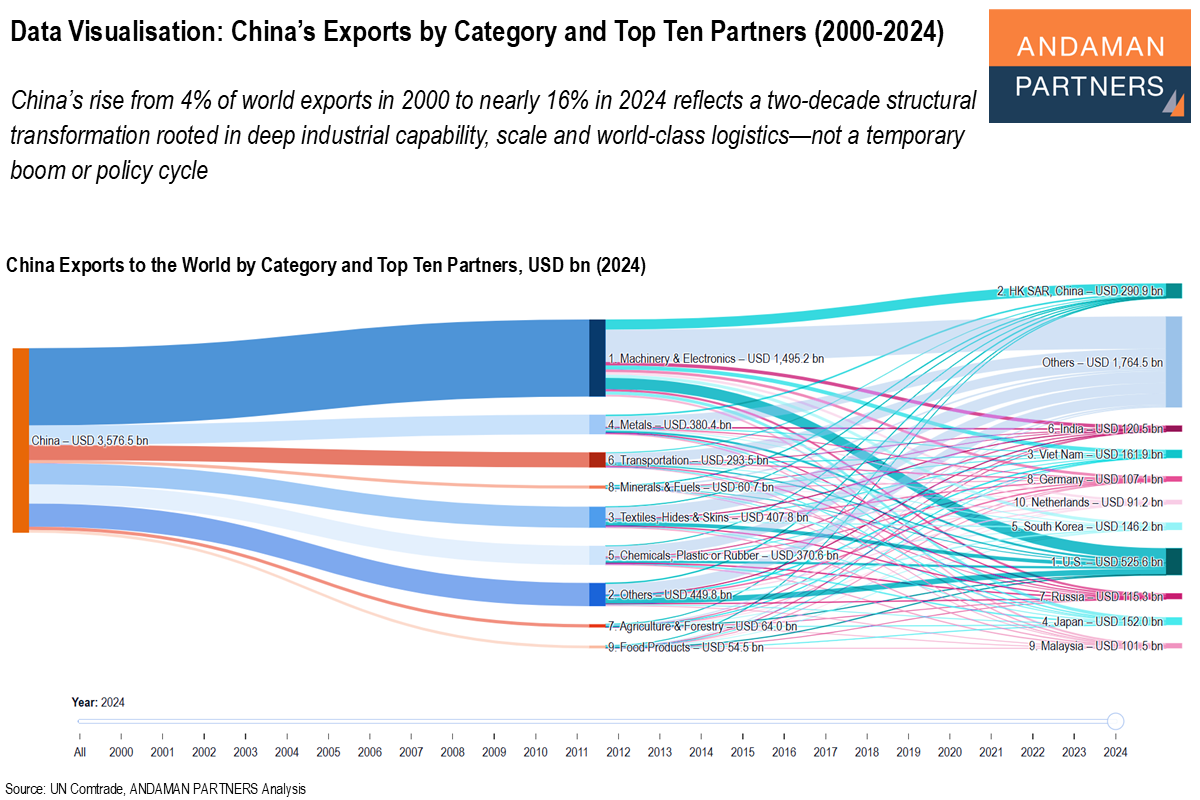
China’s rise from 4% of world exports in 2000 to nearly 16% in 2024 reflects a two-decade structural transformation.
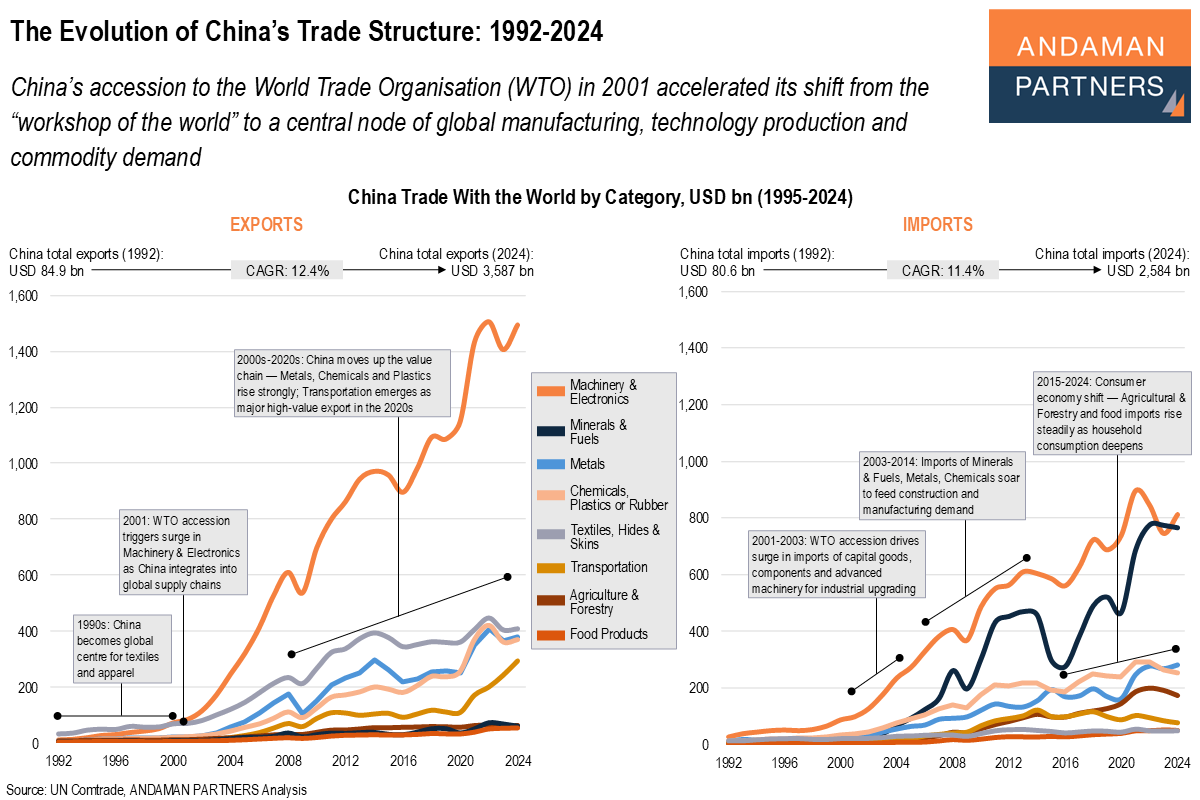
China’s accession to the WTO accelerated its shift from the “workshop of the world” to a central node of manufacturing, production and demand.
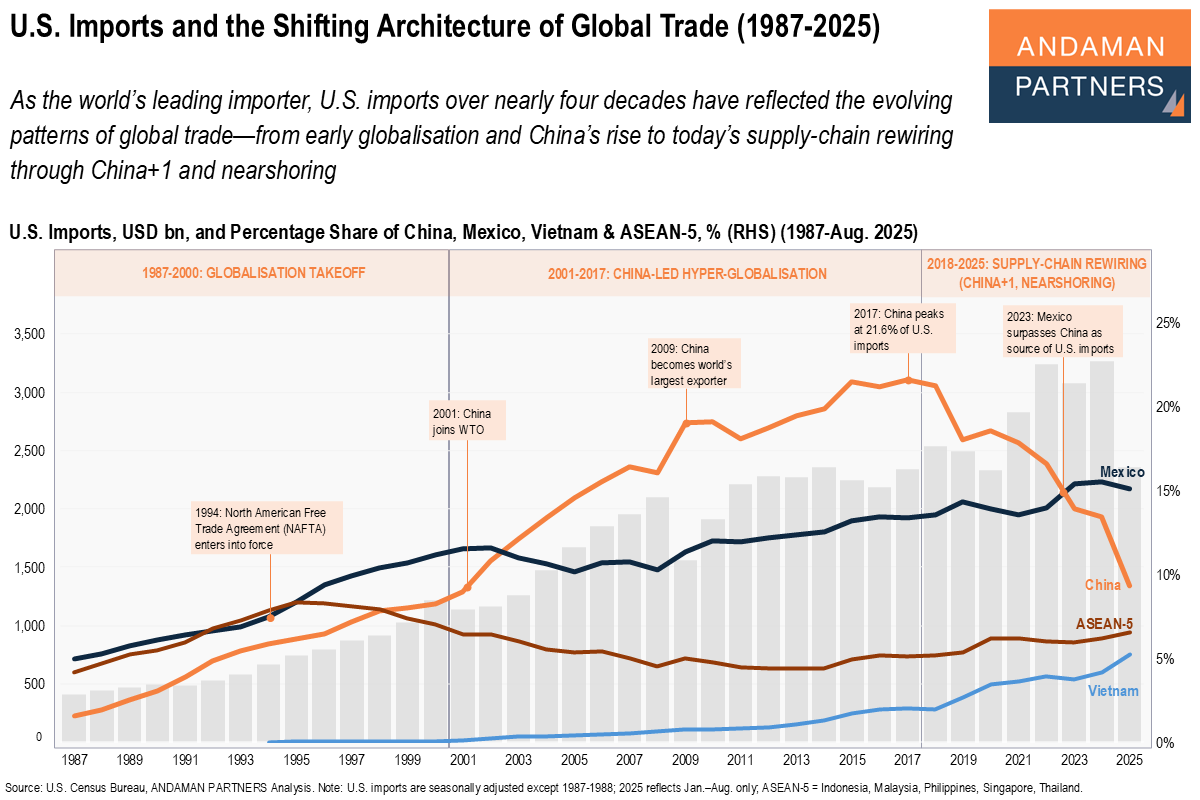
As the world’s leading importer, U.S. imports over nearly four decades have reflected the evolving patterns of global trade.