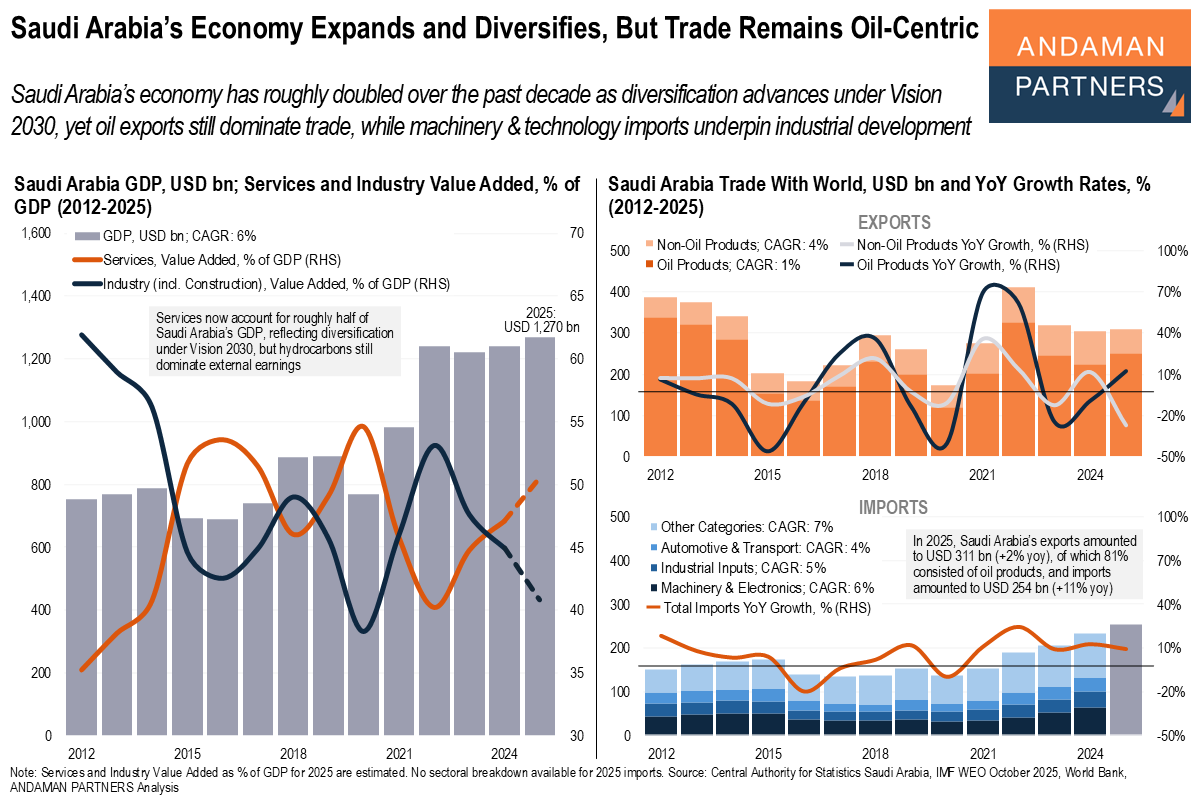
Saudi Arabia’s Economy Expands and Diversifies, But Trade Remains Oil-Centric
Saudi Arabia’s economy has roughly doubled over the past decade, yet oil exports still dominate trade.

Saudi Arabia’s economy has roughly doubled over the past decade, yet oil exports still dominate trade.
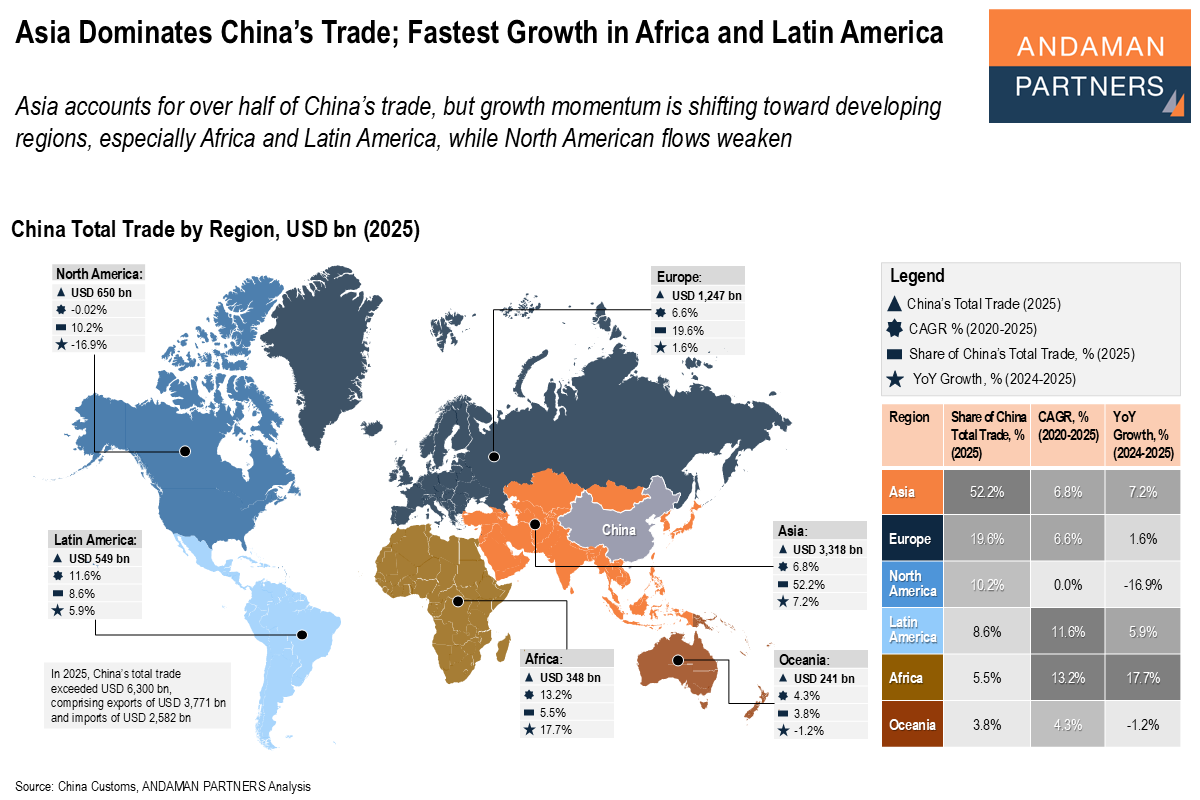
Asia accounts for over half of China’s trade, but growth momentum is shifting toward developing regions, especially Africa and Latin America.
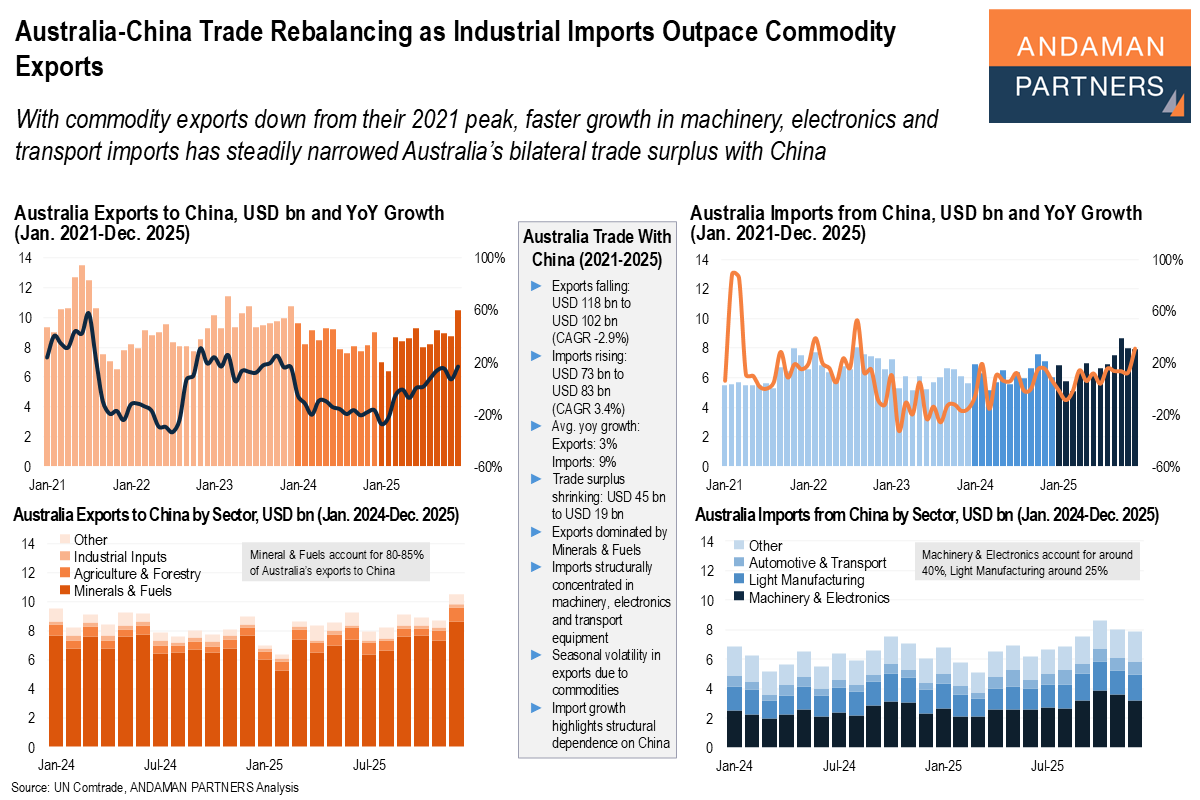
With commodity exports down from 2021, faster growth in machinery, electronics and transport imports has narrowed Australia’s trade surplus.
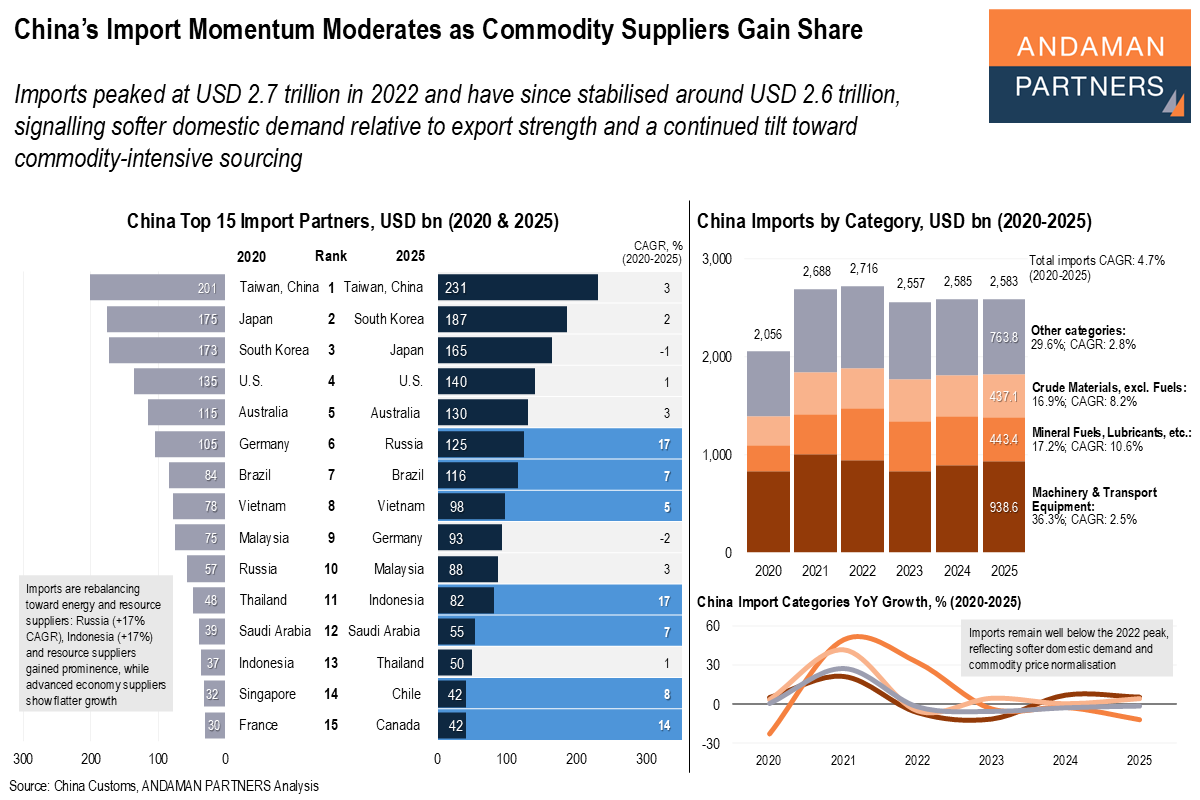
Imports have stabilised around USD 2.6 trillion, signalling softer domestic demand and a continued tilt toward commodity-intensive sourcing.
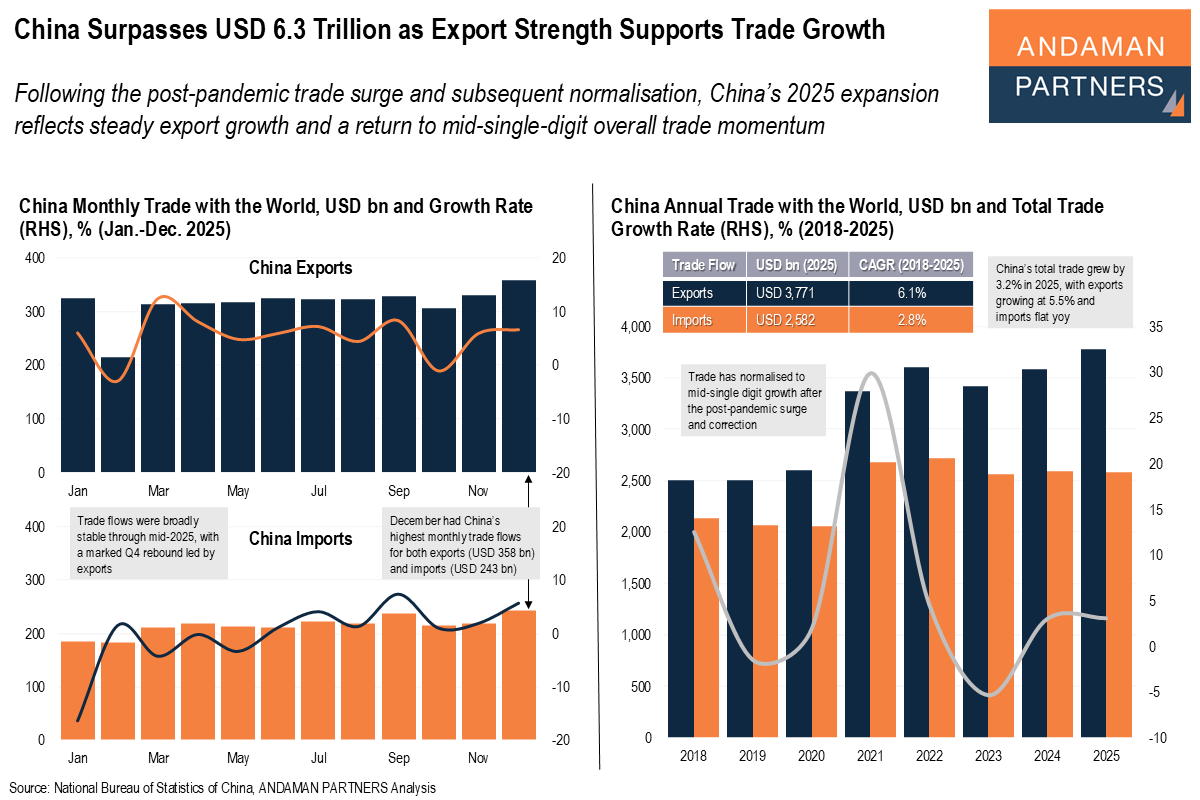
China’s 2025 expansion reflects steady export growth and a return to mid-single-digit overall trade momentum.
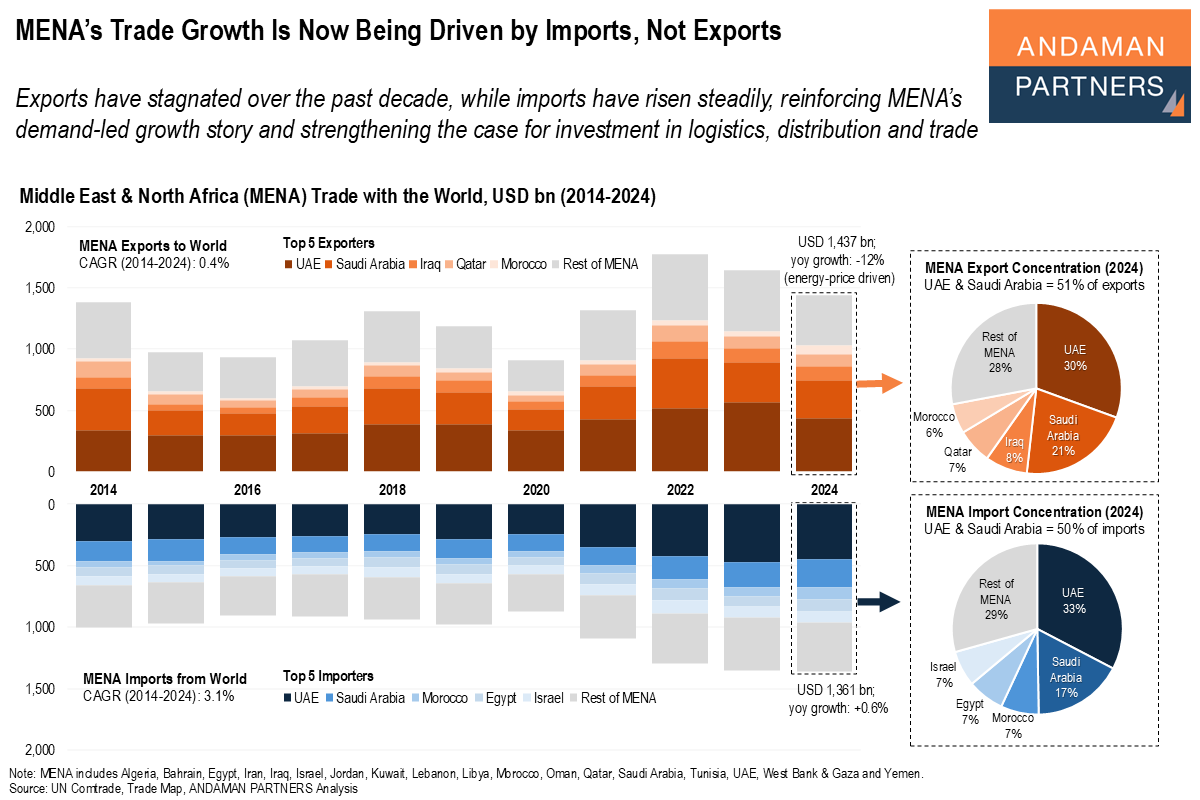
Exports have stagnated over the past decade, while imports have risen steadily, reinforcing MENA’s demand-led growth story.
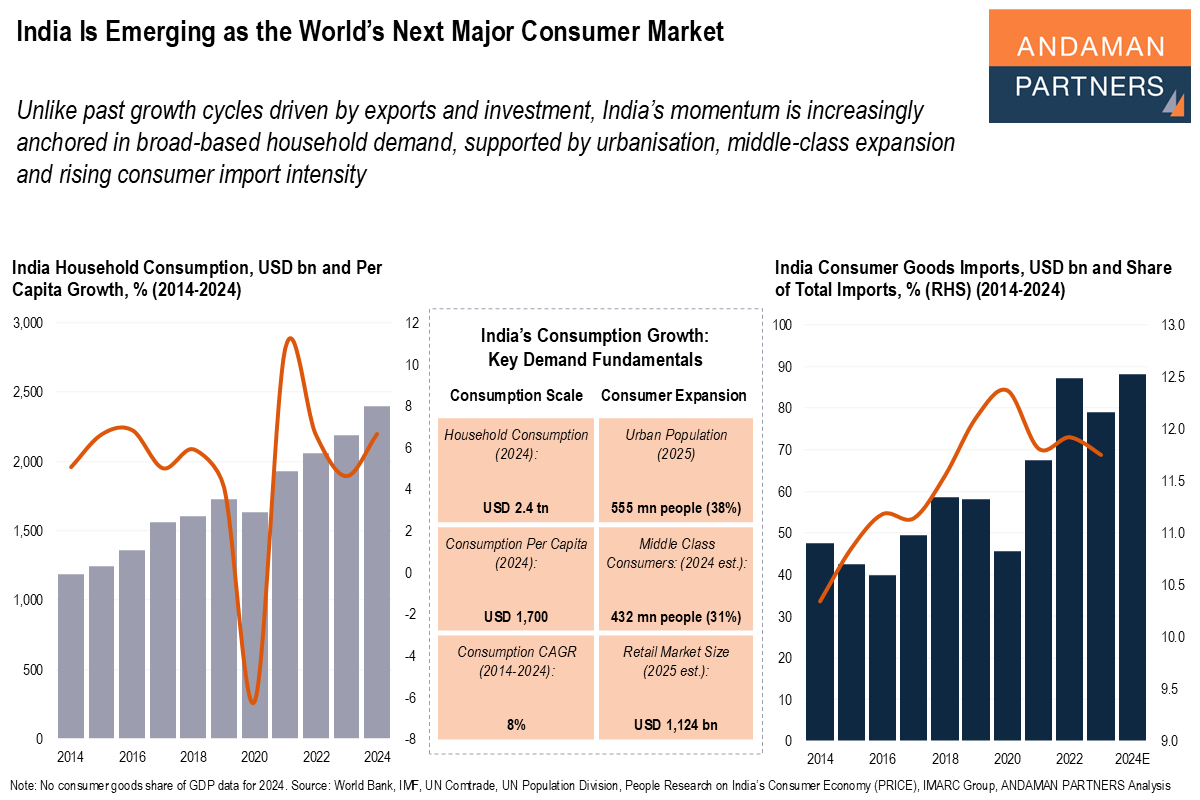
India’s momentum is anchored in broad-based household demand, supported by urbanisation, middle-class expansion and consumer import intensity.
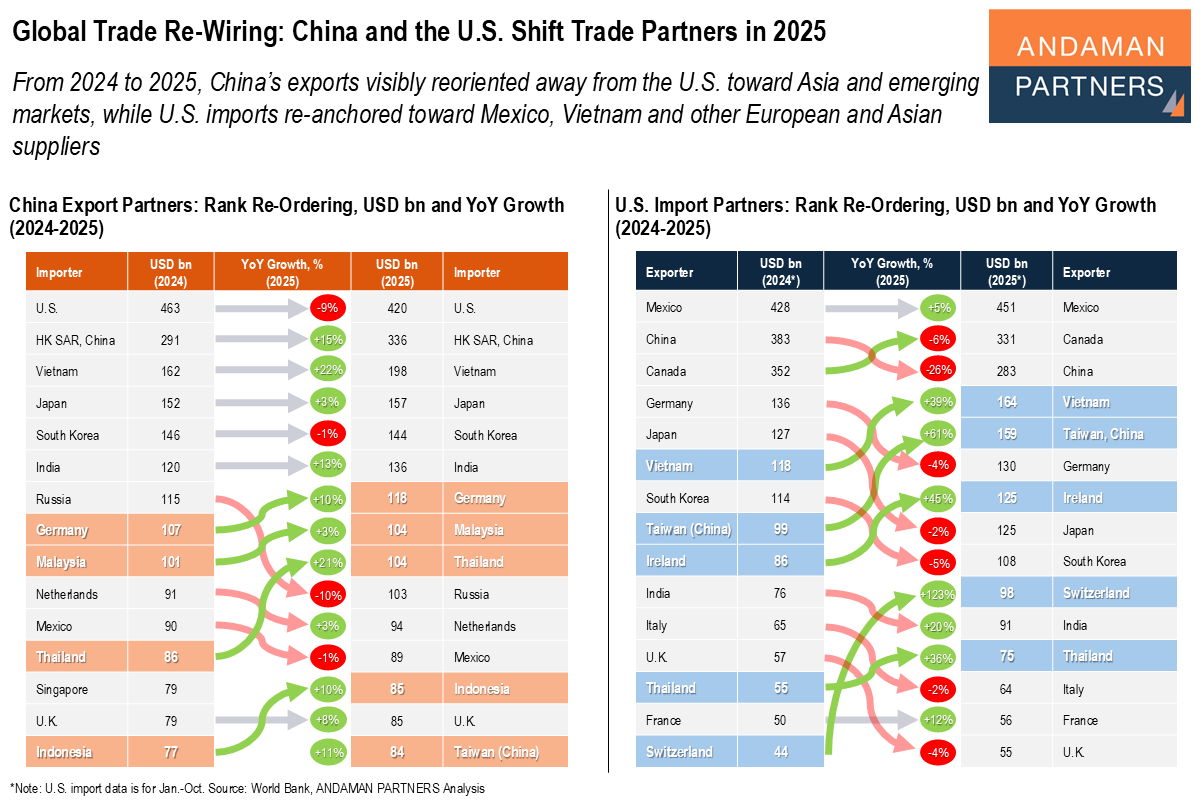
China’s exports reoriented away from the U.S. toward Asia and emerging markets, while U.S. imports re-anchored toward Mexico, Europe and Asia.
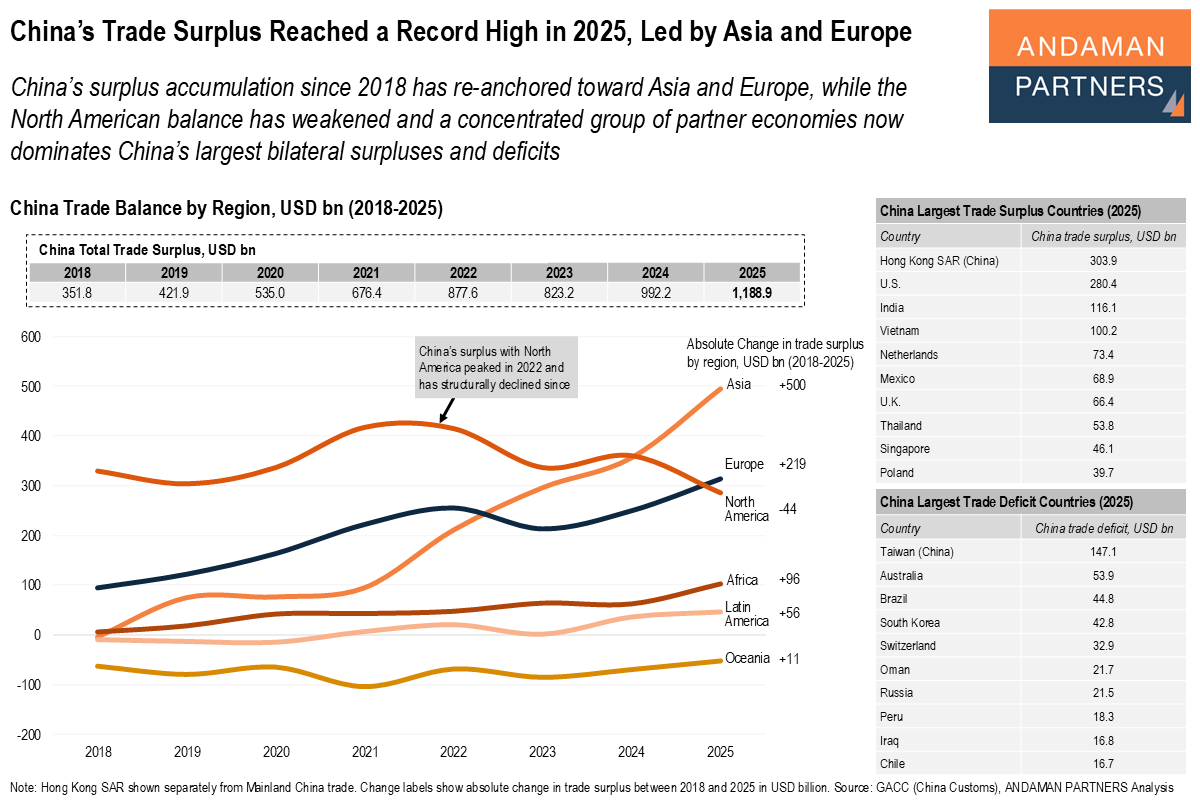
China’s surplus accumulation since 2018 has re-anchored toward Asia and Europe, while the North American balance has weakened.
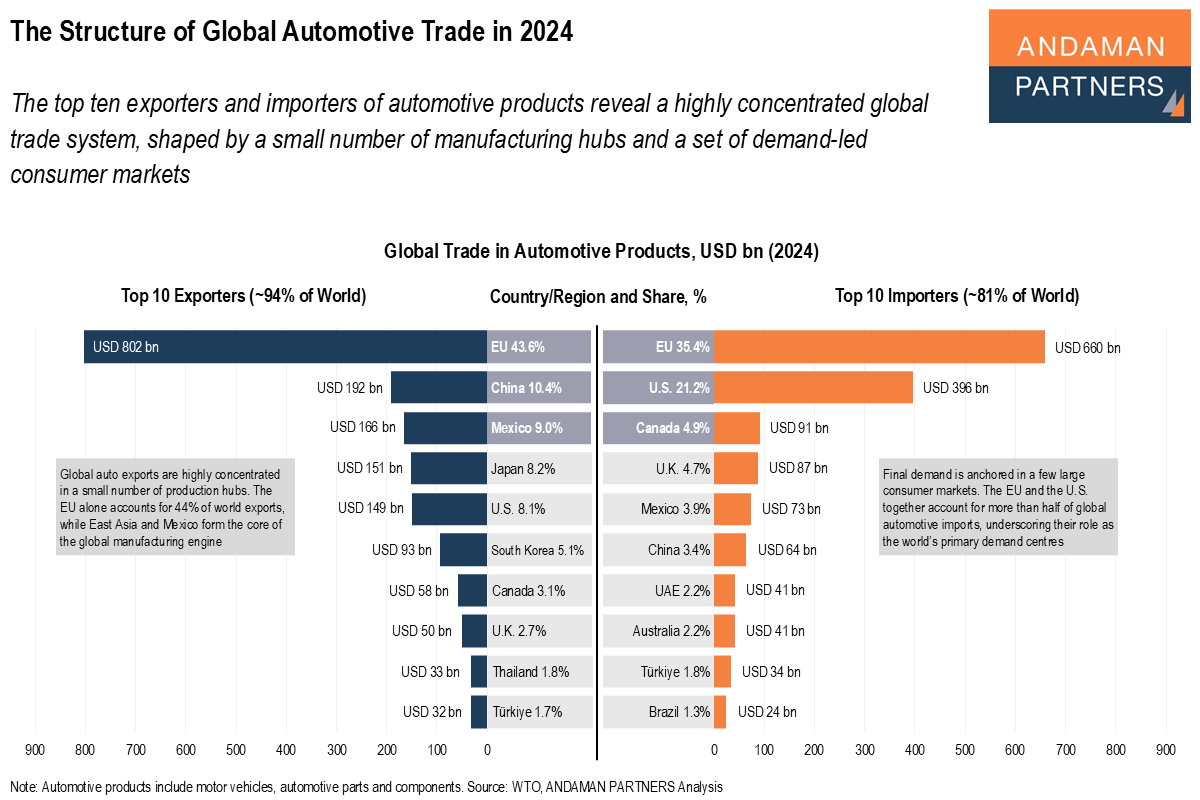
The top ten exporters and importers of automotive products reveal a highly concentrated global trade system.