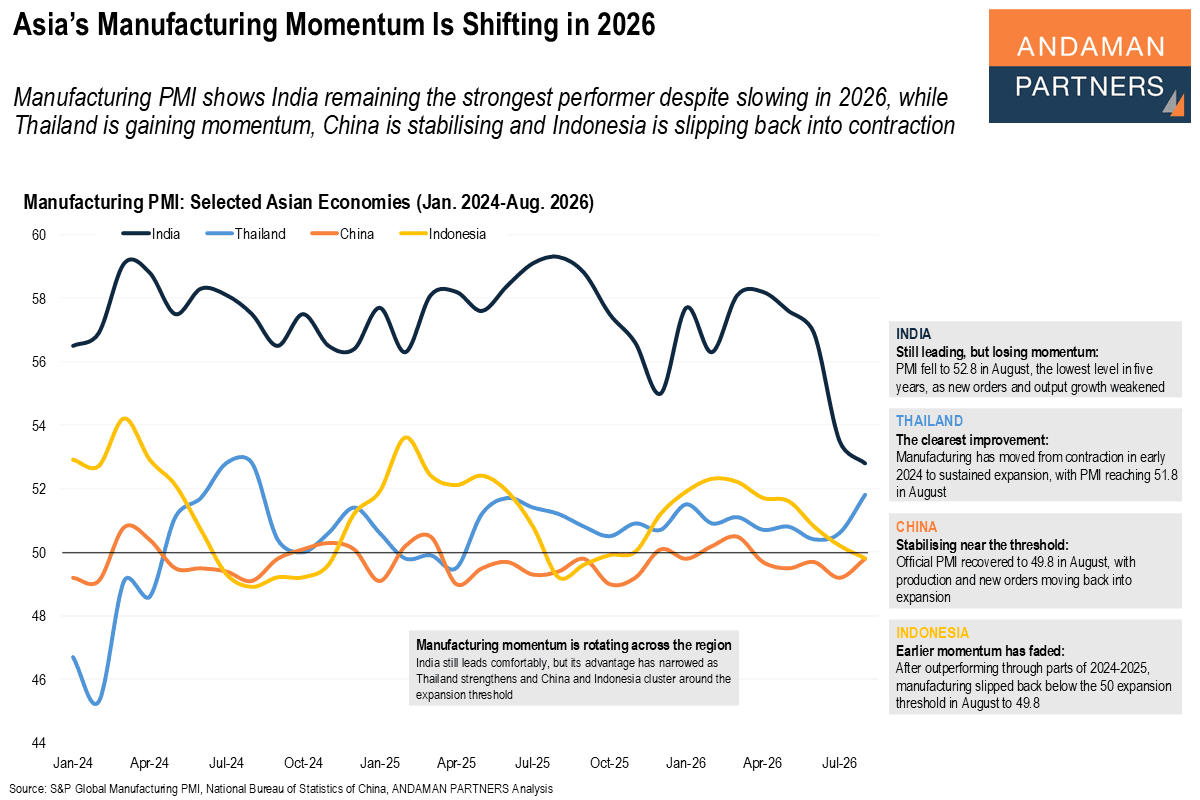
Asia’s Manufacturing Momentum Is Shifting in 2026
India leads despite slowing in 2026; Thailand is gaining momentum; China is stabilising and Indonesia is slipping back into contraction

India leads despite slowing in 2026; Thailand is gaining momentum; China is stabilising and Indonesia is slipping back into contraction
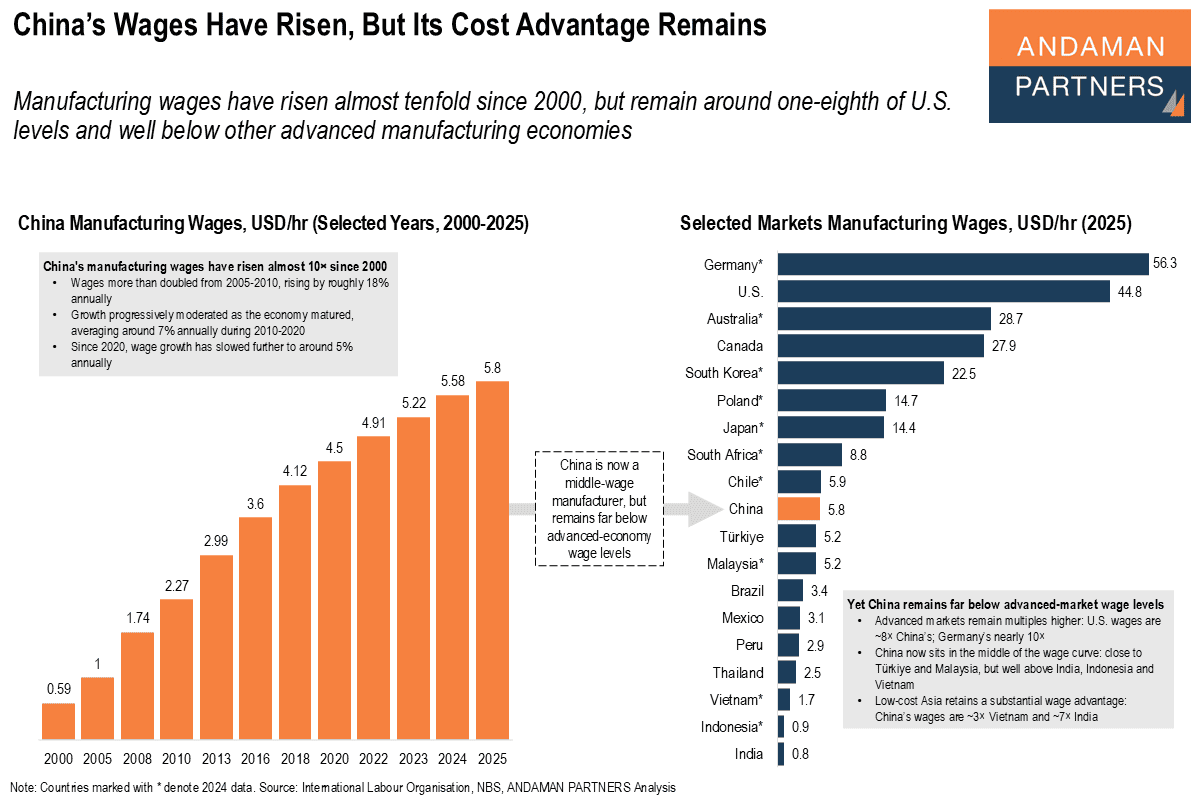
Manufacturing wages have risen almost tenfold since 2000, but remain well below advanced manufacturing economies
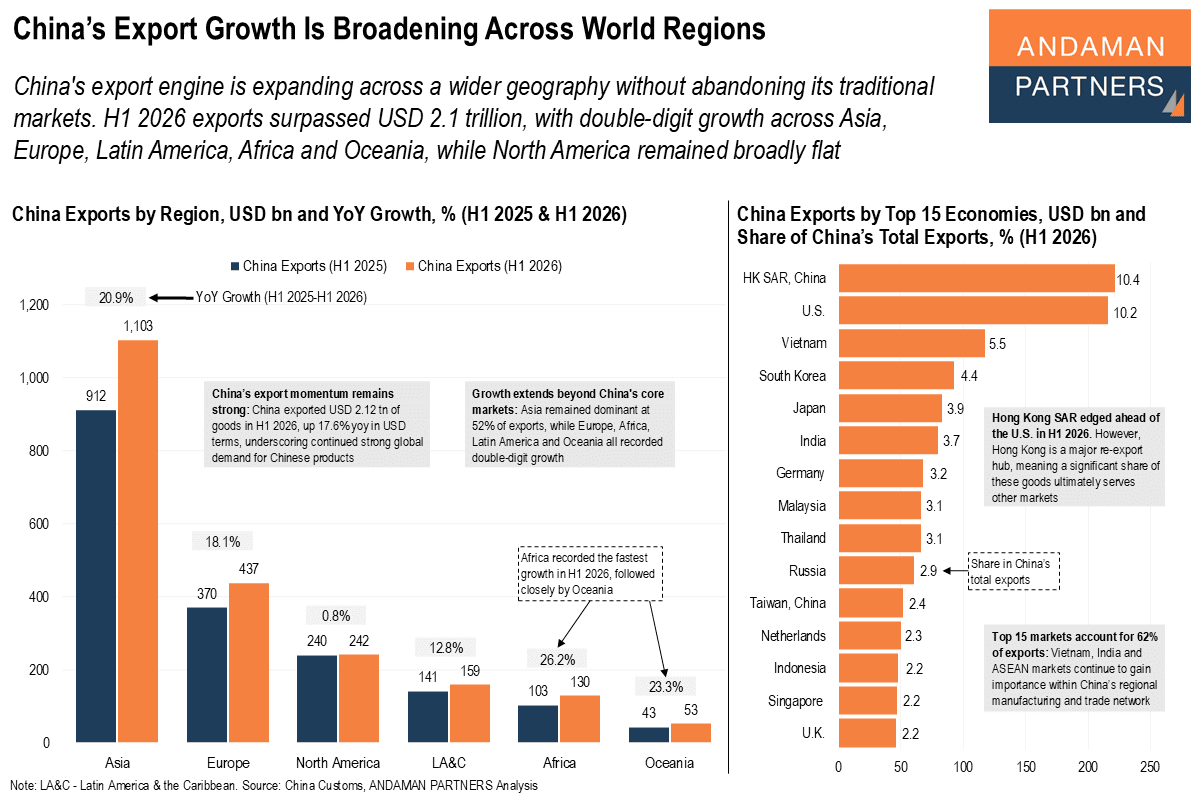
China's export engine is expanding across a wider geography without abandoning its traditional markets
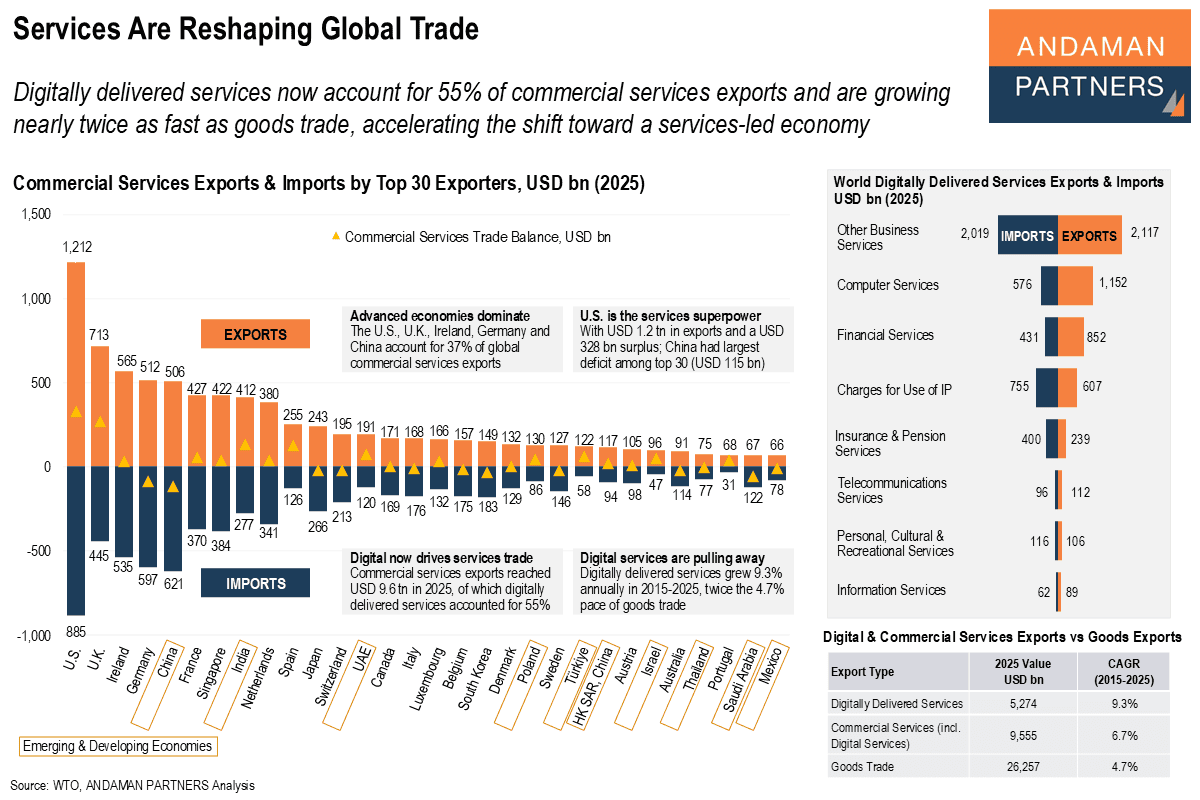
Digitally delivered services now account for 55% of commercial services exports and are growing nearly twice as fast as goods trade
ANDAMAN PARTNERS outlines and unpacks some of the broad shifts and fine intricacies of China’s economic development and transition.
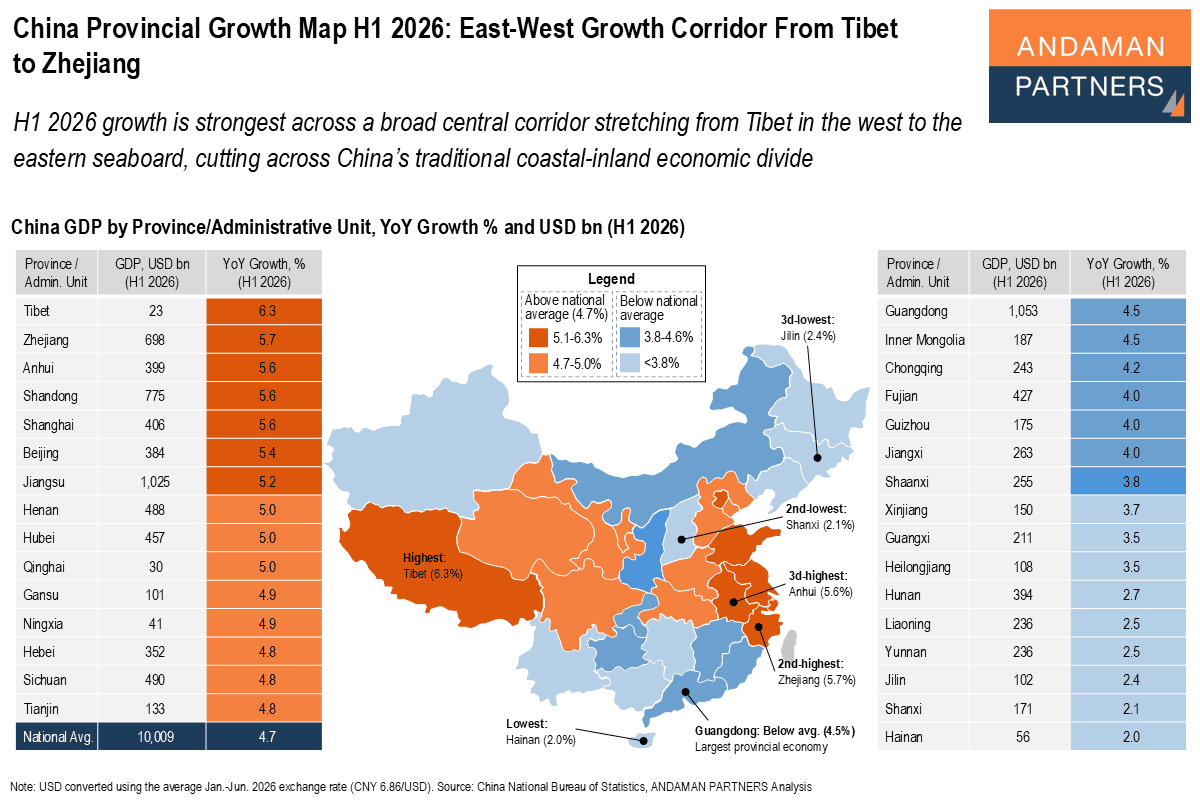
H1 2026 growth is strongest across a broad central corridor stretching from Tibet in the west to the eastern seaboard
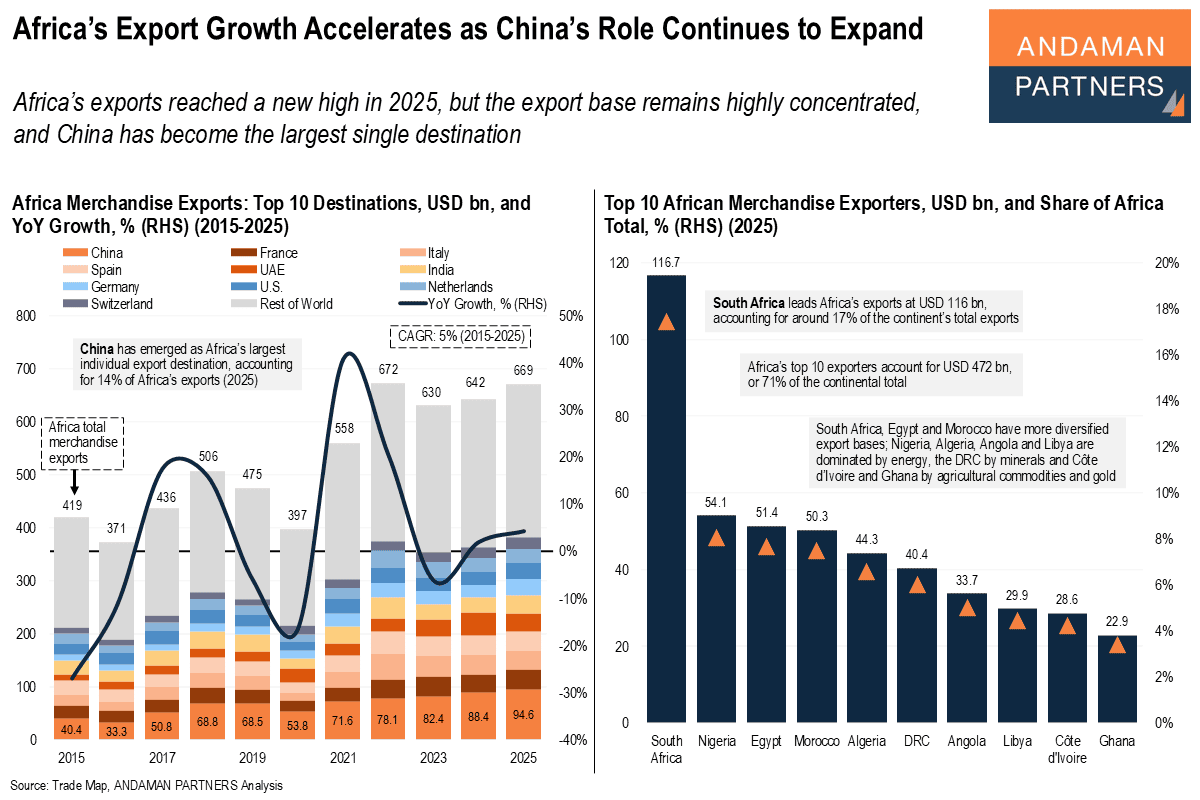
Africa’s exports reached a new high in 2025, but the export base remains highly concentrated, and China has become the largest single destination
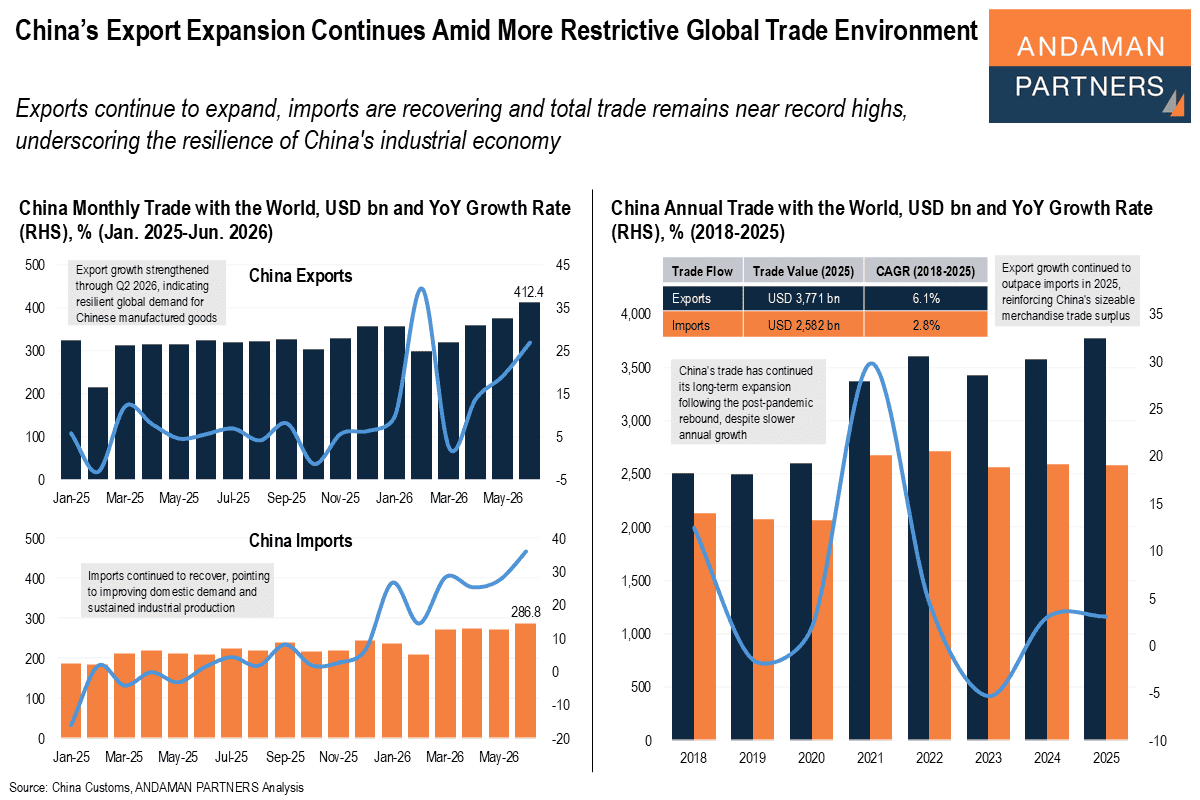
Exports continue to expand, imports are recovering and total trade remains near record highs
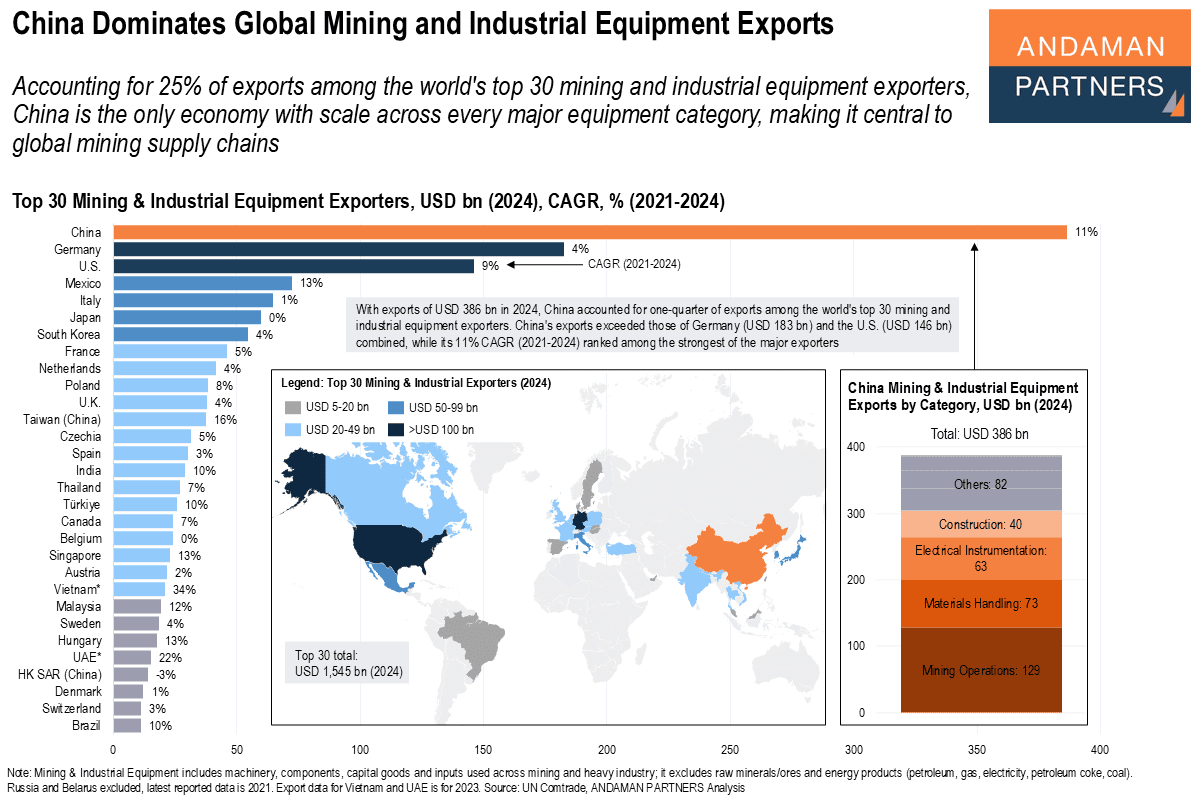
China is the only economy with scale across every major equipment category, making it central to global mining supply chains
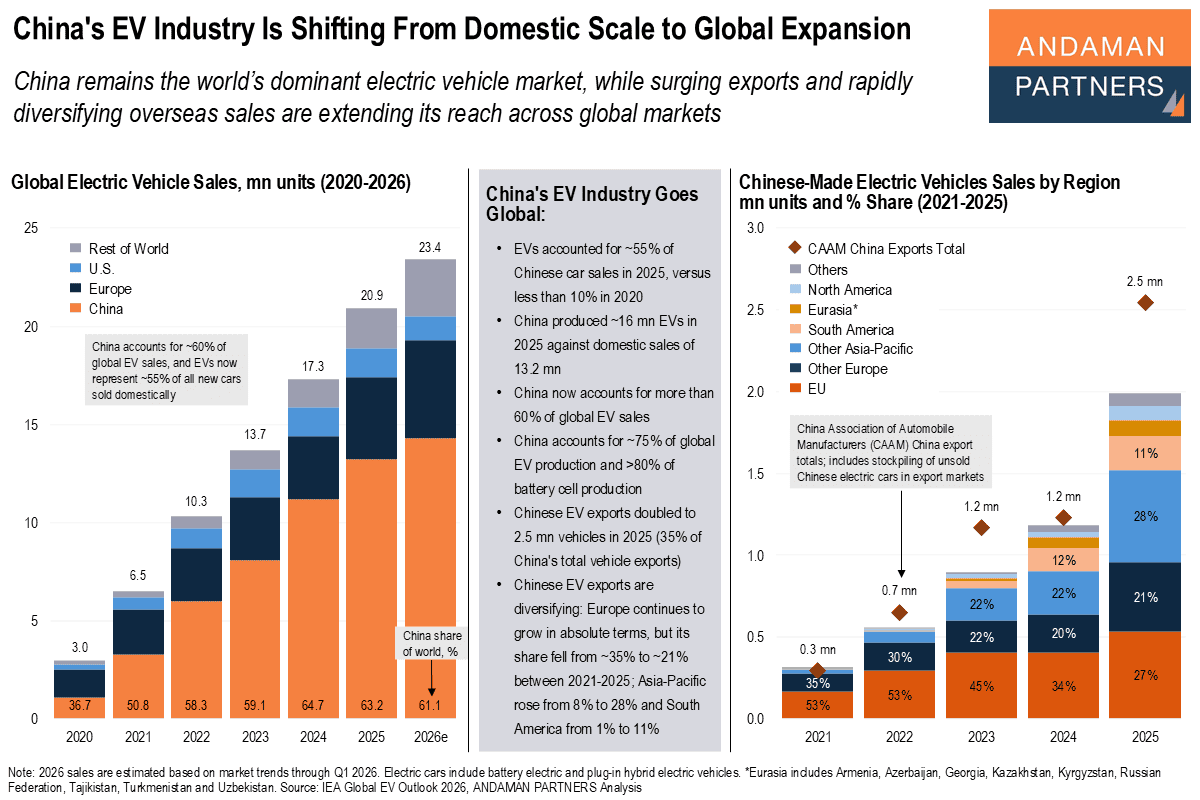
China is the world’s dominant EV market, and surging exports and diversifying overseas sales are extending its reach across global markets