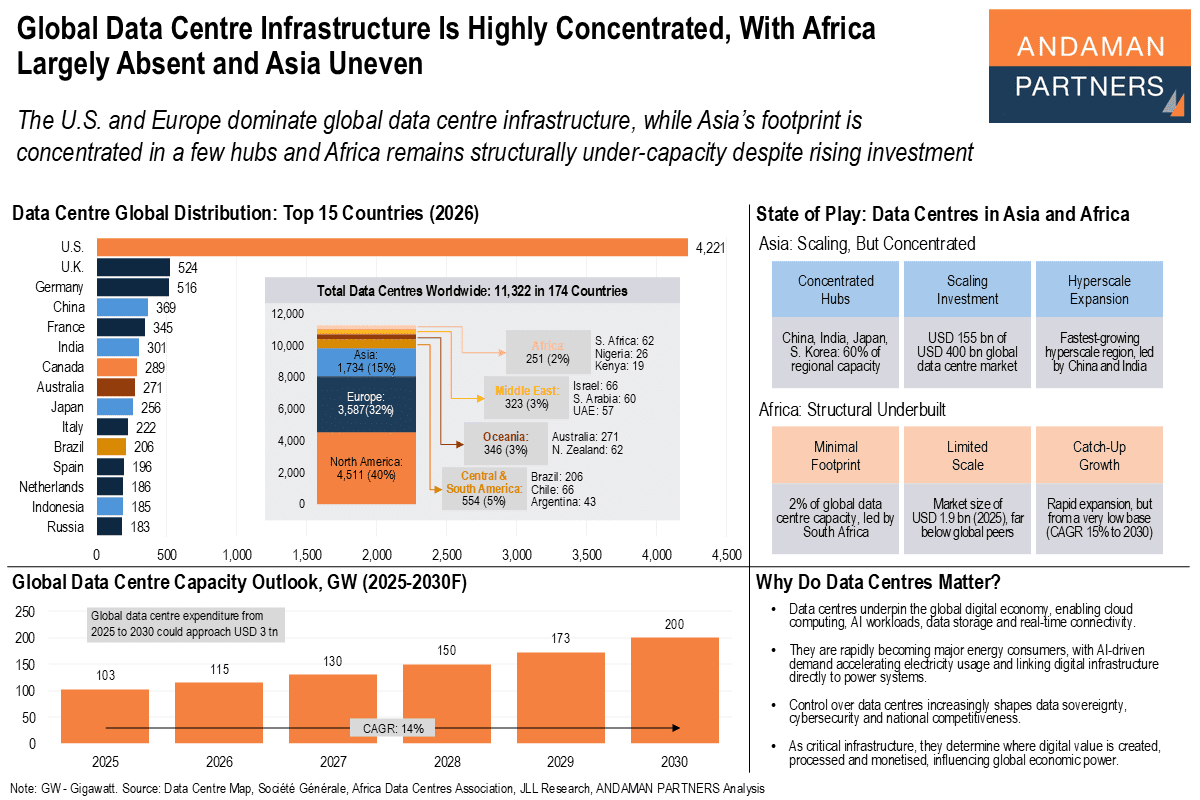
Global Data Centre Infrastructure Is Highly Concentrated, With Africa Largely Absent and Asia Uneven
The U.S. and Europe dominate global data centre infrastructure, while Asia’s footprint is concentrated in a few hubs

The U.S. and Europe dominate global data centre infrastructure, while Asia’s footprint is concentrated in a few hubs
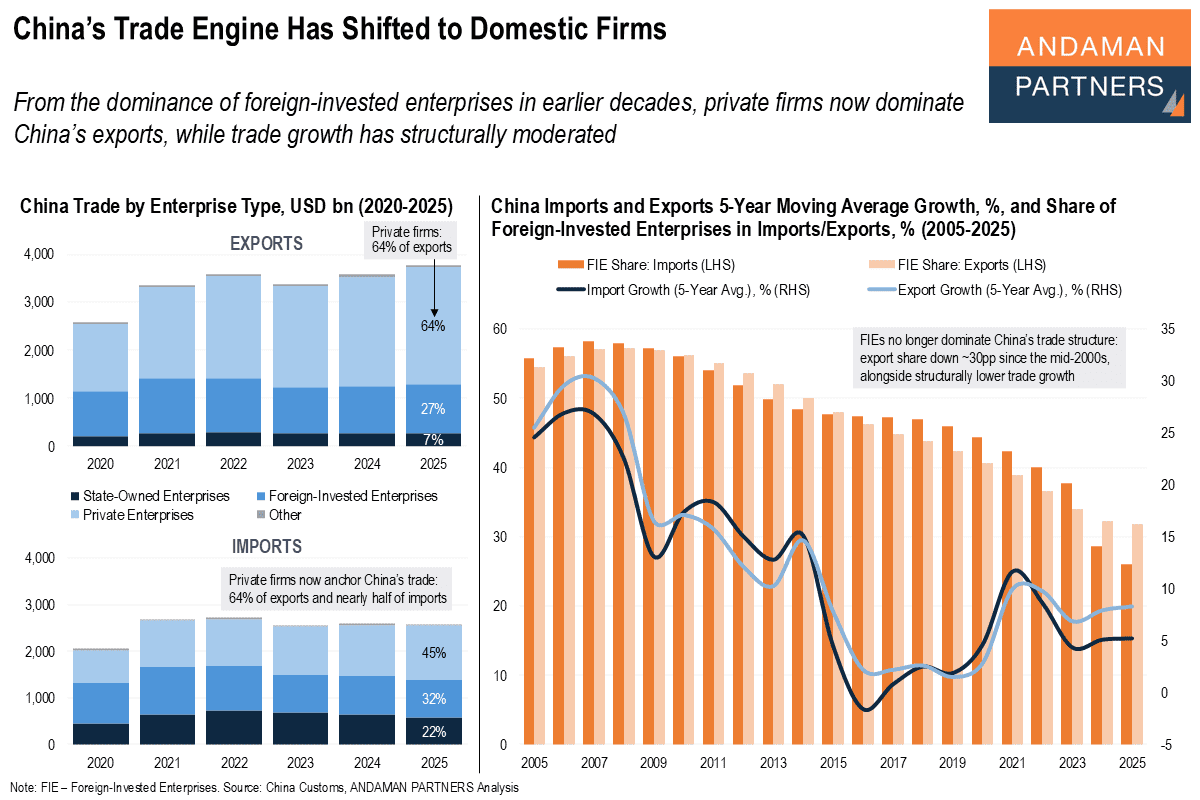
Private firms now dominate China’s exports, while trade growth has structurally moderated.
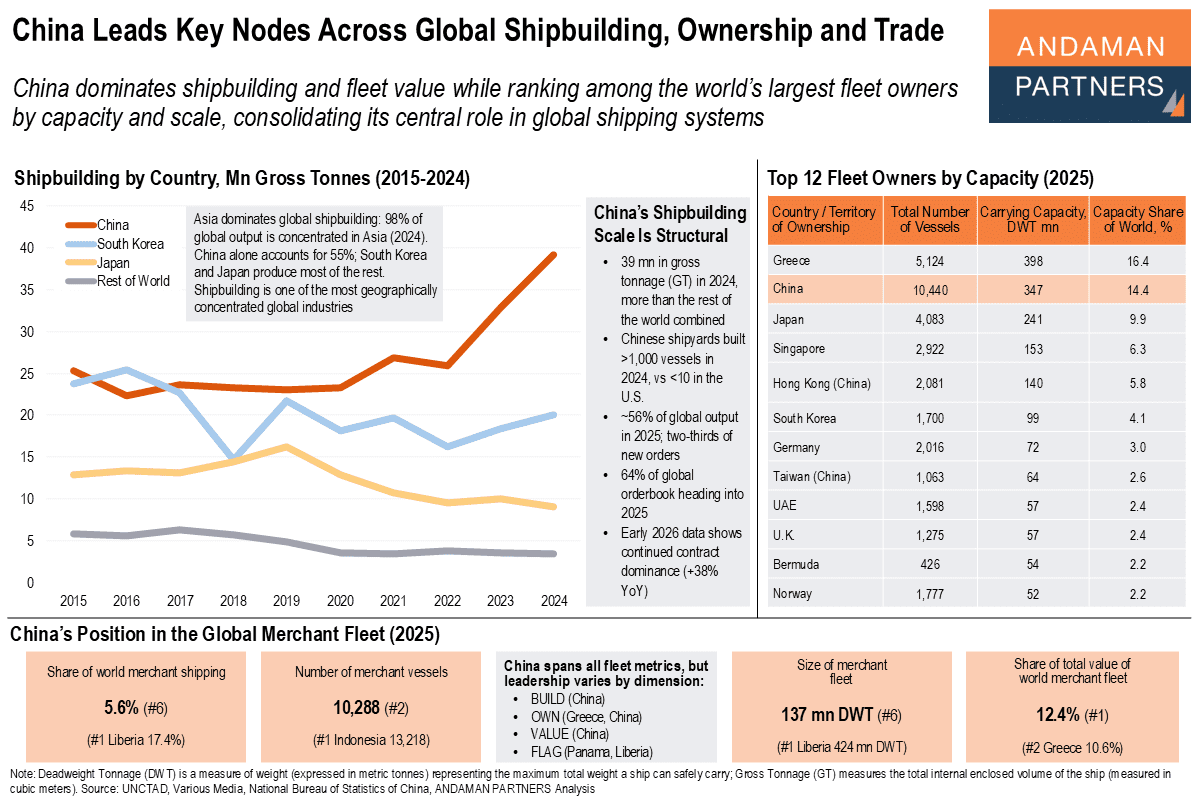
China dominates shipbuilding and fleet value while ranking among the world’s largest fleet owners by capacity and scale.
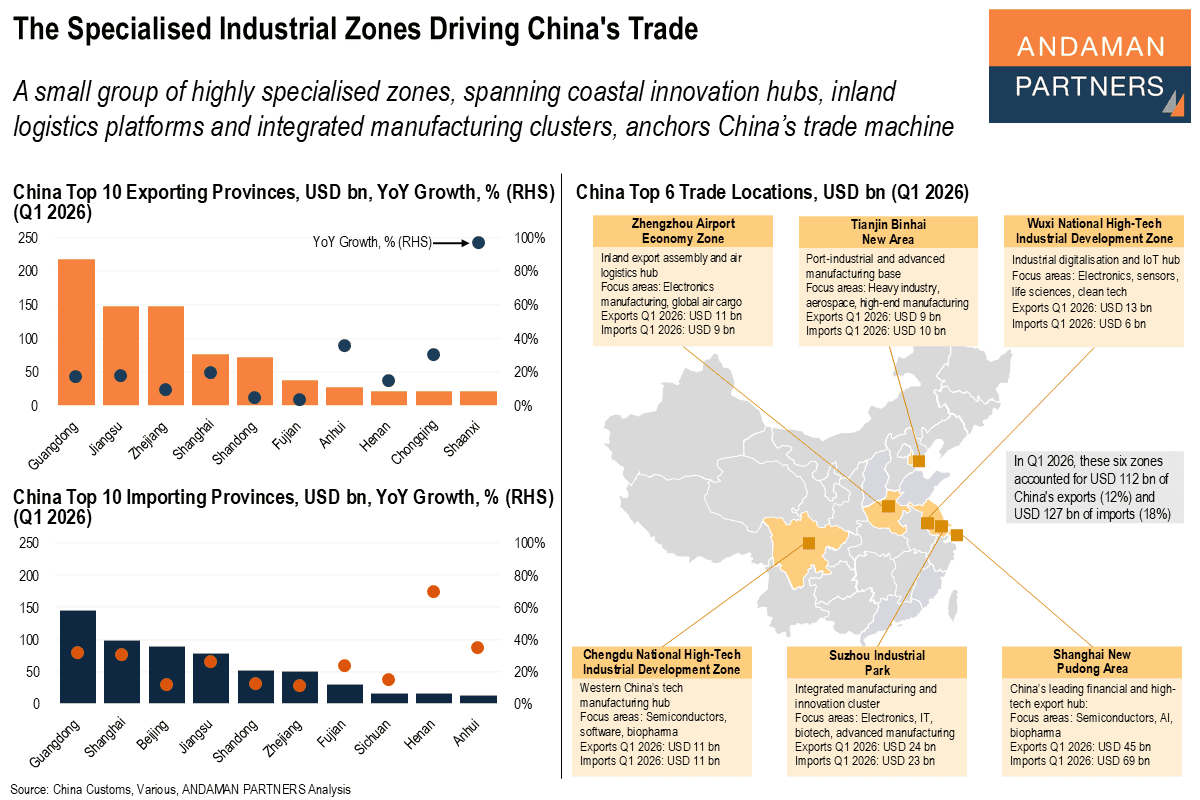
A small group of highly specialised zones anchors China’s trade machine.
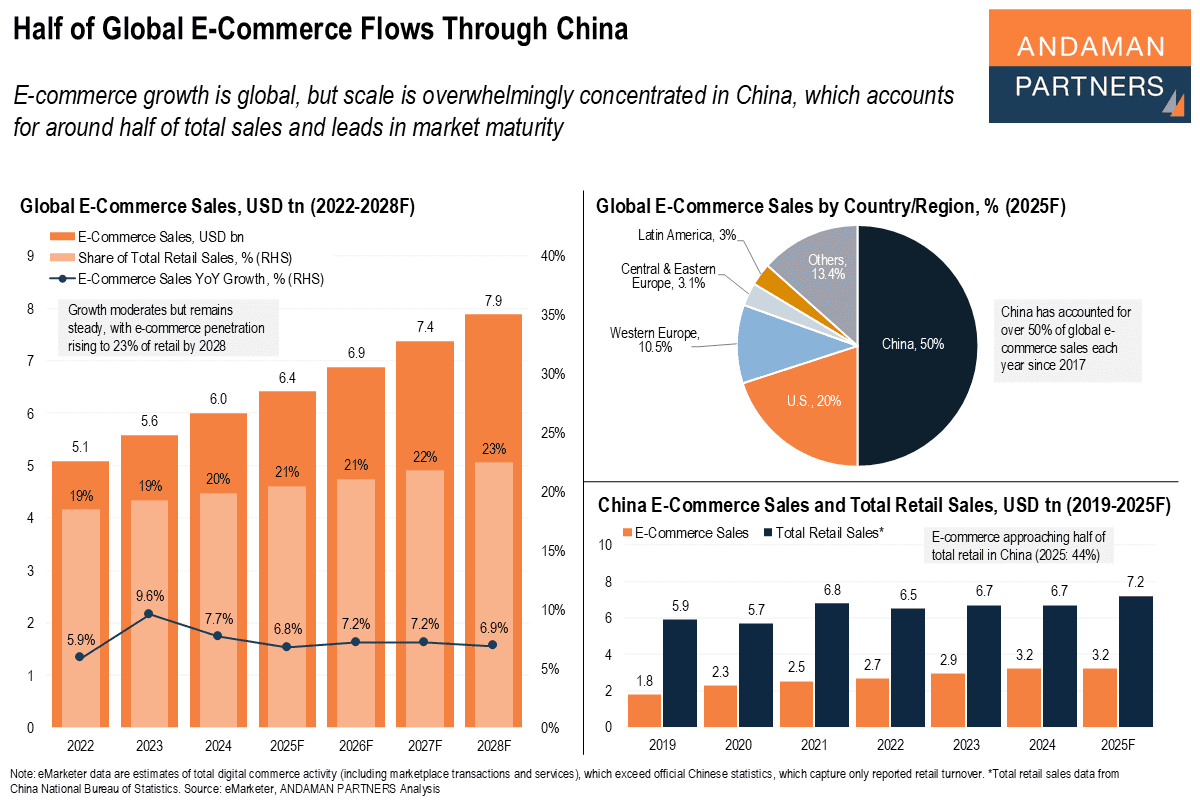
E-commerce growth is global, but scale is overwhelmingly concentrated in China.
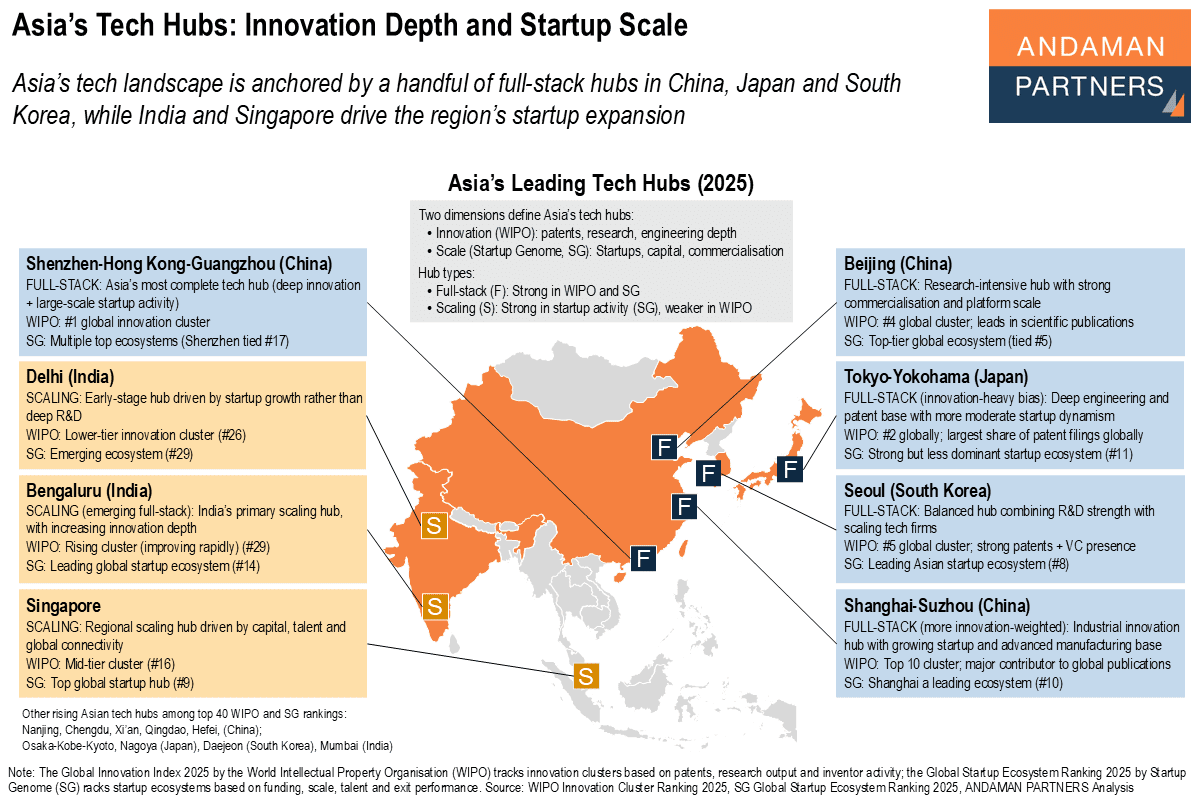
Asia’s tech landscape is anchored by a handful of full-stack hubs in China, Japan and South Korea, while India and Singapore drive startup expansion.
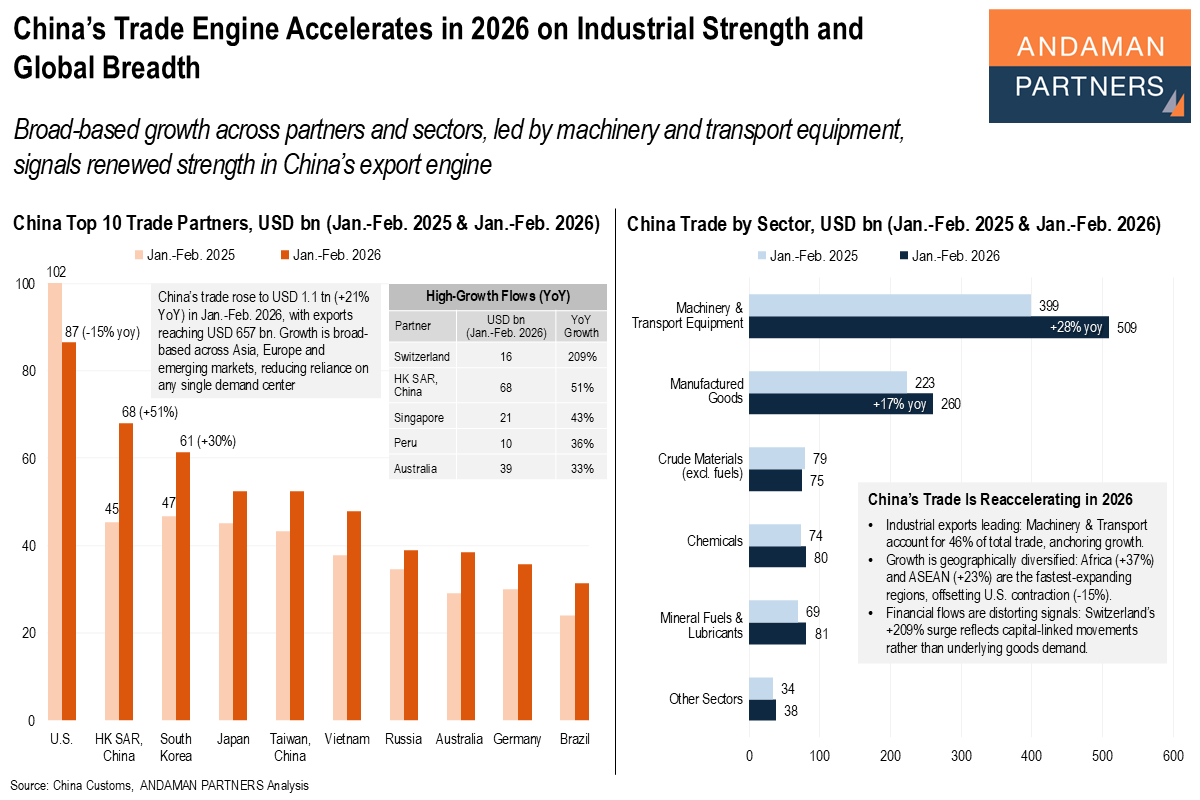
Broad-based growth across partners and sectors, led by machinery and transport equipment, signals renewed strength in China’s export engine.
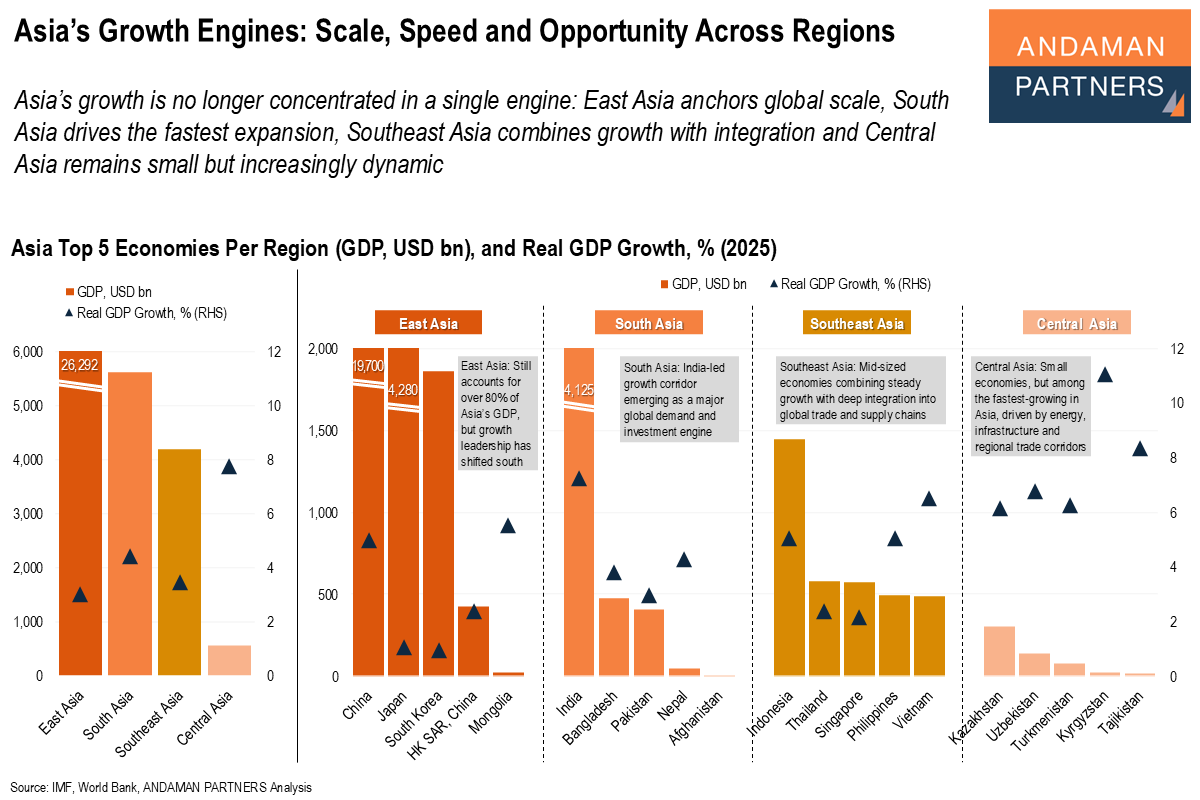
Asia's scale, speed and integration are no longer concentrated in a single core, but spread across multiple, complementary engines.
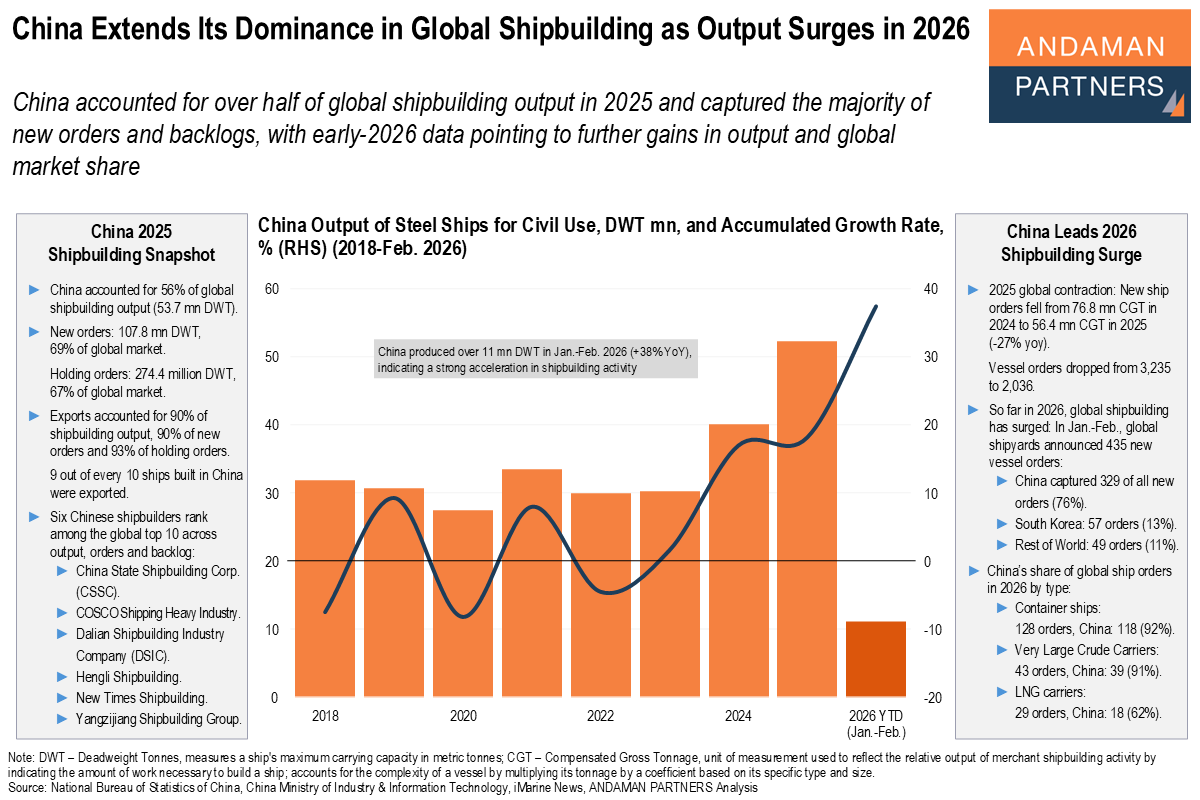
Even as global ship orders declined in 2025, early-2026 data shows a rapid rebound, with China securing the vast majority of new contracts.
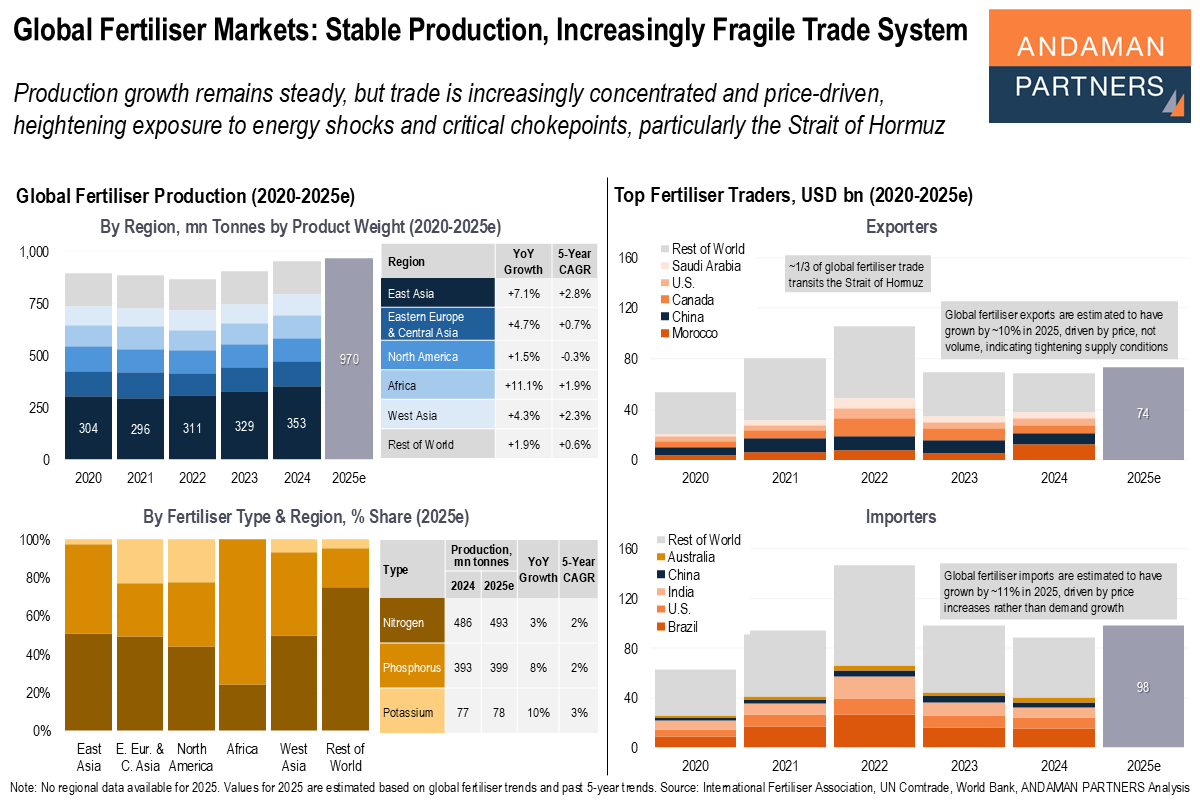
Production growth remains steady, but trade is increasingly concentrated and price-driven, heightening exposure to energy shocks and critical chokepoints.