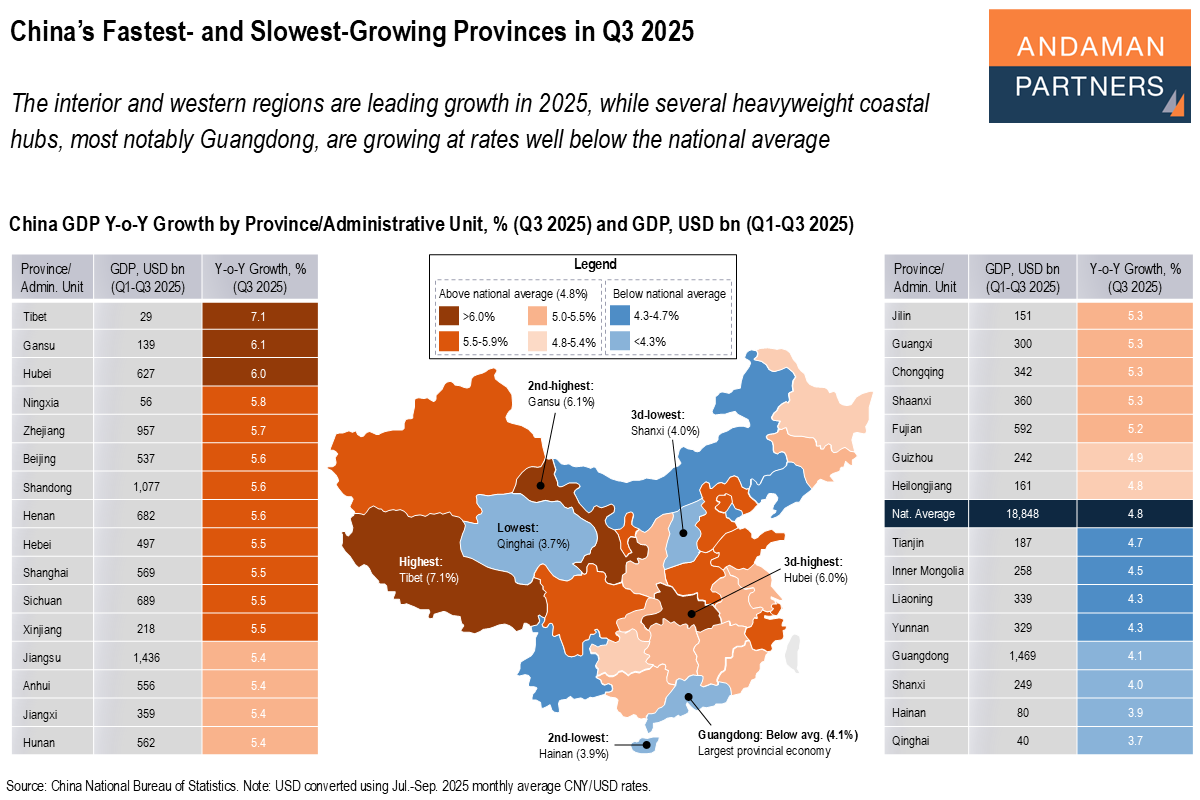

China’s Fastest- and Slowest-Growing Provinces in Q3 2025
The interior and western regions are leading growth in 2025, while several heavyweight coastal hubs, most notably Guangdong, are growing at rates well below the national average.
China’s regional growth dynamism in 2025 is shifting from coastal export hubs to inland investment corridors, driven by investment and industrial upgrading rather than broad-based consumer strength.
In the third quarter, western provinces and inland tech hubs outpaced coastal manufacturing giants. Energy, infrastructure and emerging manufacturing hubs in central and western provinces drove momentum, while coastal export centres faced the challenge of lower external demand.
Tibet (7.1%), Gansu (6.1%) and Hubei (6.0%) led provincial growth. Western provinces continue to benefit from state-led investment in energy and infrastructure. At the same time, Hubei’s performance highlights the rise of inland advanced manufacturing clusters in the automotive, battery and microchip sectors. Tibet’s growth was also supported by investment and tourism.
By contrast, the coastal picture was more mixed. Zhejiang (5.7%) and Shanghai (5.5%) grew above the national average, supported by resilient services and high-tech activity. However, Guangdong (4.1%), China’s largest provincial economy, underperformed amid weaker global electronics demand and subdued private sector sentiment.
Qinghai (3.7%), Hainan (3.9%) and Shanxi (4.0%) were the laggards. The service-led recovery lost steam in Hainan, while Qinghai remains structurally constrained by its scale and industrial breadth and Shanxi’s traditional energy base faced weak coal prices and ongoing industrial adjustments.
In short, China’s growth in 2025 has become more regionally uneven, with inland investment and industrial upgrading taking the lead, and coastal demand-driven engines adjusting to a slower global cycle and domestic property headwinds.
Also by ANDAMAN PARTNERS:
ANDAMAN PARTNERS supports international business ventures and growth. We help launch global initiatives and accelerate successful expansion across borders. If your business, operations or project requires cross-border support, contact connect@andamanpartners.com.

Hong Kong: From a Gateway to a Springboard Out of Mainland China by ANDAMAN PARTNERS Co-Founder Rachel Wu
Analysis by ANDAMAN PARTNERS Co-Founder Rachel Wu on Hong Kong’s changing role

A Glance at China’s Consumer Market from Nanjing West Road by ANDAMAN PARTNERS Co-Founder Rachel Wu
Analysis by ANDAMAN PARTNERS Co-Founder Rachel Wu on China’s consumer economy

China Keeps Shopping for Services. Are You Selling? By ANDAMAN PARTNERS Co-Founder Rachel Wu
Analysis by ANDAMAN PARTNERS Co-Founder Rachel Wu on Shanghai’s services economy
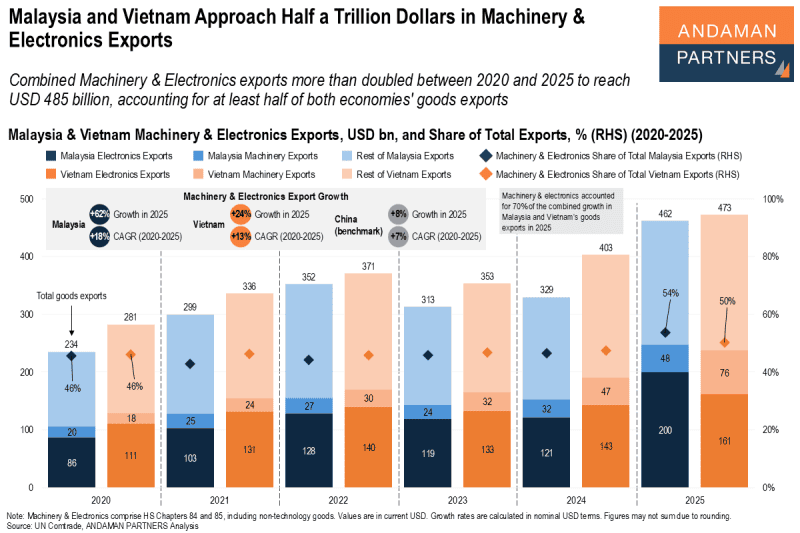
Malaysia and Vietnam Approach Half a Trillion Dollars in Machinery & Electronics Exports
Combined Machinery & Electronics exports more than doubled between 2020 and 2025 to reach USD 485 billion
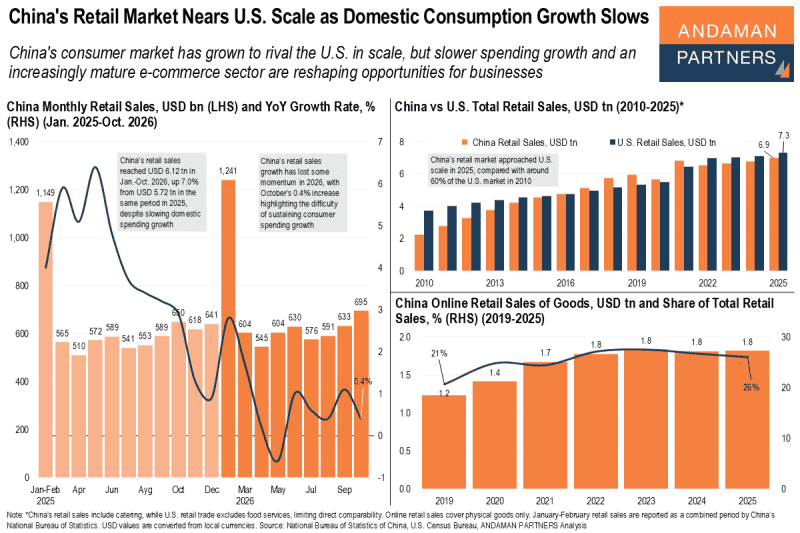
China’s Retail Market Nears U.S. Scale as Domestic Consumption Growth Slows
China’s consumer market has grown to rival the U.S. in scale, but slower spending growth is reshaping opportunities for businesses
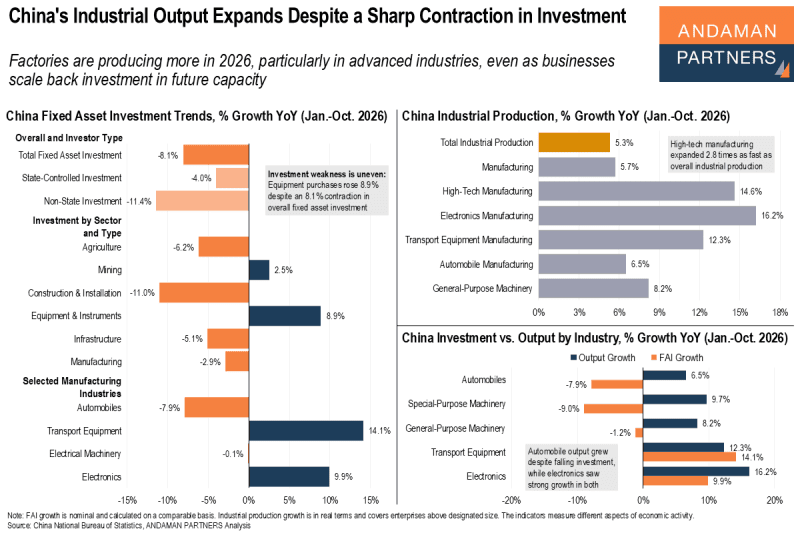
China’s Industrial Output Expands Despite a Sharp Contraction in Investment
Factories are producing more in 2026, particularly in advanced industries, even as businesses scale back investment in future capacity
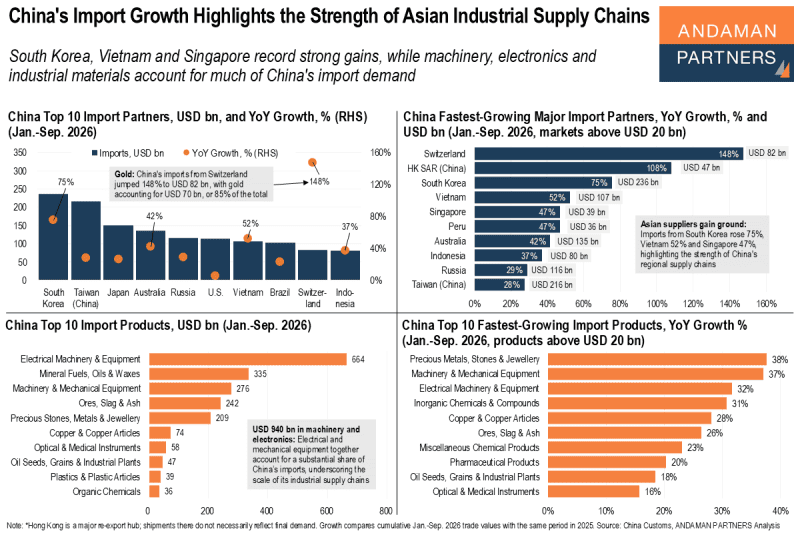
Pingback: China Provincial Growth Map 2025: Central and Western Momentum, Coastal Underperformance | ANDAMAN PARTNERS
Pingback: ANDAMAN PARTNERS
Pingback: China's Economy Maintains Steady Growth in 2026
Pingback: China’s Provincial Economies 2026 | ANDAMAN PARTNERS