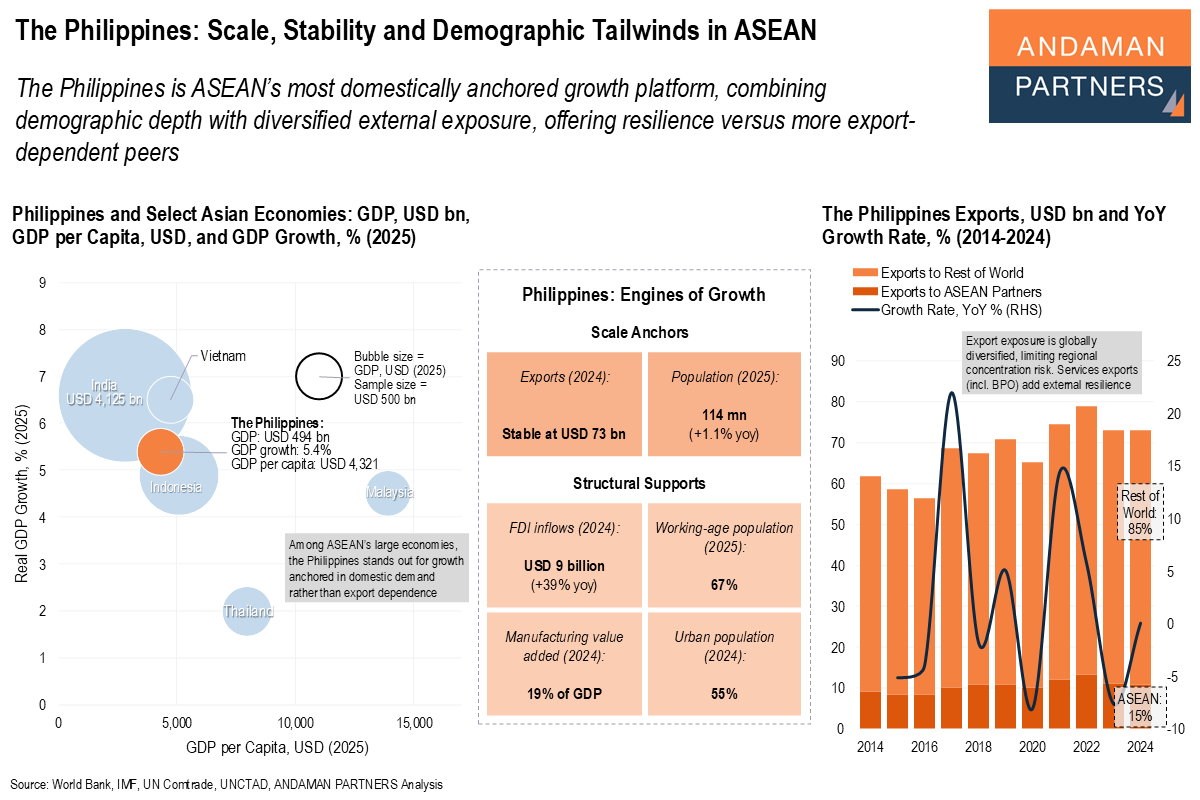
The Philippines: Scale, Stability and Demographic Tailwinds in ASEAN
The Philippines is ASEAN’s most domestically anchored growth platform, combining demographic depth with diversified external exposure.

The Philippines is ASEAN’s most domestically anchored growth platform, combining demographic depth with diversified external exposure.
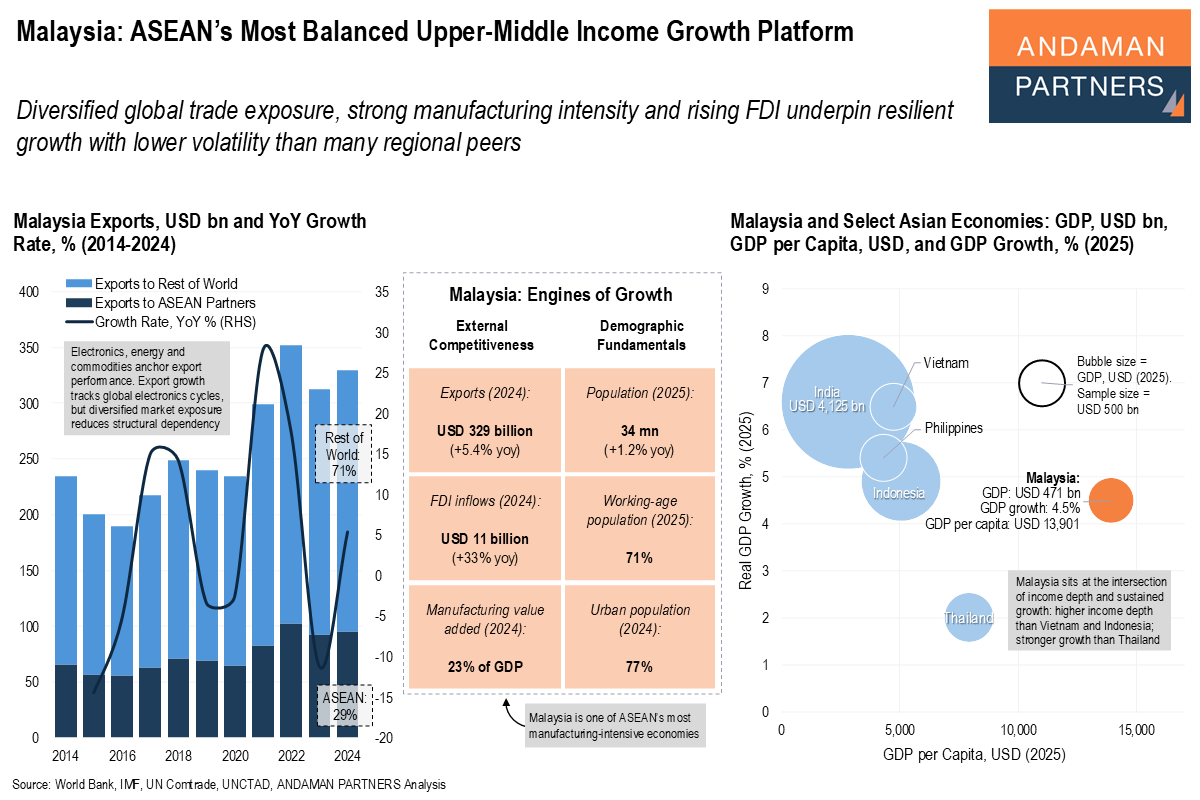
Diversified global trade exposure, strong manufacturing intensity and rising FDI underpin resilient growth with lower volatility than many regional peers.
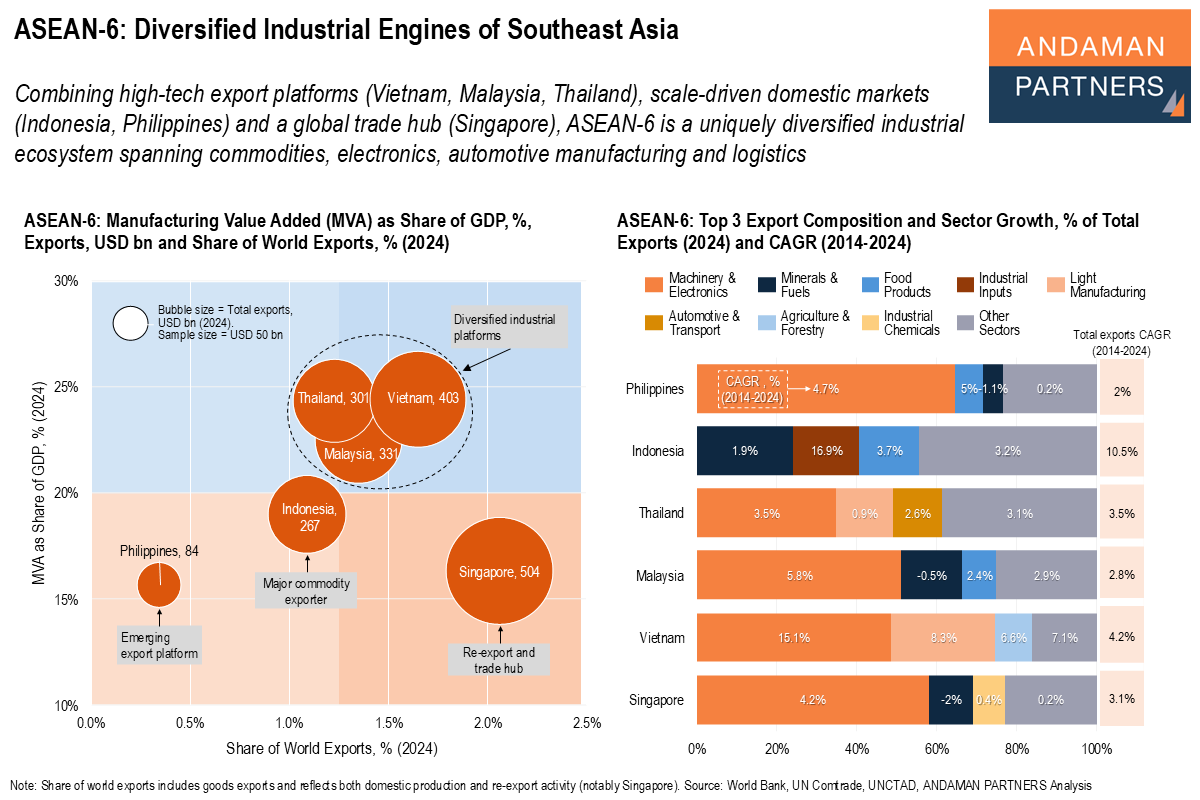
Combining high-tech export platforms, scale-driven domestic markets and a global trade hub, ASEAN-6 is a uniquely diversified industrial ecosystem.
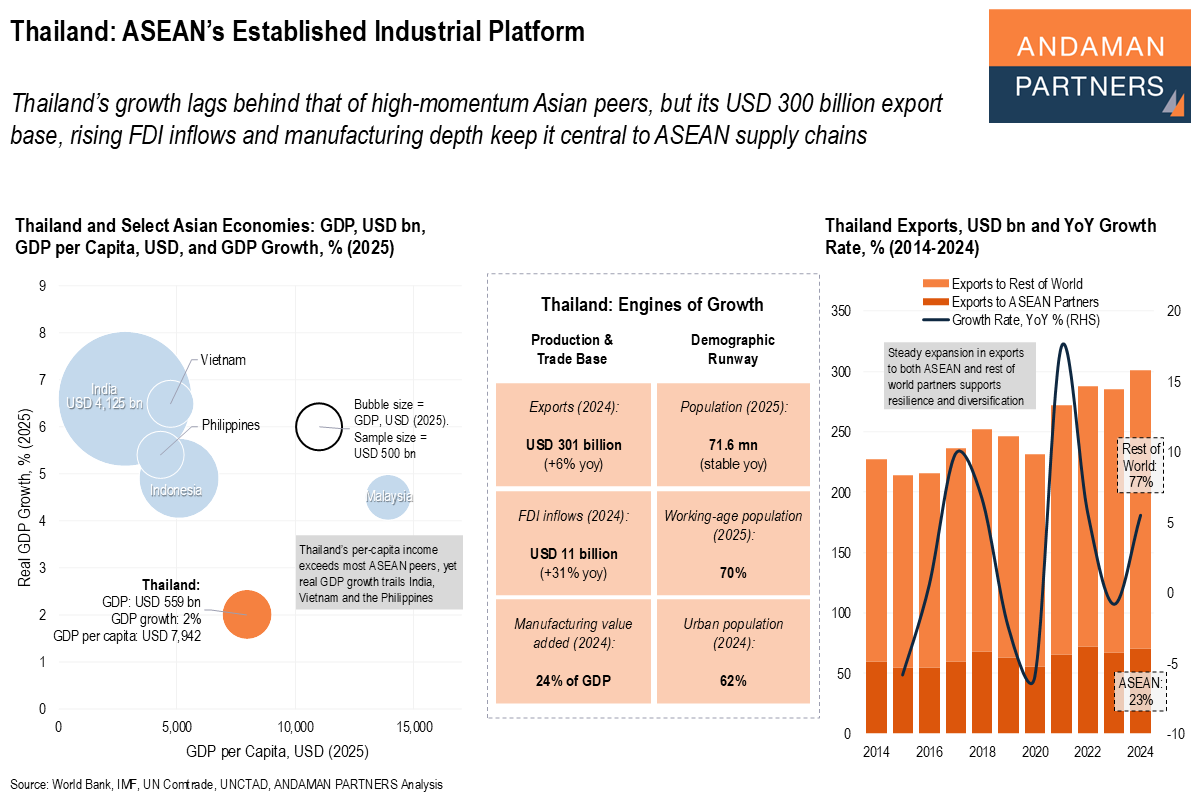
Thailand’s USD 300 billion export base, rising FDI inflows and manufacturing depth keep it central to ASEAN supply chains.
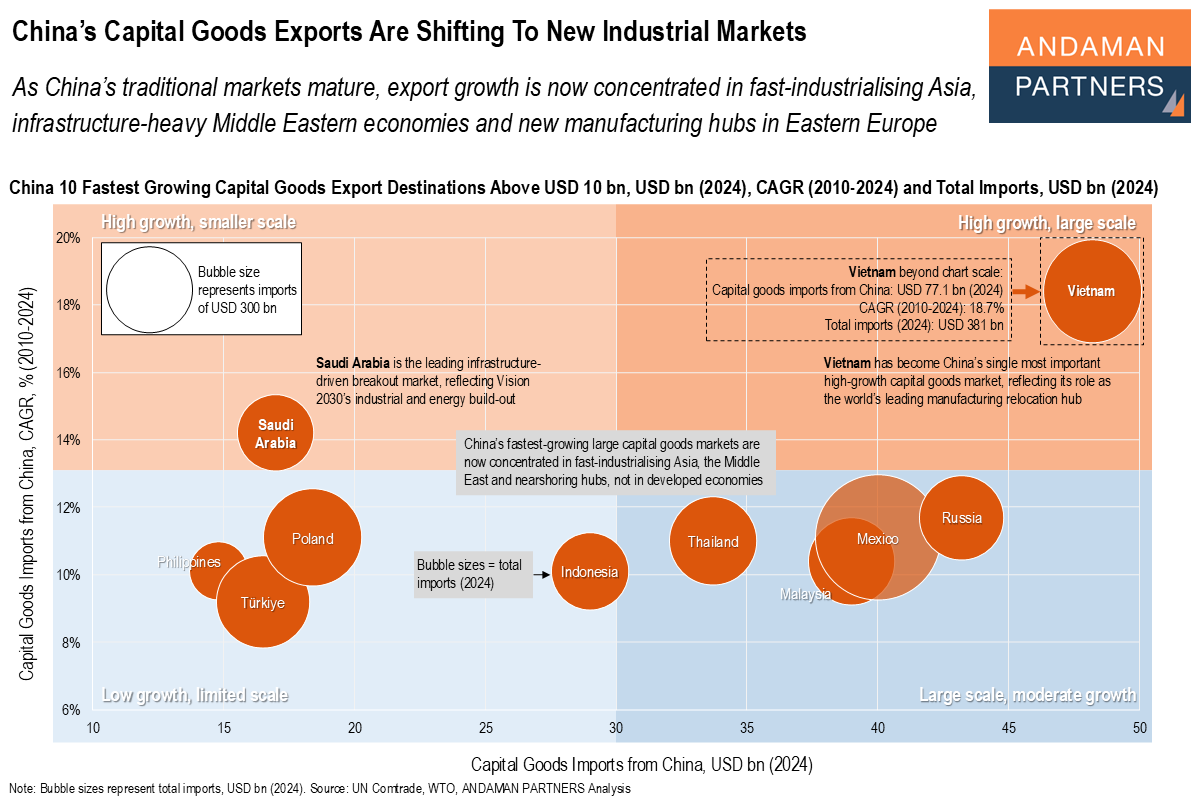
Export growth is now concentrated in fast-industrialising Asia, infrastructure-heavy Middle Eastern economies and new manufacturing hubs in Eastern Europe.
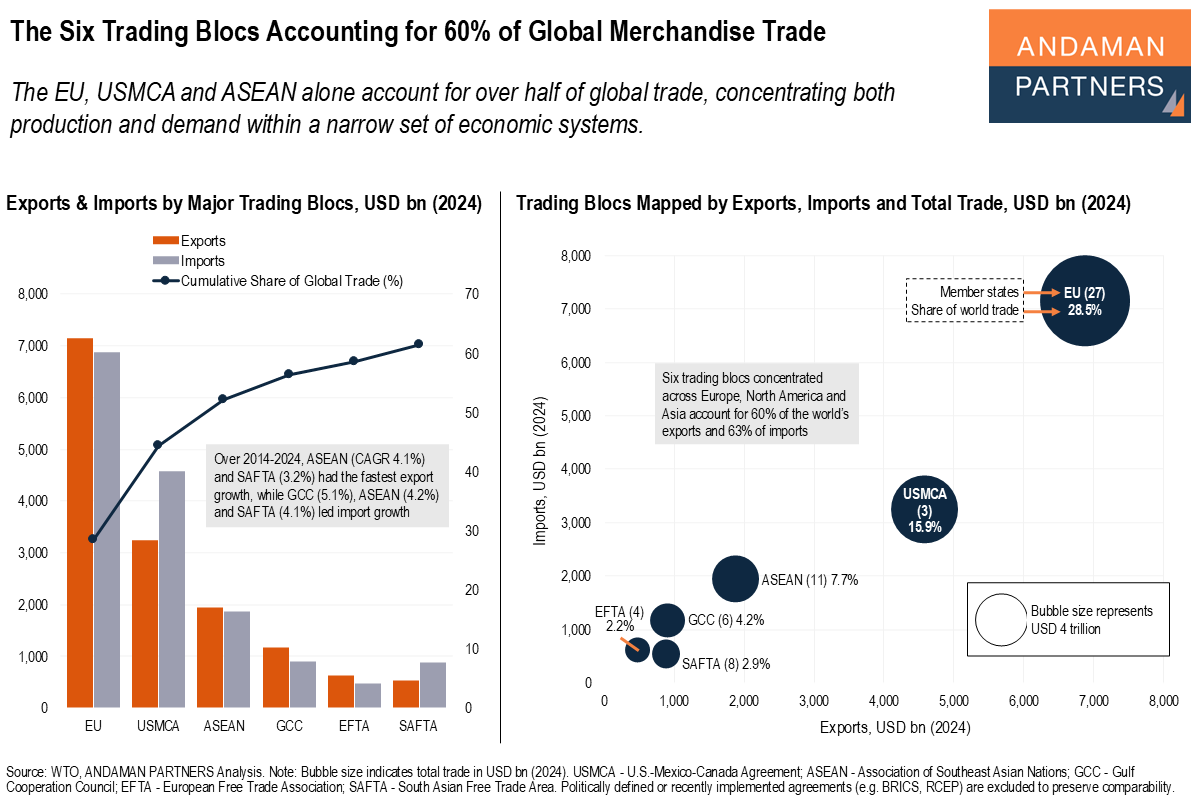
The EU, USMCA and ASEAN alone account for over half of global trade, concentrating both production and demand within a narrow set of economic systems.
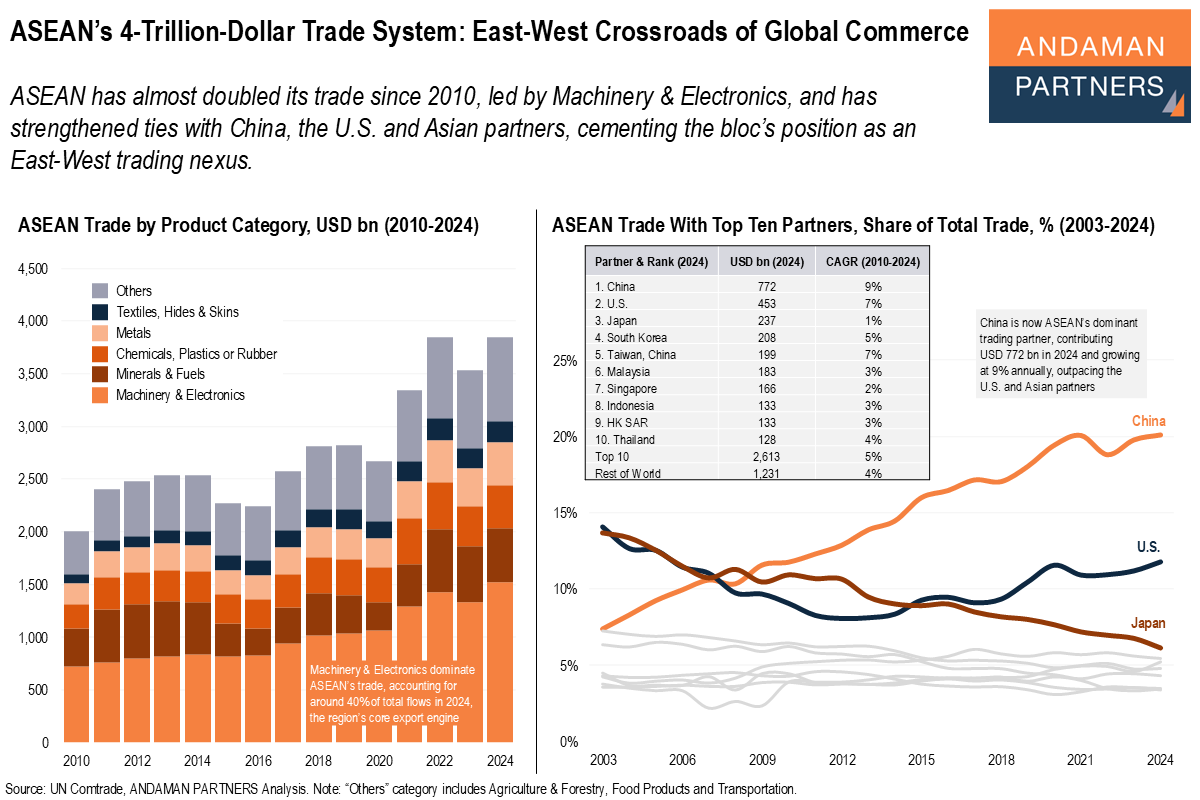
ASEAN has almost doubled its trade since 2010 and has strengthened ties with China and the U.S., cementing the bloc’s position as an East-West trading nexus.
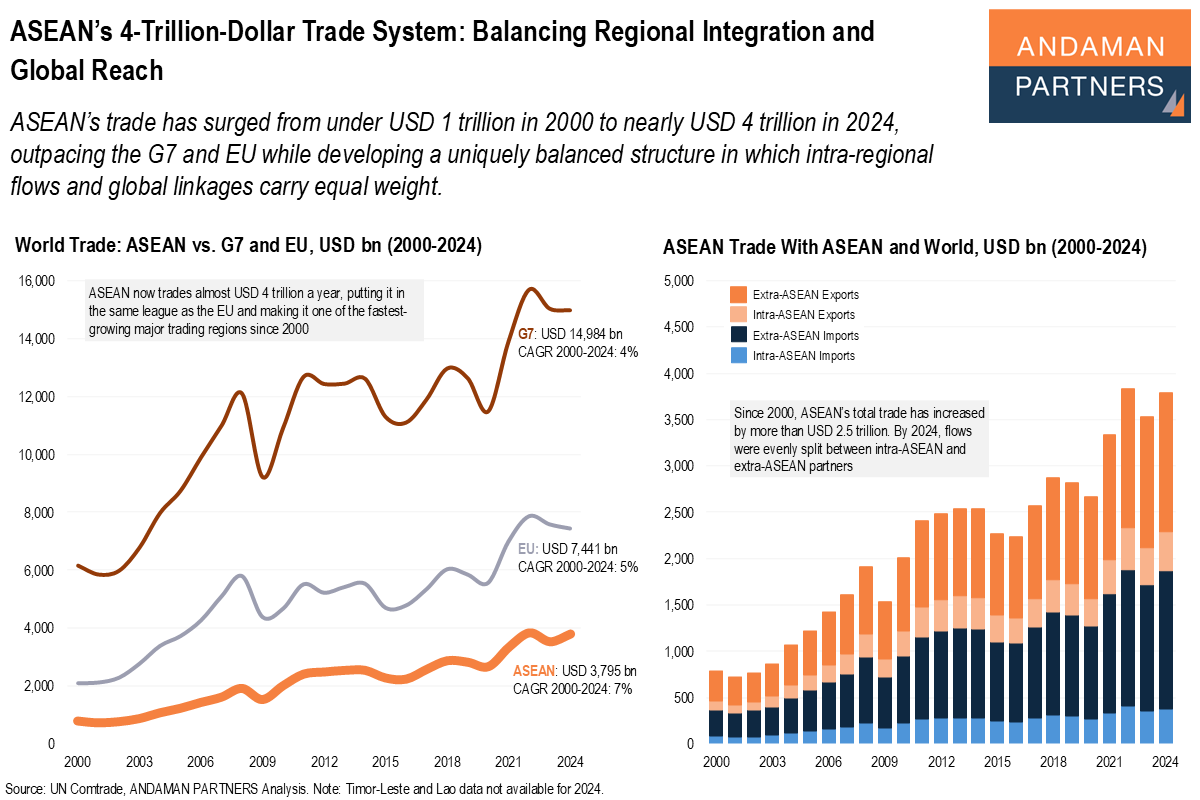
ASEAN’s trade has surged to nearly USD 4 trillion in 2024 while developing a uniquely balanced structure.
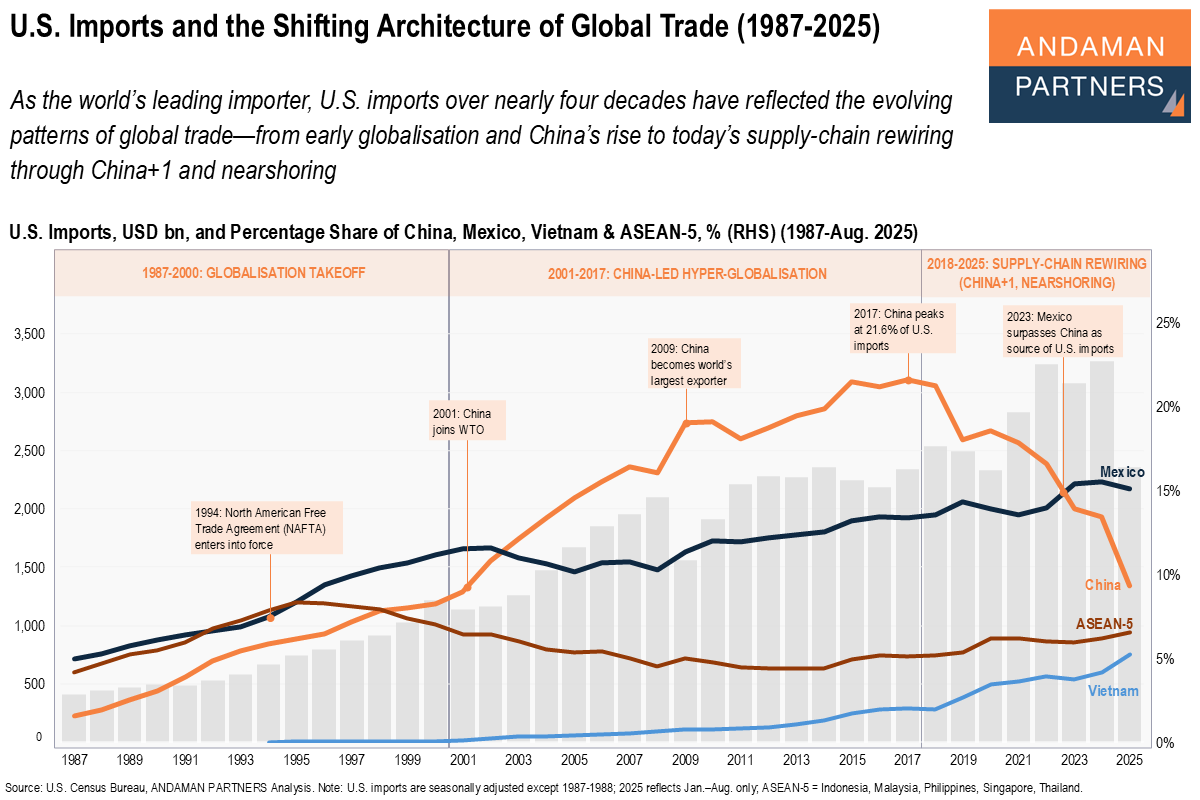
As the world’s leading importer, U.S. imports over nearly four decades have reflected the evolving patterns of global trade.
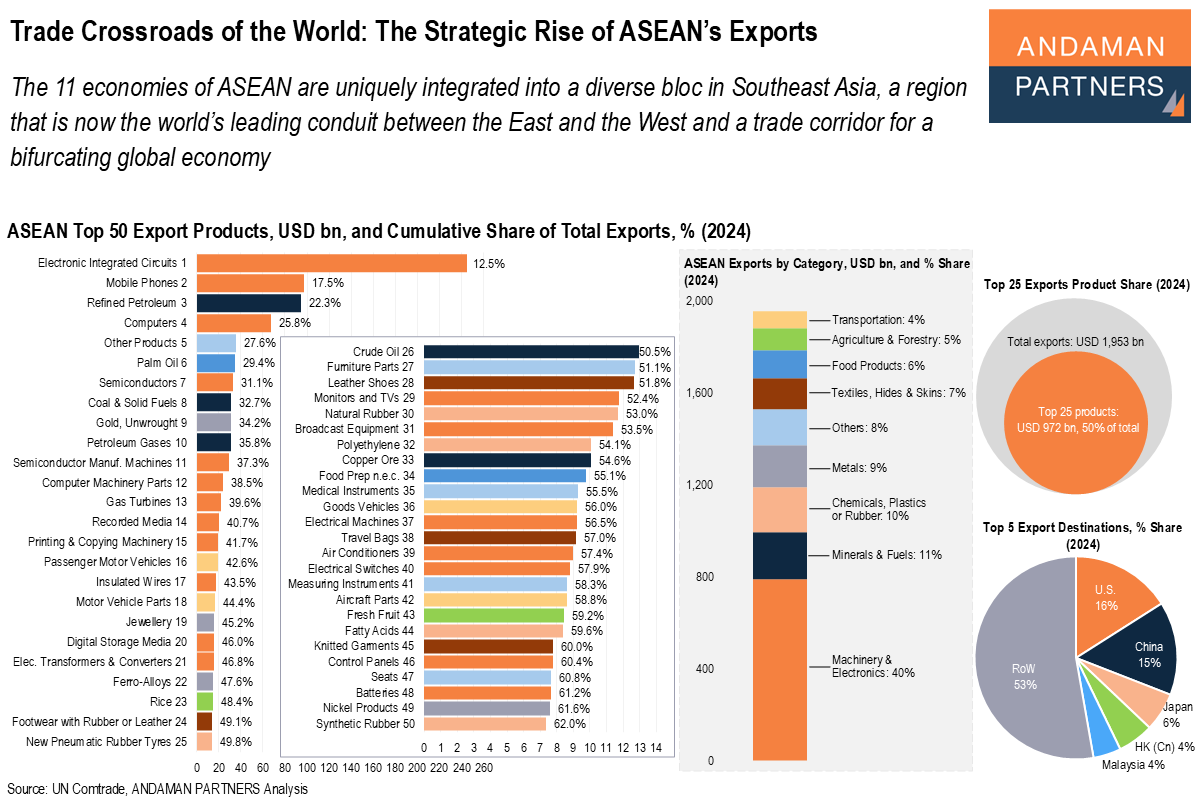
The 11 ASEAN economies are integrated into a diverse bloc in Southeast Asia, a region that is now the world’s leading conduit between East and West.