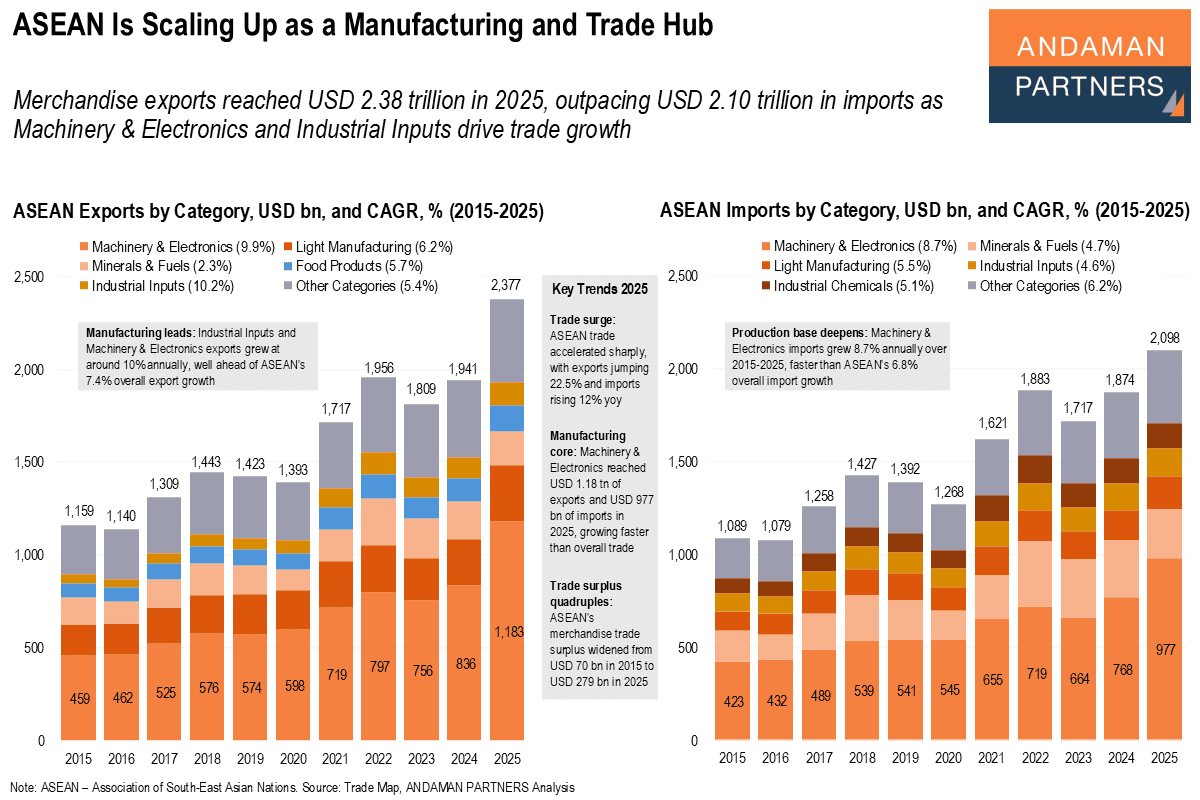
ASEAN Is Scaling Up as a Manufacturing and Trade Hub
Merchandise exports reached USD 2.38 trillion in 2025, outpacing USD 2.10 trillion in imports

Merchandise exports reached USD 2.38 trillion in 2025, outpacing USD 2.10 trillion in imports
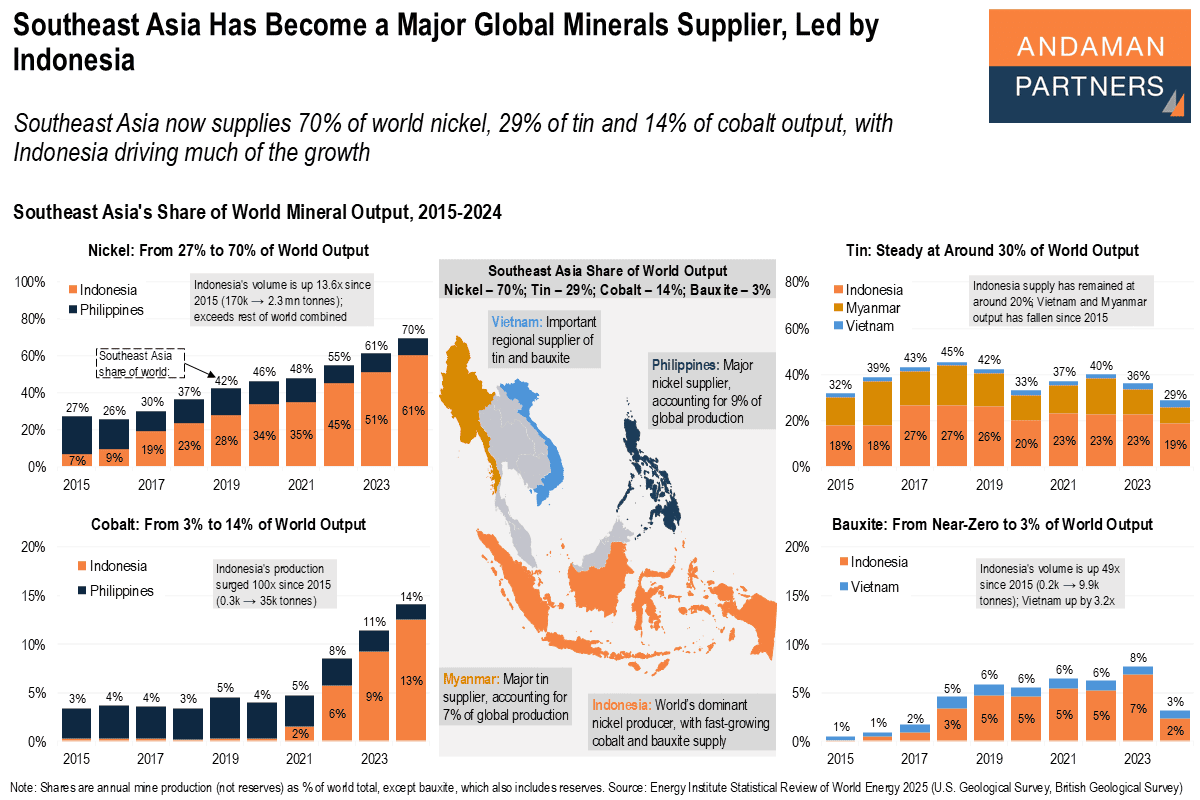
Southeast Asia now supplies 70% of world nickel, 29% of tin and 14% of cobalt output, with Indonesia driving much of the growth
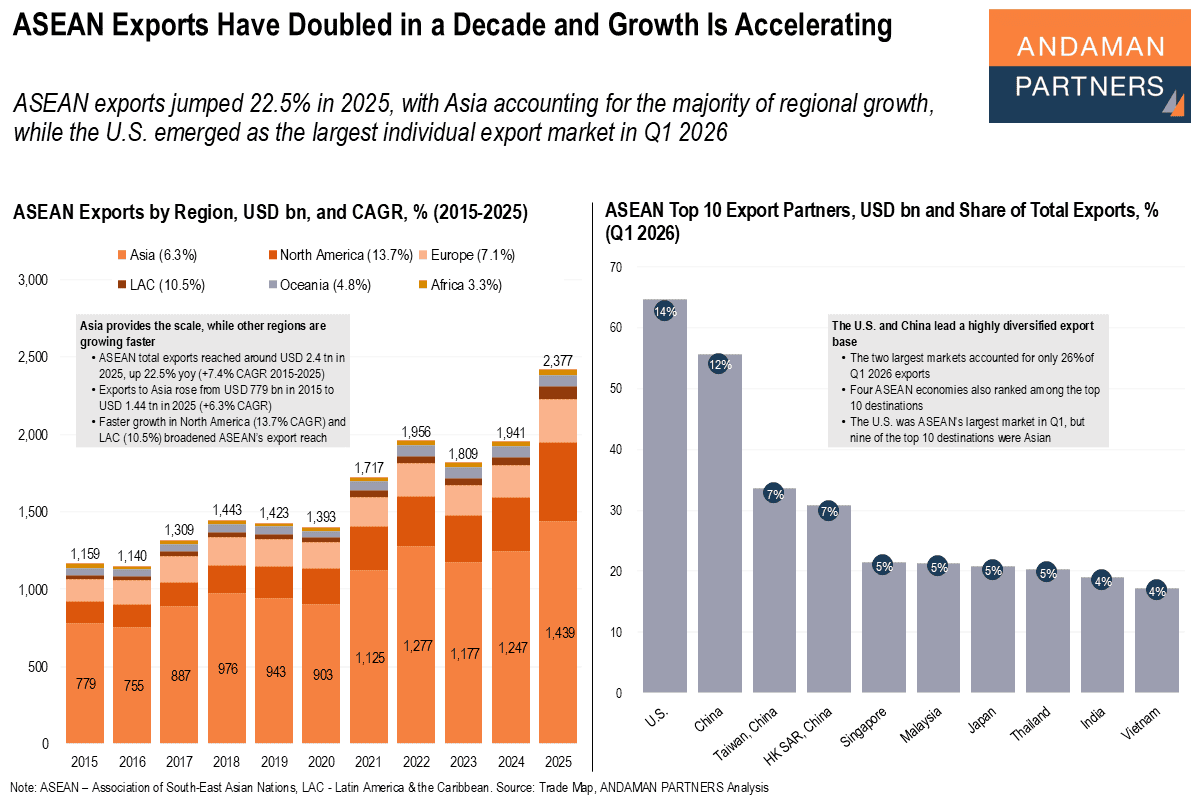
ASEAN exports jumped 22.5% in 2025, with Asia accounting for the majority of regional growth
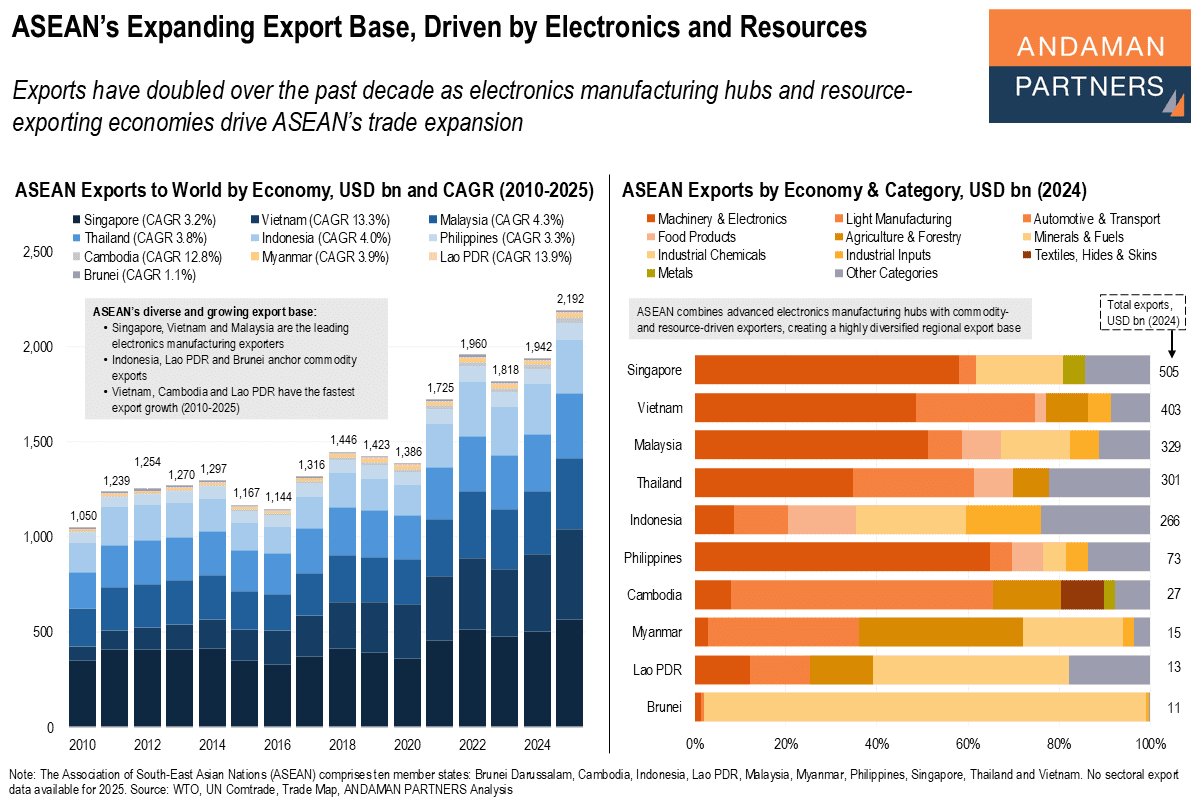
Exports have doubled over the past decade as electronics manufacturing hubs and resource-exporting economies drive ASEAN’s trade expansion.
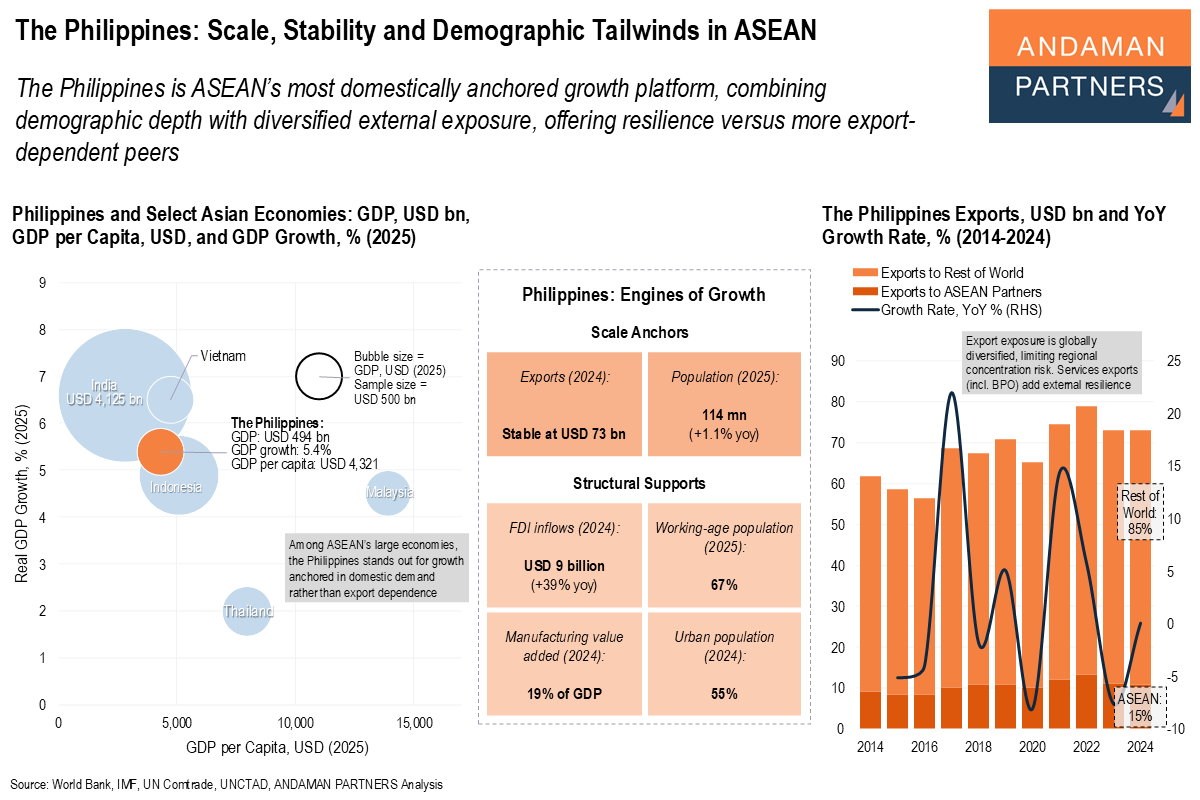
The Philippines is ASEAN’s most domestically anchored growth platform, combining demographic depth with diversified external exposure.
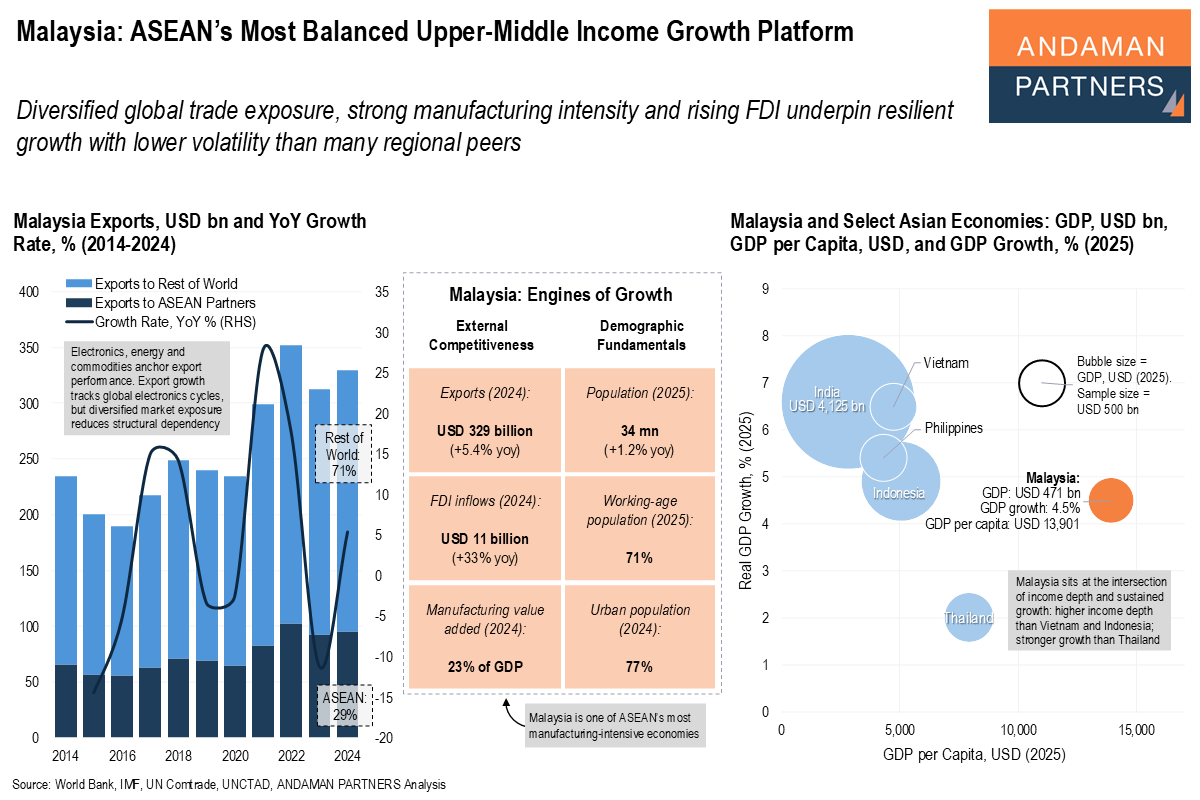
Diversified global trade exposure, strong manufacturing intensity and rising FDI underpin resilient growth with lower volatility than many regional peers.
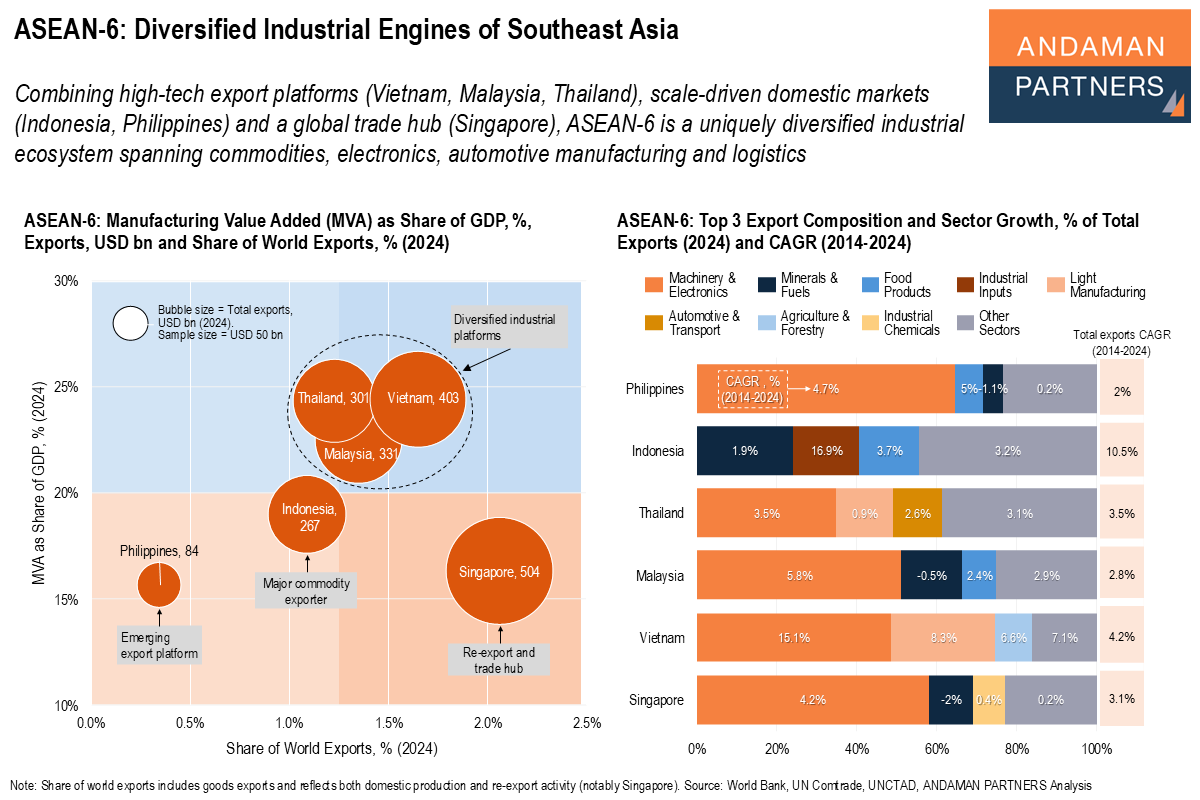
Combining high-tech export platforms, scale-driven domestic markets and a global trade hub, ASEAN-6 is a uniquely diversified industrial ecosystem.
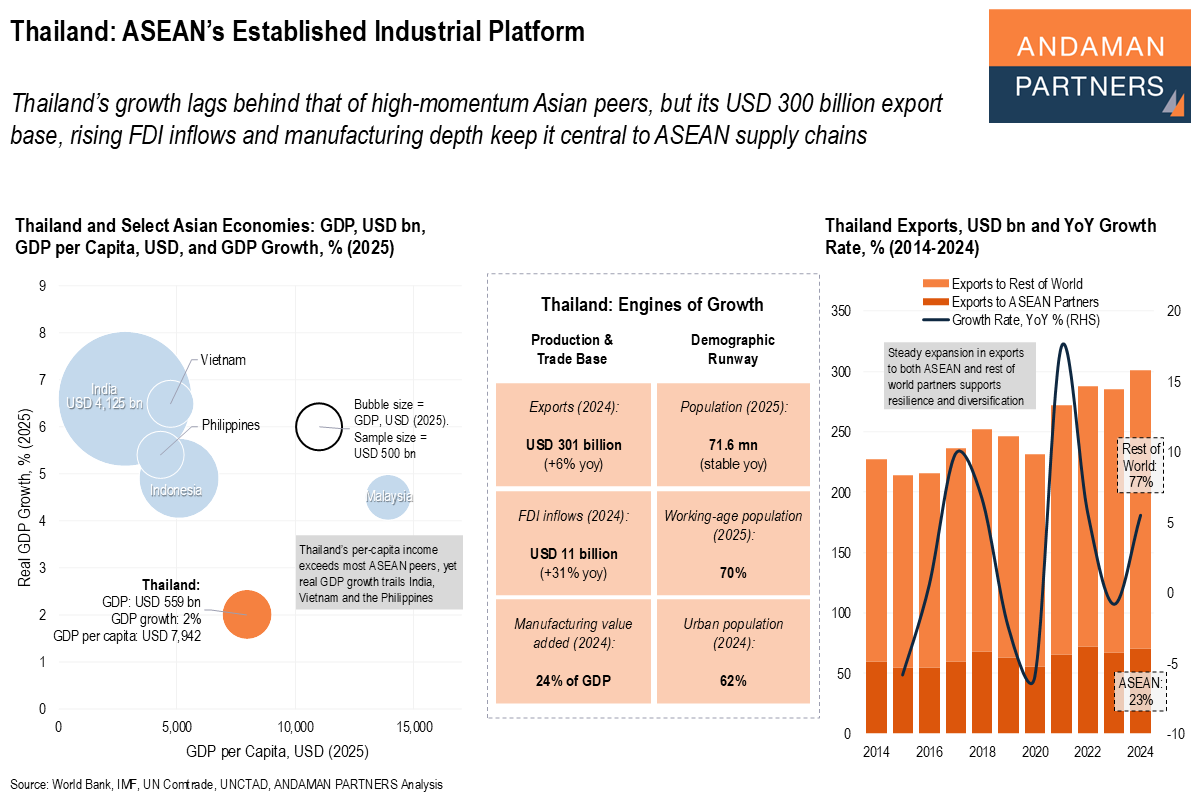
Thailand’s USD 300 billion export base, rising FDI inflows and manufacturing depth keep it central to ASEAN supply chains.
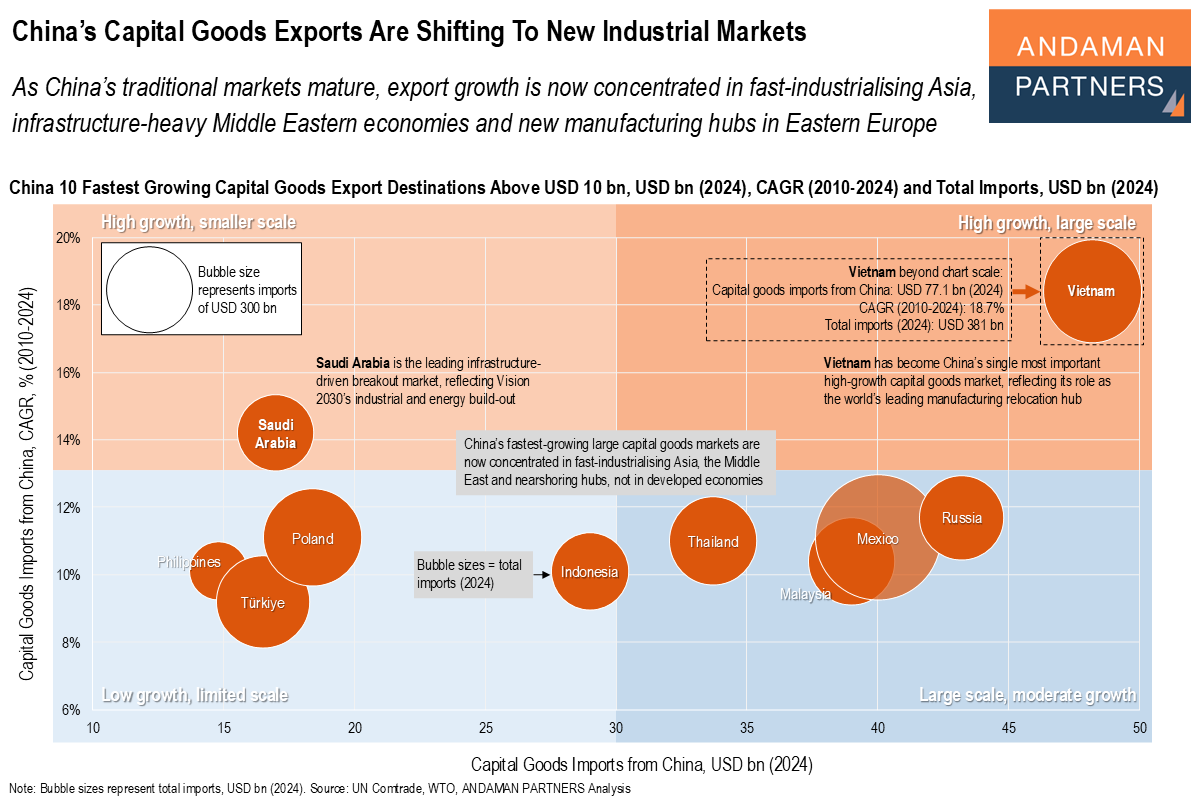
Export growth is now concentrated in fast-industrialising Asia, infrastructure-heavy Middle Eastern economies and new manufacturing hubs in Eastern Europe.
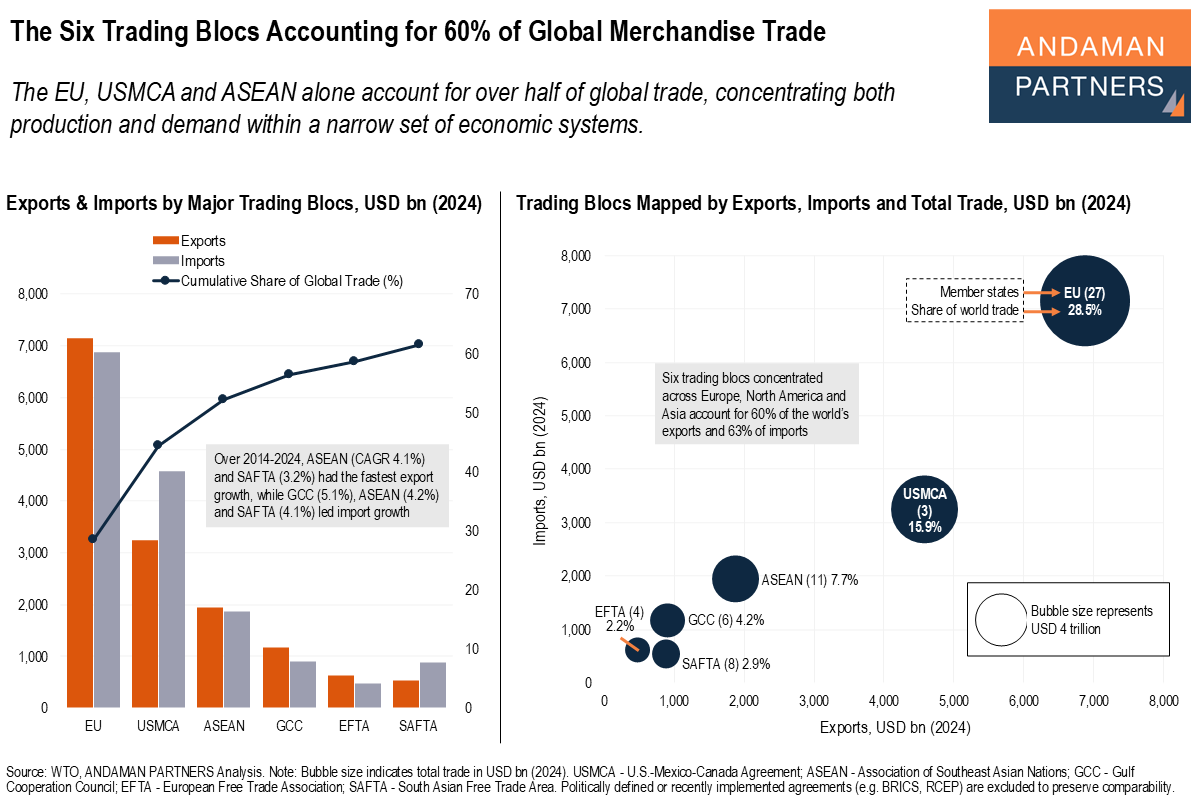
The EU, USMCA and ASEAN alone account for over half of global trade, concentrating both production and demand within a narrow set of economic systems.