ANDAMAN PARTNERS Wishes You a Happy and Prosperous Year of the Horse!
Compliments of the Chinese Lunar New Year to all our clients, customers, suppliers and partners.
Compliments of the Chinese Lunar New Year to all our clients, customers, suppliers and partners.

Mexico, Vietnam, Thailand and India anchor export volumes to China, the EU and the U.S., while India stands out for the fastest growth.
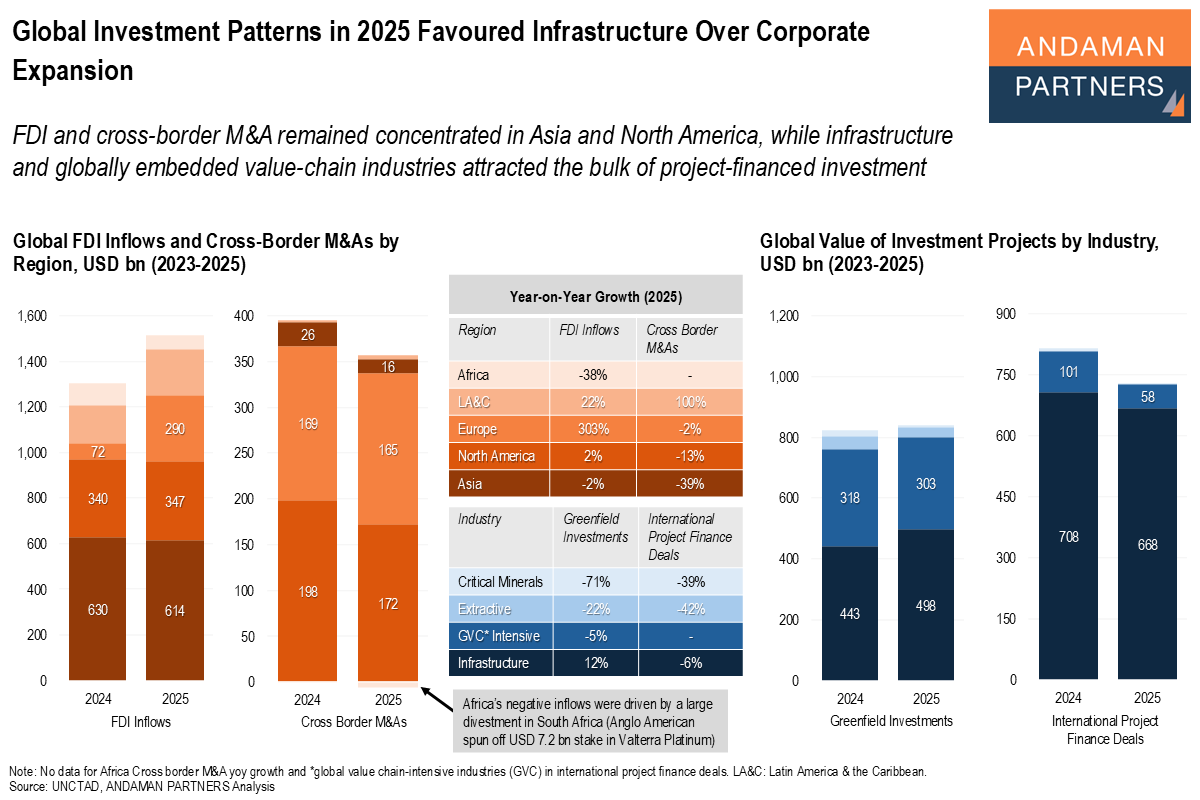
FDI and M&A remained concentrated in Asia and North America, while infrastructure attracted the bulk of project-financed investment.
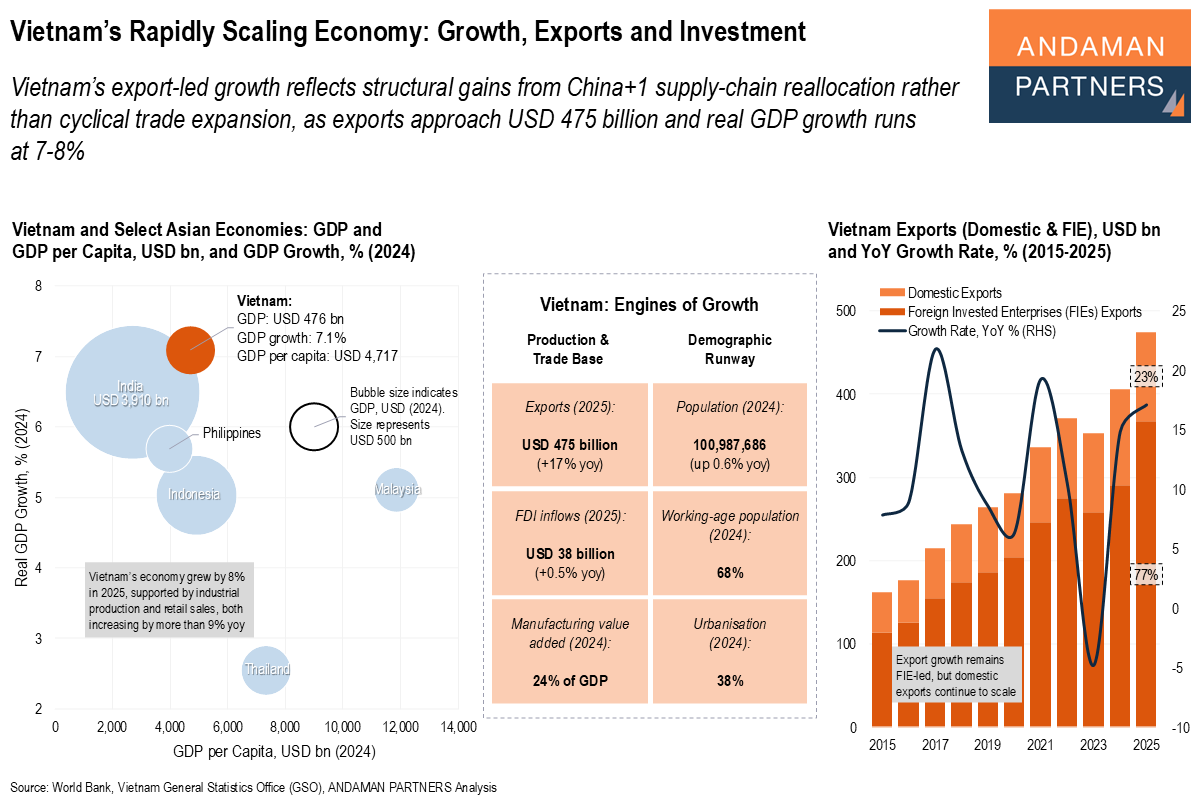
Vietnam’s export-led growth reflects structural gains from China+1 supply-chain reallocation rather than cyclical trade expansion.
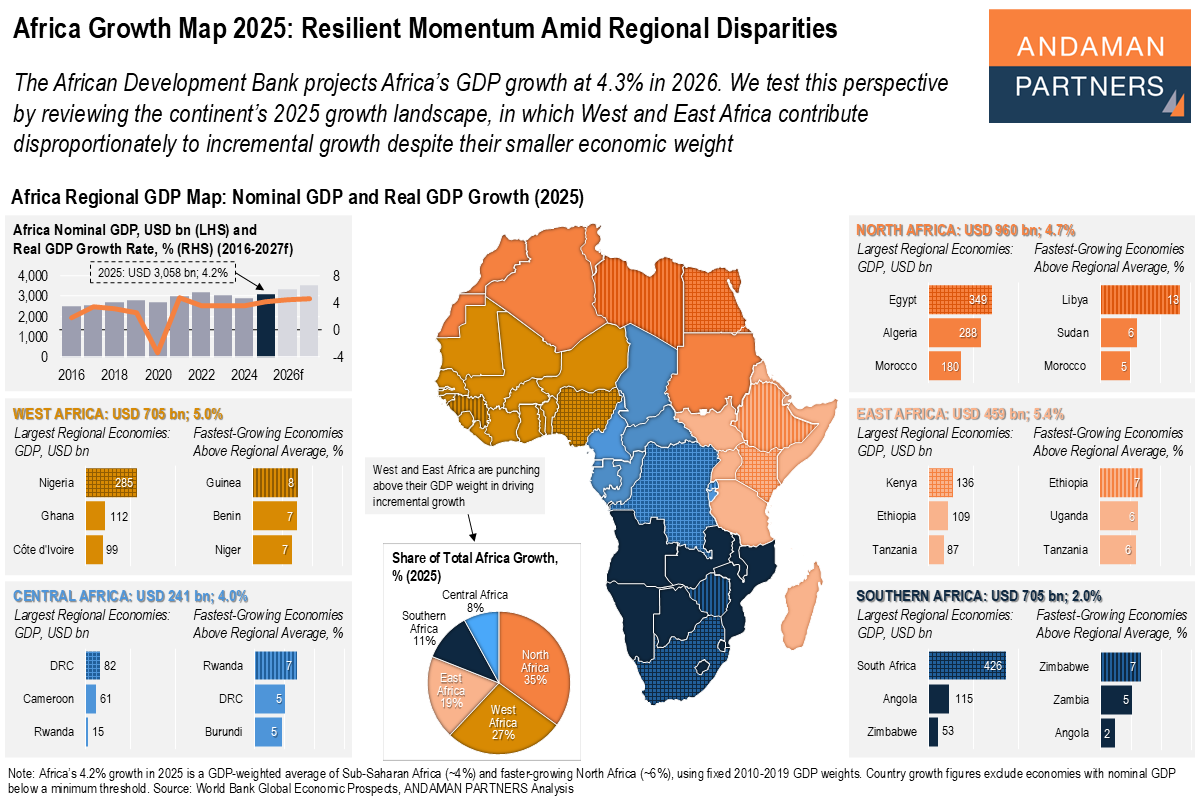
The African Development Bank projects Africa’s GDP growth at 4.3% in 2026. We test this perspective by reviewing the continent’s 2025 growth landscape.
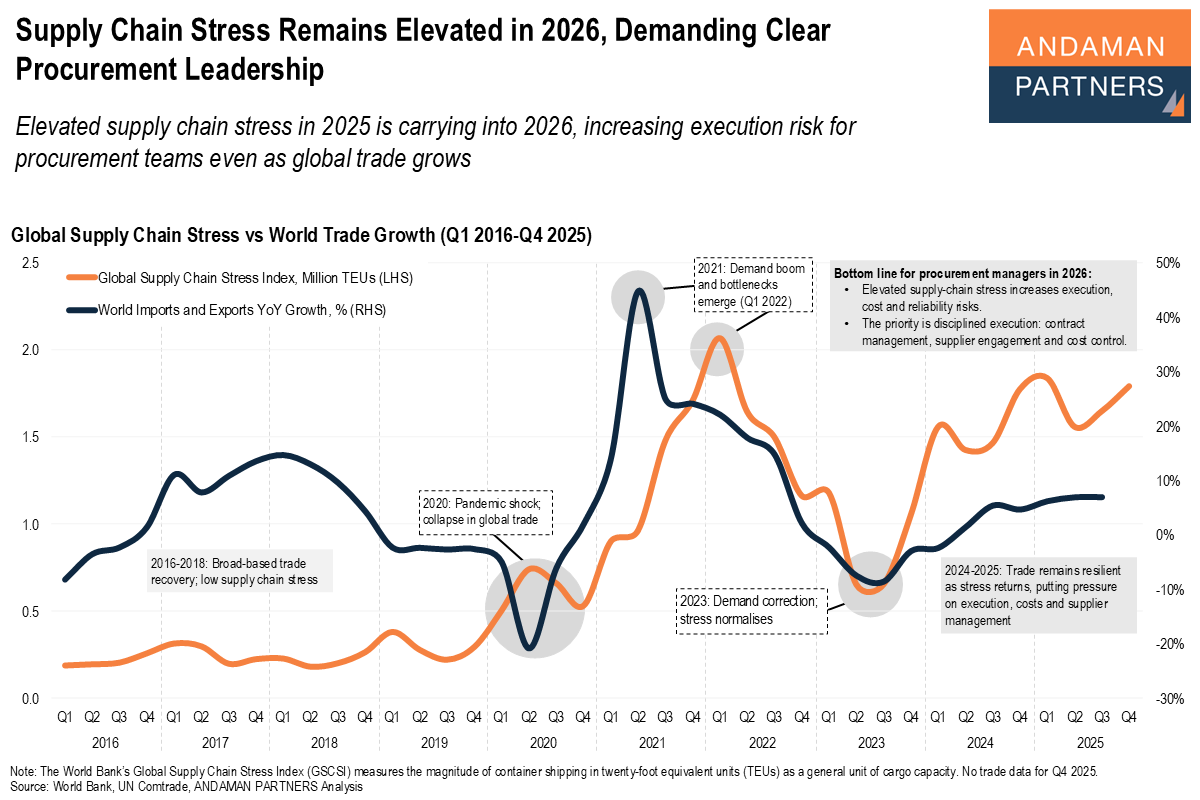
Elevated supply chain stress in 2025 is carrying into 2026, increasing execution risk for procurement teams even as global trade grows.
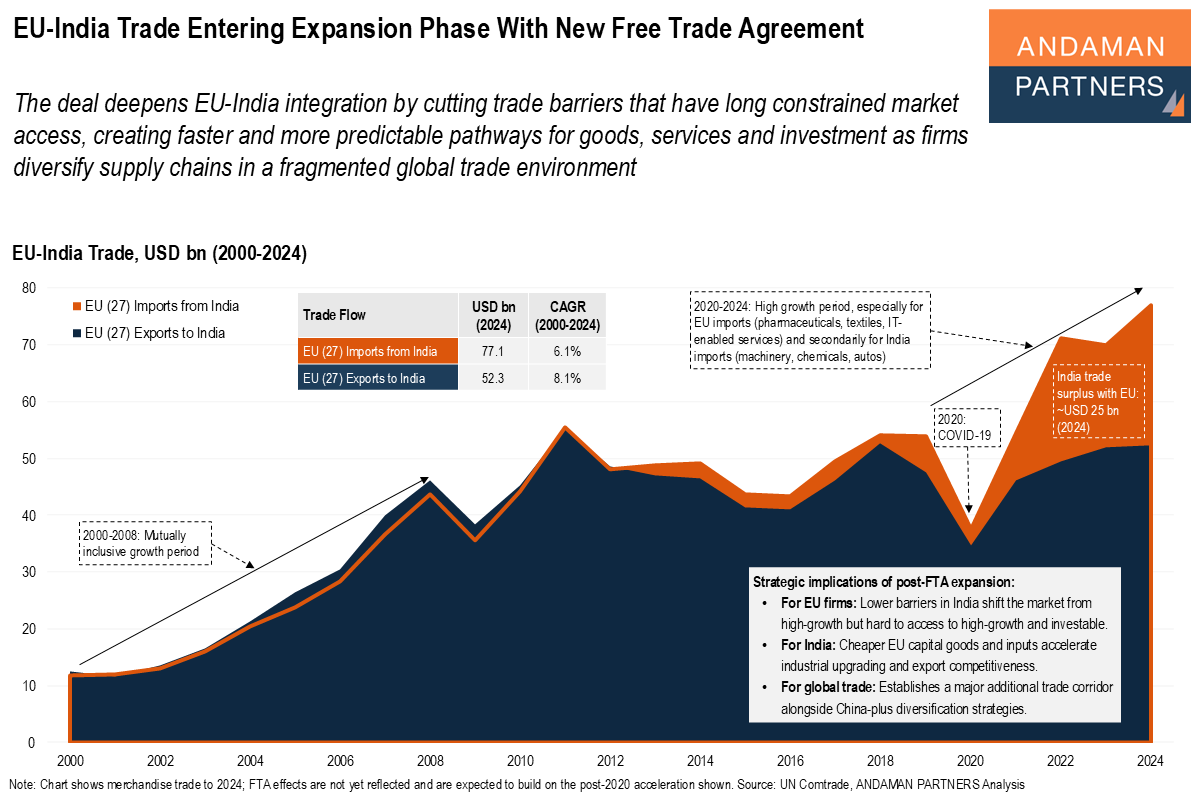
The deal deepens EU-India integration by cutting trade barriers that have long constrained market access.
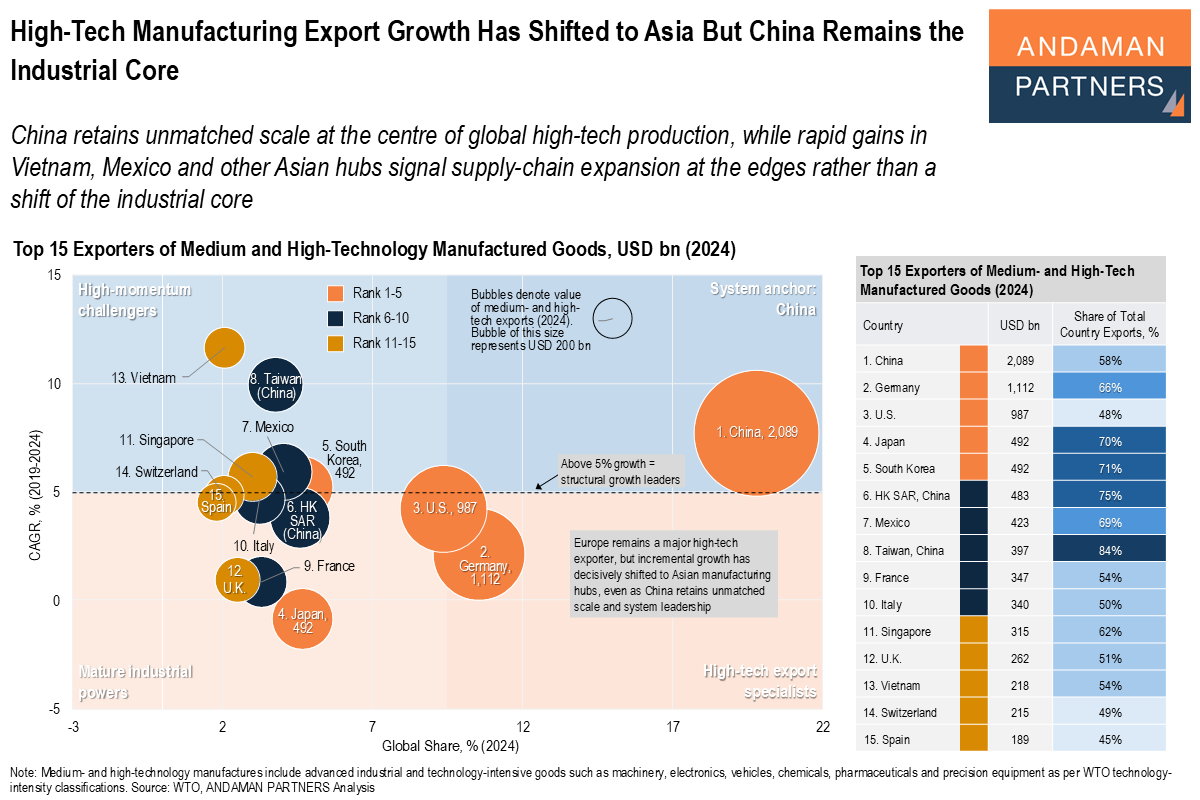
China retains unmatched scale at the centre of global high-tech production, while rapid gains in Vietnam, Mexico and other Asian hubs.
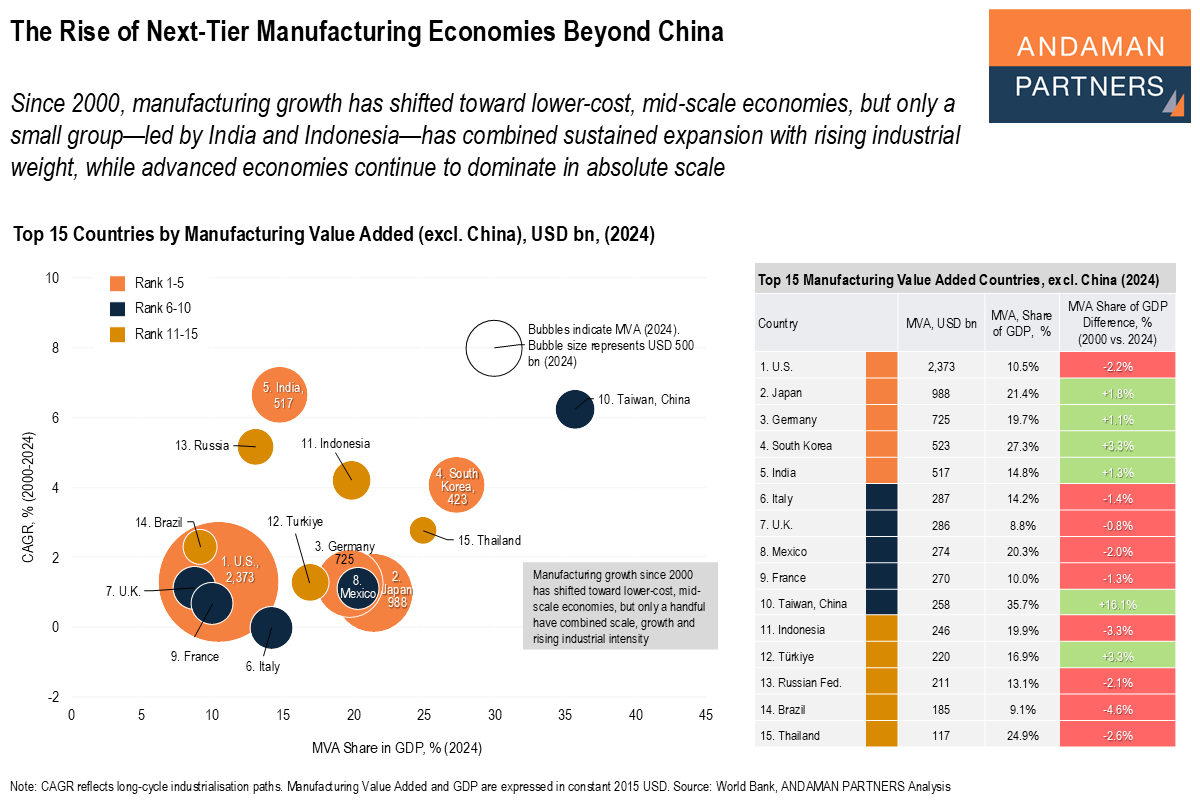
Manufacturing growth shifted toward lower-cost, mid-scale economies, but only a small group has combined sustained expansion with rising industrial weight.
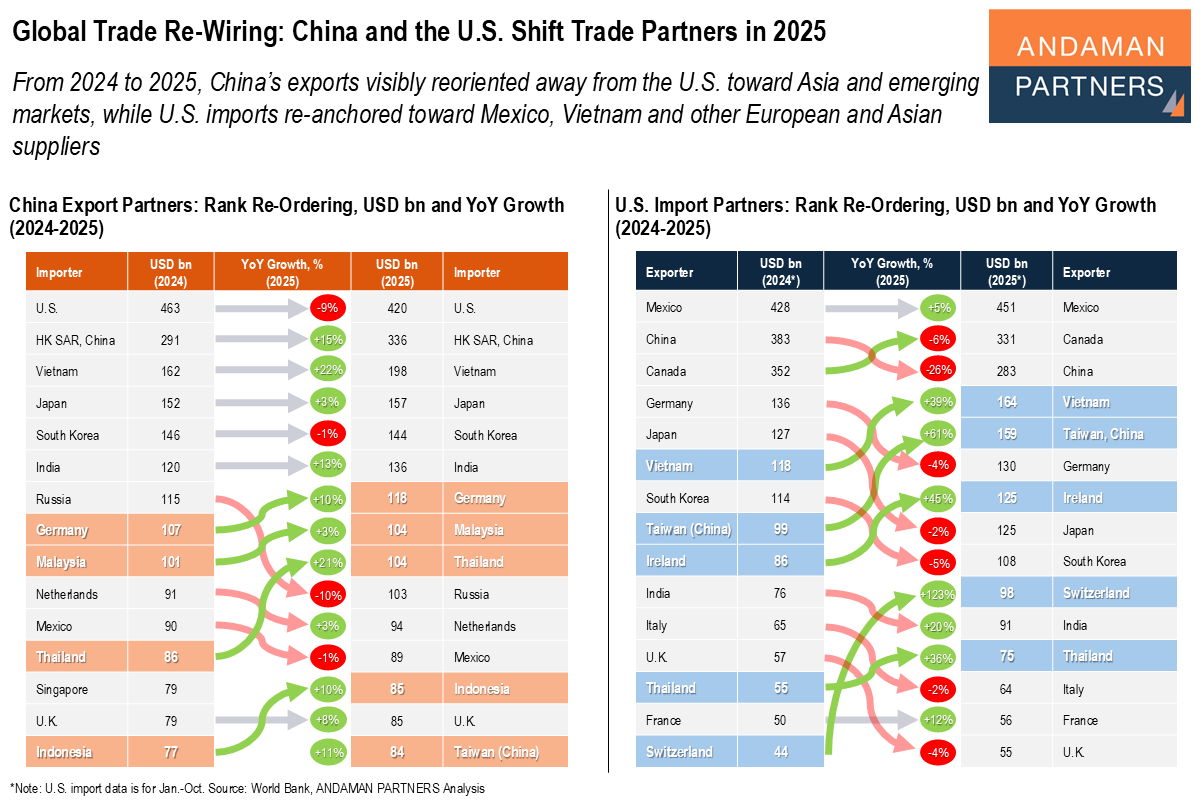
China’s exports reoriented away from the U.S. toward Asia and emerging markets, while U.S. imports re-anchored toward Mexico, Europe and Asia.