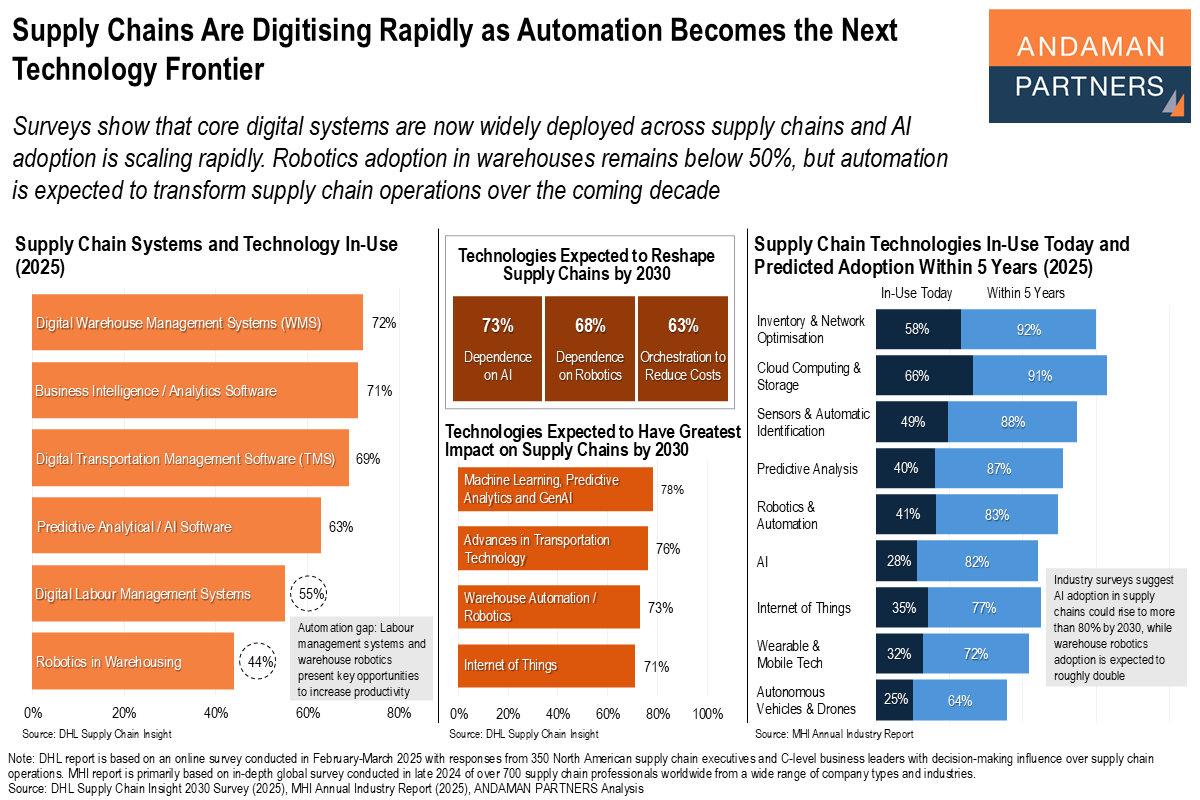

Surveys show that core digital systems are now widely deployed across supply chains and AI adoption is scaling rapidly. Robotics adoption in warehouses remains below 50%, but automation is expected to transform supply chain operations over the coming decade.
Supply chain technology adoption in 2025-2026 shows a clear structural shift: core digital systems are now firmly embedded across large enterprises. Around 70% of supply chain executives report using warehouse management systems, transportation management software and analytics platforms, indicating that digital foundations are now widely established across logistics and operations.
Industry surveys point to a rapid acceleration in the next phase of supply chain technology adoption. AI adoption in supply chains could rise to more than 80% by 2030, while warehouse robotics adoption is expected to roughly double over the next five years. Technologies such as machine learning, advanced transportation systems and connected devices are widely expected to have the greatest operational impact.
Yet the next productivity wave remains uneven. While AI and predictive analytics are gaining traction, robotics adoption in warehouses remains below 50%. This gap highlights a key opportunity for productivity gains, particularly as labour management systems and automation technologies continue to evolve.
Taken together, the data suggest that supply chains are moving into a new phase of digital transformation. The first stage focused on deploying core systems to digitise operations; the next stage will centre on integrating automation, AI and connected technologies to improve efficiency, resilience and responsiveness.
For supply chain operators, digital infrastructure is now the baseline. Competitive advantage will increasingly depend on how effectively companies scale automation, integrate intelligent systems and adapt their operations to a more technologically complex logistics environment.
Also by ANDAMAN PARTNERS:
ANDAMAN PARTNERS supports international business ventures and growth. We help launch global initiatives and accelerate successful expansion across borders. If your business, operations or project requires cross-border support, contact connect@andamanpartners.com.

Shenzhen: Where Entrepreneurs Land and Ideas Take Off by ANDAMAN PARTNERS Co-Founder Rachel Wu
Analysis by ANDAMAN PARTNERS Co-Founder Rachel Wu on what makes the city of Shenzhen different
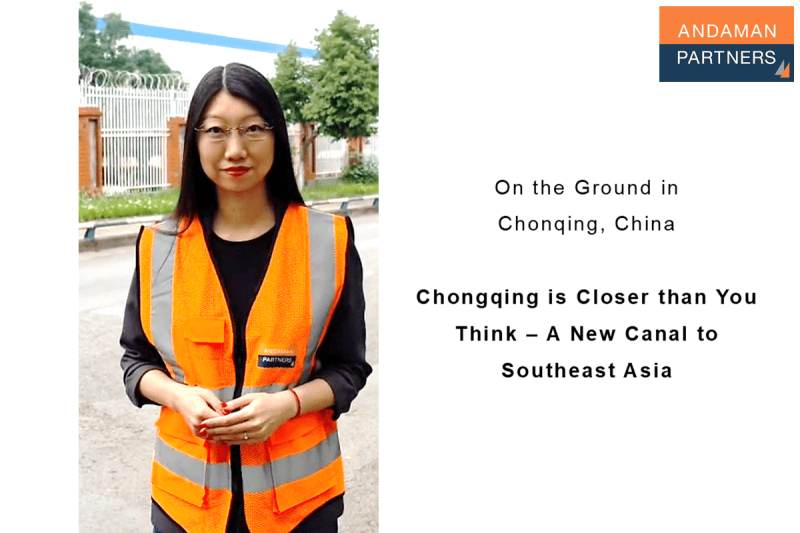
Chongqing Is Closer Than You Think by ANDAMAN PARTNERS Co-Founder Rachel Wu
ANDAMAN PARTNERS Co-Founder Rachel Wu on a new waterway in southern China that is redrawing the map for western China’s trade

How an Inland City Became One of China’s Top 5 Economies by ANDAMAN PARTNERS Co-Founder Rachel Wu
Analysis by ANDAMAN PARTNERS Co-Founder Rachel Wu on how Chongqing became one of China’s top 5 economies
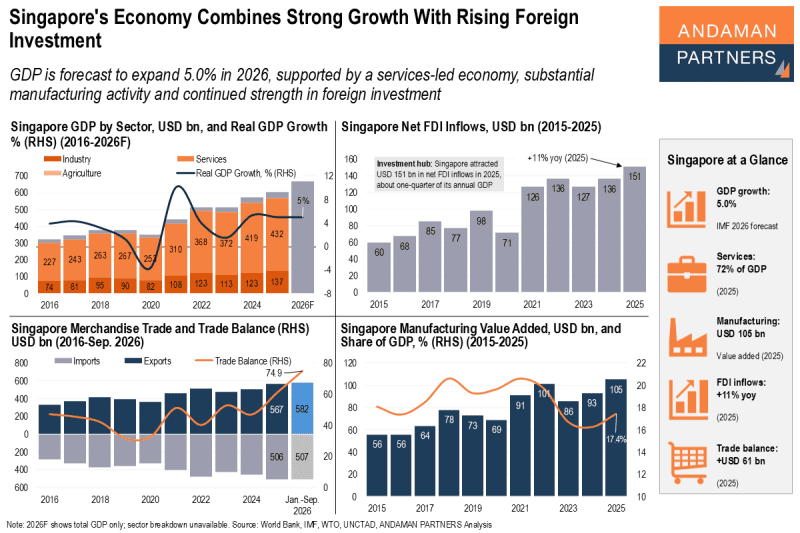
Singapore’s Economy Combines Strong Growth with Rising Foreign Investment
GDP is forecast to expand 5.0% in 2026, supported by a services-led economy
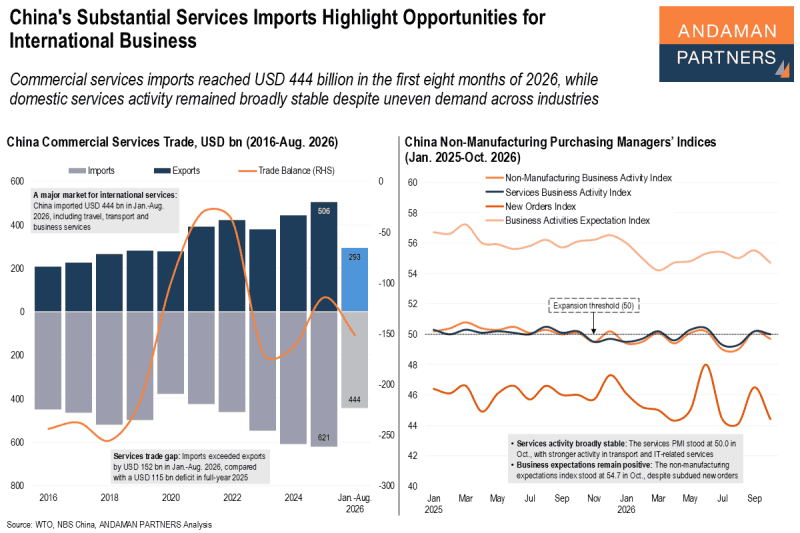
China’s Substantial Services Imports Highlight Opportunities for International Business
Commercial services imports reached USD 444 billion in the first eight months of 2026, while domestic services activity remained broadly stable
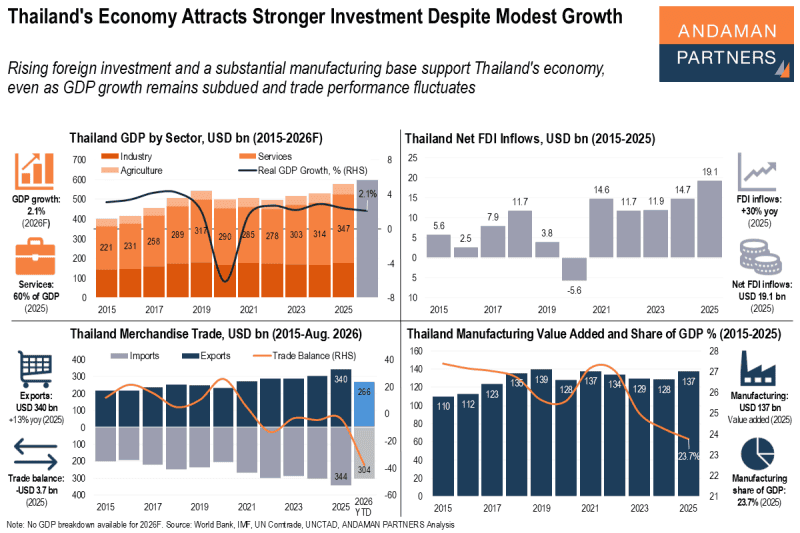
Thailand’s Economy Attracts Stronger Investment Despite Modest Growth
Rising foreign investment and a manufacturing base support Thailand’s economy, even as GDP growth remains subdued