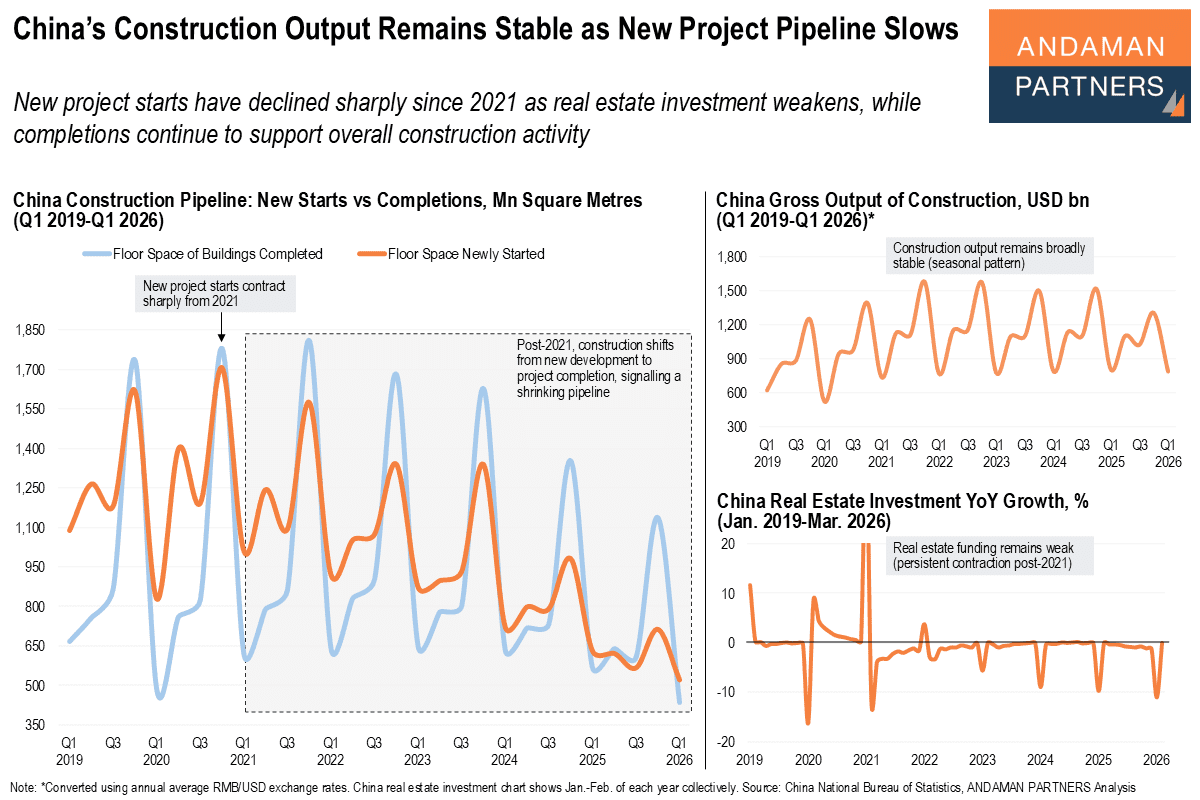

New project starts have declined sharply since 2021 as real estate investment weakens, while completions continue to support overall construction activity.
China’s construction sector is undergoing a structural shift. While overall construction output has remained broadly stable through 2024 and into Q1 2026, the underlying pipeline has weakened materially. New project starts have declined sharply since 2021, reflecting a sustained slowdown in real estate development activity, while completions have held up as developers prioritise delivery of existing projects.
This divergence points to a system increasingly driven by legacy activity rather than new demand. Real estate investment, historically the backbone of construction, has remained subdued post-2021, indicating tighter funding conditions and a more cautious development environment. At the same time, policy support and project completion requirements have helped stabilise output in the near term.
Overall, China’s construction market remains large, but future growth will depend less on expansion and more on the pace and direction of a gradually adjusting real estate sector.
Also by ANDAMAN PARTNERS:
ANDAMAN PARTNERS supports international business ventures and growth. We help launch global initiatives and accelerate successful expansion across borders. If your business, operations or project requires cross-border support, contact connect@andamanpartners.com.

How an Inland City Became One of China’s Top 5 Economies by ANDAMAN PARTNERS Co-Founder Rachel Wu
Analysis by ANDAMAN PARTNERS Co-Founder Rachel Wu on how Chongqing became one of China’s top 5 economies
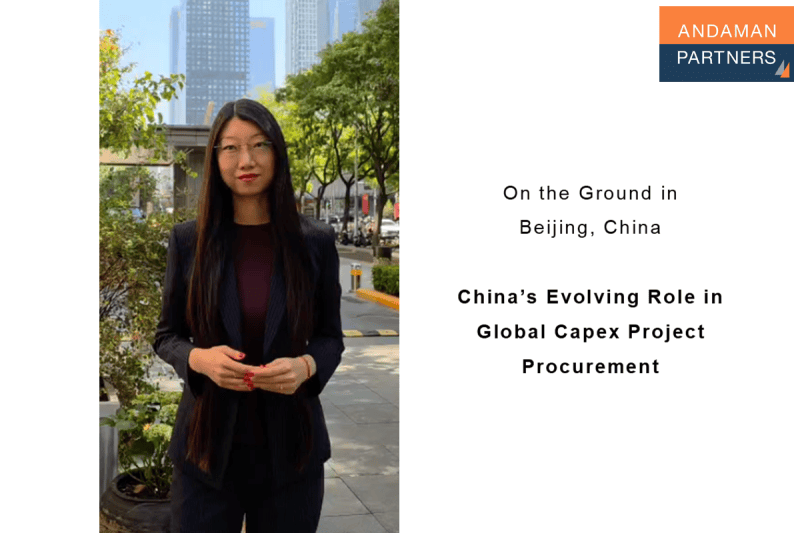
China’s Role in Global Capex Project Procurement by ANDAMAN PARTNERS Co-Founder Rachel Wu
Analysis by ANDAMAN PARTNERS Co-Founder Rachel Wu on how China’s role has evolved in global capex project procurement

ANDAMAN PARTNERS Co-Founder Rachel Wu to Deliver Talk at SEP Global Reunion 2026 in Shanghai, China
Rachel will deliver a talk at the event entitled ‘Two SEPers in the Family – Building in China for 20+ Years’
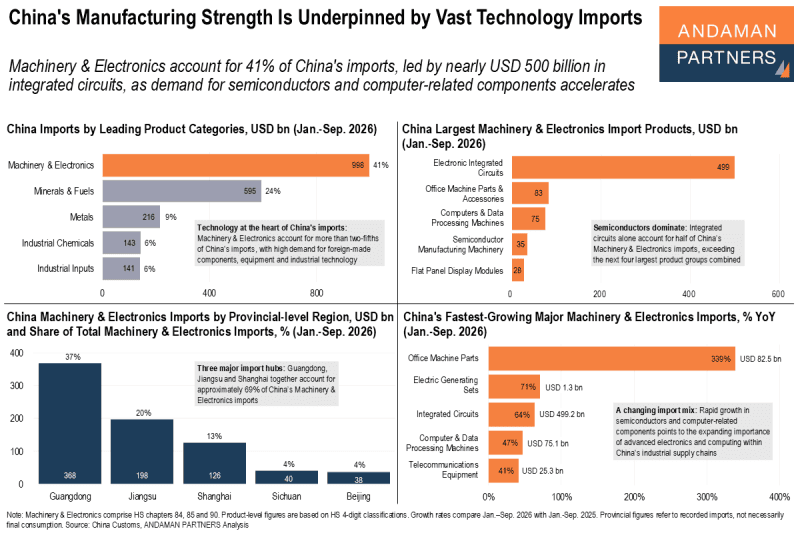
China’s Manufacturing Strength Is Underpinned by Vast Technology Imports
Machinery & Electronics account for 41% of China’s imports, led by nearly USD 500 billion in integrated circuits
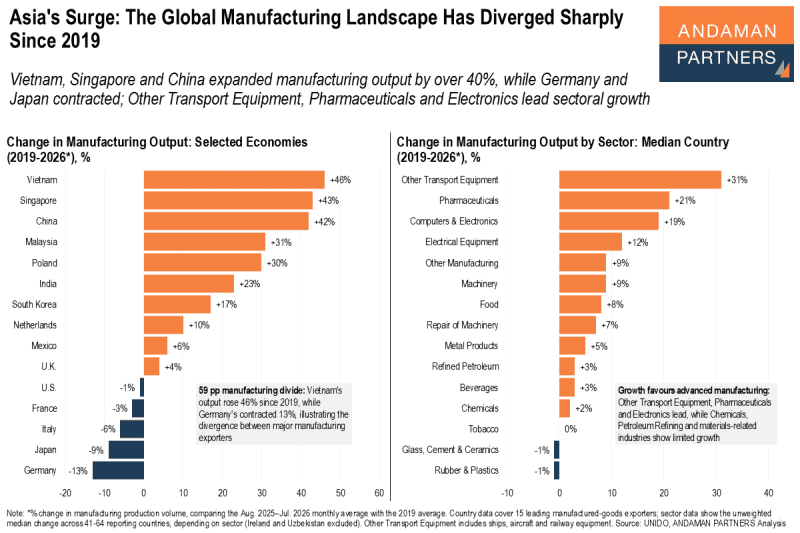
Asia’s Surge: The Global Manufacturing Landscape Has Diverged Sharply Since 2019
Vietnam, Singapore and China expanded manufacturing output by over 40%, while Germany and Japan contracted
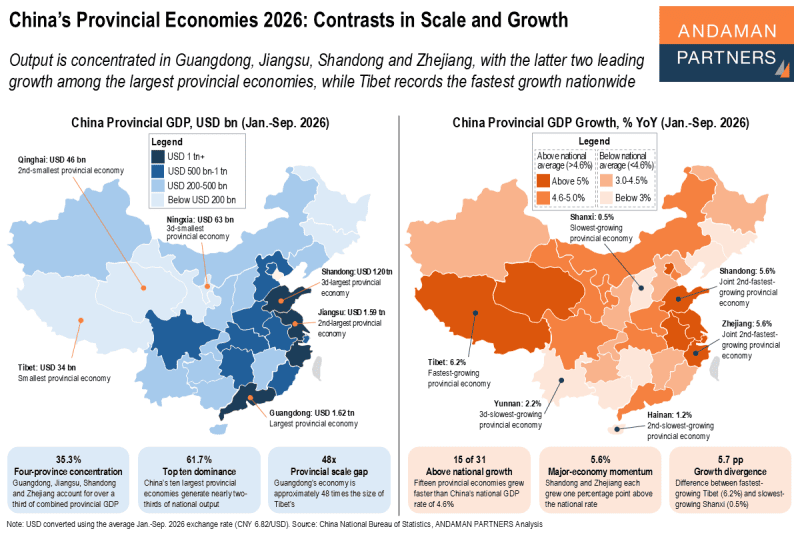
China’s Provincial Economies 2026: Contrasts in Scale and Growth
Output is concentrated in Guangdong, Jiangsu, Shandong and Zhejiang, while Tibet records the fastest growth nationwide