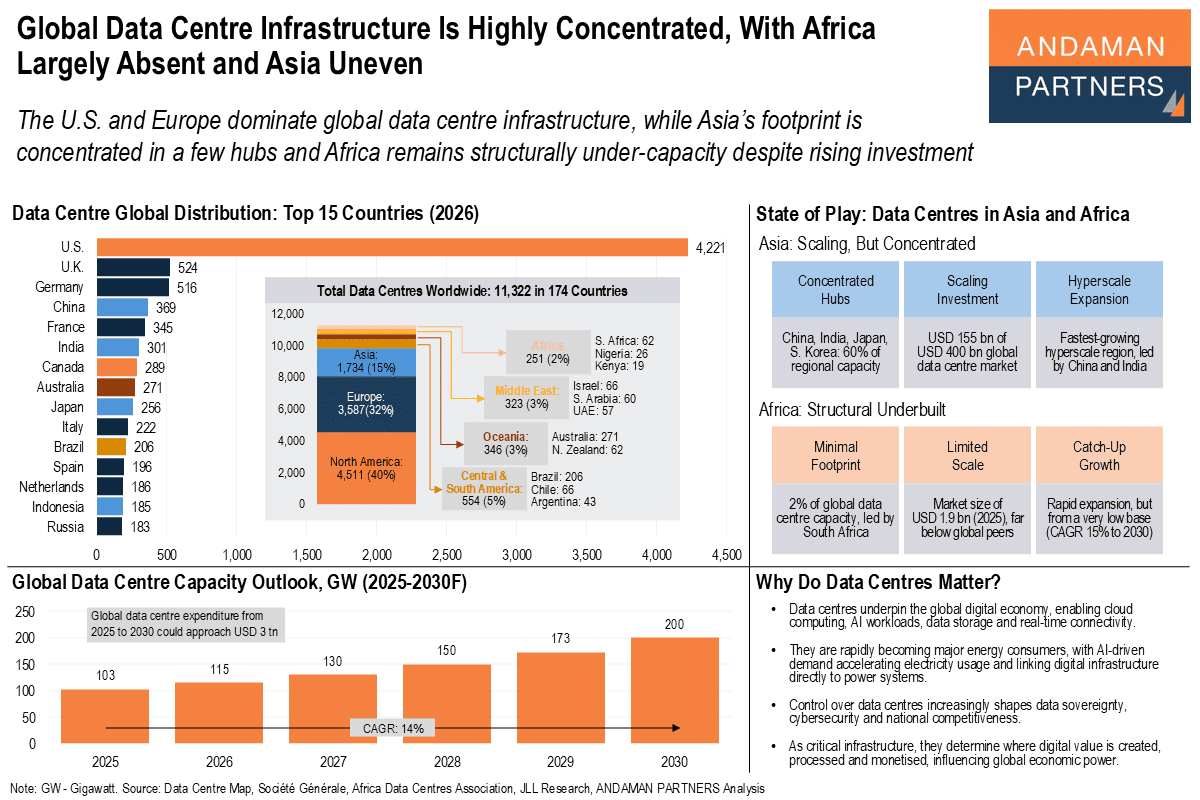
The U.S. and Europe dominate global data centre infrastructure, while Asia’s footprint is concentrated in a few hubs and Africa remains structurally under-capacity despite rising investment.
Global data centre infrastructure, now central to the functioning of the digital economy, is highly concentrated in a small number of countries. The U.S. alone hosts over 4,200 data centres, far exceeding any other market, with Europe forming a dense secondary cluster. Together, North America and Europe account for the majority of global capacity, underscoring how firmly digital infrastructure remains anchored in advanced economies.
Asia represents the only region outside the West with meaningful scale, but its footprint is far from evenly distributed. A handful of hubs, primarily China, India, Japan and South Korea, account for 60% of regional capacity, supported by strong investment and rapid expansion in hyperscale facilities. While the region is growing quickly, this growth is concentrated in select markets rather than broadly distributed.
By contrast, Africa remains structurally underbuilt. The continent accounts for roughly 2% of global data centre capacity, with infrastructure heavily concentrated in South Africa. Although investment is accelerating and capacity is expected to expand significantly over the coming decade, this growth is occurring from a very low base.
Looking ahead, global data centre capacity is projected to rise steadily through 2030, driven by demand for cloud computing, artificial intelligence and digital services. However, this expansion is unlikely to materially alter the underlying geographic imbalance. As a result, control over the infrastructure that underpins the digital economy remains highly concentrated, with significant implications for global competitiveness, data sovereignty and economic development.
Also by ANDAMAN PARTNERS:
ANDAMAN PARTNERS supports international business ventures and growth. We help launch global initiatives and accelerate successful expansion across borders. If your business, operations or project requires cross-border support, contact connect@andamanpartners.com.

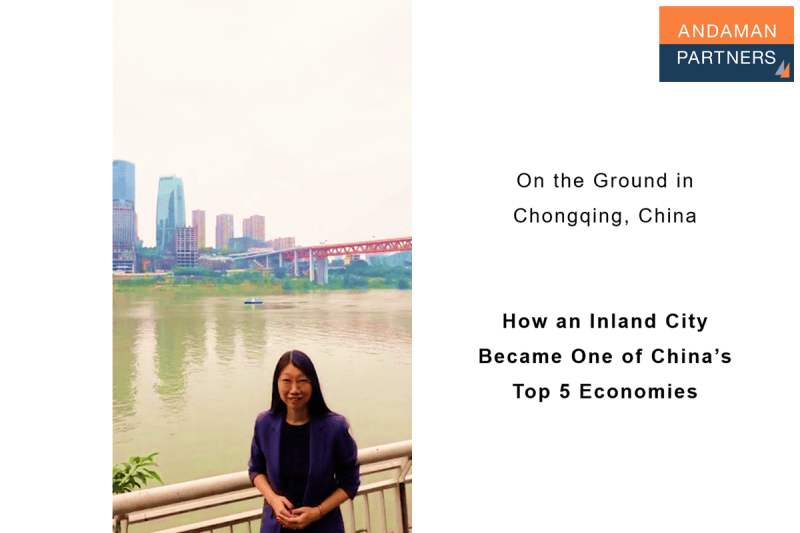
How an Inland City Became One of China’s Top 5 Economies by ANDAMAN PARTNERS Co-Founder Rachel Wu
Analysis by ANDAMAN PARTNERS Co-Founder Rachel Wu on how Chongqing became one of China’s top 5 economies

China’s Role in Global Capex Project Procurement by ANDAMAN PARTNERS Co-Founder Rachel Wu
Analysis by ANDAMAN PARTNERS Co-Founder Rachel Wu on how China’s role has evolved in global capex project procurement

ANDAMAN PARTNERS Co-Founder Rachel Wu to Deliver Talk at SEP Global Reunion 2026 in Shanghai, China
Rachel will deliver a talk at the event entitled ‘Two SEPers in the Family – Building in China for 20+ Years’
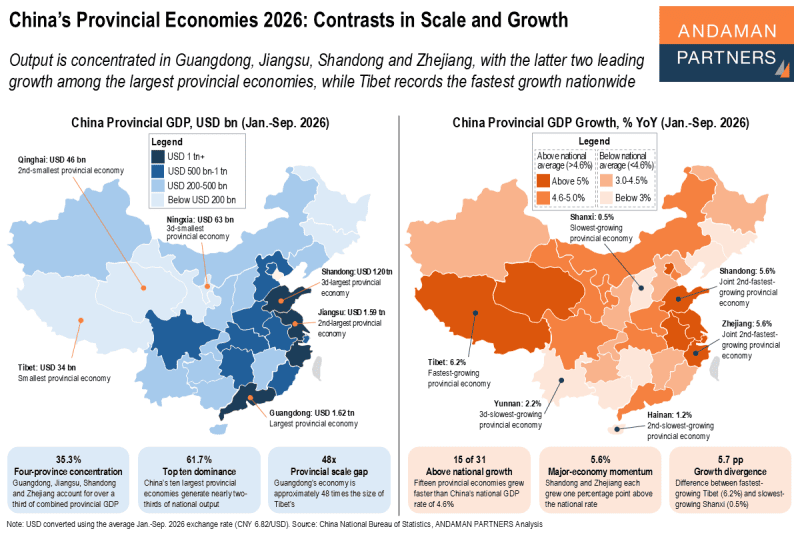
China’s Provincial Economies 2026: Contrasts in Scale and Growth
Output is concentrated in Guangdong, Jiangsu, Shandong and Zhejiang, while Tibet records the fastest growth nationwide
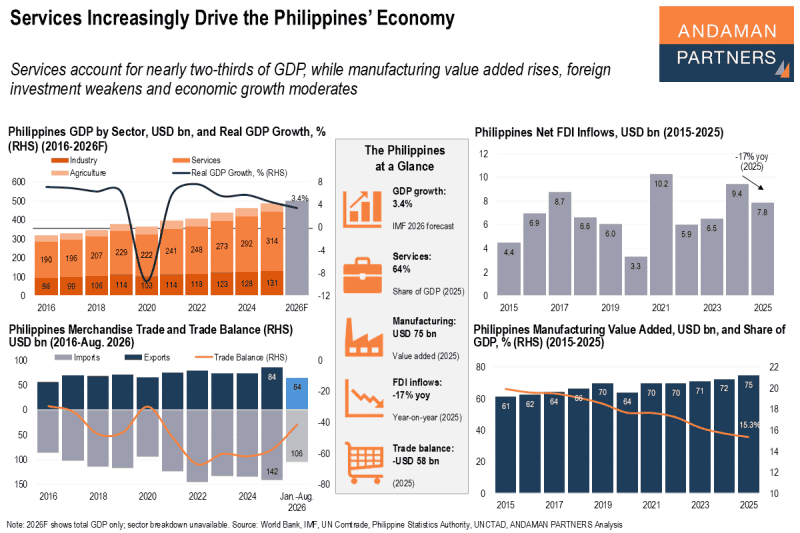
Services Increasingly Drive the Philippines’ Economy
Services account for two-thirds of GDP, while manufacturing value added rises, foreign investment weakens and growth moderates
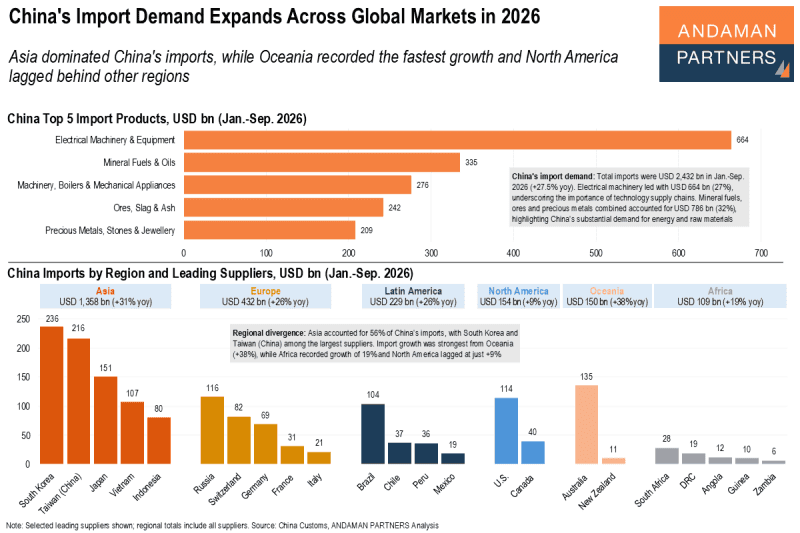
China’s Import Demand Expands Across Global Markets in 2026
Asia dominated China’s imports, while Oceania recorded the fastest growth and North America lagged behind other regions
Pingback: Domestic Capital Dominates China’s AI Investment | ANDAMAN PARTNERS