
The Next Wave of Global Industrial Export Growth
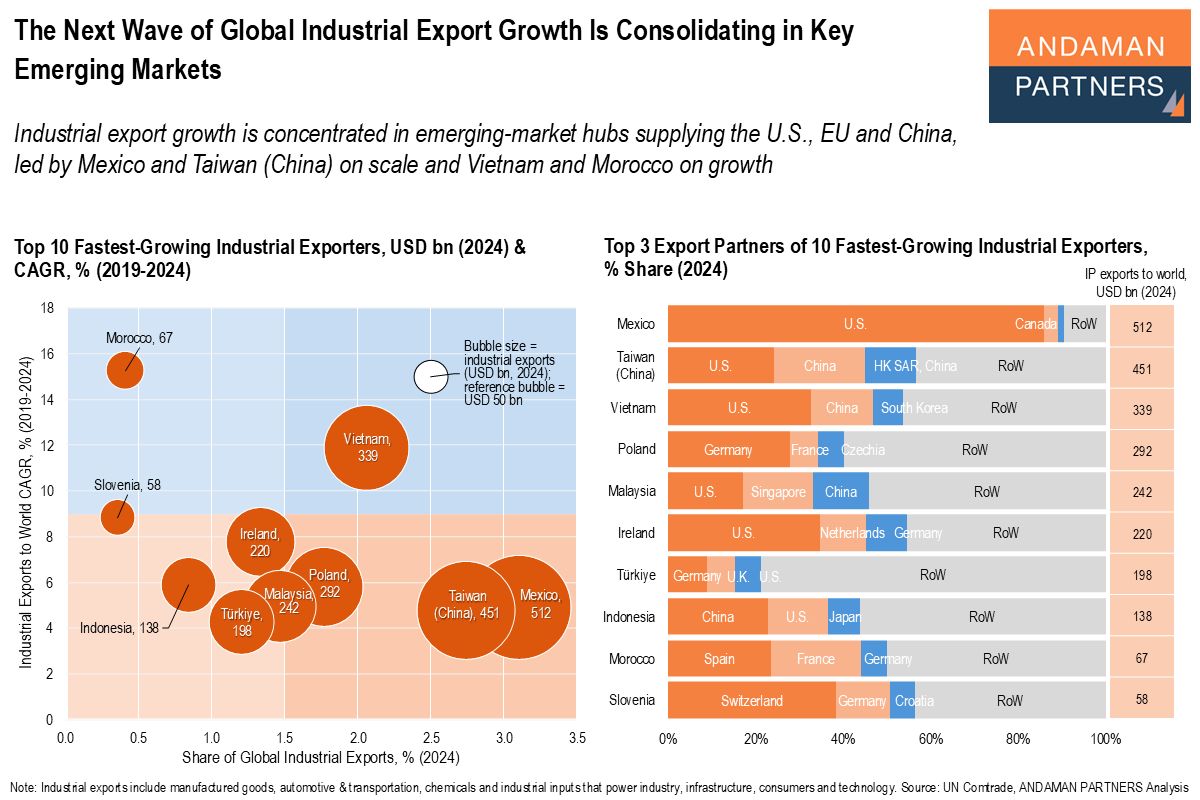
Industrial export growth is concentrated in emerging-market hubs supplying the U.S., EU and China, led by Mexico and Taiwan (China) on scale and Vietnam and Morocco on growth.
Global industrial export growth is consolidating in a small group of highly competitive emerging-market export hubs that are scaling rapidly while remaining tightly integrated into demand from the U.S., the EU and China.
Industrial product exports include manufactured goods such as machinery and electronics, vehicles and other transport equipment and chemicals and intermediate industrial inputs that underpin global manufacturing, infrastructure and consumer industries.
The ten fastest-growing industrial exporters globally by export scale in 2024 and export growth momentum (CAGR, 2019-2024) are a set of high-performing emerging-market hubs that now serve as core industrial suppliers to the U.S., the EU and China. The ten exporters are led by Mexico and Taiwan (China) in scale and by Vietnam and Morocco in growth, along with a cluster of six exporters from Europe and Asia.
- Mexico is the largest exporter in the group, with industrial exports of USD 512 billion in 2024, driven largely by U.S. demand and specialising in autos, electronics and machinery.
- Taiwan (China) follows at USD 451 billion, driven by advanced electronics and semiconductor-linked exports spanning the U.S. and China.
- Vietnam (USD 339 billion) stands out for its strong combination of scale and growth, powered by electronics, consumer goods and diversified assembly supply chains serving the U.S., China and South Korea.
- Poland (USD 292 billion) reflects Europe’s manufacturing depth, supplying Germany and France with machinery, autos and industrial components.
- Malaysia (USD 242 billion) is a key exporter of electronics and semiconductors, embedded in U.S. and China-facing production networks.
- Ireland (USD 220 billion) is distinctive for high-value pharmaceutical and chemicals exports to the U.S. and Europe.
- Türkiye (USD 198 billion) combines industrial breadth (autos, appliances and textiles) with strong European integration.
- Indonesia (USD 138 billion) is scaling exports in resource-linked industrial inputs, metals and basic manufacturing, with China as the leading buyer, followed by the U.S. and Japan.
- Morocco (USD 67 billion) is emerging as a fast-growing nearshore platform for Europe, led by automotive electrical systems and parts supply chains.
- Slovenia (USD 58 billion), though smaller in scale, is a fast-growing EU-integrated exporter specialising in high-value industrial components.
Also by ANDAMAN PARTNERS:
ANDAMAN PARTNERS supports international business ventures and growth. We help launch global initiatives and accelerate successful expansion across borders. If your business, operations or project requires cross-border support, contact connect@andamanpartners.com.

ANDAMAN PARTNERS Co-Founder Rachel Wu to Deliver Talk at SEP Reunion 2026 in Shanghai, China
ANDAMAN PARTNERS will attend the SEP Reunion 2026 in Shanghai, China, from 28 October to 1 November 2026

ANDAMAN PARTNERS to Attend Stanford Executive Programme Reunion 2026 in Shanghai, China
ANDAMAN PARTNERS will attend the SEP Reunion 2026 in Shanghai, China, from 28 October to 1 November 2026

ANDAMAN PARTNERS to Attend 2026 IMF & World Bank Annual Meetings in Bangkok, Thailand
ANDAMAN PARTNERS will attend the IMF & World Bank Annual Meetings in Bangkok on 12-18 October 2026
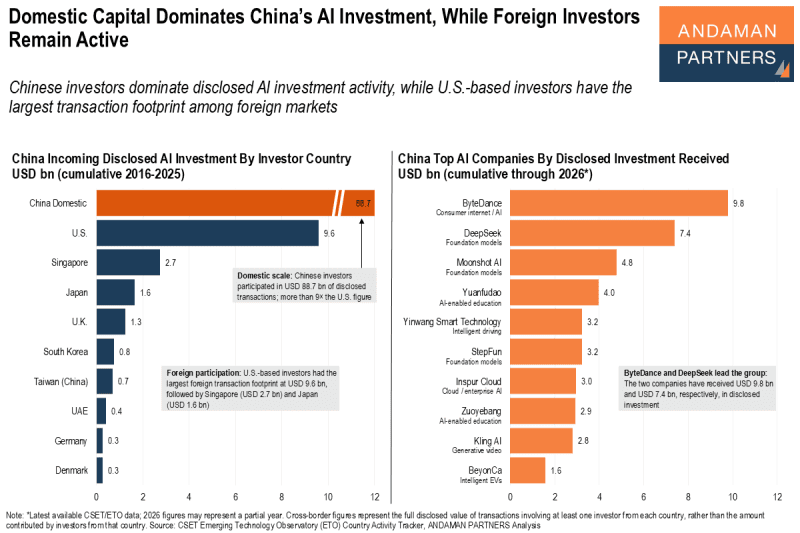
Domestic Capital Dominates China’s AI Investment, While Foreign Investors Remain Active
Chinese investors dominate disclosed AI investment activity, while U.S.-based investors have the largest transaction footprint among foreign markets
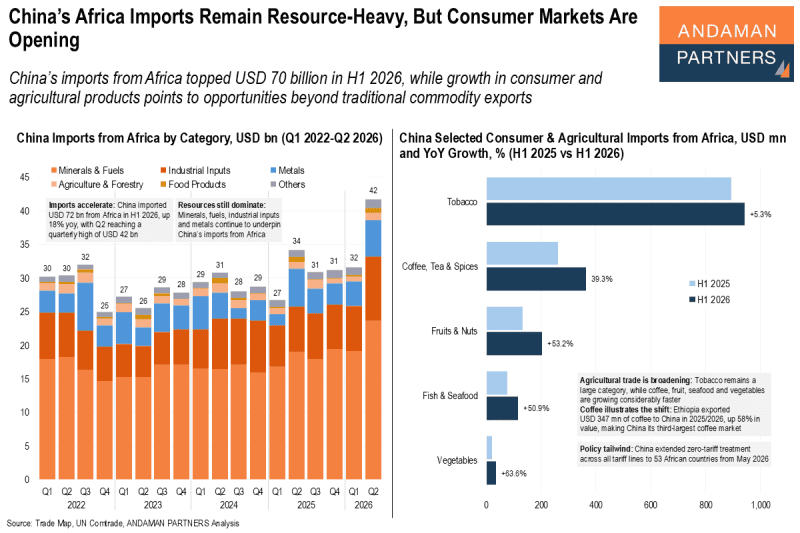
China’s Africa Imports Remain Resource-Heavy, But Consumer Markets Are Opening
China’s imports from Africa topped USD 70 billion in H1 2026, while consumer and agricultural products point to new opportunities for growth
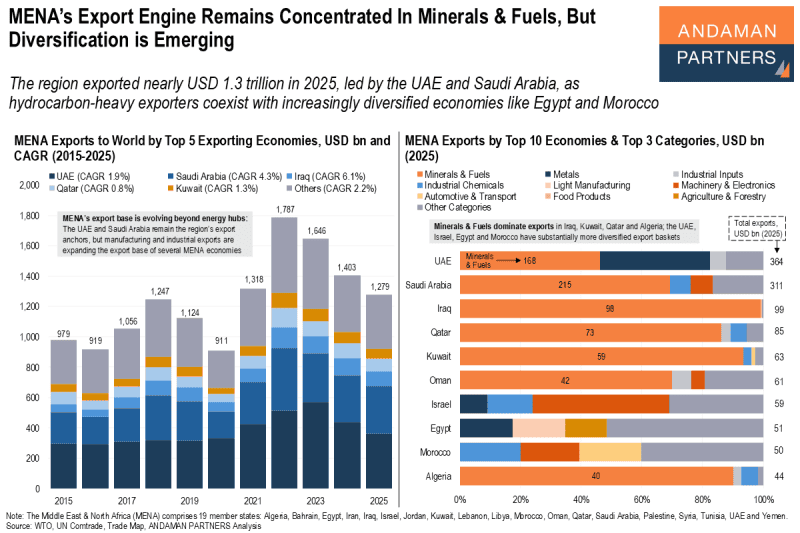
MENA’s Export Engine Remains Concentrated in Minerals & Fuels, But Diversification Is Emerging
MENA exported nearly USD 1.3 trillion in 2025, with hydrocarbon-heavy exporters coexisting with increasingly diversified economies