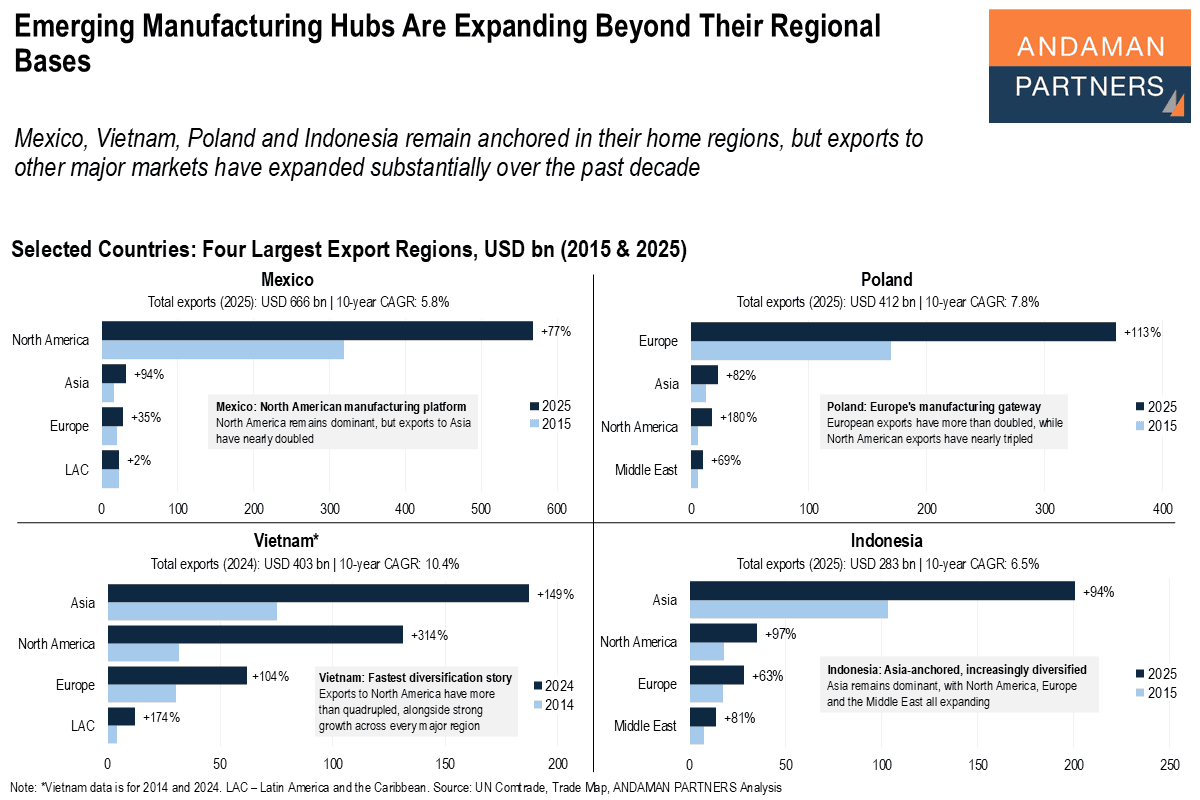
Emerging Manufacturing Hubs Are Expanding Beyond Their Regional Bases
Mexico, Vietnam, Poland and Indonesia remain anchored in their home regions, but exports to other major markets have expanded substantially

Mexico, Vietnam, Poland and Indonesia remain anchored in their home regions, but exports to other major markets have expanded substantially
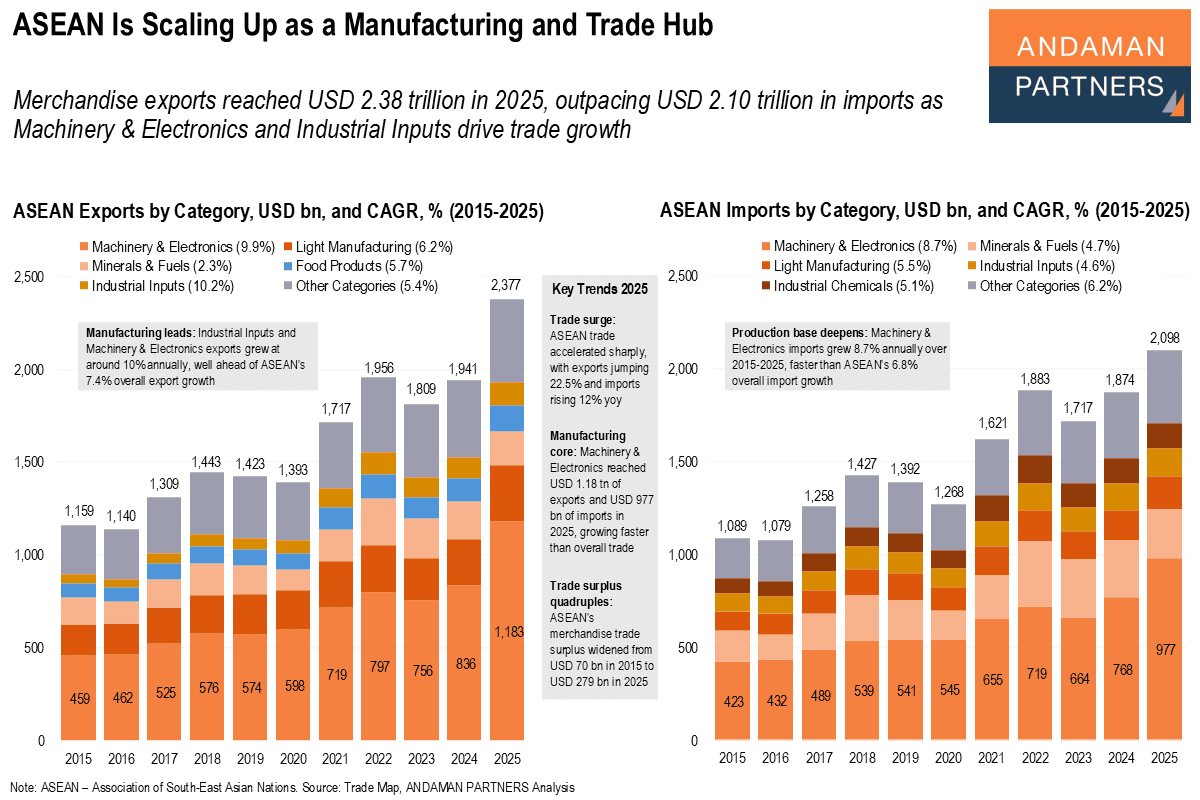
Merchandise exports reached USD 2.38 trillion in 2025, outpacing USD 2.10 trillion in imports
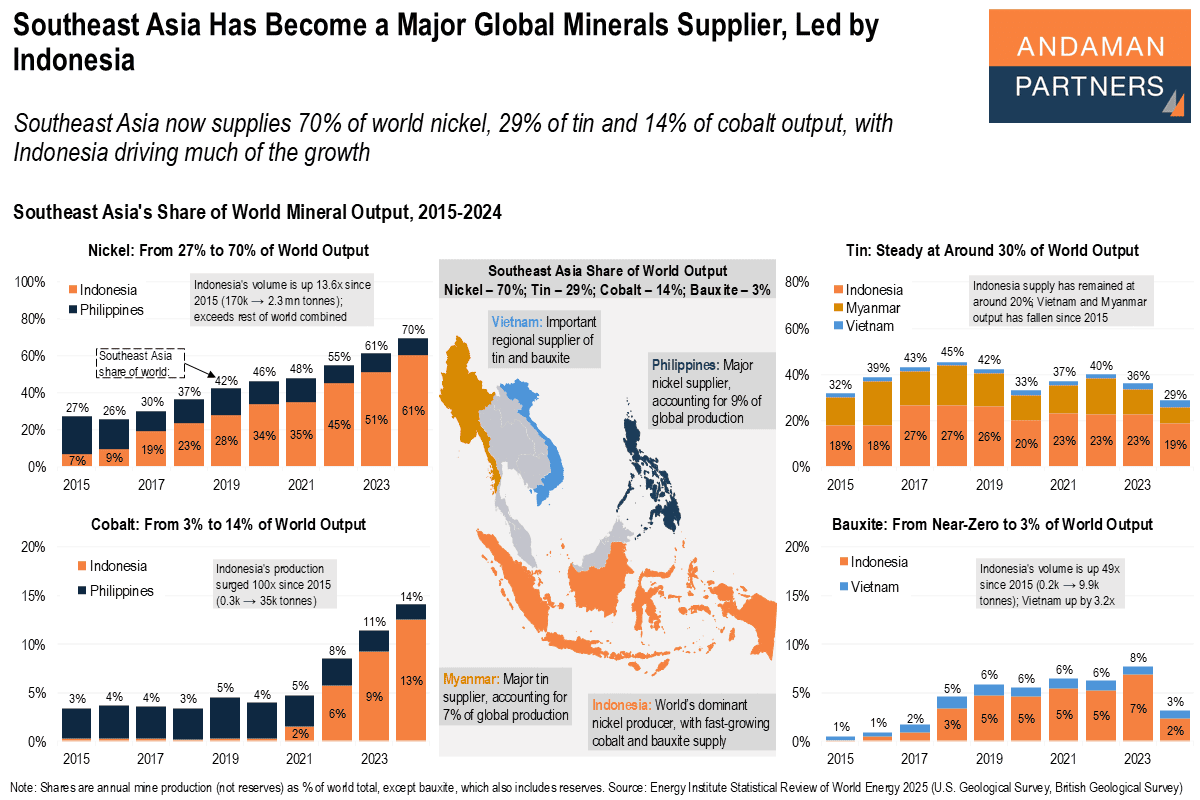
Southeast Asia now supplies 70% of world nickel, 29% of tin and 14% of cobalt output, with Indonesia driving much of the growth
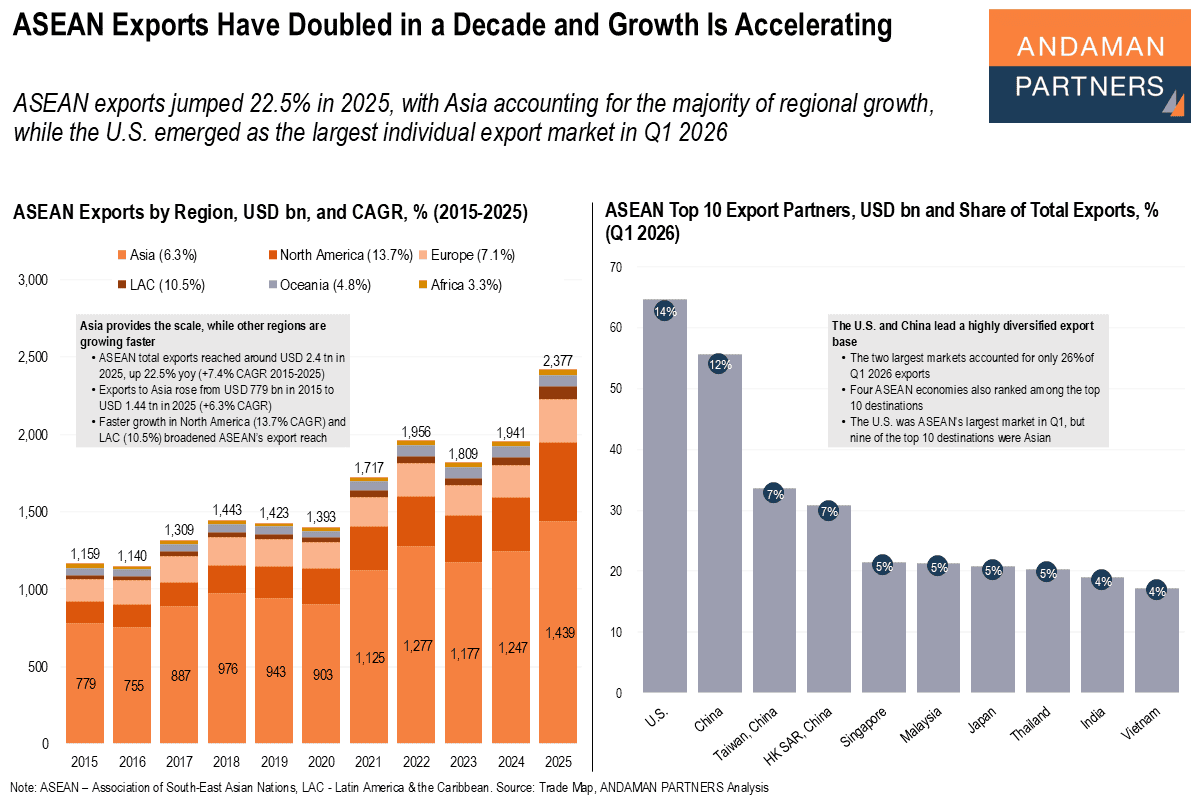
ASEAN exports jumped 22.5% in 2025, with Asia accounting for the majority of regional growth
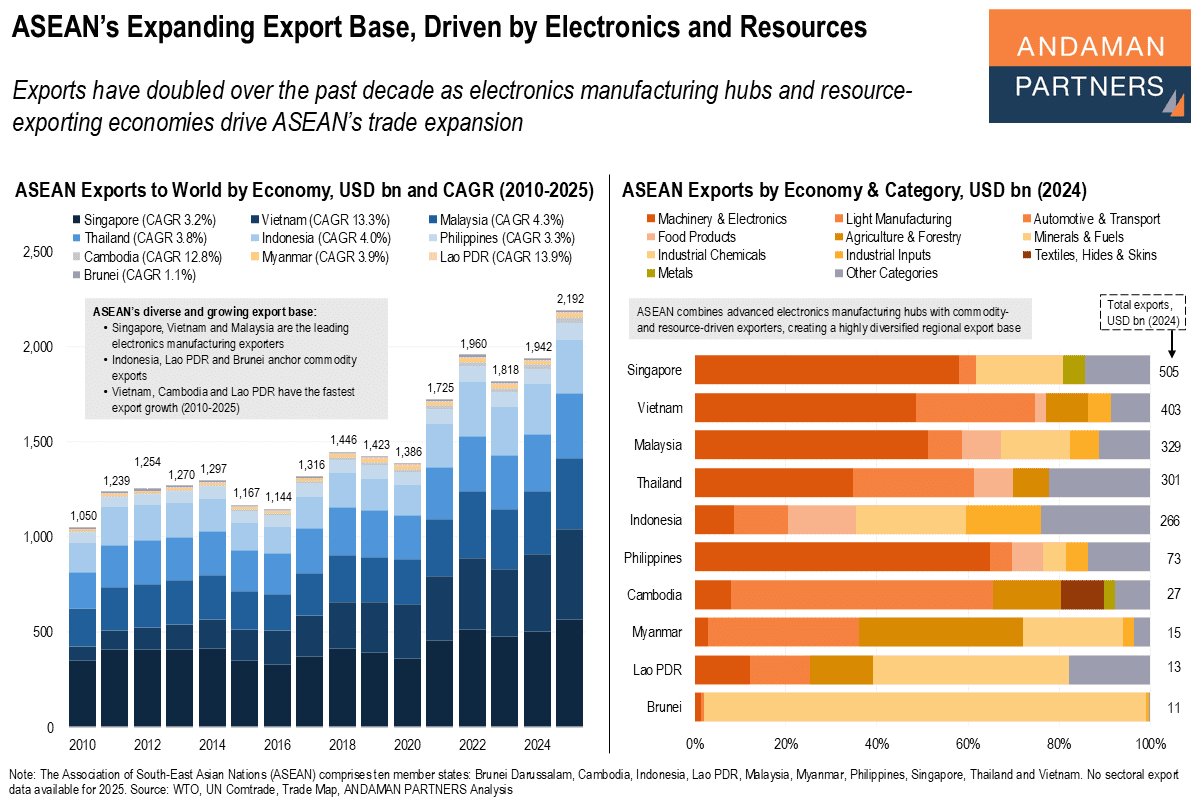
Exports have doubled over the past decade as electronics manufacturing hubs and resource-exporting economies drive ASEAN’s trade expansion.
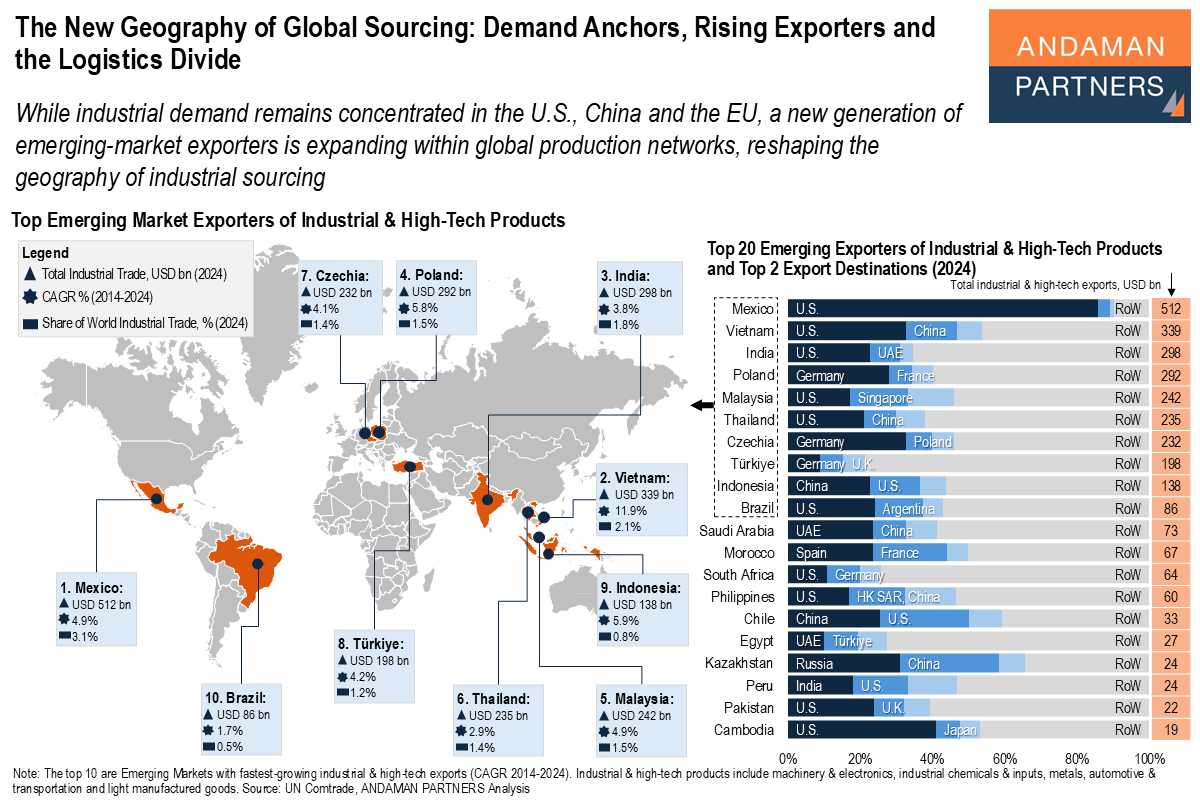
Industrial demand is concentrated in the U.S., China and the EU, while a new generation of emerging markets is expanding in global production.
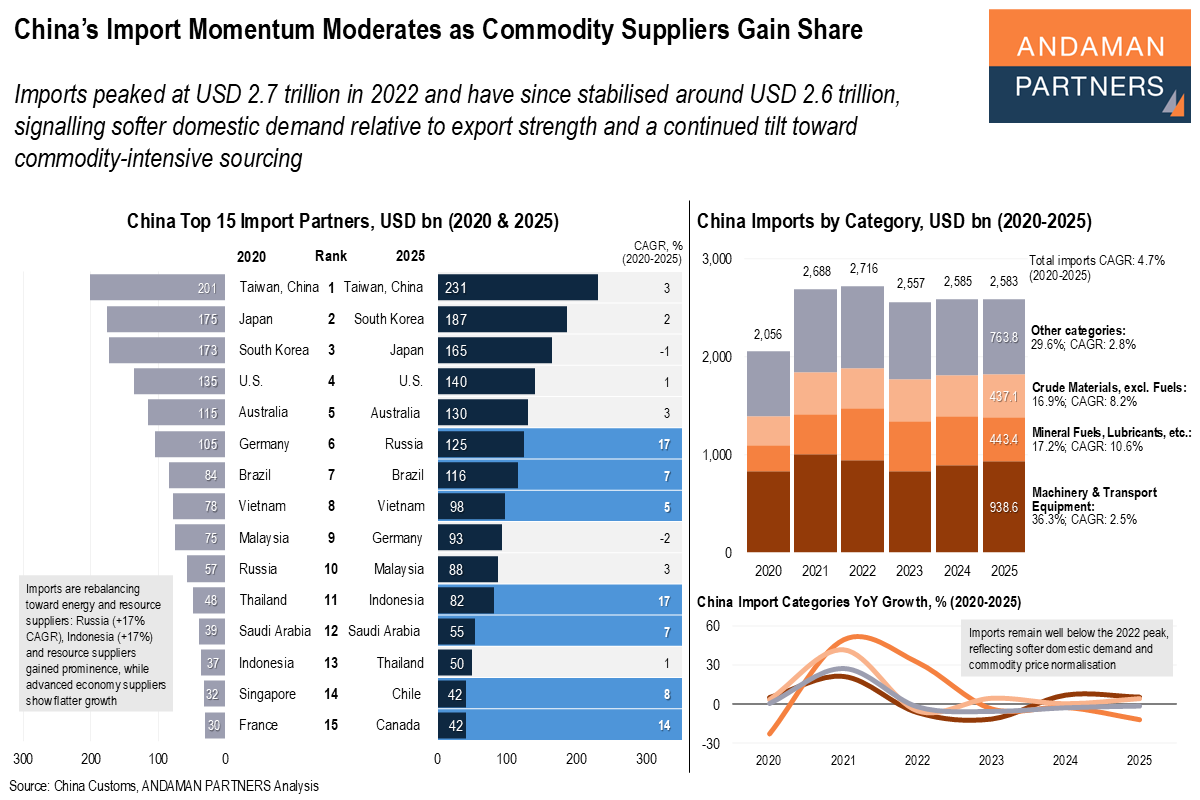
Imports have stabilised around USD 2.6 trillion, signalling softer domestic demand and a continued tilt toward commodity-intensive sourcing.
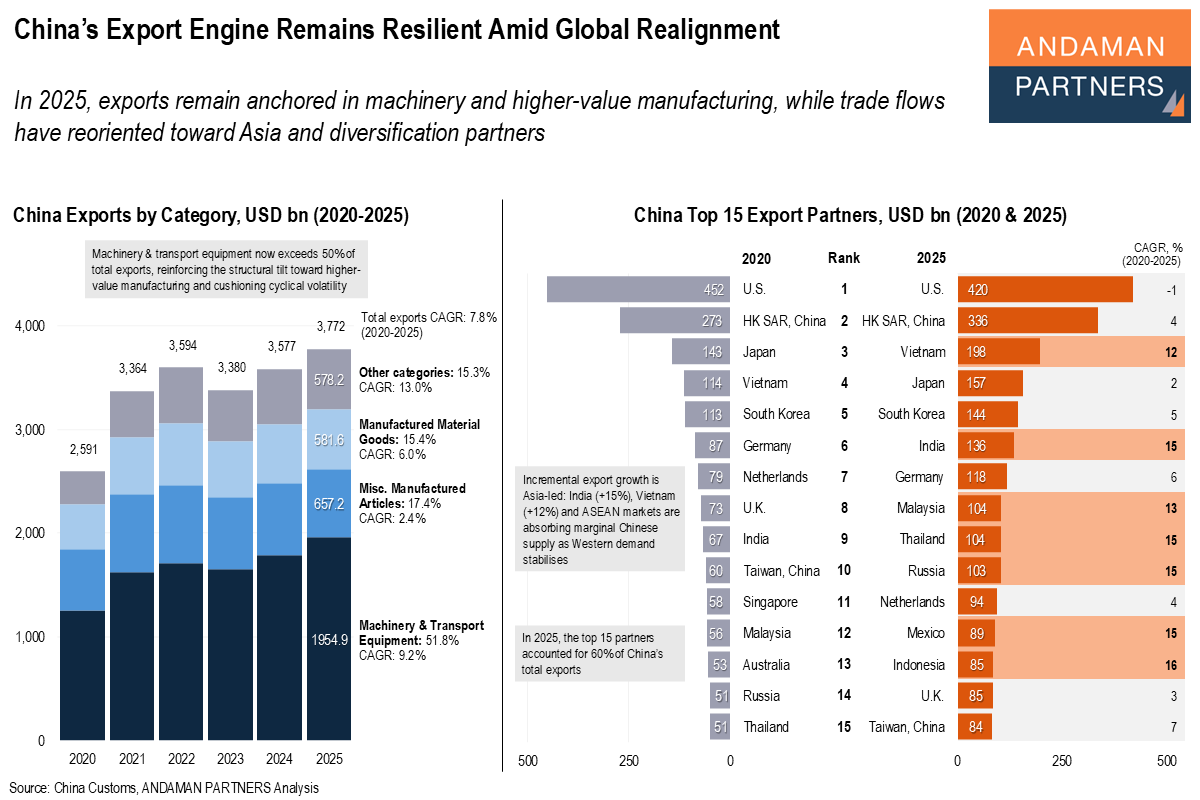
Exports remain anchored in machinery and higher-value manufacturing, while trade flows have reoriented toward Asia and diversification partners.
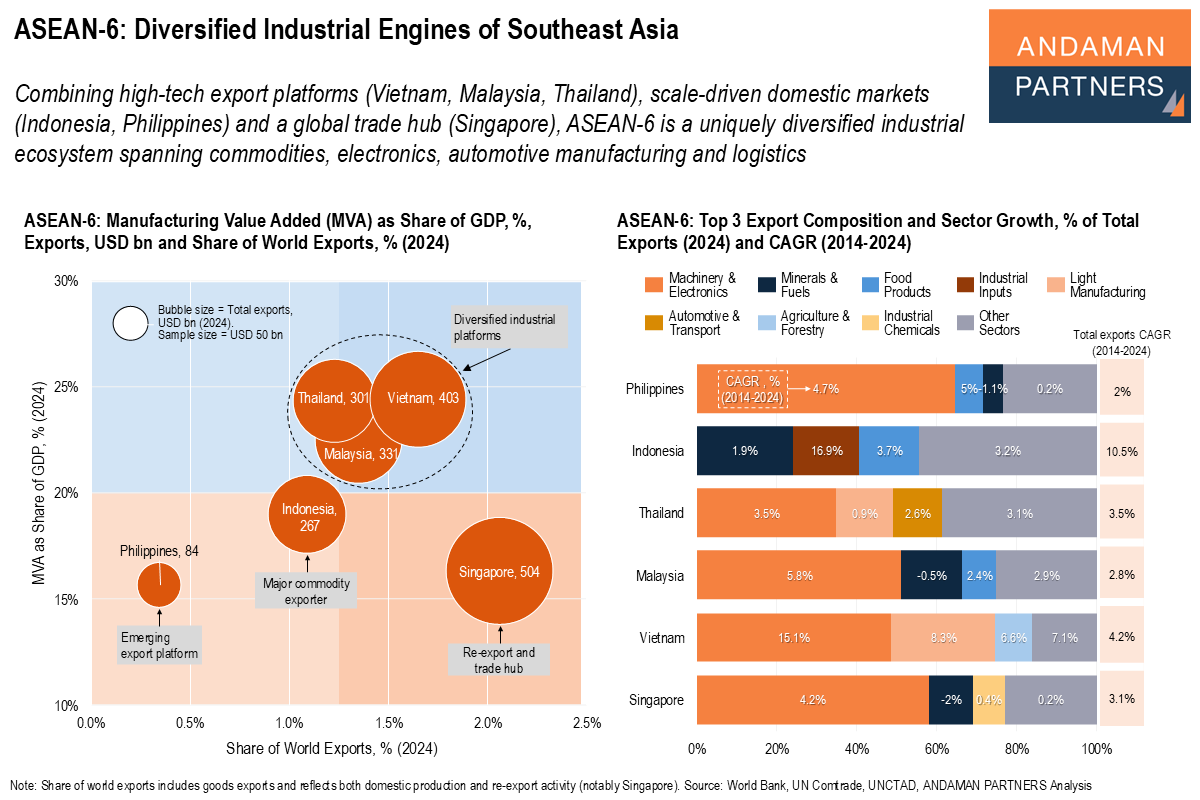
Combining high-tech export platforms, scale-driven domestic markets and a global trade hub, ASEAN-6 is a uniquely diversified industrial ecosystem.
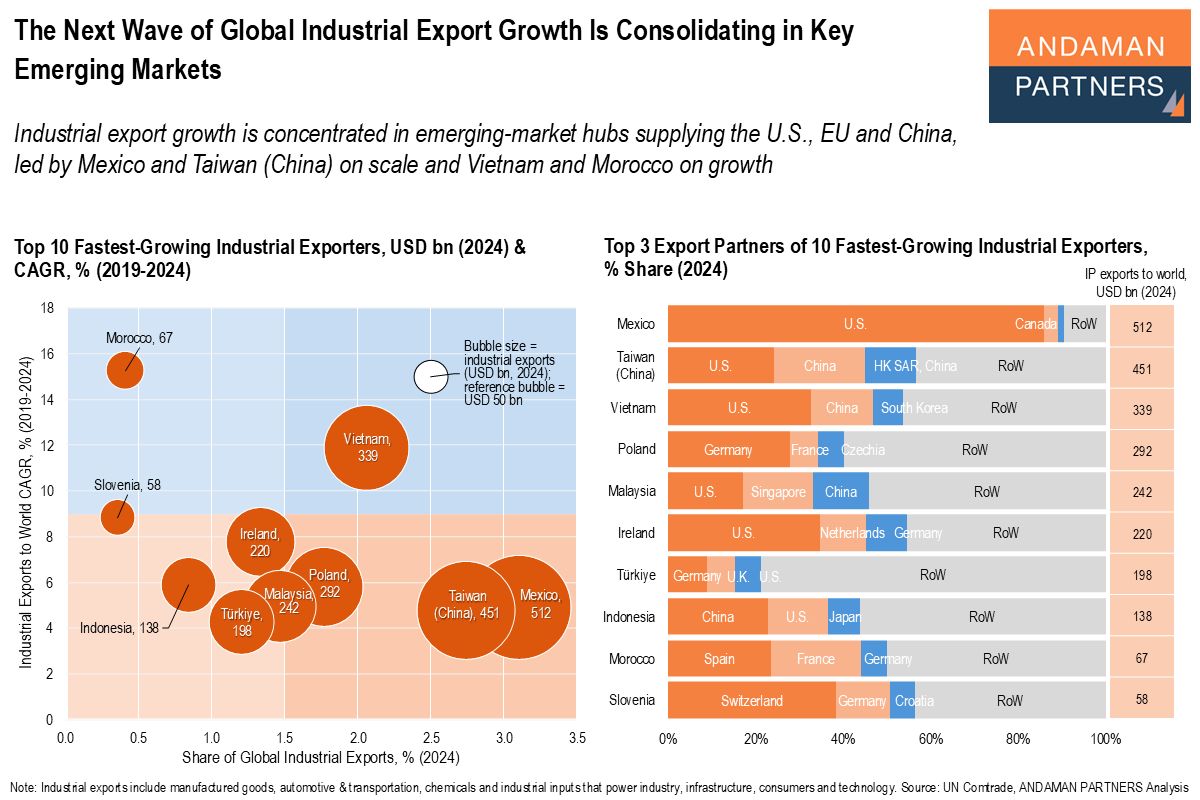
Industrial export growth is concentrated in emerging-market hubs supplying the U.S., EU and China, led by Mexico and Taiwan (China).