
AI Adoption Is Now Mainstream
AI Adoption Is Now Mainstream, But Enterprise-Scale Impact Remains Limited
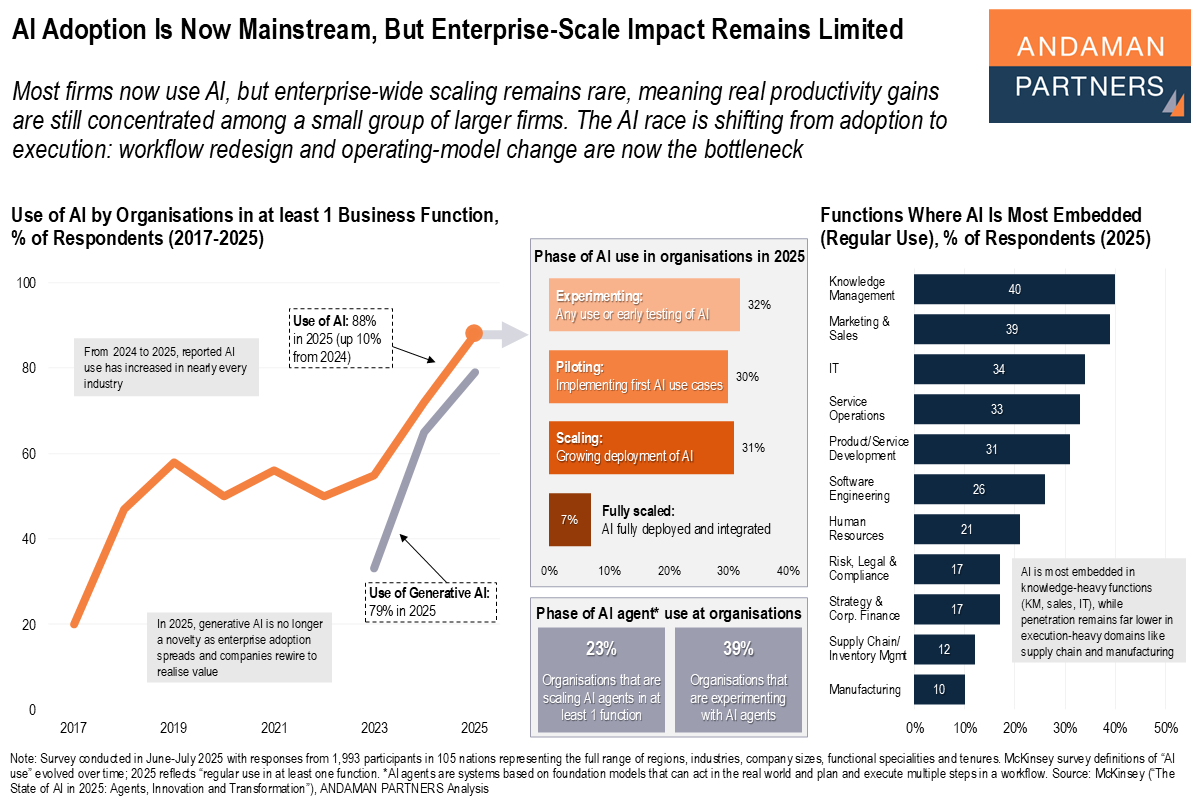
Most firms now use AI, but enterprise-wide scaling remains rare, meaning real productivity gains are still concentrated among a small group of larger firms. The AI race is shifting from adoption to execution: workflow redesign and operating-model change are now the bottleneck.
AI adoption is now firmly mainstream, with 88% of organisations reporting regular use in at least one business function in 2025, yet true enterprise-wide impact remains limited because scaling is still rare: only 7% report fully scaled deployment, while most remain stuck in experimentation (32%) or piloting (30%).
Where AI is most embedded, adoption is concentrated in knowledge-heavy and digital functions such as knowledge management (40%), marketing and sales (39%) and IT (34%). Usage remains far lower in operational domains such as supply chain (12%) and manufacturing (10%).
The data highlights a clear shift in the AI race from adoption to execution: competitive advantage is increasingly determined not by whether firms are using AI, but by whether they can redesign workflows, build operating-model capabilities, and scale AI across core business processes.
Also by ANDAMAN PARTNERS:
ANDAMAN PARTNERS supports international business ventures and growth. We help launch global initiatives and accelerate successful expansion across borders. If your business, operations or project requires cross-border support, contact connect@andamanpartners.com.

A Glance at China’s Consumer Market from Nanjing West Road by ANDAMAN PARTNERS Co-Founder Rachel Wu
Analysis by ANDAMAN PARTNERS Co-Founder Rachel Wu on China’s consumer economy

China Keeps Shopping for Services. Are You Selling? By ANDAMAN PARTNERS Co-Founder Rachel Wu
Analysis by ANDAMAN PARTNERS Co-Founder Rachel Wu on Shanghai’s services economy

Shenzhen: Where Entrepreneurs Land and Ideas Take Off by ANDAMAN PARTNERS Co-Founder Rachel Wu
Analysis by ANDAMAN PARTNERS Co-Founder Rachel Wu on what makes the city of Shenzhen different
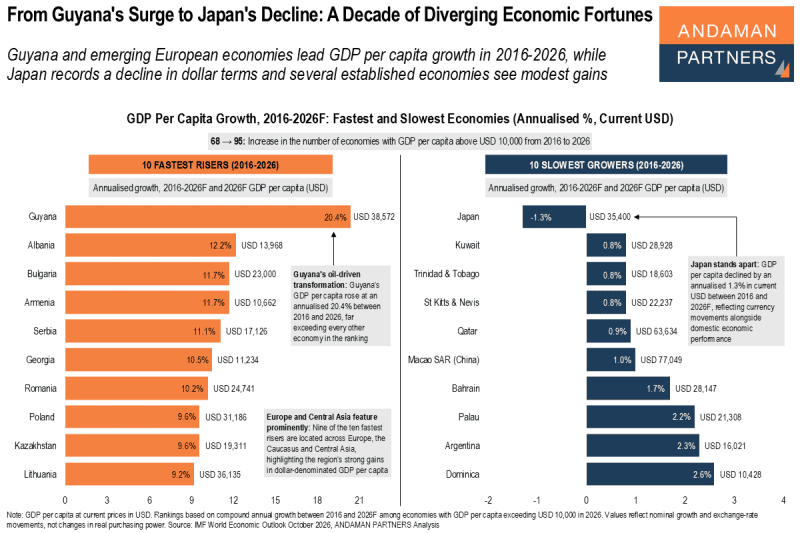
From Guyana’s Surge to Japan’s Decline: A Decade of Diverging Economic Fortunes
Guyana and emerging European economies lead GDP per capita growth in 2016-2026, while Japan records a decline
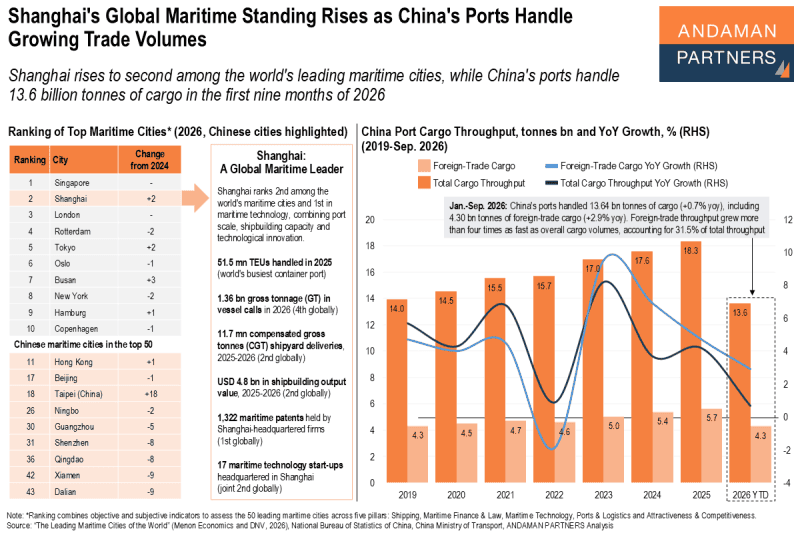
Shanghai’s Global Maritime Standing Rises as China’s Ports Handle Growing Trade Volumes
Shanghai rises to second among the world’s leading maritime cities, while China’s ports handle 13.6 billion tonnes of cargo in 2026
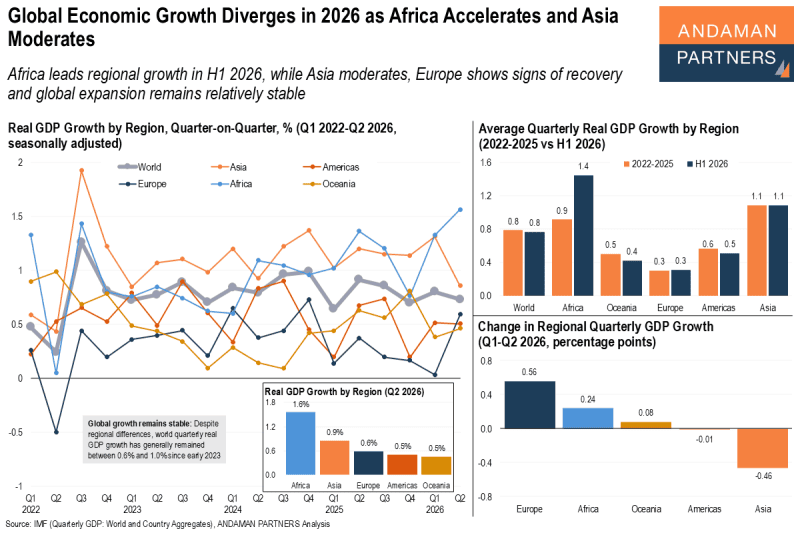
Global Economic Growth Diverges in 2026 as Africa Accelerates and Asia Moderates
Africa leads regional growth in H1 2026, while Asia moderates and Europe shows signs of recovery