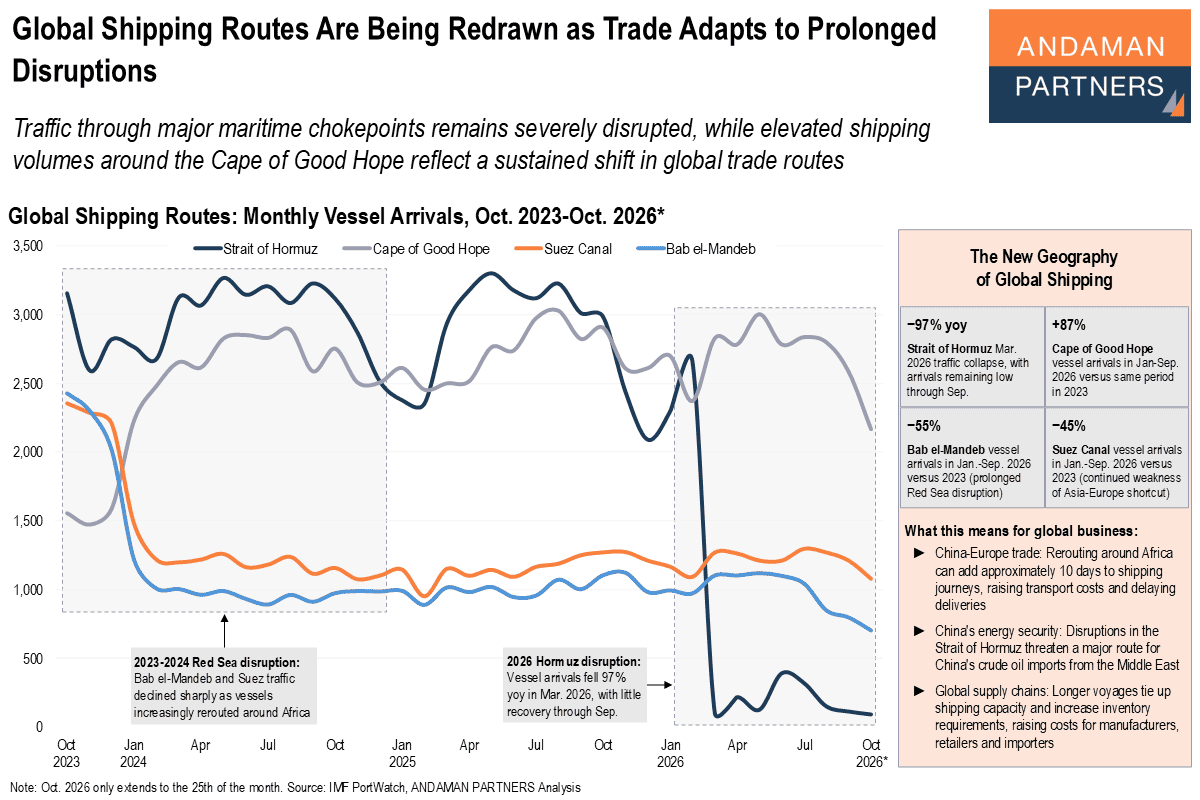
Global Shipping Routes Are Being Redrawn
Traffic through major maritime chokepoints remains severely disrupted, while elevated shipping volumes around the Cape of Good Hope reflect a sustained shift in global trade routes.
Global shipping is being reshaped, but the story is not simply one of disruption. It is also about how international trade adapts when established routes become unreliable.
Since late 2023, shipping companies have increasingly diverted vessels away from the Red Sea and Suez Canal, sending them on longer journeys around Africa. In the first nine months of 2026, vessel arrivals at the Cape of Good Hope were 87% higher than in the same period in 2023, while traffic through Bab el-Mandeb and the Suez Canal was down 55% and 45%, respectively. A further shock came in March 2026, when vessel arrivals through the Strait of Hormuz collapsed by 97% year-on-year, with little recovery through September.
These changes matter far beyond the shipping industry. For Chinese exporters serving Europe, longer routes around Africa can add approximately 10 days to delivery times, raising transport costs and forcing businesses to plan further ahead.
Disruptions in the Strait of Hormuz present a different challenge, threatening a crucial route for China’s crude oil imports from the Middle East. Across the global economy, longer voyages tie up shipping capacity, complicate inventory management and increase costs for manufacturers, retailers and consumers. Yet the continued movement of goods along alternative routes also demonstrates the adaptability of global trade.
The emerging picture is not one of globalisation coming to a halt, but of a trading system adjusting to new constraints. For international businesses, understanding where goods move, how long they take to arrive and what they cost to transport is becoming as important as understanding where they are produced.
Also by ANDAMAN PARTNERS:
ANDAMAN PARTNERS supports international business ventures and growth. We help launch global initiatives and accelerate successful expansion across borders. If your business, operations or project requires cross-border support, contact connect@andamanpartners.com.

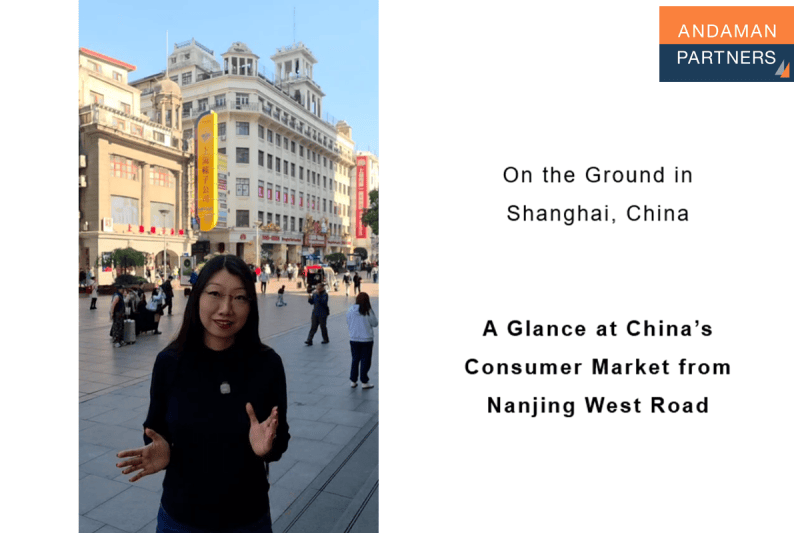
A Glance at China’s Consumer Market from Nanjing West Road by ANDAMAN PARTNERS Co-Founder Rachel Wu
Analysis by ANDAMAN PARTNERS Co-Founder Rachel Wu on China’s consumer economy
China Keeps Shopping for Services. Are You Selling? By ANDAMAN PARTNERS Co-Founder Rachel Wu
Analysis by ANDAMAN PARTNERS Co-Founder Rachel Wu on Shanghai’s services economy

Shenzhen: Where Entrepreneurs Land and Ideas Take Off by ANDAMAN PARTNERS Co-Founder Rachel Wu
Analysis by ANDAMAN PARTNERS Co-Founder Rachel Wu on what makes the city of Shenzhen different
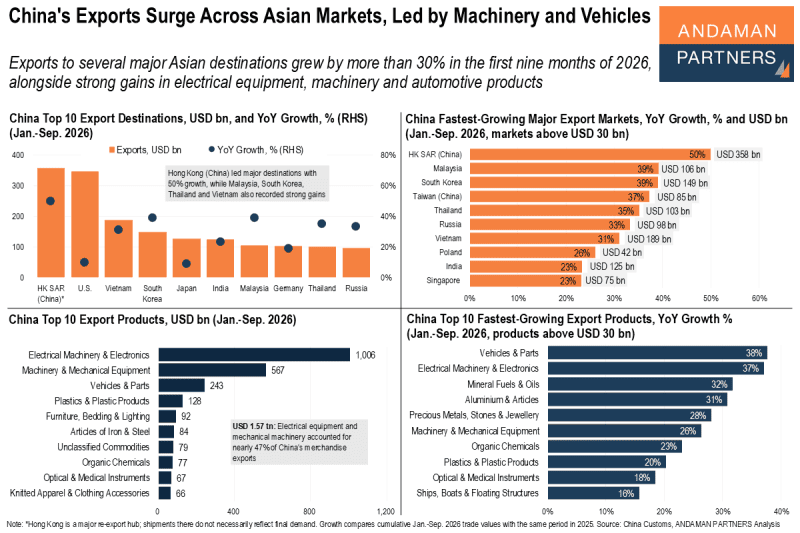
China’s Exports Surge Across Asian Markets, Led by Machinery and Vehicles
Exports to several major Asian destinations grew by more than 30% in the first nine months of 2026
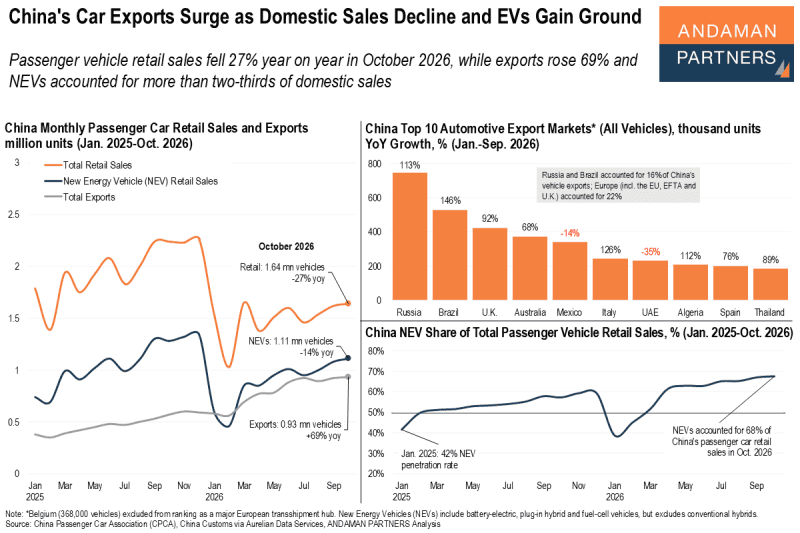
China’s Car Exports Surge as Domestic Sales Decline and EVs Gain Ground
Passenger vehicle retail sales fell 27% year on year in October 2026, while exports rose 69%
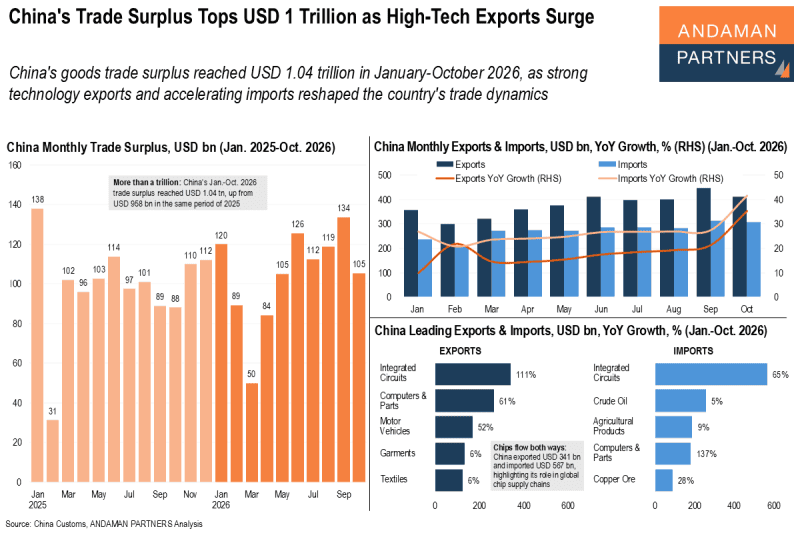
China’s Trade Surplus Tops USD 1 Trillion as High-Tech Exports Surge
China’s goods trade surplus reached USD 1.04 trillion in the first ten months of 2026