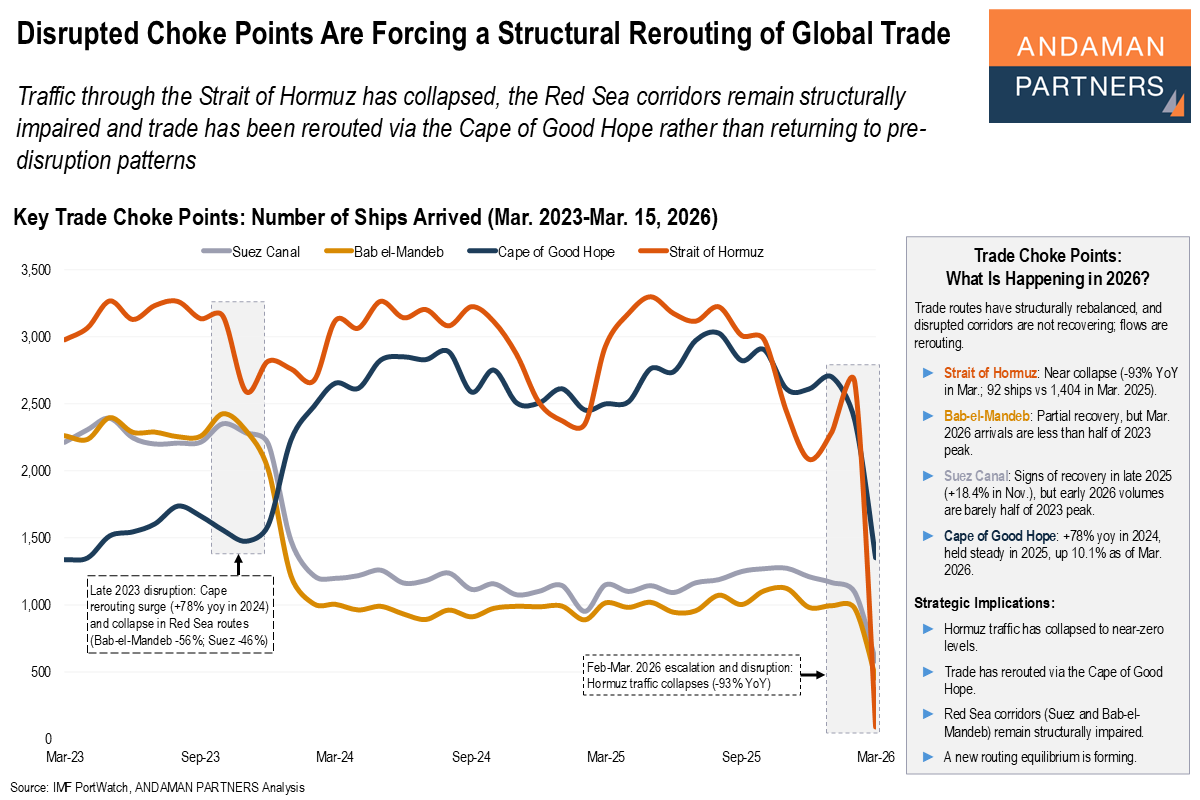
Disrupted Choke Points Are Forcing a Structural Rerouting of Global Trade
Traffic through the Strait of Hormuz has collapsed, the Red Sea corridors remain structurally impaired and trade has been rerouted via the Cape of Good Hope.

Traffic through the Strait of Hormuz has collapsed, the Red Sea corridors remain structurally impaired and trade has been rerouted via the Cape of Good Hope.
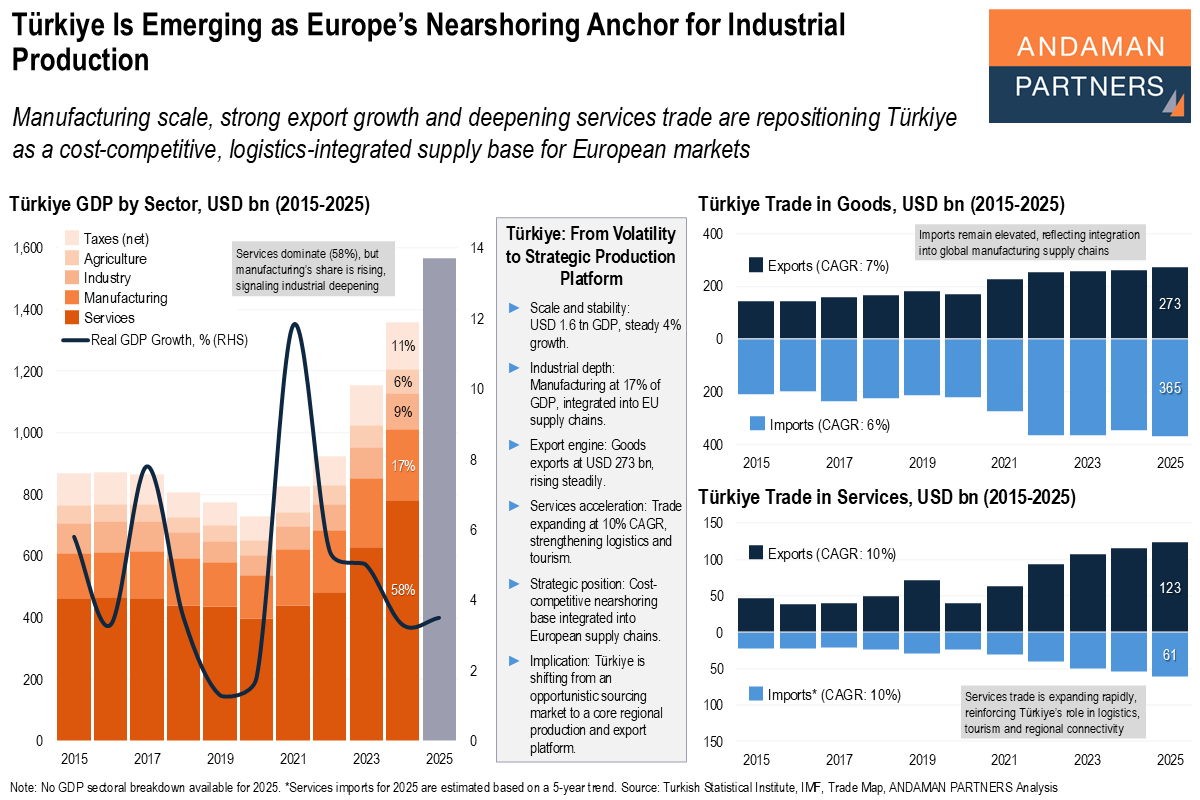
Manufacturing scale, strong export growth and deepening services trade are repositioning Türkiye as a cost-competitive supply base for Europe.
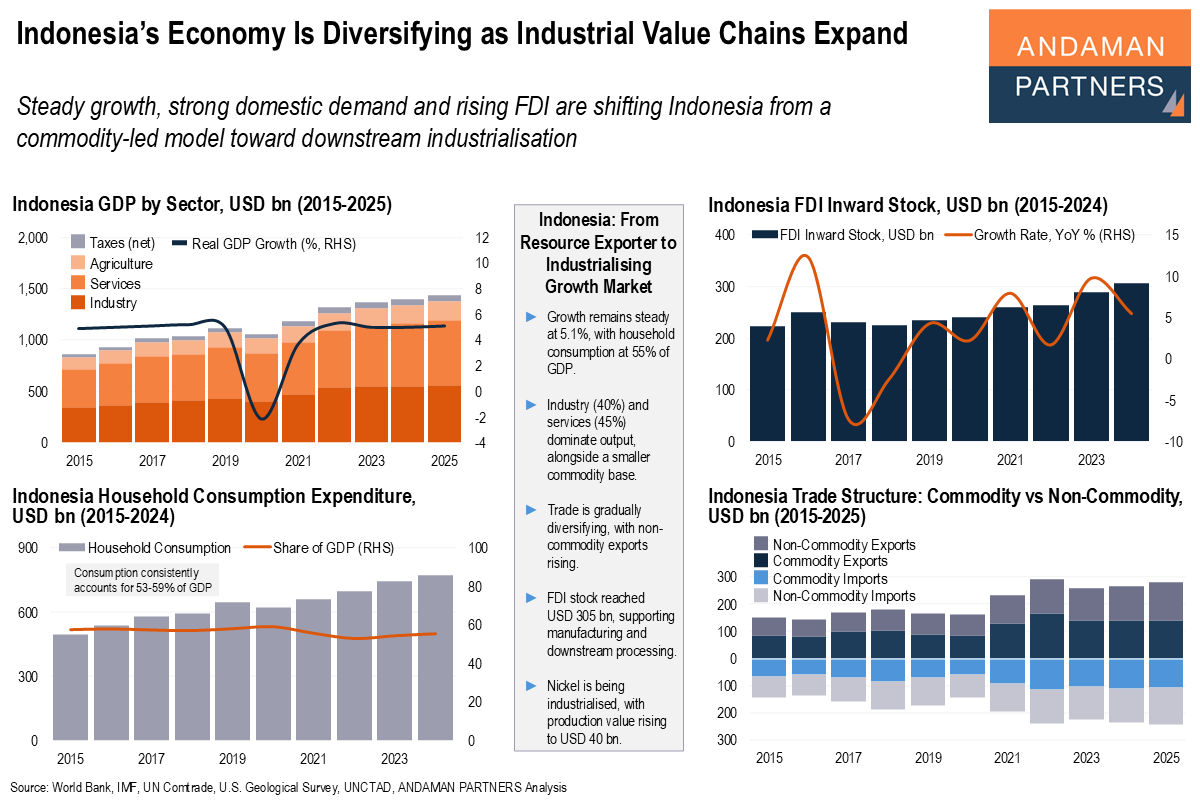
Steady growth, strong domestic demand and rising FDI are shifting Indonesia from a commodity-led model toward downstream industrialisation.

India provides the region's industrial scale and Bangladesh is driving the fastest export-led expansion.
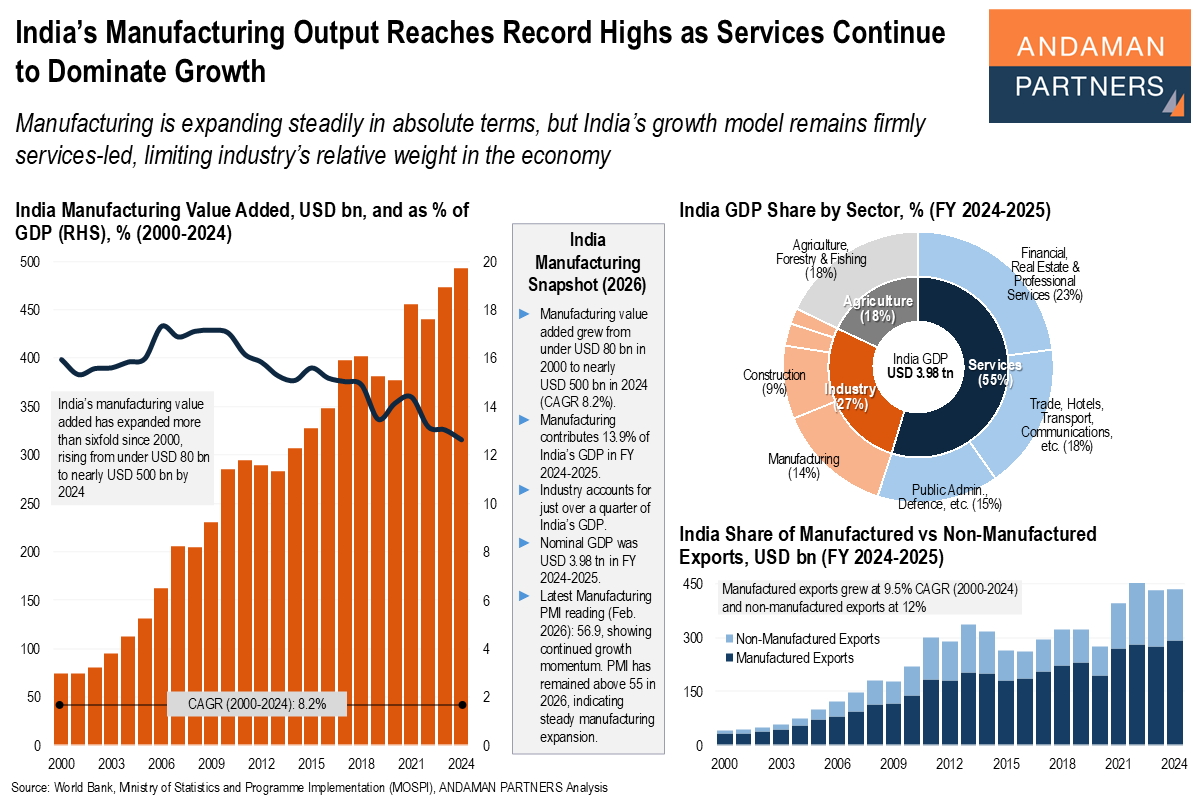
Manufacturing is expanding steadily in absolute terms, but India’s growth model remains firmly services-led.
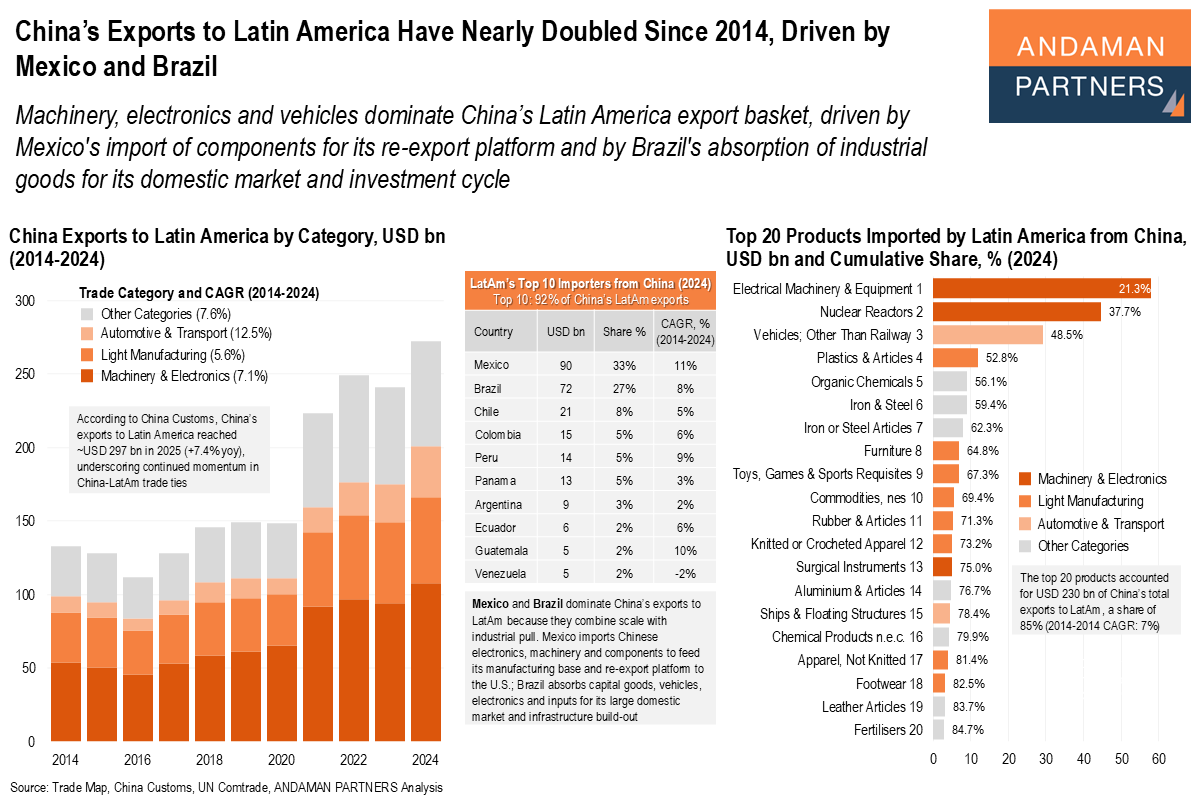
Machinery, electronics and vehicles dominate China’s Latin America export basket, driven by Mexico and Brazil.
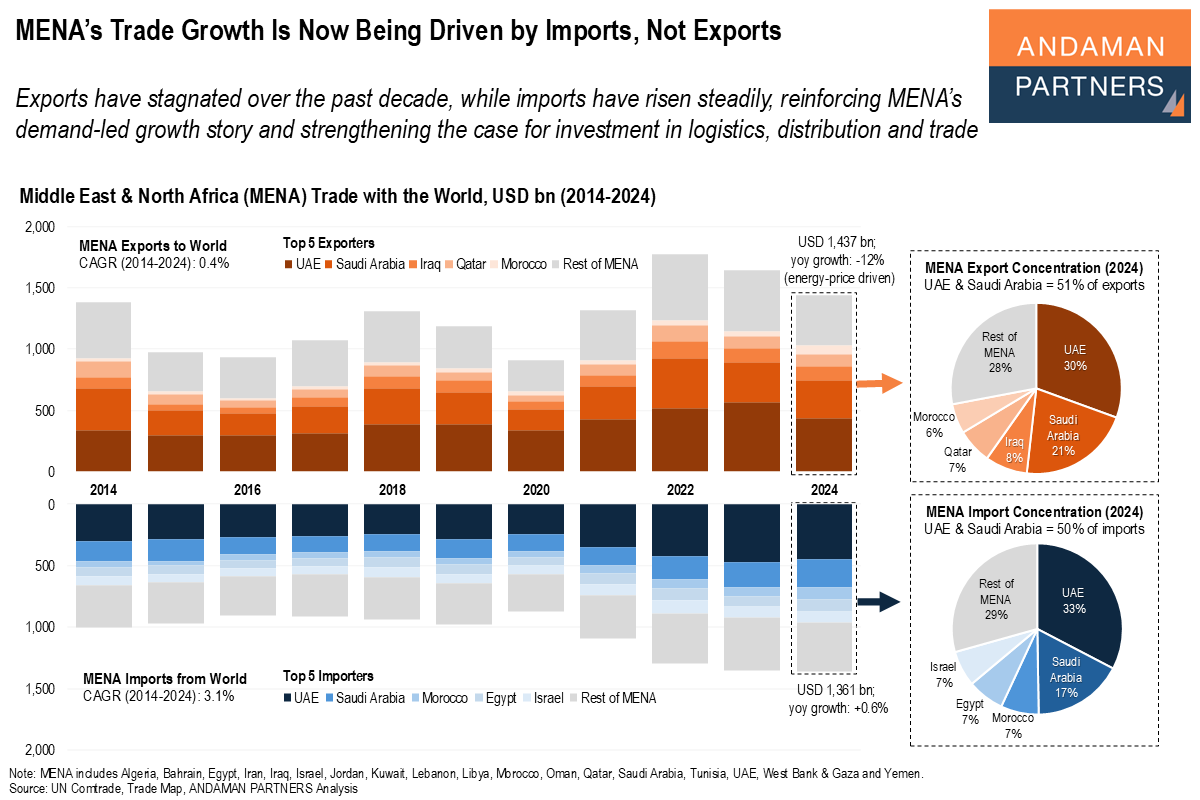
Exports have stagnated over the past decade, while imports have risen steadily, reinforcing MENA’s demand-led growth story.
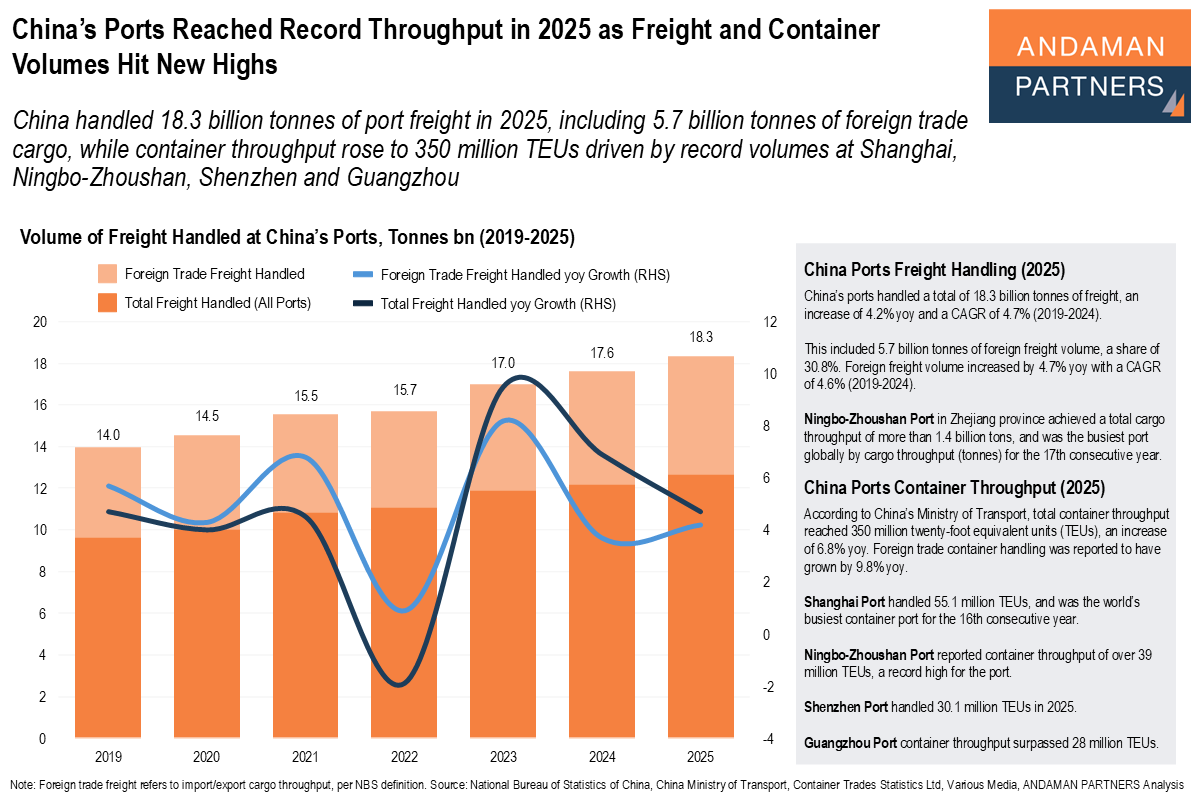
China handled 18.3 billion tonnes of port freight in 2025, including 5.7 billion tonnes of foreign trade cargo.
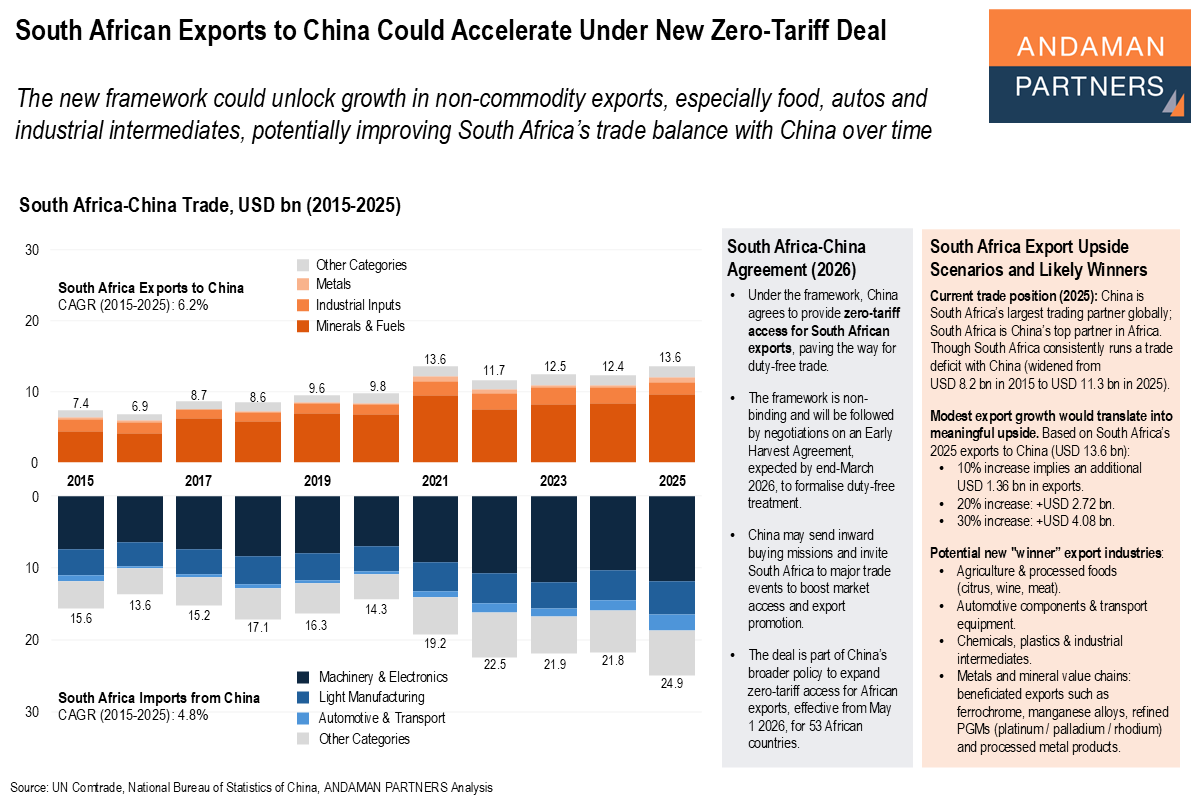
The new framework could unlock growth in non-commodity exports, especially food, autos and industrial intermediates.
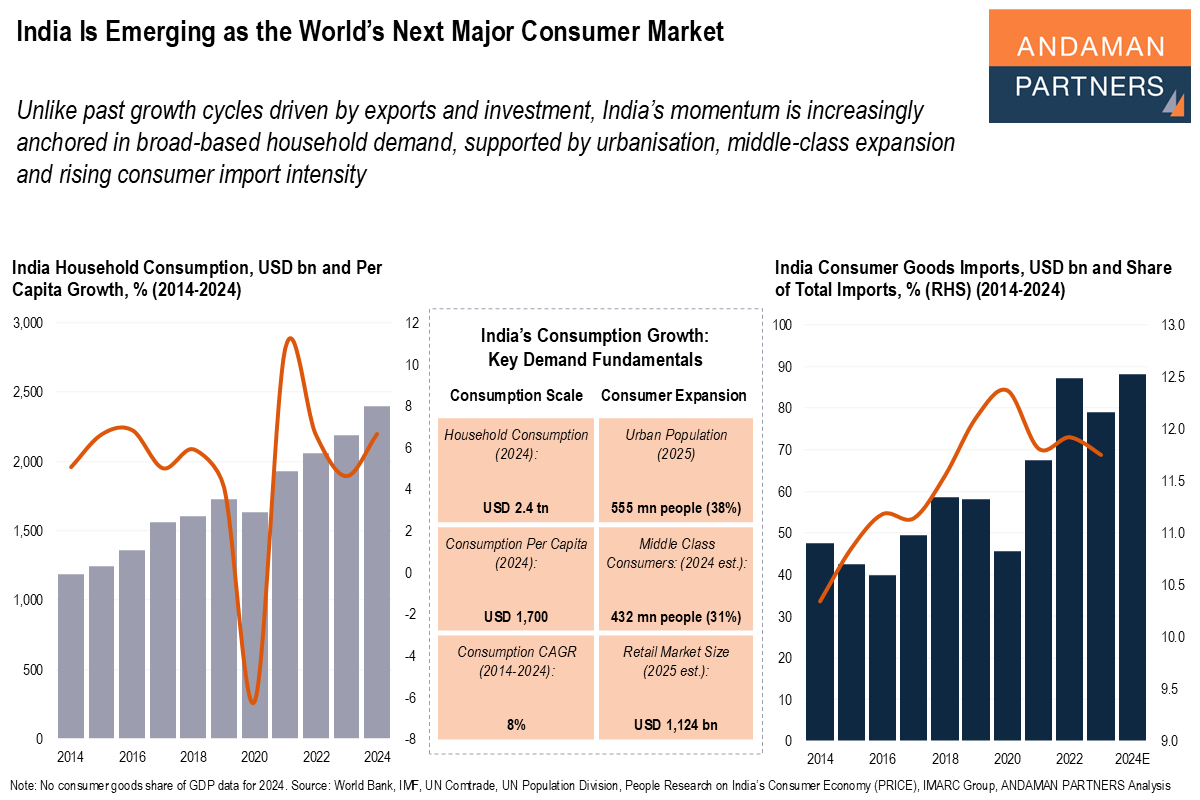
India’s momentum is anchored in broad-based household demand, supported by urbanisation, middle-class expansion and consumer import intensity.