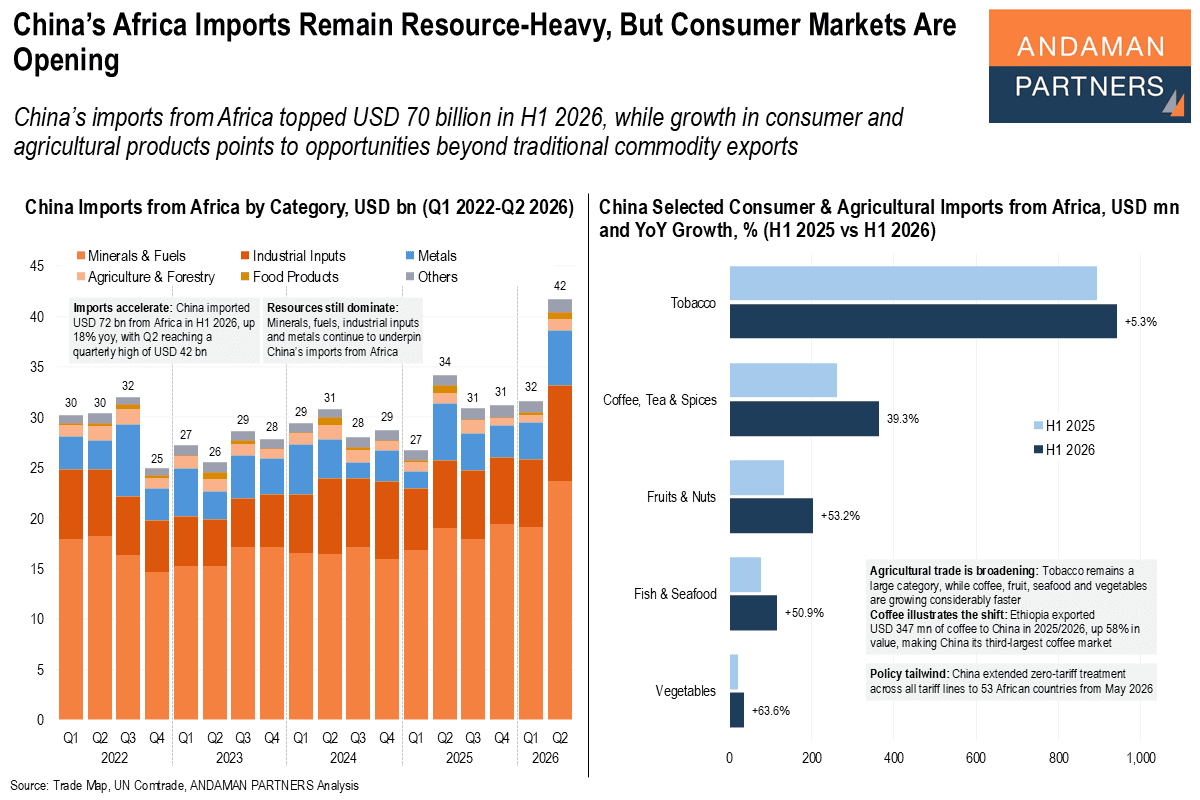
China’s Africa Imports Remain Resource-Heavy, But Consumer Markets Are Opening
China’s imports from Africa topped USD 70 billion in H1 2026, while consumer and agricultural products point to new opportunities for growth

China’s imports from Africa topped USD 70 billion in H1 2026, while consumer and agricultural products point to new opportunities for growth
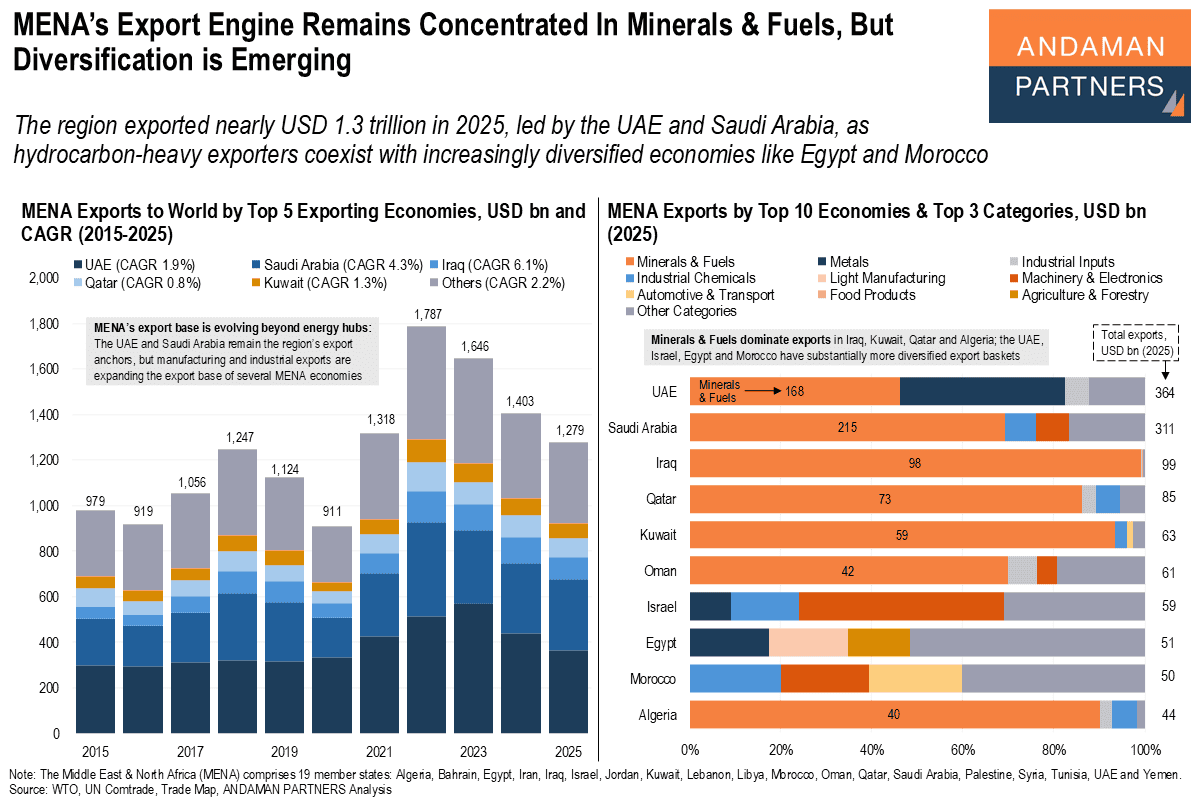
MENA exported nearly USD 1.3 trillion in 2025, with hydrocarbon-heavy exporters coexisting with increasingly diversified economies
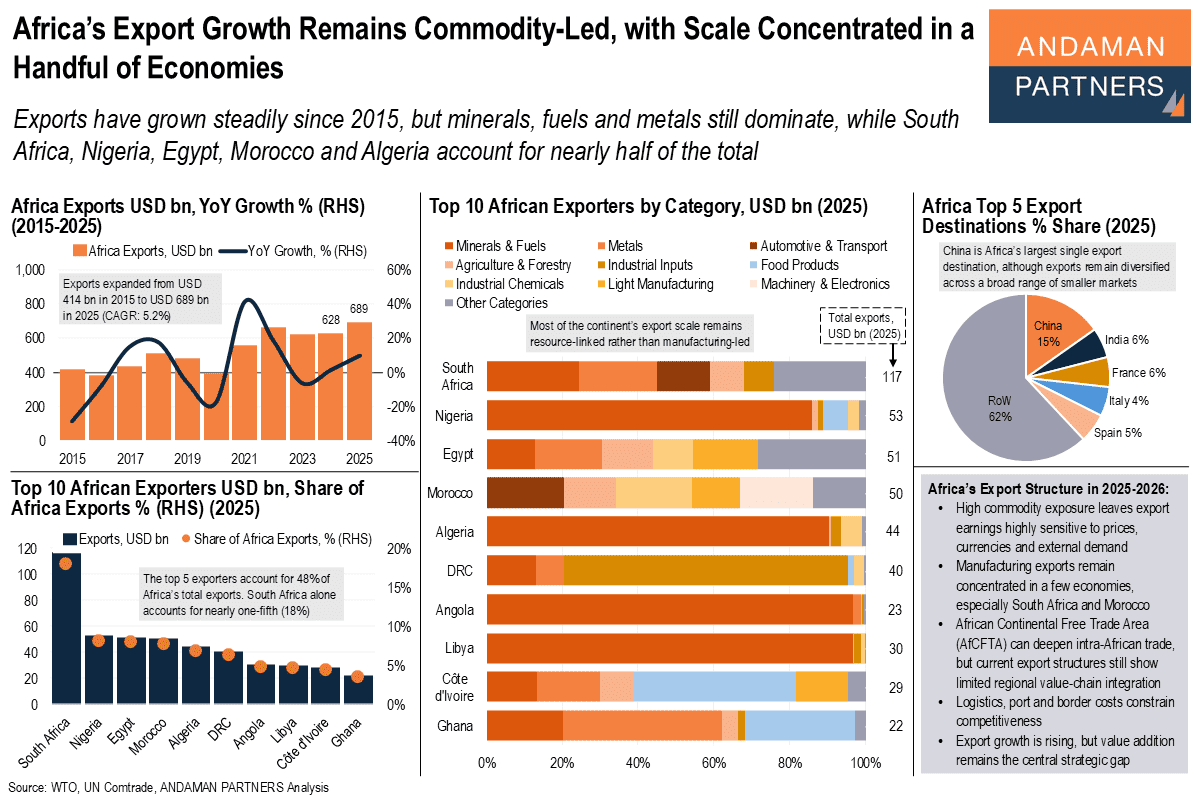
Exports have grown steadily since 2015, but minerals, fuels and metals still dominate, while five countries account for half of the total
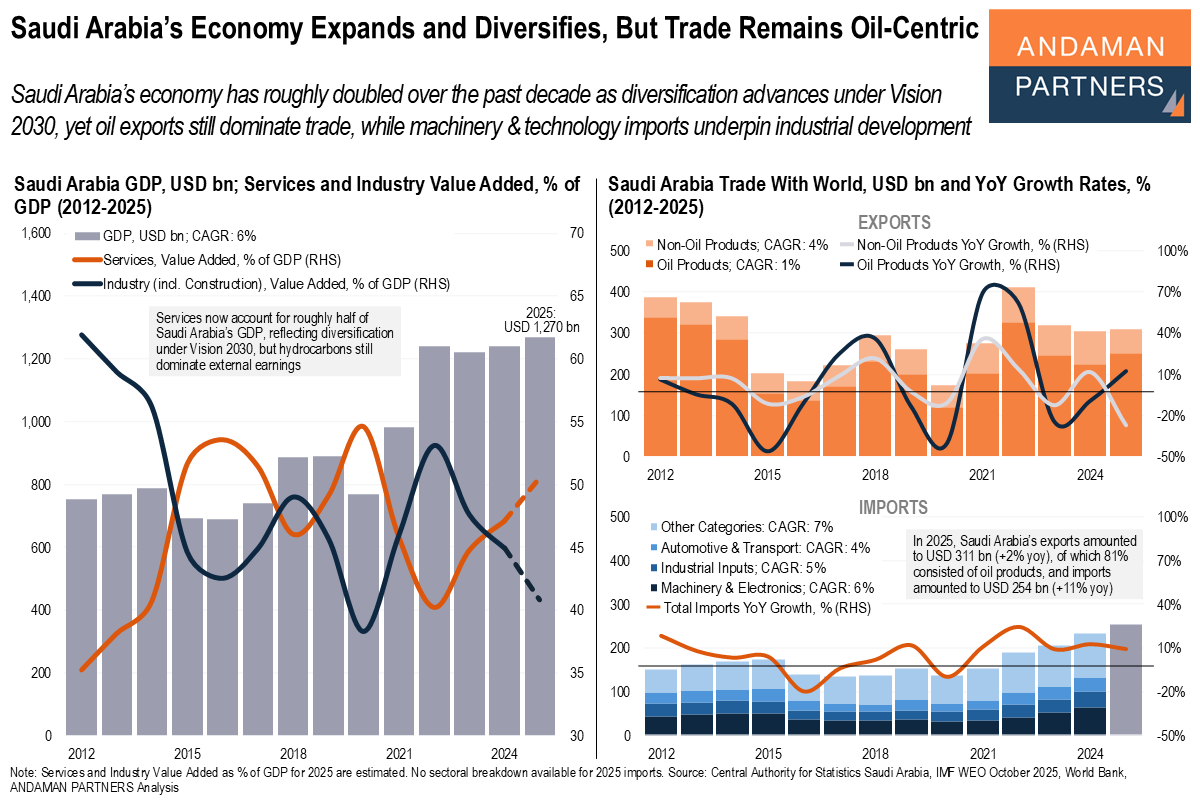
Saudi Arabia’s economy has roughly doubled over the past decade, yet oil exports still dominate trade.
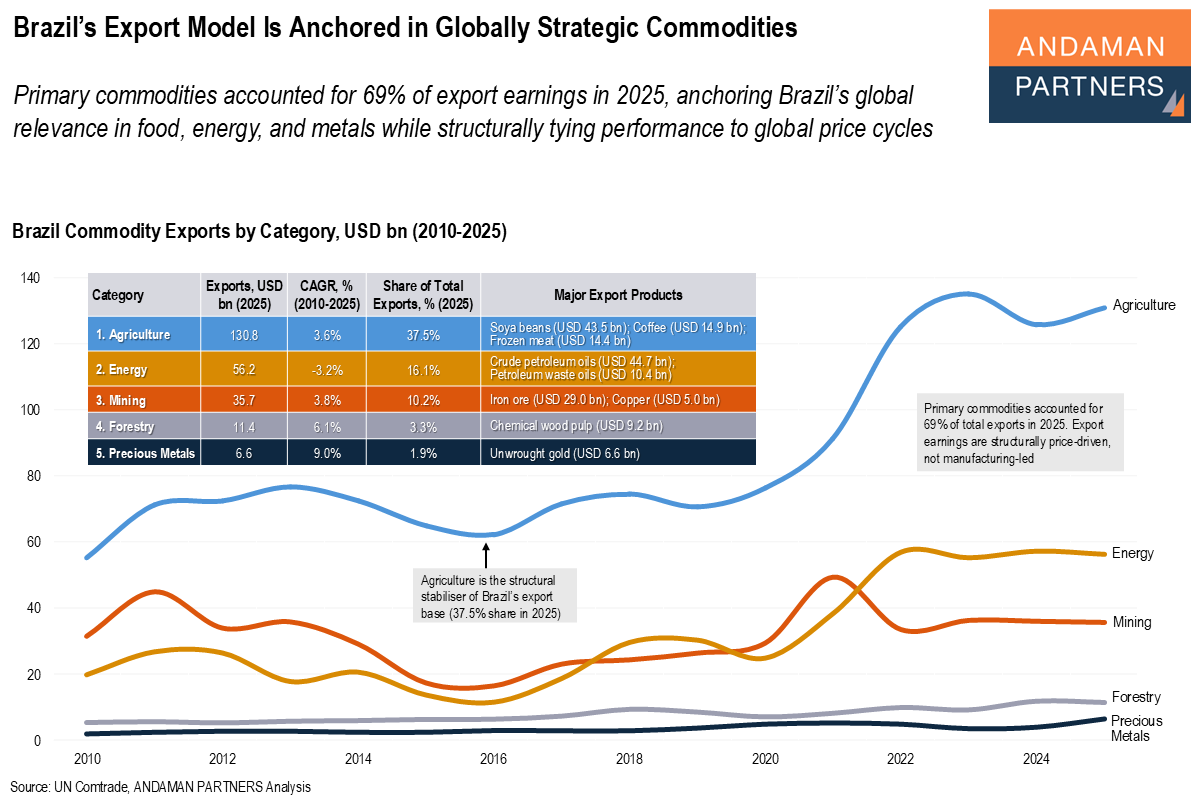
Primary commodities accounted for 69% of export earnings in 2025, anchoring Brazil’s global relevance in food, energy, and metals.
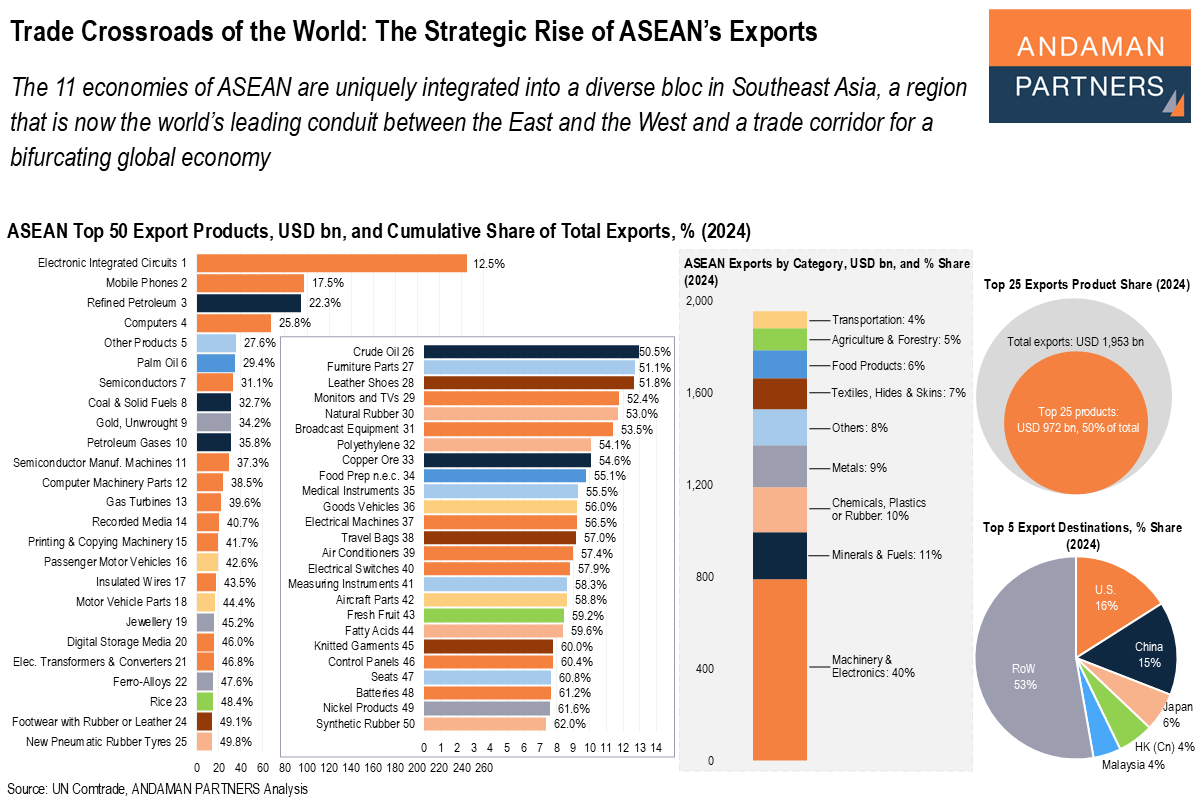
The 11 ASEAN economies are integrated into a diverse bloc in Southeast Asia, a region that is now the world’s leading conduit between East and West.
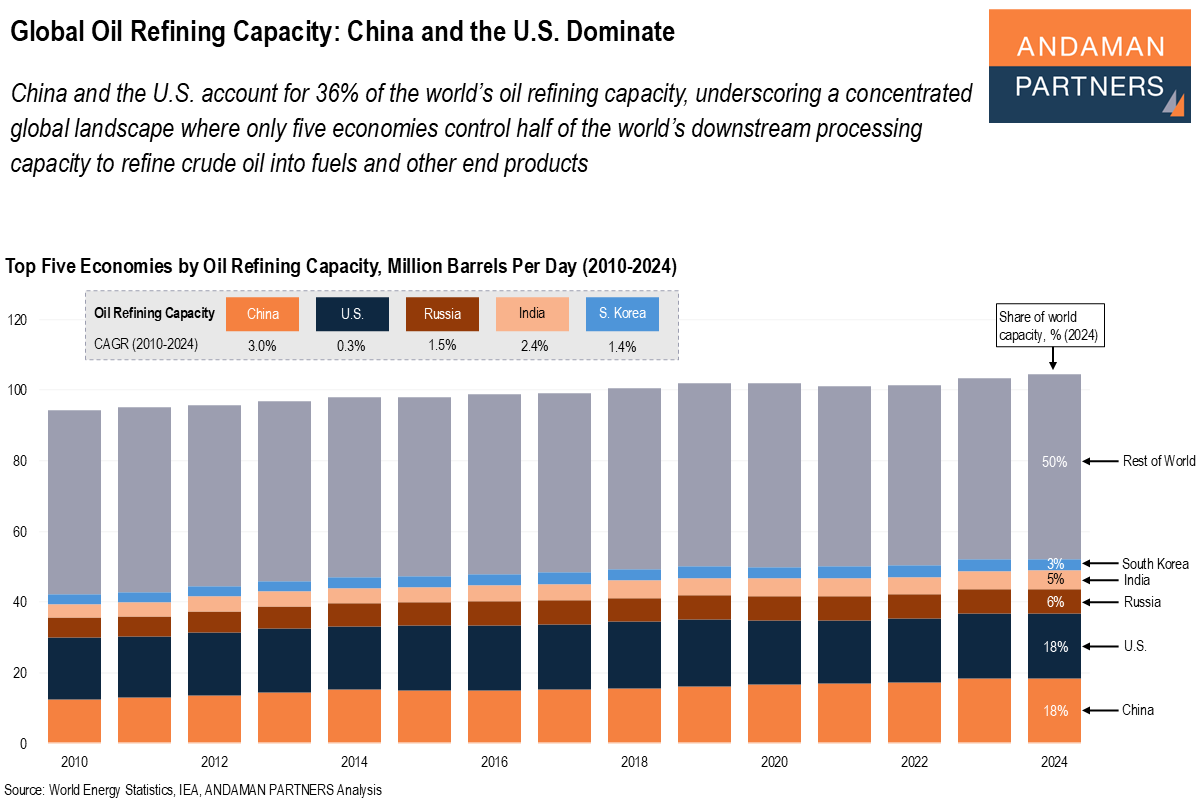
China and the U.S. account for 36% of the world’s oil refining capacity, and only five economies control half of the world’s capacity.
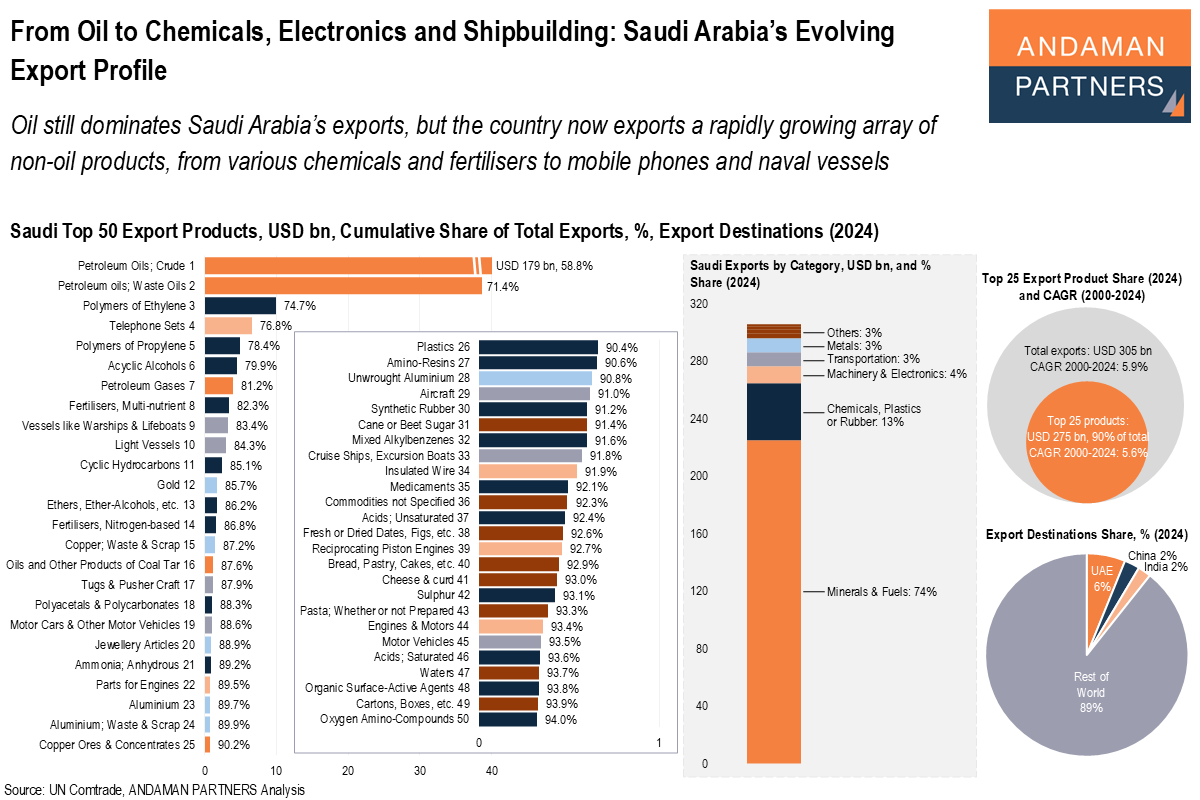
Oil still dominates Saudi Arabia’s exports, but the country now exports a rapidly growing array of non-oil products.

China is the world’s largest consumer of energy and runs large trade deficits for primary fuels, especially crude oil and petroleum gases.
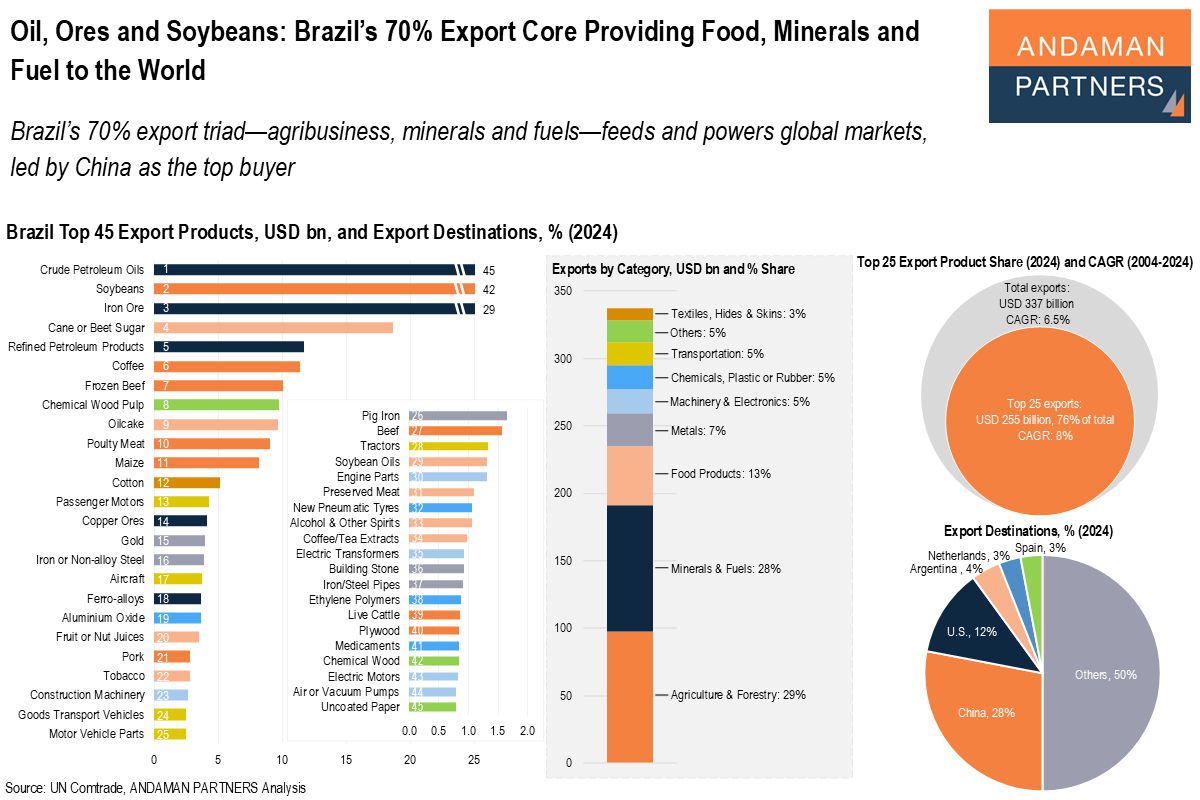
Brazil’s 70% export triad—agribusiness, minerals and fuels—feeds and powers global markets, led by China as the top buyer.