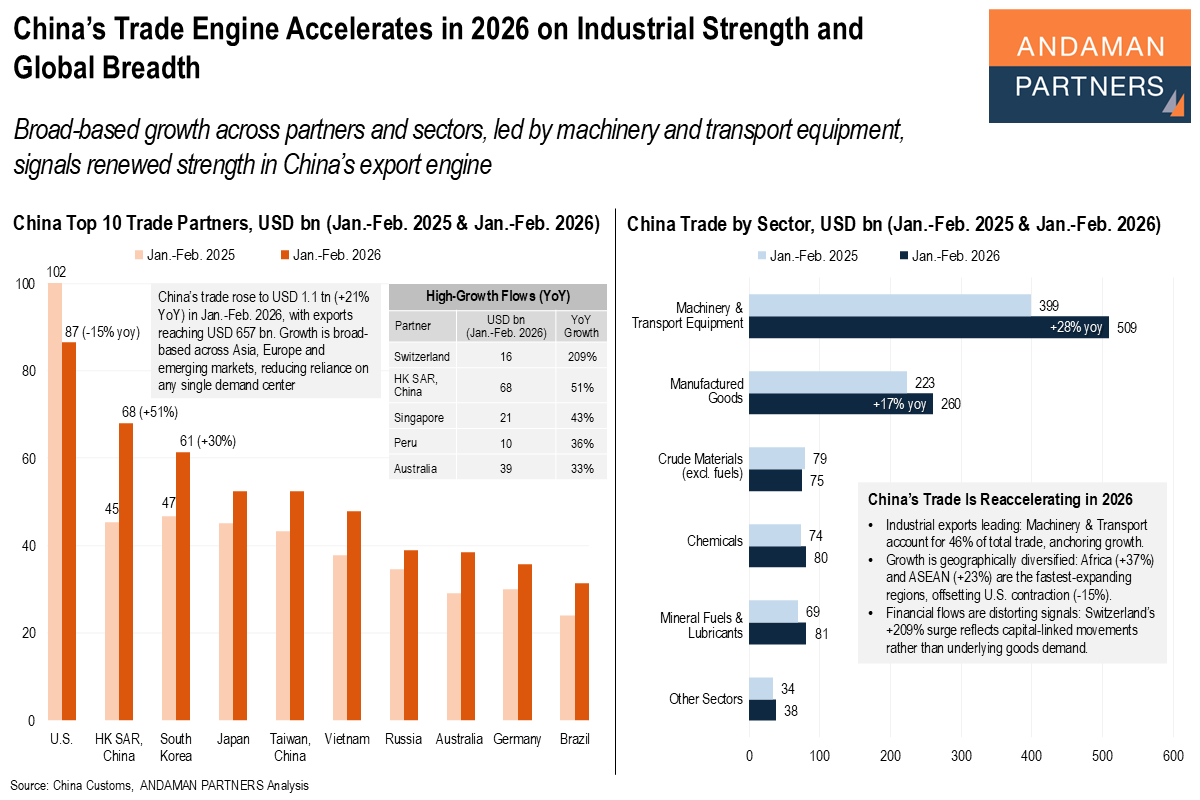
China’s Trade Engine Accelerates in 2026 on Industrial Strength and Global Breadth
Broad-based growth across partners and sectors, led by machinery and transport equipment, signals renewed strength in China’s export engine.

Broad-based growth across partners and sectors, led by machinery and transport equipment, signals renewed strength in China’s export engine.
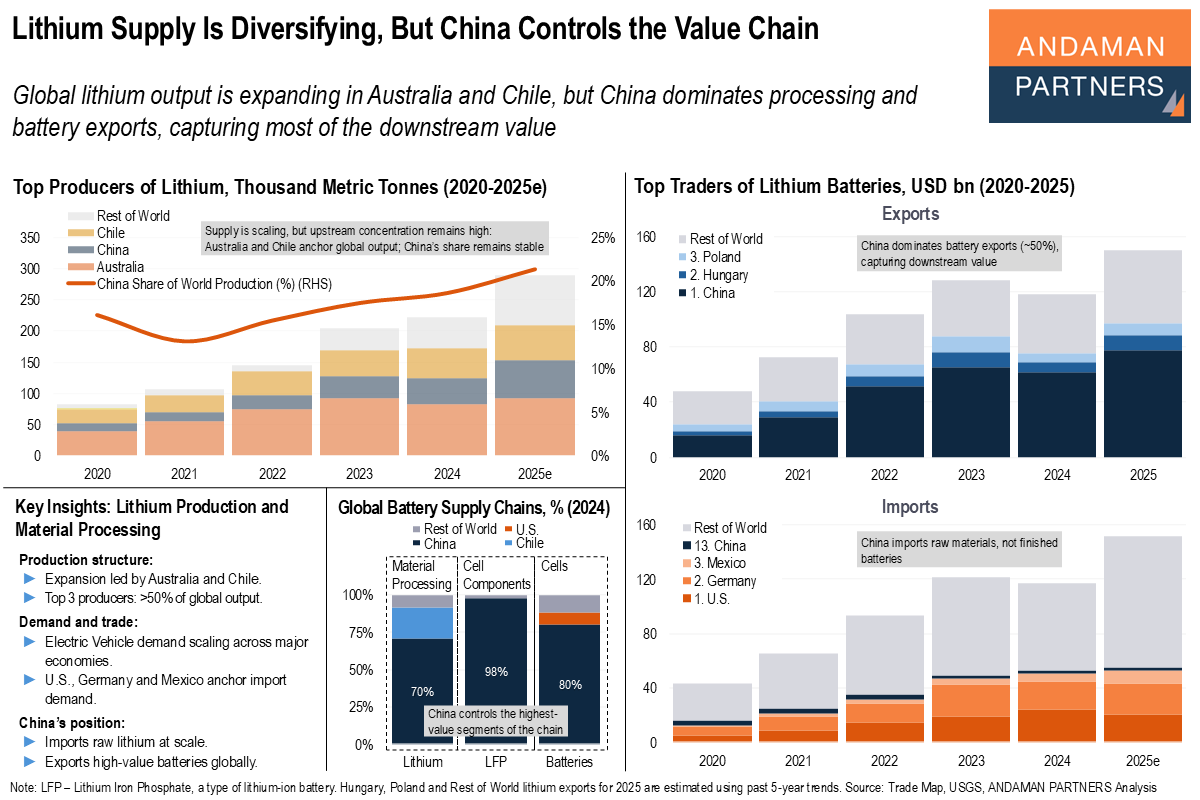
Global lithium output is expanding in Australia and Chile, but China dominates processing and battery exports, capturing most of the downstream value.
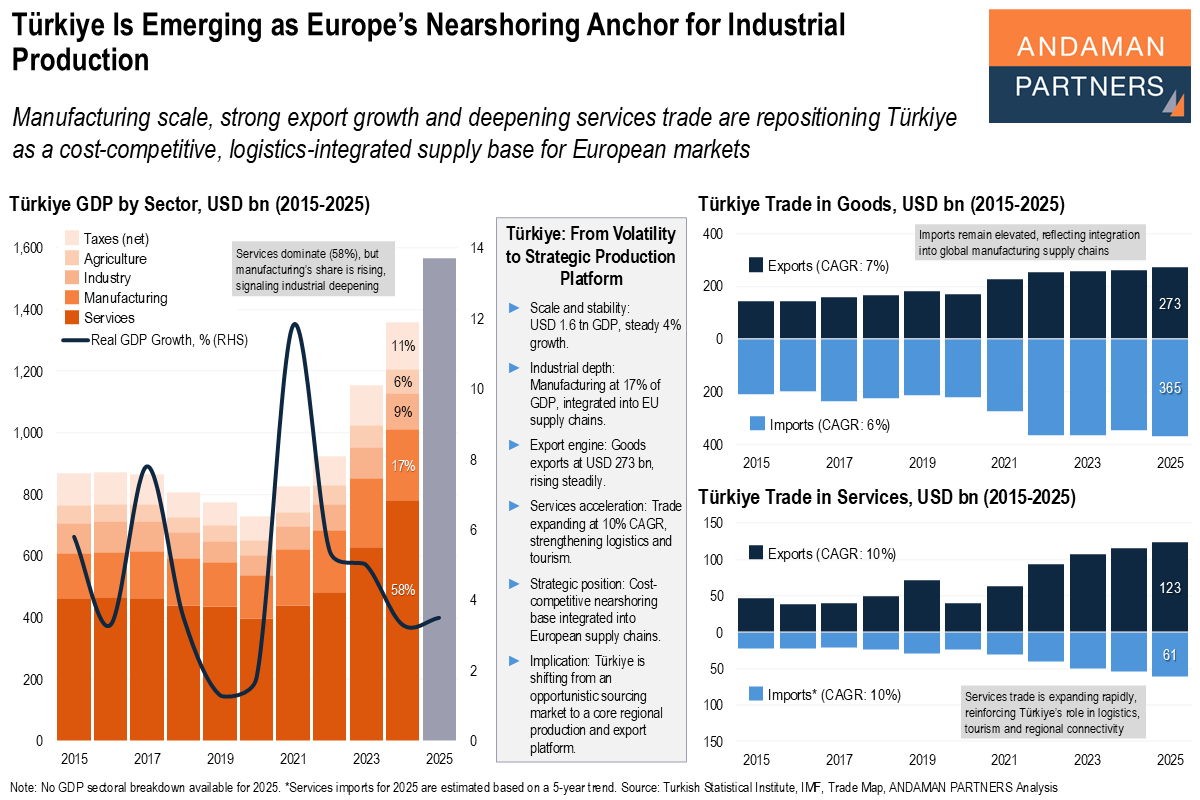
Manufacturing scale, strong export growth and deepening services trade are repositioning Türkiye as a cost-competitive supply base for Europe.
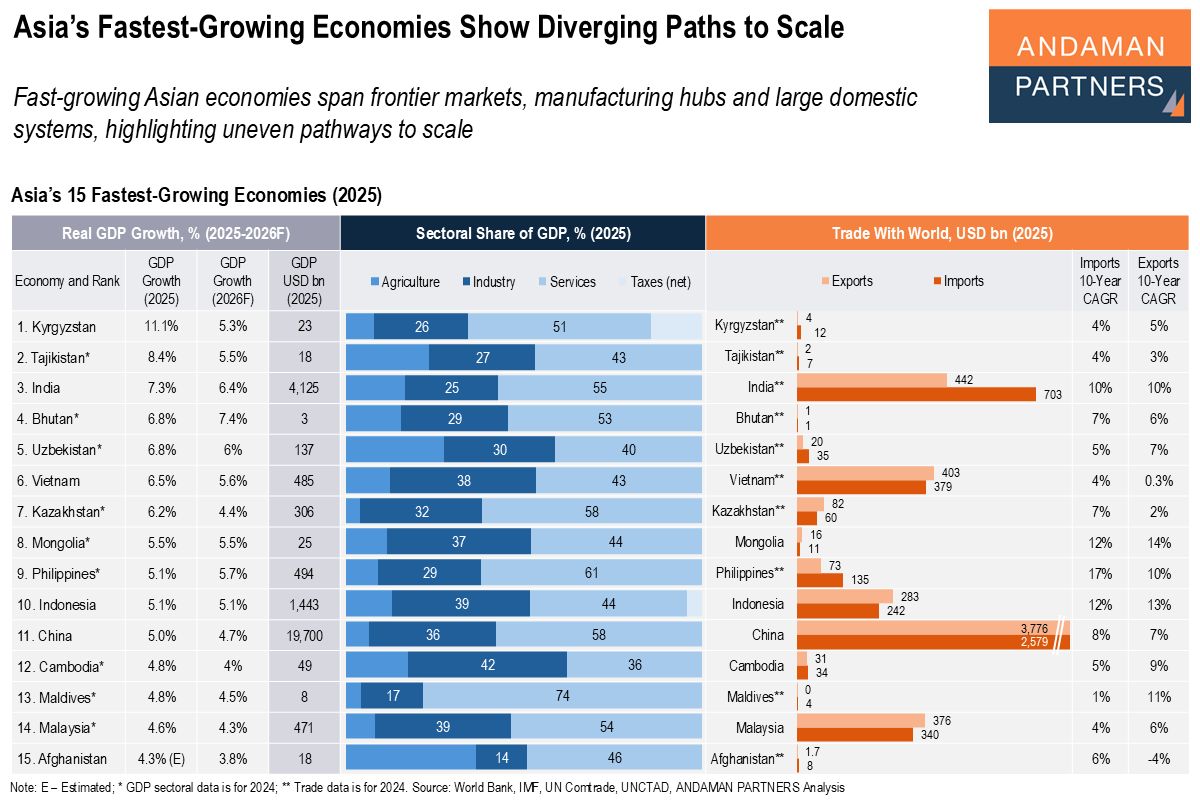
Fast-growing Asian economies span frontier markets, manufacturing hubs and large domestic systems, highlighting uneven pathways to scale.
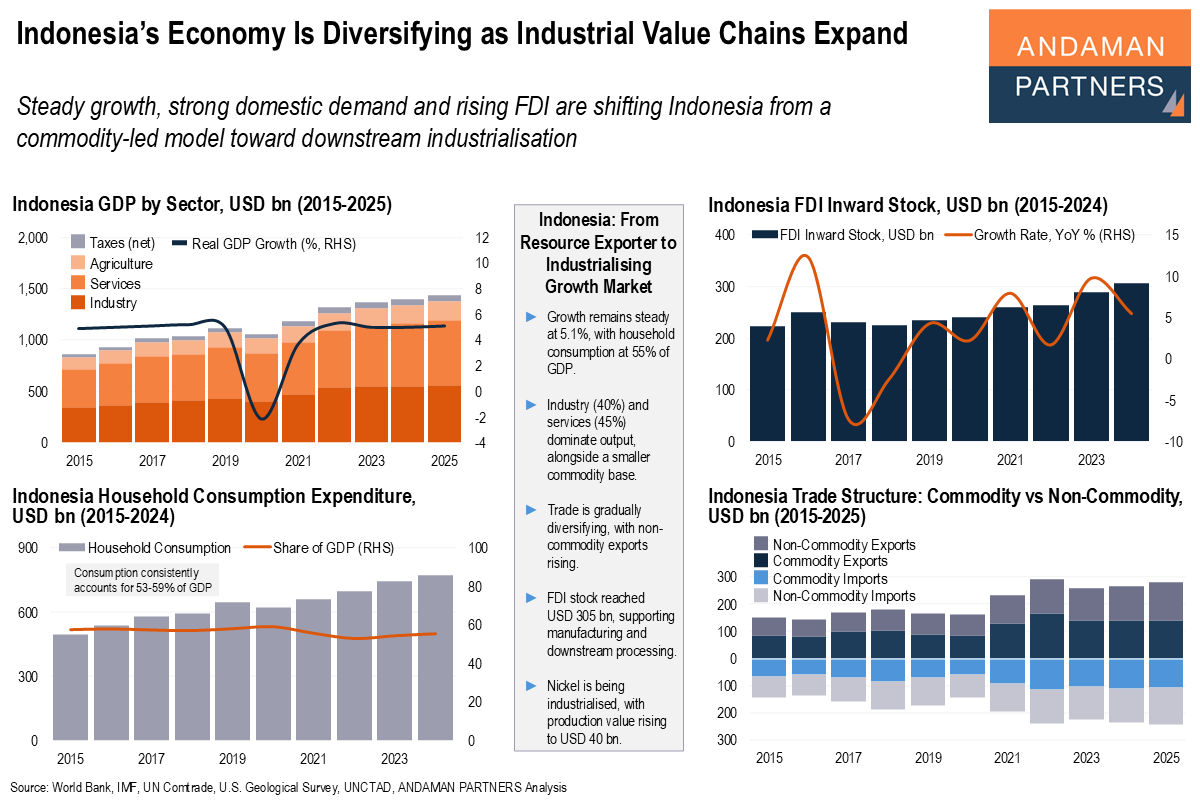
Steady growth, strong domestic demand and rising FDI are shifting Indonesia from a commodity-led model toward downstream industrialisation.
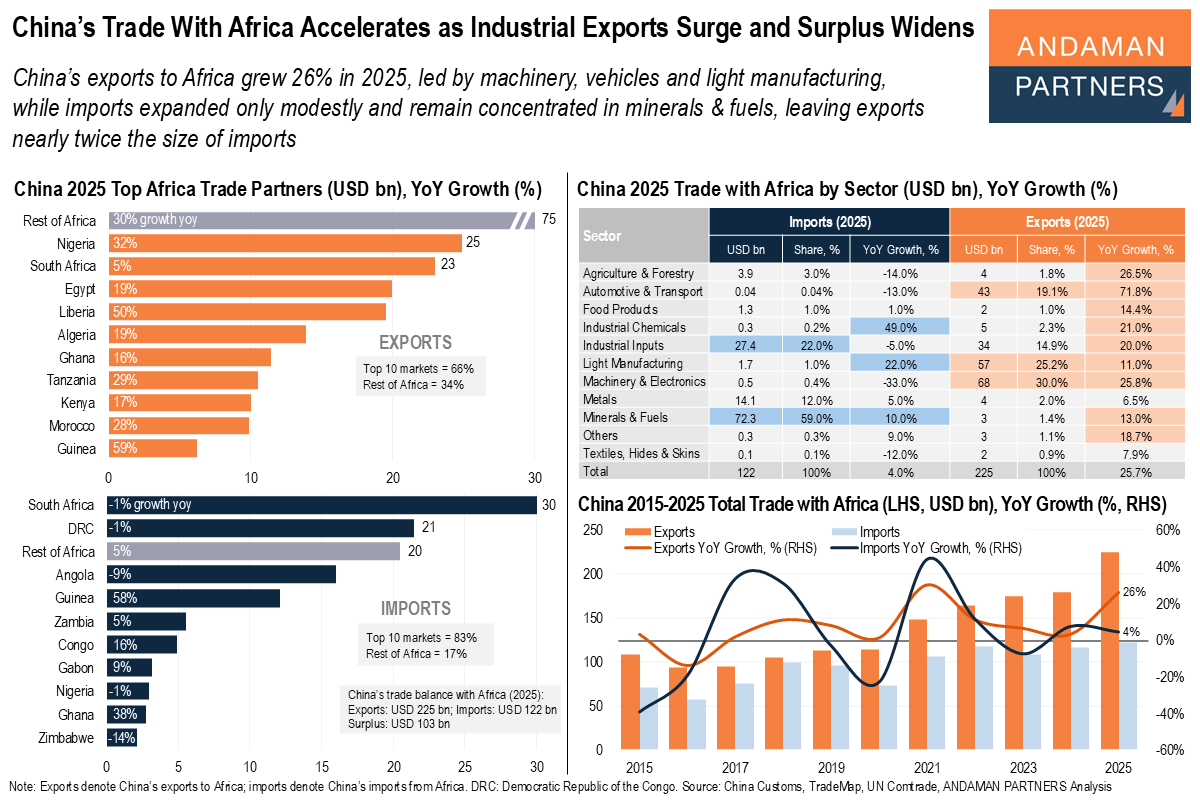
China’s exports to Africa grew 26% in 2025, led by machinery, vehicles and light manufacturing, while imports expanded only modestly.
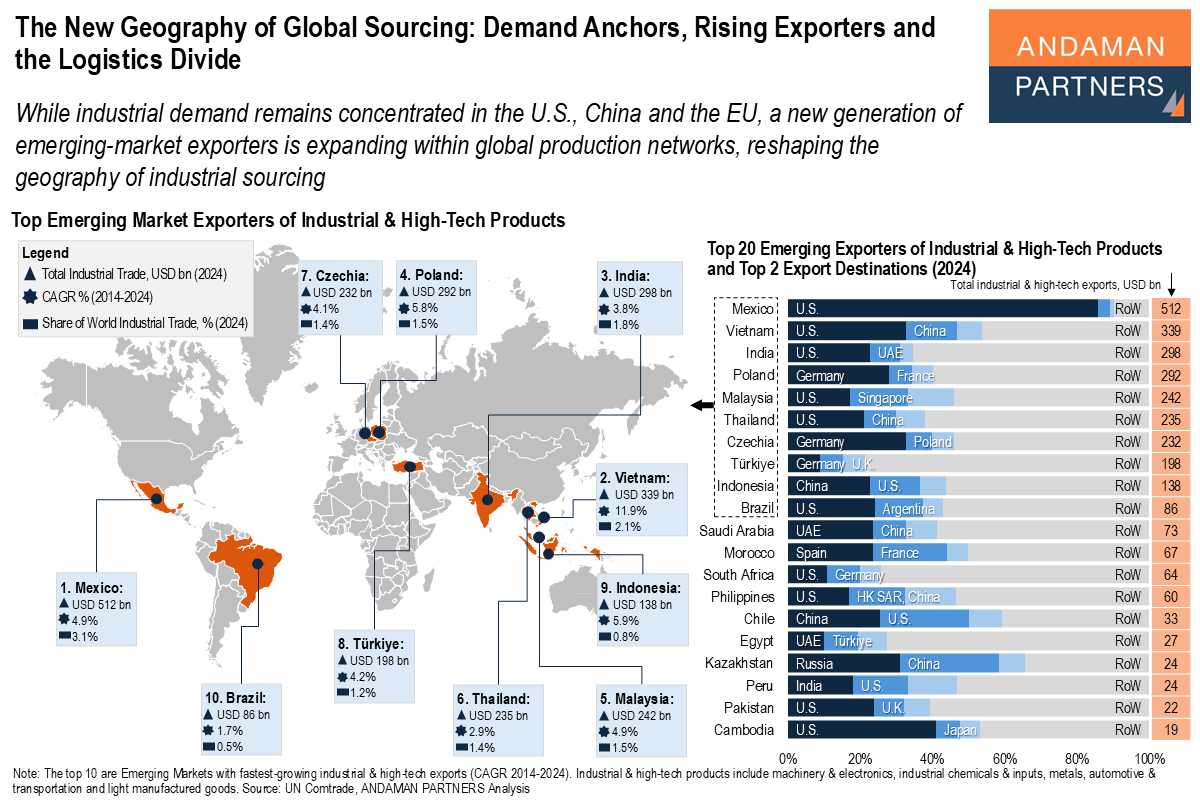
Industrial demand is concentrated in the U.S., China and the EU, while a new generation of emerging markets is expanding in global production.
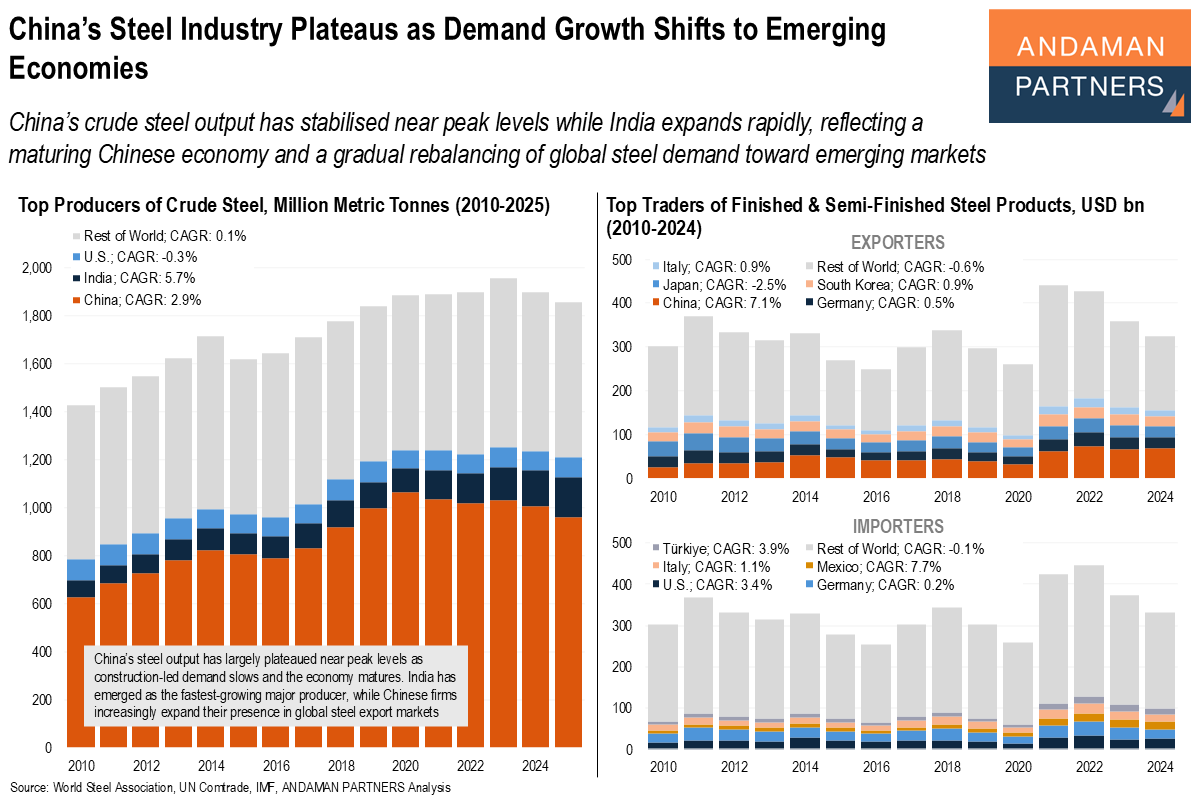
China’s crude steel output has stabilised near peak levels while India expands rapidly, reflecting a gradual rebalancing of global steel demand.
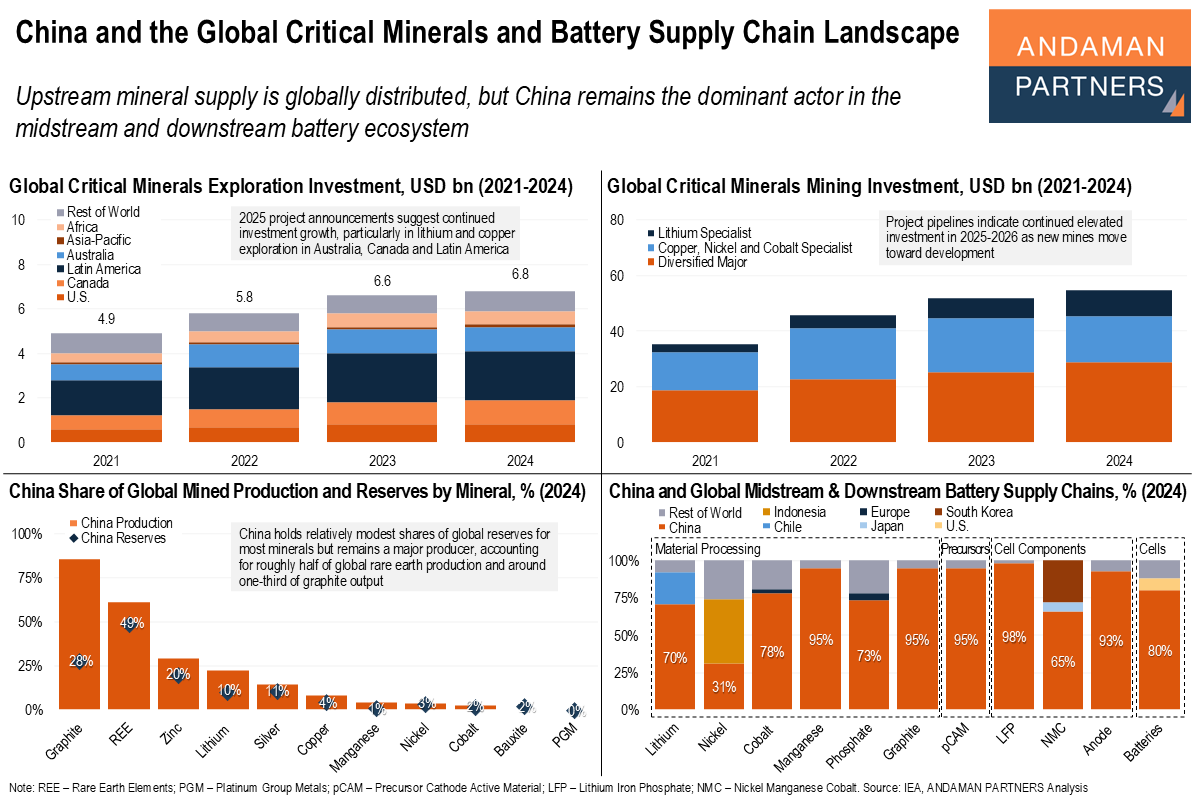
Upstream mineral supply is globally distributed, but China remains the dominant actor in the midstream and downstream battery ecosystem.

India provides the region's industrial scale and Bangladesh is driving the fastest export-led expansion.