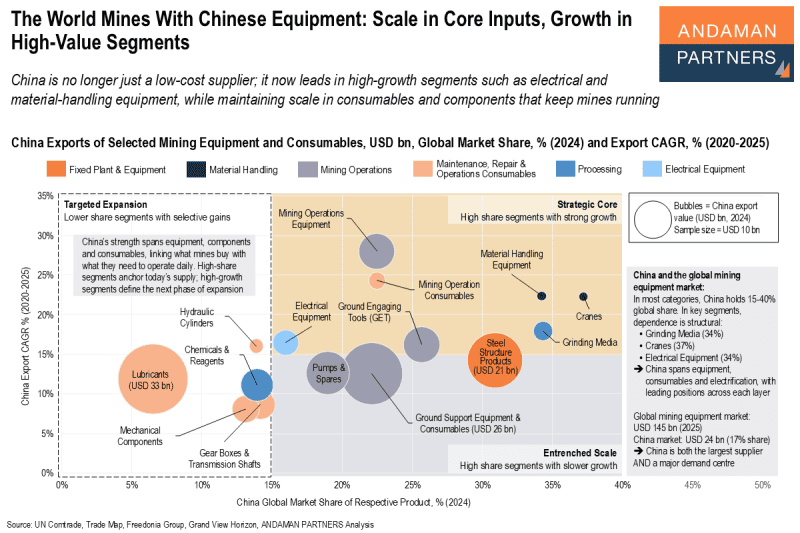
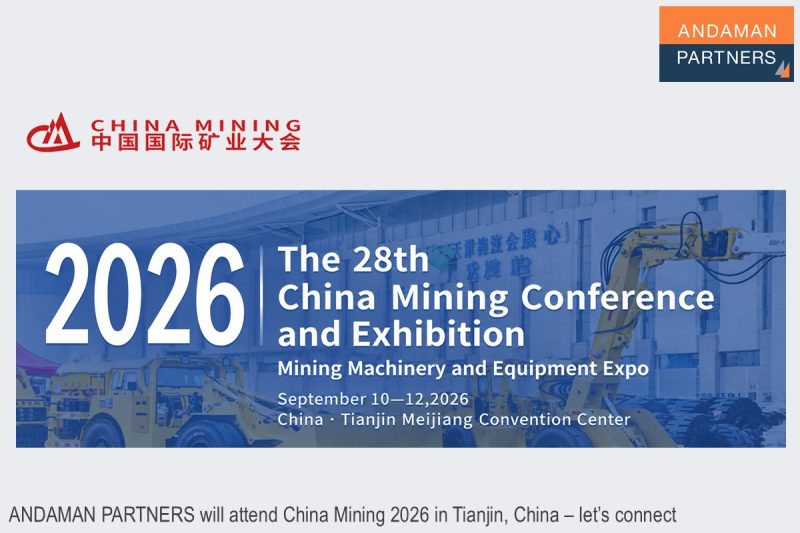
ANDAMAN PARTNERS to Attend China Mining 2026 in Tianjin, China
ANDAMAN PARTNERS will attend the China Mining Conference and Exhibition in Tianjin, China, on 10-12 September 2026

ANDAMAN PARTNERS at the Singapore Institute of Directors Annual Conference 2026
ANDAMAN PARTNERS at the Singapore Institute of Directors Conference 2026 in Singapore on 28 August 2026
ANDAMAN PARTNERS Attended the Australia Governance Summit 2026 in Sydney
ANDAMAN PARTNERS Co-Founder Kobus van der Wath attended the Australia Governance Summit (AGS26) in Sydney, Australia.
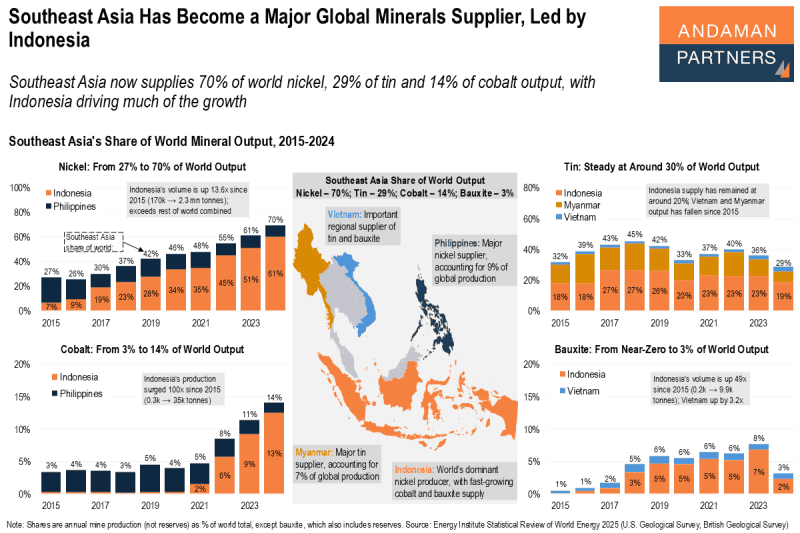
Southeast Asia Has Become a Major Global Minerals Supplier, Led by Indonesia
Southeast Asia now supplies 70% of world nickel, 29% of tin and 14% of cobalt output, with Indonesia driving much of the growth
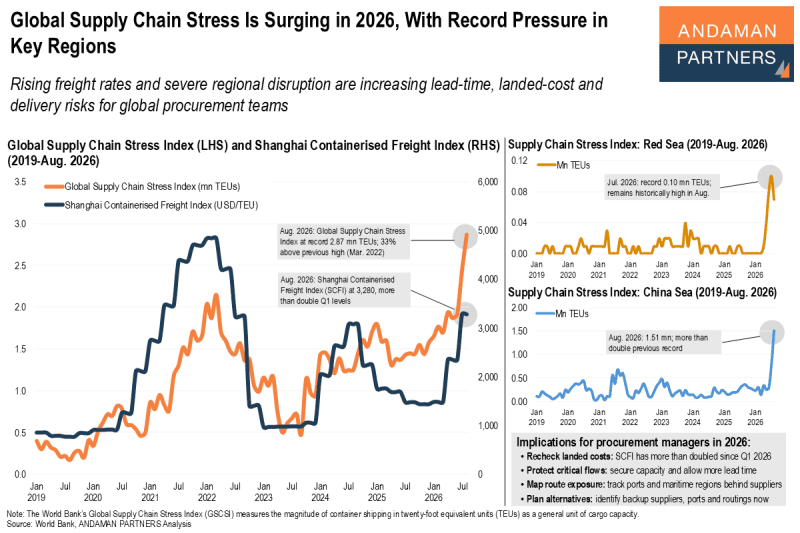
Global Supply Chain Stress Is Surging in 2026, With Record Pressure in Key Regions
Rising freight rates and severe regional disruption are increasing lead-time, landed-cost and delivery risks for global procurement teams
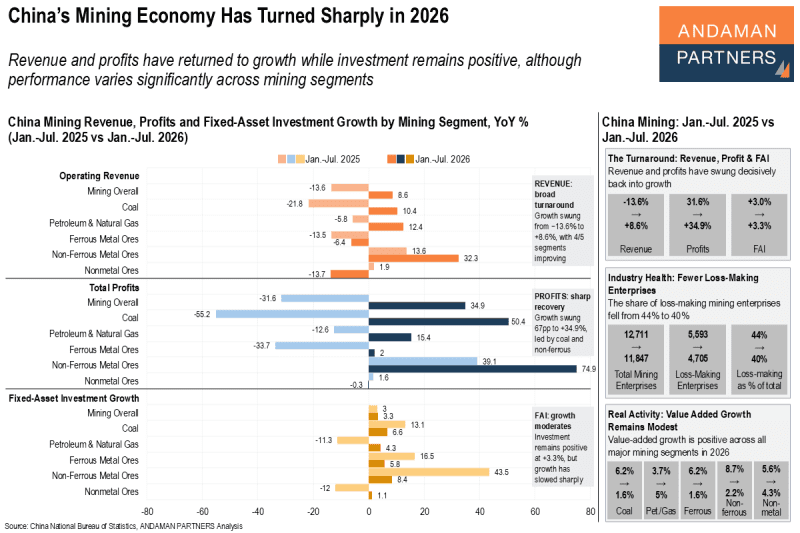
China’s Mining Economy Has Turned Sharply in 2026
Revenue and profits have returned to growth while investment remains positive, although performance varies significantly across segments