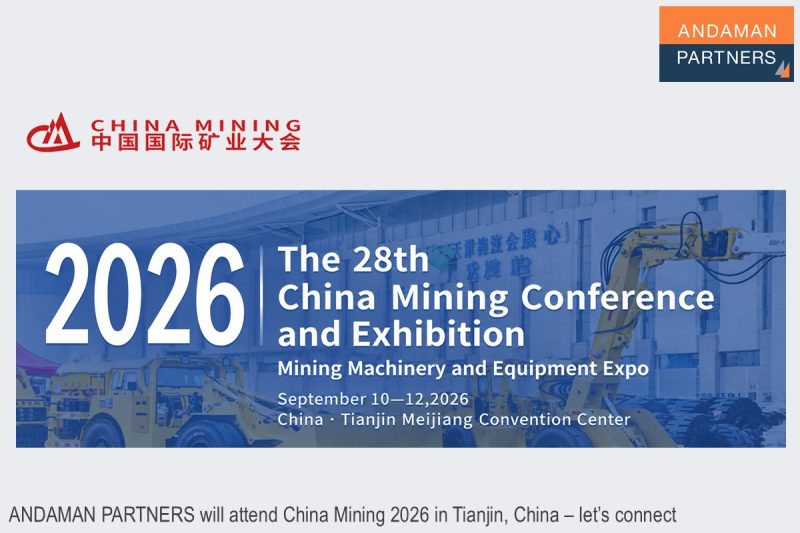
ANDAMAN PARTNERS to Attend China Mining 2026 in Tianjin, China
ANDAMAN PARTNERS will attend the China Mining Conference and Exhibition in Tianjin, China, on 10-12 September 2026

ANDAMAN PARTNERS at the Singapore Institute of Directors Annual Conference 2026
ANDAMAN PARTNERS at the Singapore Institute of Directors Conference 2026 in Singapore on 28 August 2026
ANDAMAN PARTNERS Attended the Australia Governance Summit 2026 in Sydney
ANDAMAN PARTNERS Co-Founder Kobus van der Wath attended the Australia Governance Summit (AGS26) in Sydney, Australia.
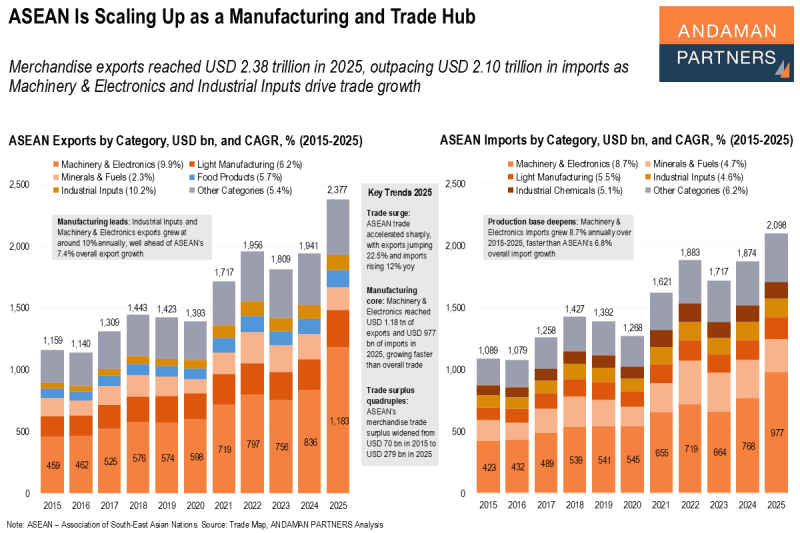
ASEAN Is Scaling Up as a Manufacturing and Trade Hub
Merchandise exports reached USD 2.38 trillion in 2025, outpacing USD 2.10 trillion in imports
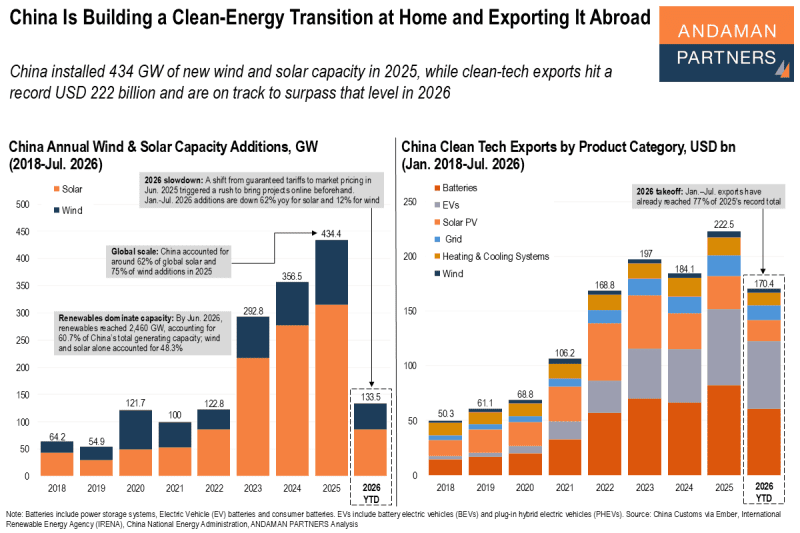
China Is Building a Clean-Energy Transition at Home and Exporting It Abroad
China installed 434 GW of new wind and solar capacity in 2025, while clean-tech exports hit a record level in 2026
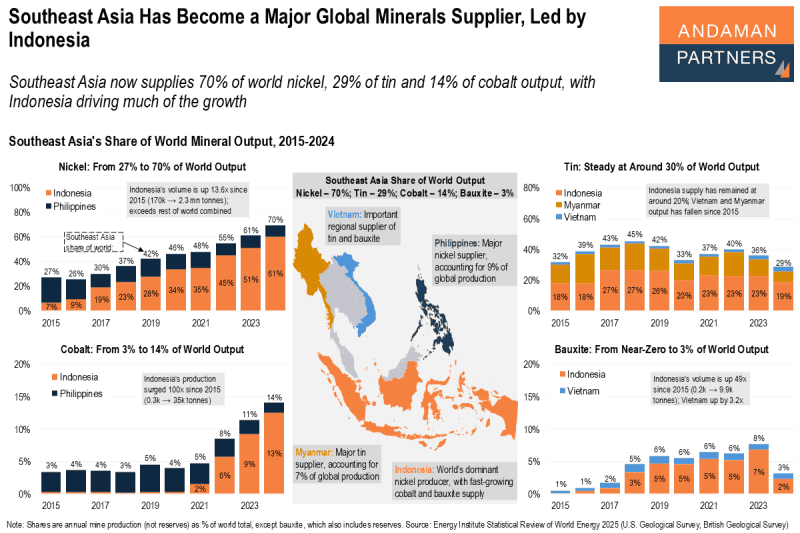
Southeast Asia Has Become a Major Global Minerals Supplier, Led by Indonesia
Southeast Asia now supplies 70% of world nickel, 29% of tin and 14% of cobalt output, with Indonesia driving much of the growth