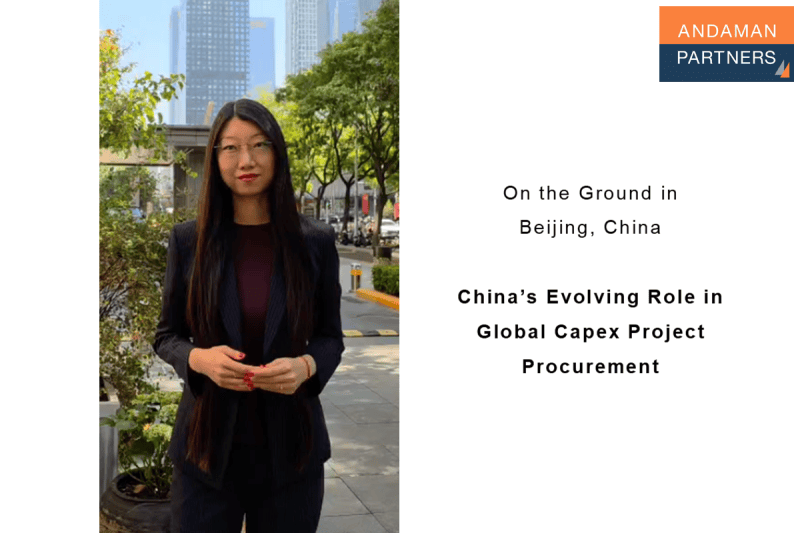
China’s Role in Global Capex Project Procurement by ANDAMAN PARTNERS Co-Founder Rachel Wu
Analysis by ANDAMAN PARTNERS Co-Founder Rachel Wu on how China’s role has evolved in global capex project procurement

ANDAMAN PARTNERS Co-Founder Rachel Wu to Deliver Talk at SEP Global Reunion 2026 in Shanghai, China
Rachel will deliver a talk at the event entitled ‘Two SEPers in the Family – Building in China for 20+ Years’

ANDAMAN PARTNERS to Attend Stanford Executive Programme Global Reunion 2026 in Shanghai, China
ANDAMAN PARTNERS will attend the SEP Global Reunion 2026 in Shanghai, China, from 28 October to 1 November 2026
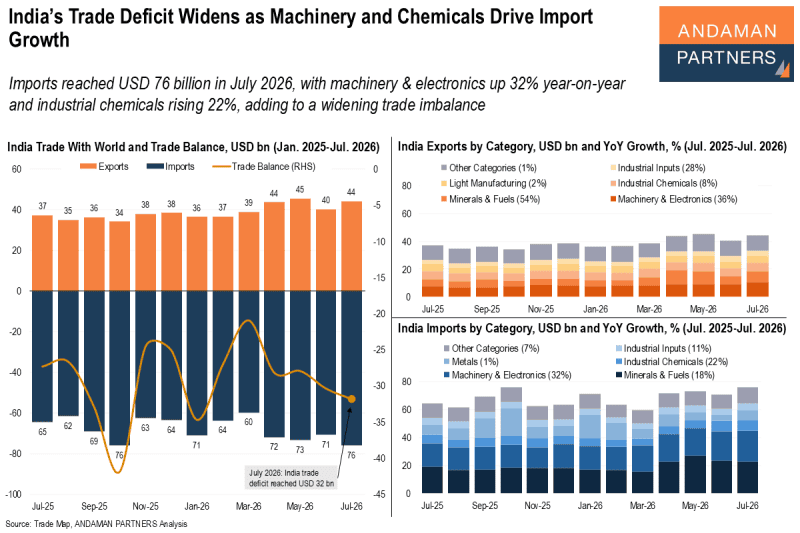
India’s Trade Deficit Widens as Machinery and Chemicals Drive Import Growth
Imports reached USD 76 billion in July 2026, with machinery & electronics up 32%, adding to a widening trade imbalance
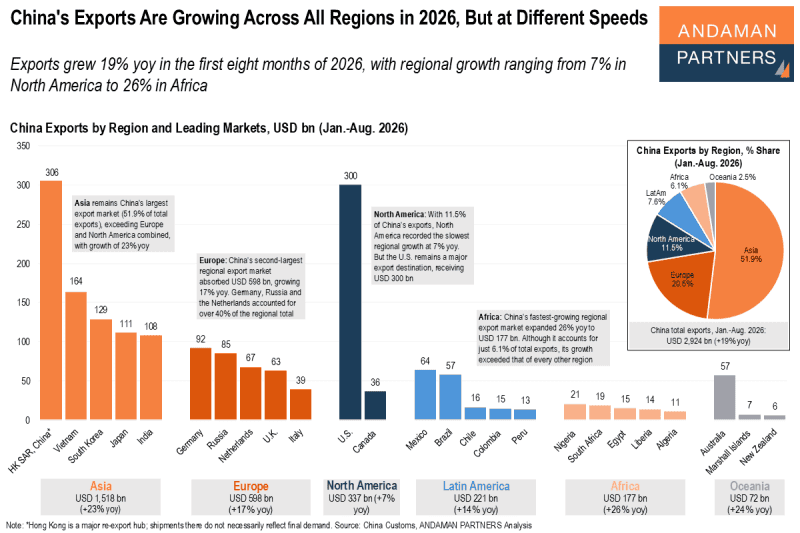
China’s Exports Are Growing Across All Regions in 2026, But at Different Speeds
Exports grew 19% yoy in the first eight months of 2026, with regional growth ranging from 7% in North America to 26% in Africa
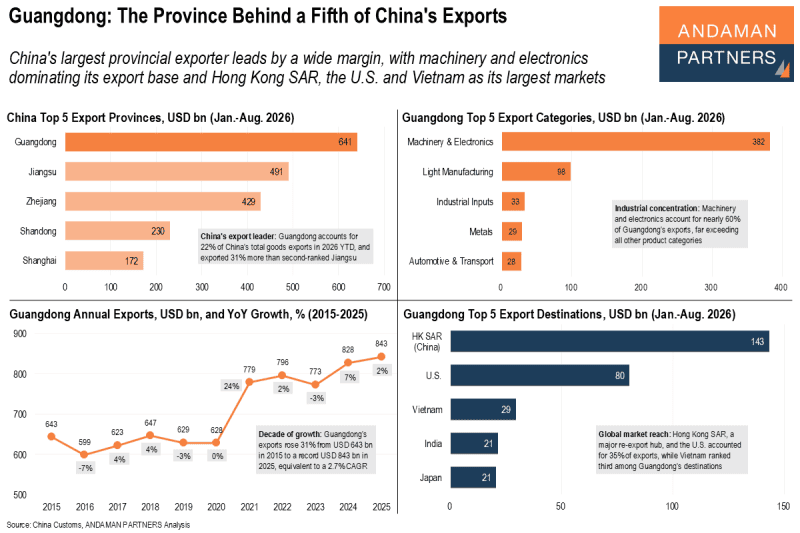
Guangdong: The Province Behind a Fifth of China’s Exports
China’s largest provincial exporter leads by a wide margin, with machinery and electronics dominating its export base