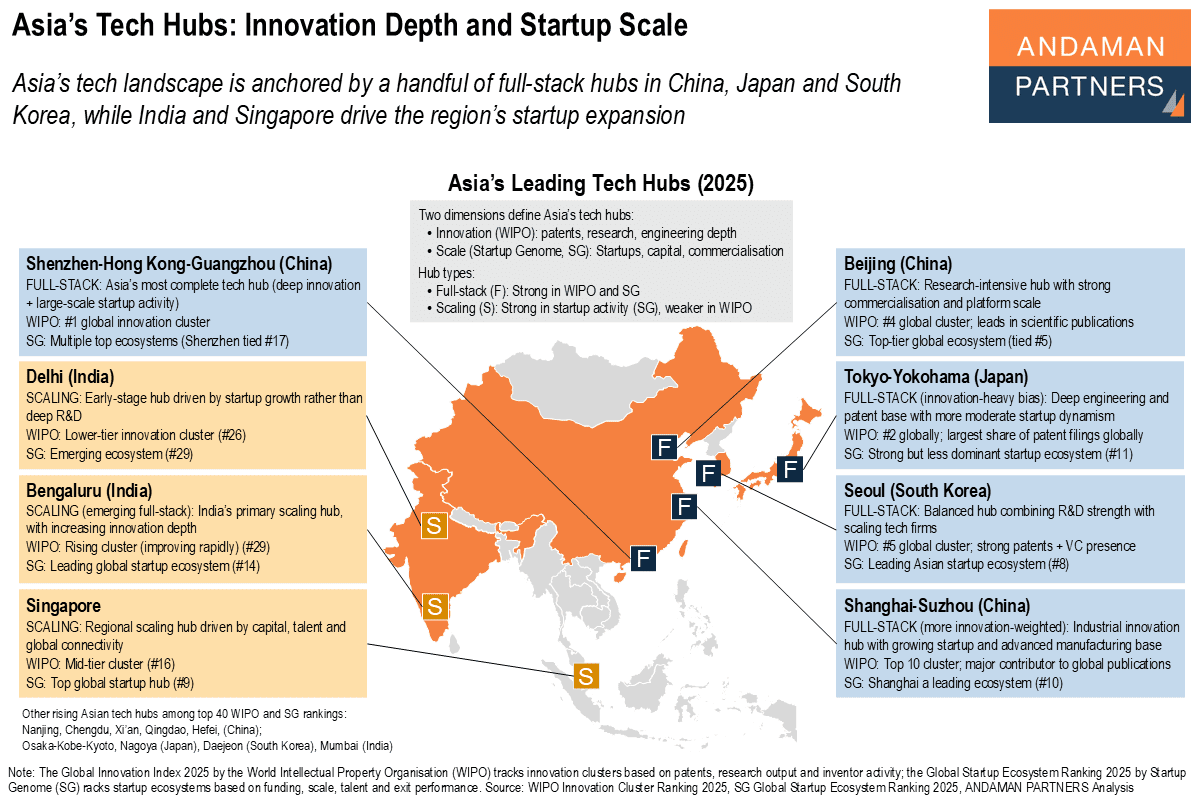

Asia’s tech landscape is anchored by a handful of full-stack hubs in China, Japan and South Korea, while India and Singapore drive the region’s startup expansion.
Asia’s tech hubs are no longer following global innovation; in 2026, they are helping define it, with China, Japan and South Korea anchoring depth while India and Singapore drive startup scale.
Asia’s leading tech hubs in 2026 are defined by a two-speed model: a small set of deep innovation clusters in China, Japan and South Korea, and a second wave of scaling ecosystems led by India and Singapore. WIPO’s 2025 cluster rankings show the region’s strongest research and patent density concentrated in a few metropolitan belts, while Startup Genome’s 2025 report highlights how capital formation, exits and startup velocity are increasingly shifting toward rising Indian and Chinese growth hubs.
- Shenzhen-Hong Kong-Guangzhou remains Asia’s most complete tech cluster, combining research depth with strong commercialisation.
- Beijing is a research-heavy hub with exceptional scientific output and rising startup scale.
- Shanghai-Suzhou stands out for industrial innovation, advanced manufacturing and an increasingly robust startup base.
- Tokyo-Yokohama remains one of Asia’s deepest engineering hubs, with unmatched patent intensity but a slower startup tempo.
- Seoul combines strong R&D with a highly competitive startup environment, making it one of the region’s most balanced hubs.
On the scaling side, Bengaluru is the standout Indian hub, with global startup momentum and rising AI and deep-tech activity. Delhi is still early in its journey, but it is becoming an important gateway for startup formation and talent. Singapore remains the region’s most international scaling platform, benefiting from access to capital, talent and connectivity.
Together, these eight hubs show that Asia’s innovation story is no longer just about manufacturing strength or patents; it is increasingly about how research, startups and capital are converging into globally competitive ecosystems.
Also by ANDAMAN PARTNERS:
ANDAMAN PARTNERS supports international business ventures and growth. We help launch global initiatives and accelerate successful expansion across borders. If your business, operations or project requires cross-border support, contact connect@andamanpartners.com.

ANDAMAN PARTNERS Attended the Australia Governance Summit 2026 in Sydney
ANDAMAN PARTNERS Co-Founder Kobus van der Wath attended the Australia Governance Summit (AGS26) in Sydney, Australia.

ANDAMAN PARTNERS Wishes You a Happy and Prosperous Year of the Horse!
Compliments of the Chinese Lunar New Year to all our clients, customers, suppliers and partners.
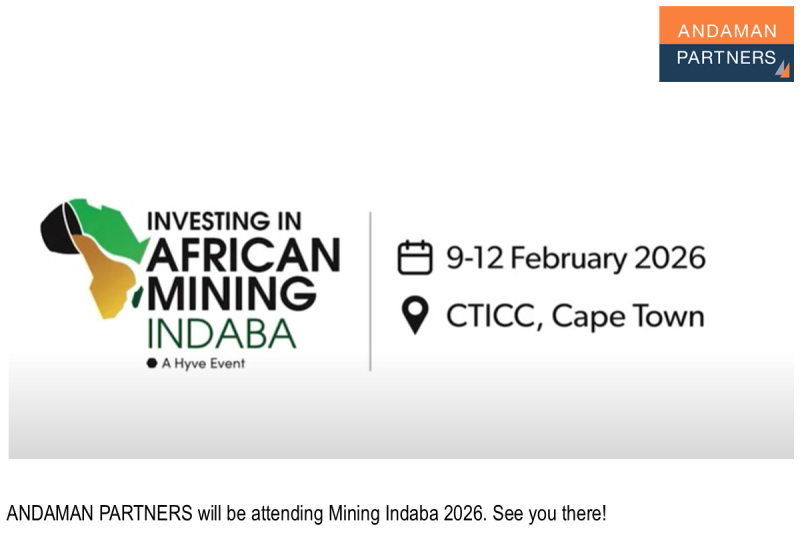
ANDAMAN PARTNERS to Attend Investing in African Mining Indaba 2026 in Cape Town
ANDAMAN PARTNERS Co-Founders Kobus van der Wath and Rachel Wu will attend Investing in African Mining Indaba 2026 in Cape Town, South Africa.
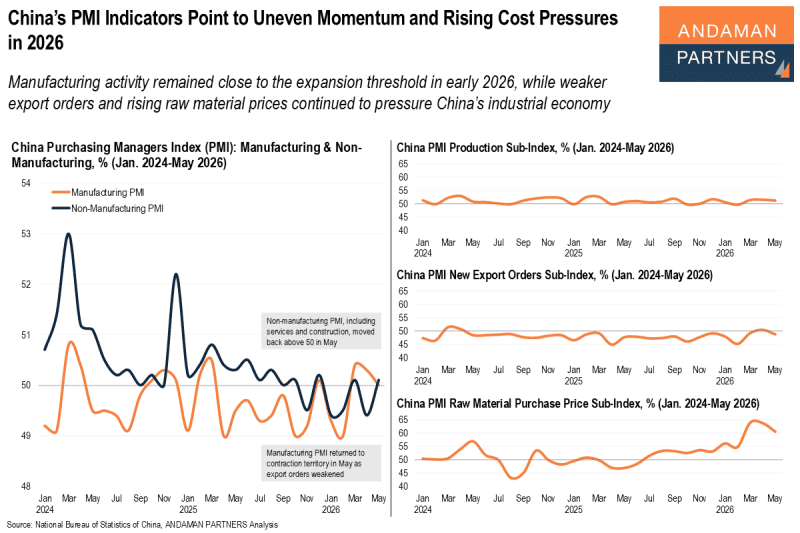
China’s PMI Indicators Point to Uneven Momentum and Rising Cost Pressures in 2026
Manufacturing activity remained close to expansion in early 2026, while weaker export orders and raw material prices pressure the economy
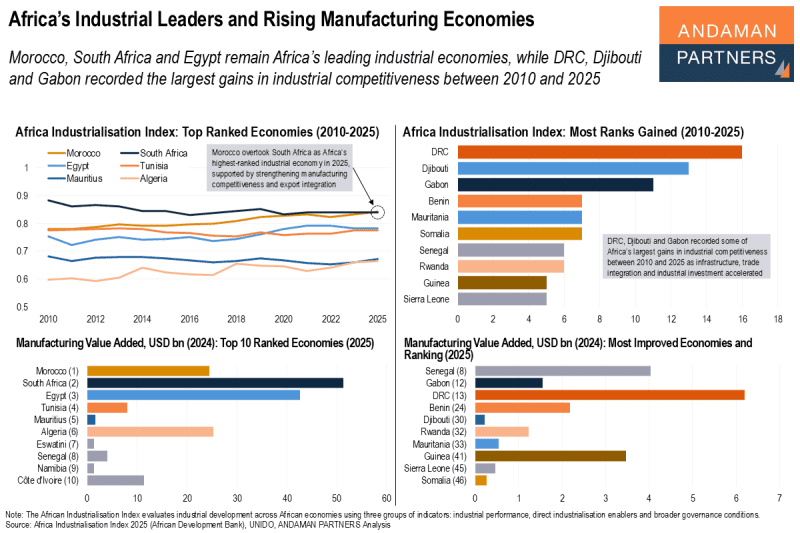
Africa’s Industrial Leaders and Rising Manufacturing Economies
Morocco, South Africa and Egypt remain Africa’s leading industrial economies; DRC, Djibouti and Gabon recorded the largest gains in competitiveness
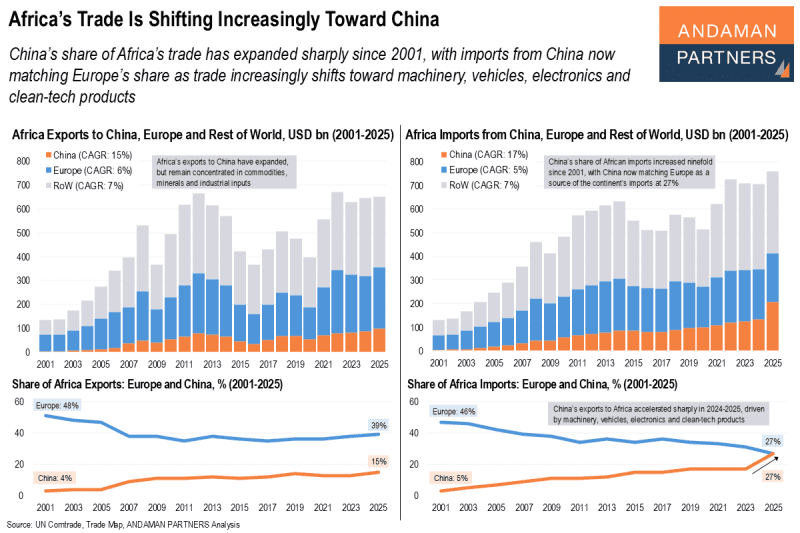
Africa’s Trade Is Shifting Increasingly Toward China
China’s share of Africa’s trade has expanded sharply since 2001, with imports from China now matching Europe’s share