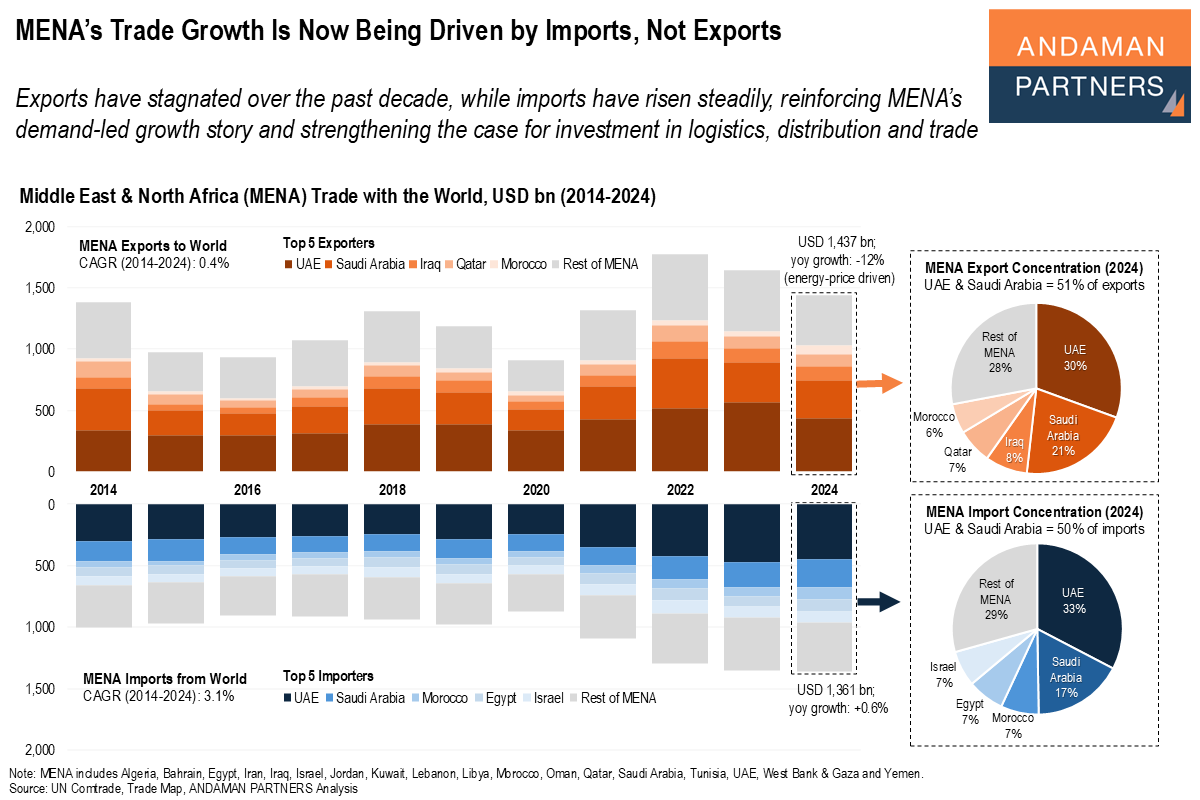
Exports have stagnated over the past decade, while imports have risen steadily, reinforcing MENA’s demand-led growth story and strengthening the case for investment in logistics, distribution and trade.
The trade profile of the Middle East & North Africa (MENA), a region comprising 18 economies, is increasingly shaped by import momentum rather than export expansion. Over 2014-2024, the region’s exports to the world grew only marginally (CAGR 0.4%), while imports expanded steadily (CAGR 3.1%), signalling a structural shift toward demand-led growth and rising purchasing power.
In 2024, MENA exports totalled USD 1.44 trillion (down 12% yoy, largely energy-price driven), while imports reached USD 1.36 trillion (up 0.6% yoy), reinforcing the region’s resilience as a global import market even during commodity-cycle volatility.
Trade flows remain highly concentrated. On the export side, the UAE (30%) and Saudi Arabia (21%) together account for 51% of total MENA exports, reflecting their role as both hydrocarbon exporters and trade intermediaries. They are followed by Iraq (8%), Qatar (7%) and Morocco (6%), highlighting the continued dominance of energy-linked exporters alongside Morocco’s more diversified manufacturing base.
Import concentration is similarly high: the UAE (33%) and Saudi Arabia (17%) account for 50% of total MENA imports, while Egypt (7%), Israel (7%) and Morocco (7%) round out the top five.
MENA is becoming a more attractive region for consumer goods, industrial inputs, food, machinery and construction-linked imports, with the UAE and Saudi Arabia strengthening their role as regional gateways. For exporters and logistics players, the opportunity is increasingly concentrated in firms that can combine distribution scale, supply-chain efficiency and hub-based market access across the broader MENA region.
Also by ANDAMAN PARTNERS:
ANDAMAN PARTNERS supports international business ventures and growth. We help launch global initiatives and accelerate successful expansion across borders. If your business, operations or project requires cross-border support, contact connect@andamanpartners.com.

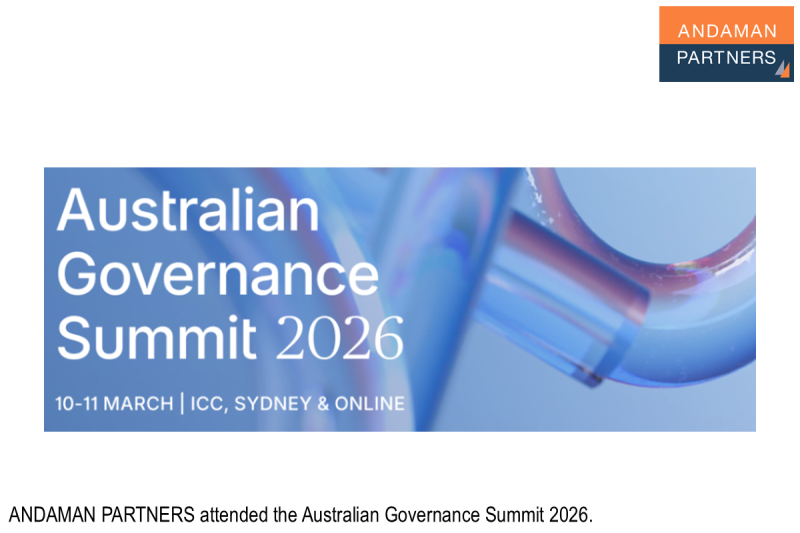
ANDAMAN PARTNERS Attended the Australia Governance Summit 2026 in Sydney
ANDAMAN PARTNERS Co-Founder Kobus van der Wath attended the Australia Governance Summit (AGS26) in Sydney, Australia.
ANDAMAN PARTNERS Wishes You a Happy and Prosperous Year of the Horse!
Compliments of the Chinese Lunar New Year to all our clients, customers, suppliers and partners.
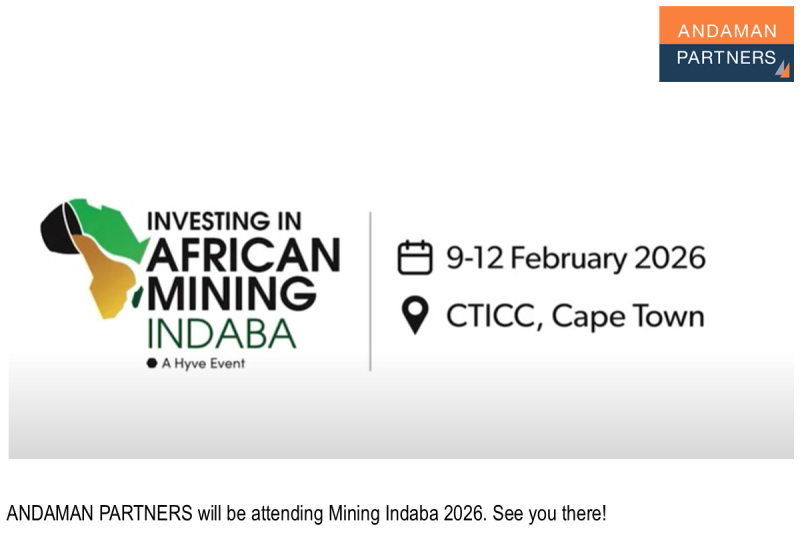
ANDAMAN PARTNERS to Attend Investing in African Mining Indaba 2026 in Cape Town
ANDAMAN PARTNERS Co-Founders Kobus van der Wath and Rachel Wu will attend Investing in African Mining Indaba 2026 in Cape Town, South Africa.
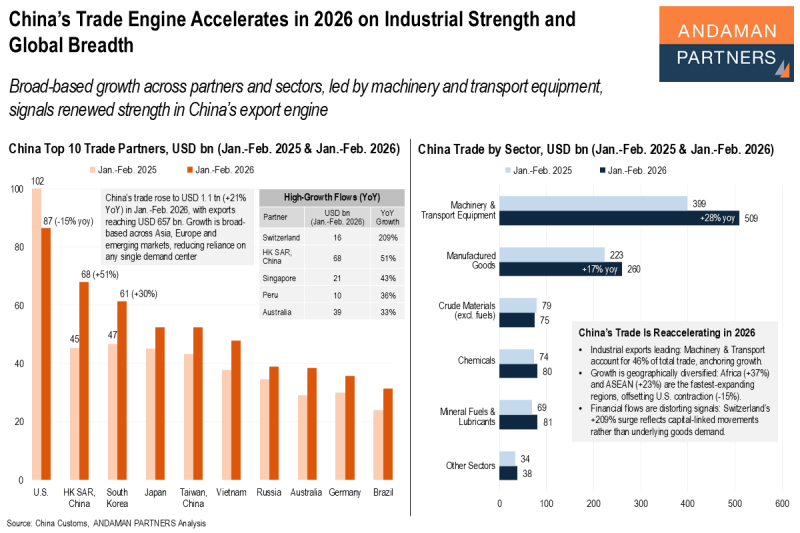
China’s Trade Engine Accelerates in 2026 on Industrial Strength and Global Breadth
Broad-based growth across partners and sectors, led by machinery and transport equipment, signals renewed strength in China’s export engine.
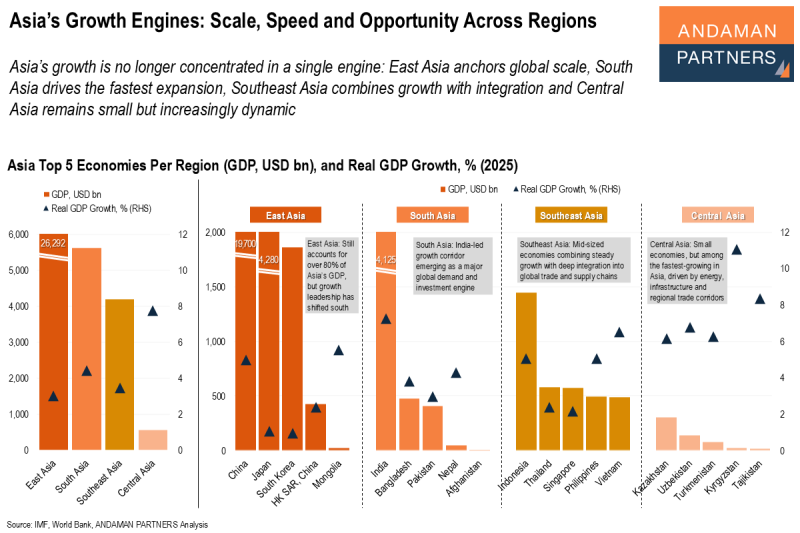
Asia’s Growth Engines: Scale, Speed and Opportunity Across Regions
Asia’s scale, speed and integration are no longer concentrated in a single core, but spread across multiple, complementary engines.
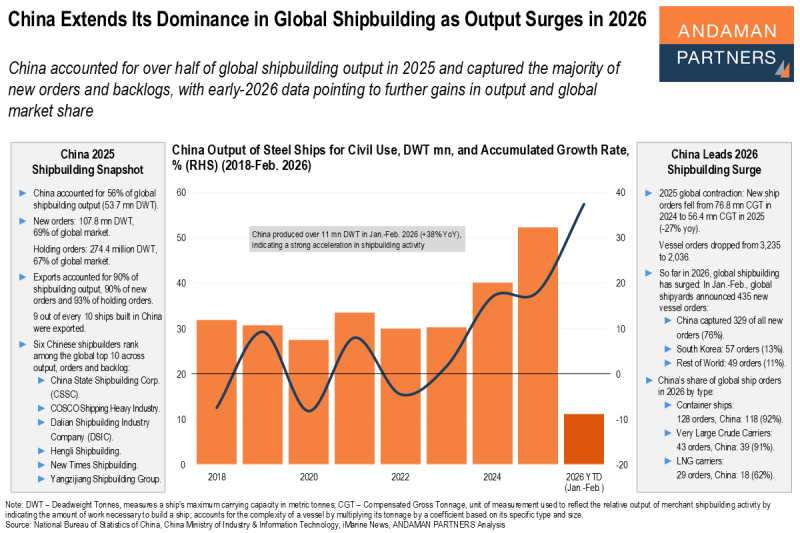
China Extends Its Dominance in Global Shipbuilding as Output Surges in 2026
Even as global ship orders declined in 2025, early-2026 data shows a rapid rebound, with China securing the vast majority of new contracts.