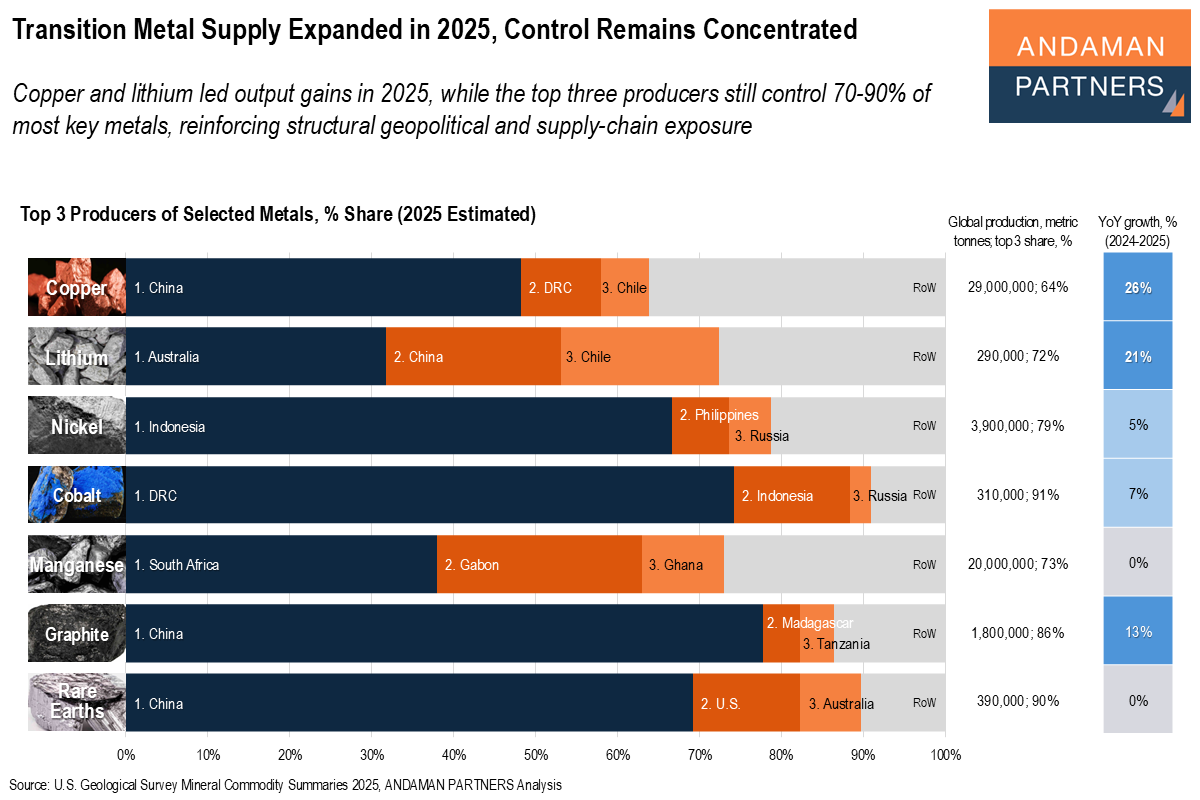
Transition Metal Supply Expanded in 2025, Control Remains Concentrated
Copper and lithium led output gains in 2025, while the top three producers still control 70-90% of most key metals.

Copper and lithium led output gains in 2025, while the top three producers still control 70-90% of most key metals.
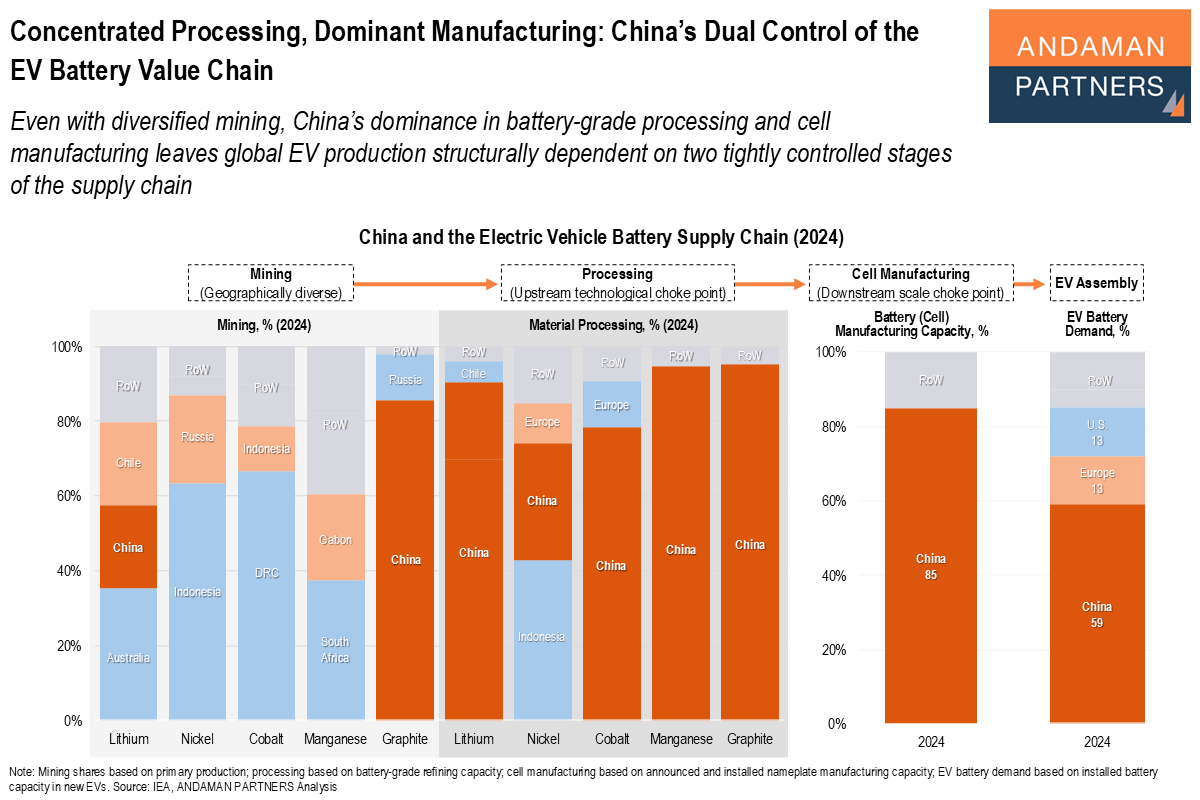
China’s dominance in battery-grade processing and cell manufacturing leaves global EV production dependent on two stages of the supply chain.
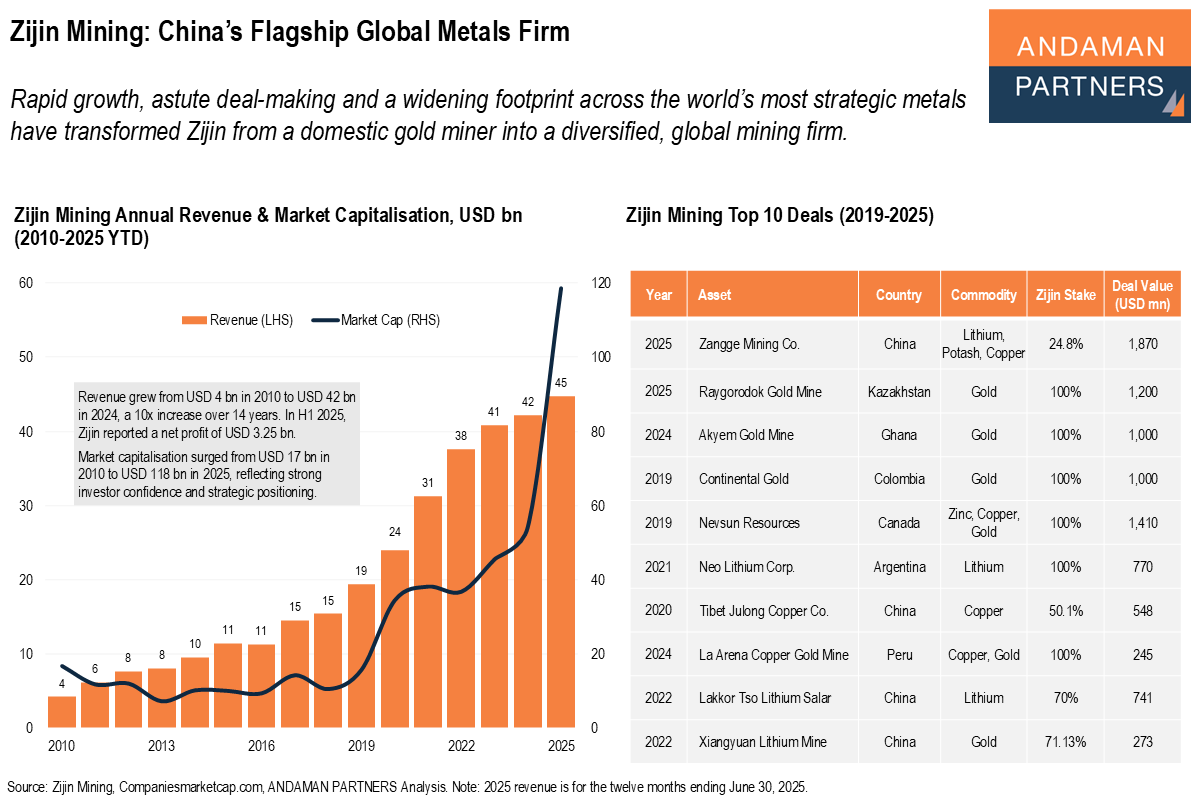
Rapid growth, astute deal-making and a widening footprint across strategic metals have transformed Zijin into a diversified, global mining firm.
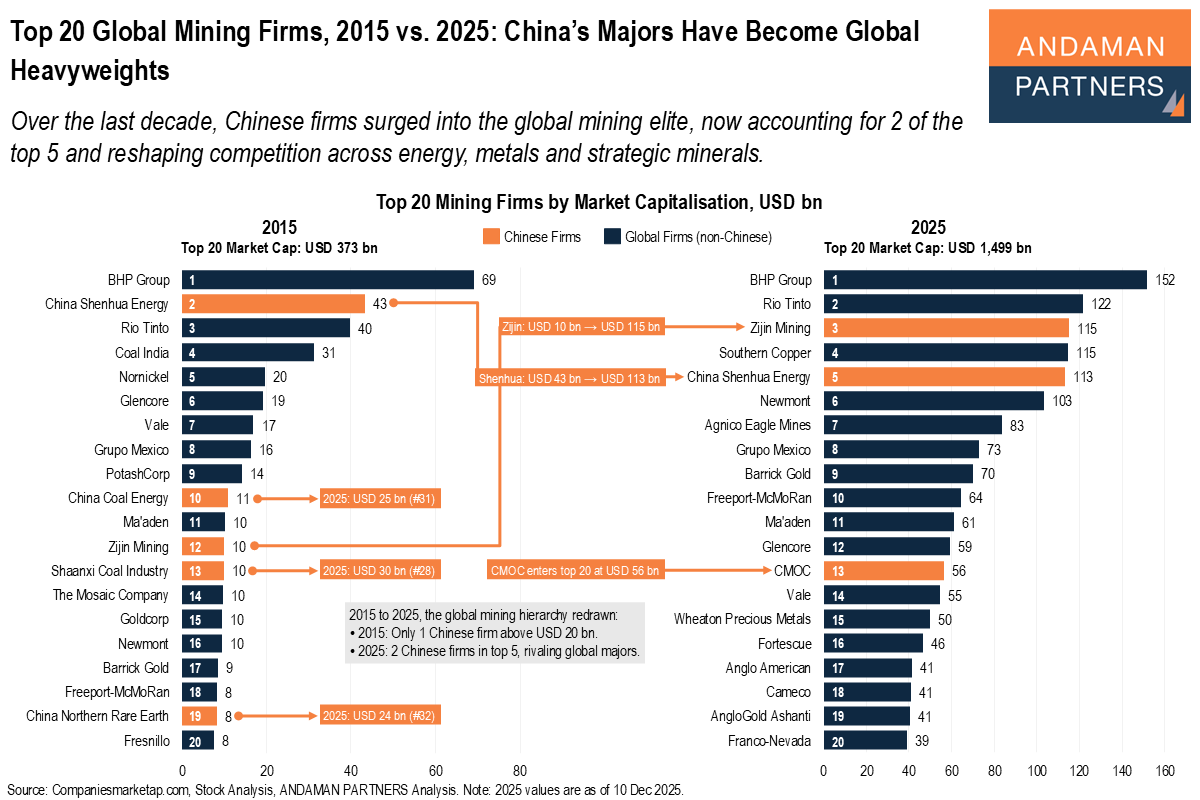
Over the last decade, Chinese firms surged into the global mining elite, now accounting for 2 of the top 5.
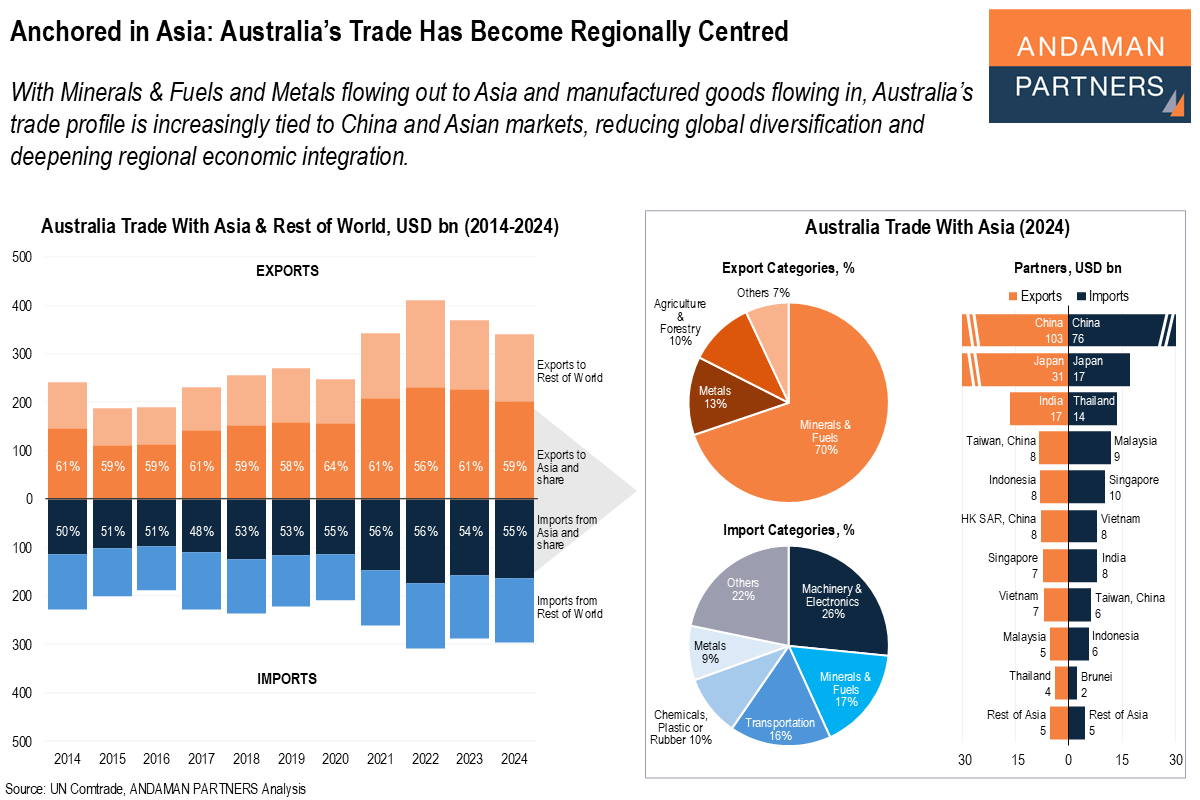
With Minerals & Fuels and Metals flowing out to Asia and manufactured goods flowing in, Australia’s trade profile is increasingly tied to China and Asian markets.
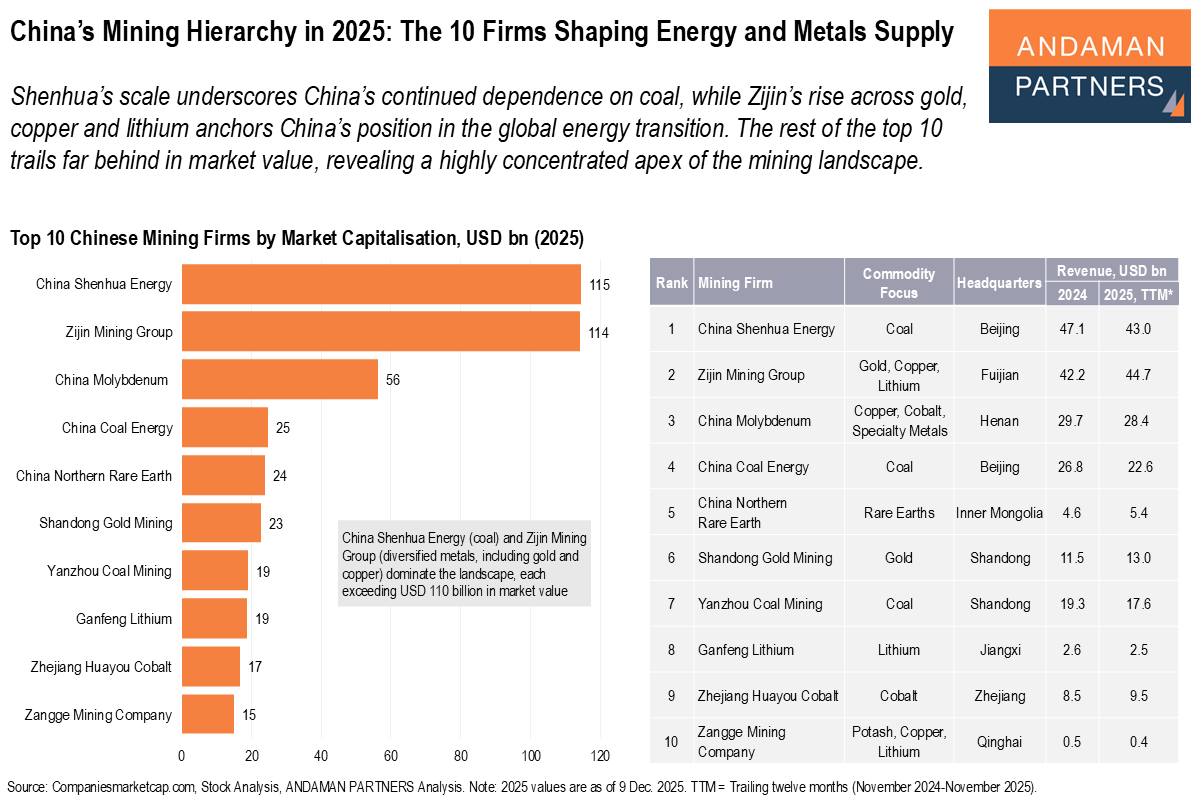
Shenhua’s scale underscores China’s continued dependence on coal, while Zijin’s rise anchors China’s position in the global energy transition.
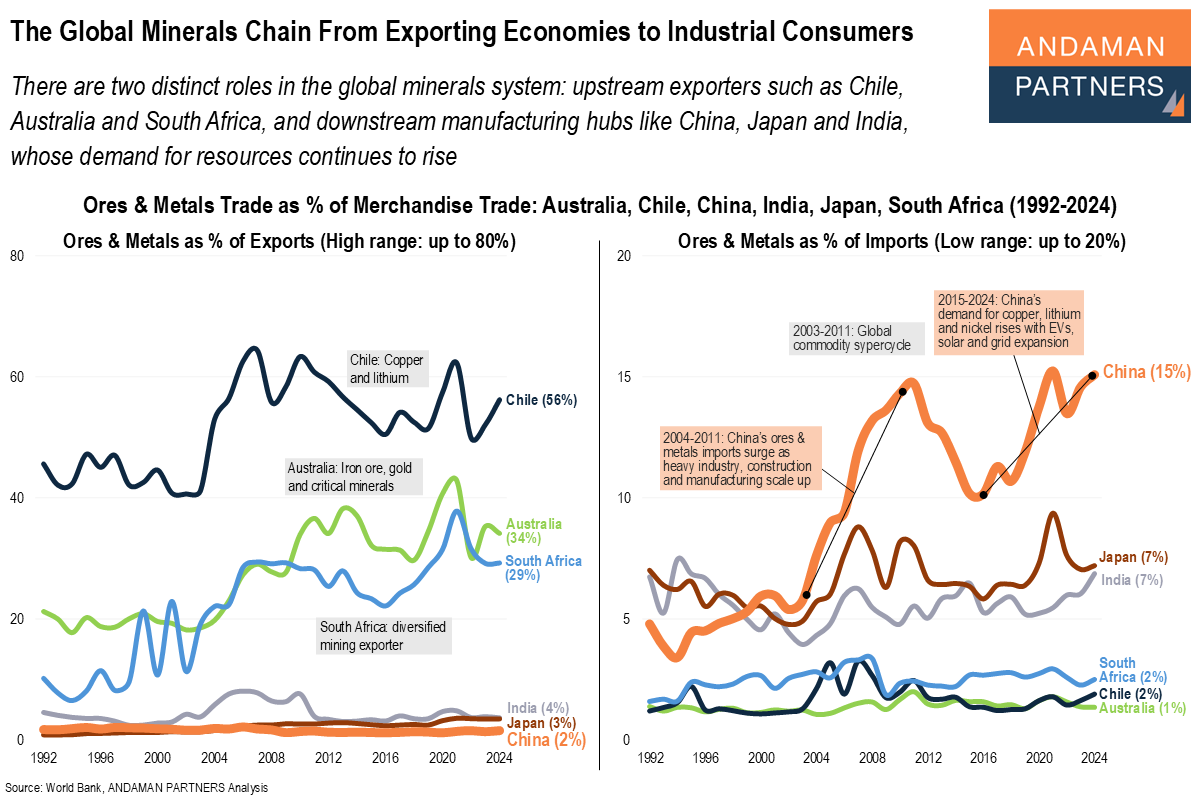
There are two distinct roles in the global minerals system: upstream exporters and downstream manufacturing hubs, whose demand for resources continues to rise.
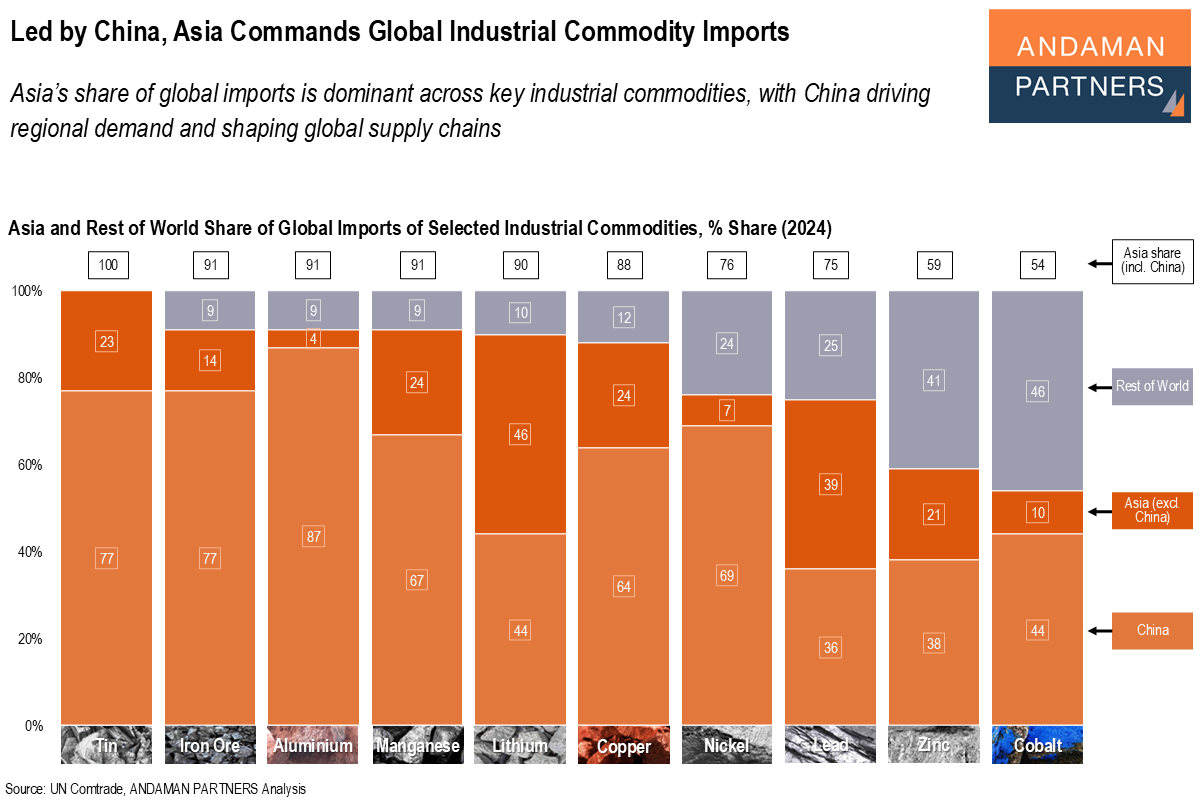
Asia’s share of global imports is dominant across key industrial commodities, with China driving regional demand and shaping global supply chains.

Beyond copper and lithium carbonate, Chile is a major supplier of fruit, fish, pulp, metals and chemicals, with China as the largest buyer.
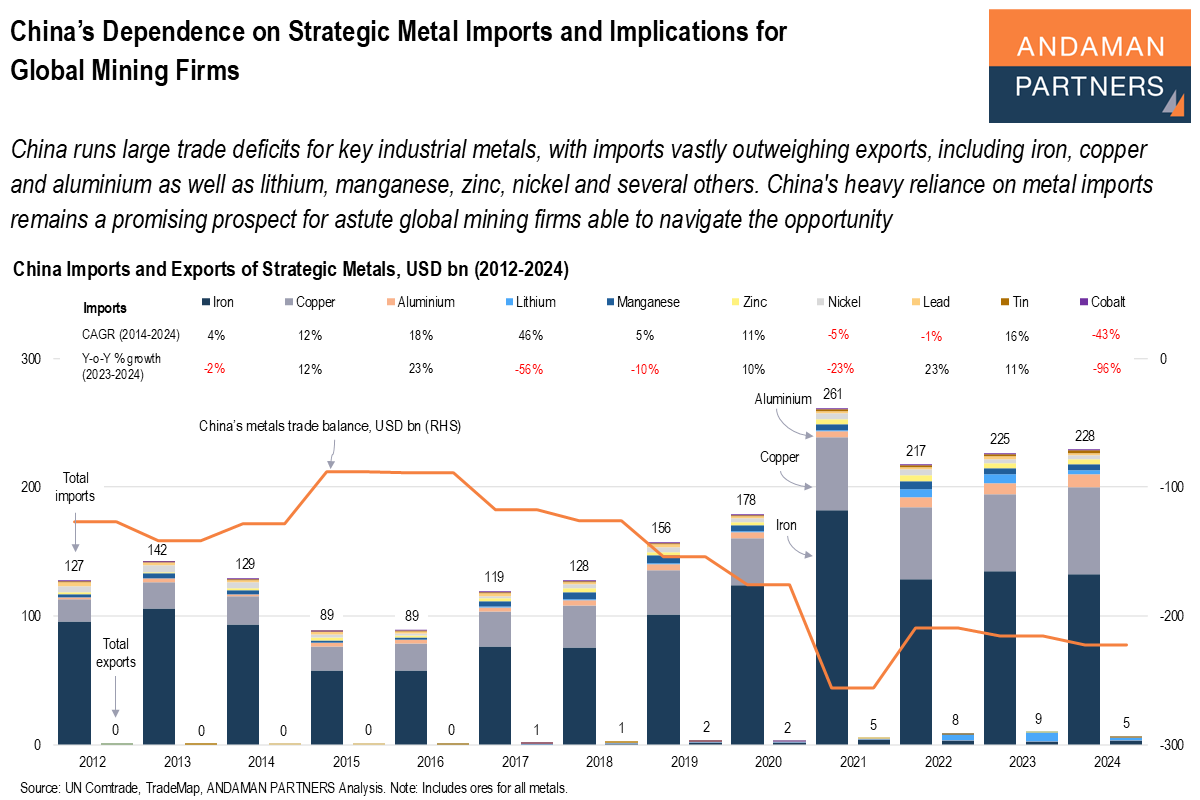
China runs large trade deficits for key industrial metals, which remains a promising opportunity for astute global mining firms.