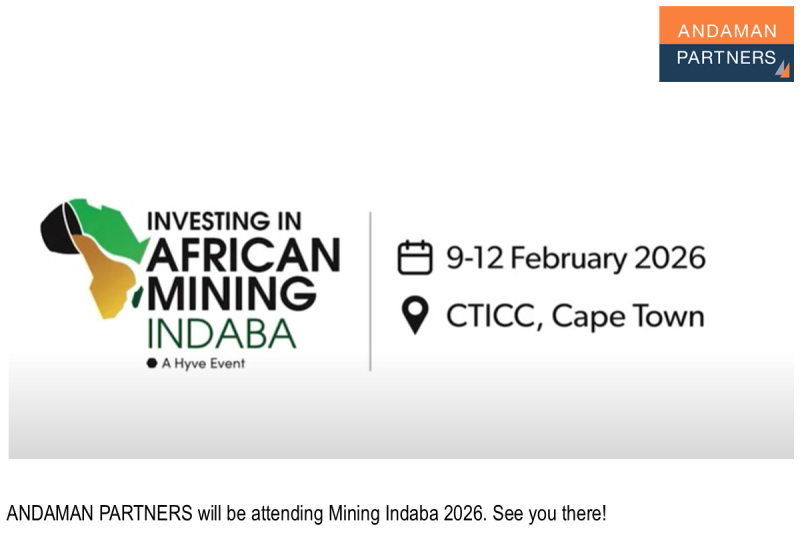
ANDAMAN PARTNERS to Attend Investing in African Mining Indaba 2026 in Cape Town
ANDAMAN PARTNERS Co-Founders Kobus van der Wath and Rachel Wu will attend Investing in African Mining Indaba 2026 in Cape Town, South Africa.
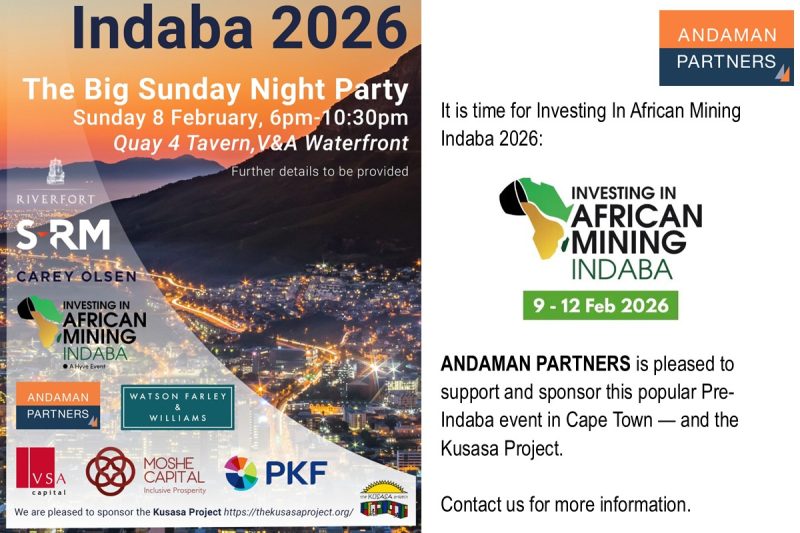
Join ANDAMAN PARTNERS at Networking Event in Cape Town Ahead of Mining Indaba 2026
ANDAMAN PARTNERS is pleased to support and sponsor this popular Pre-Indaba event in Cape Town.
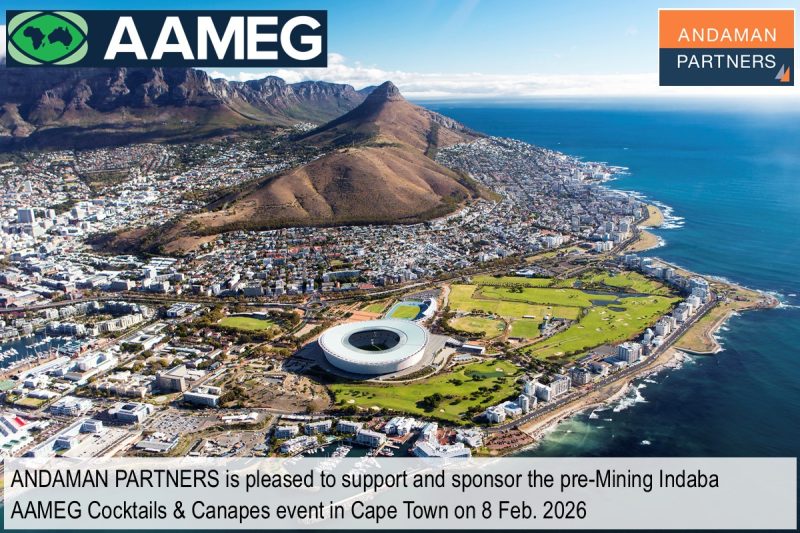
AAMEG Event in Cape Town Ahead of Mining Indaba 2026
ANDAMAN PARTNERS is pleased to sponsor and support the AAMEG pre-Mining Indaba Cocktails & Canapes event.
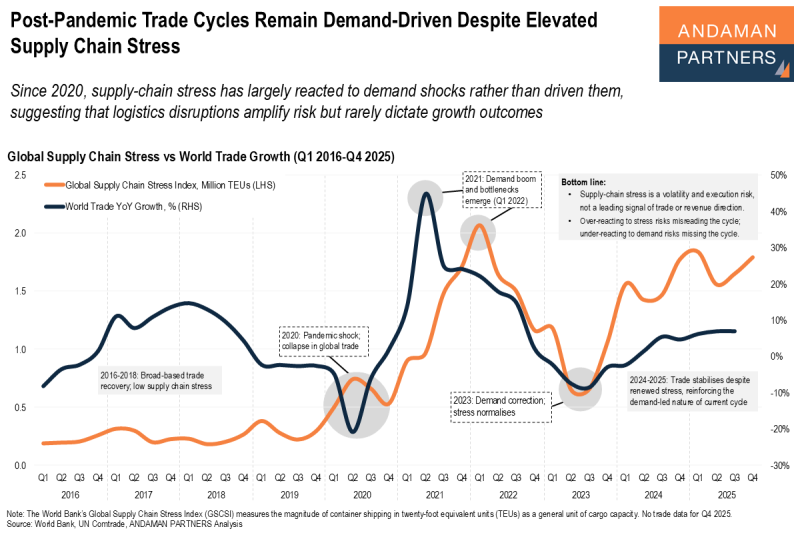
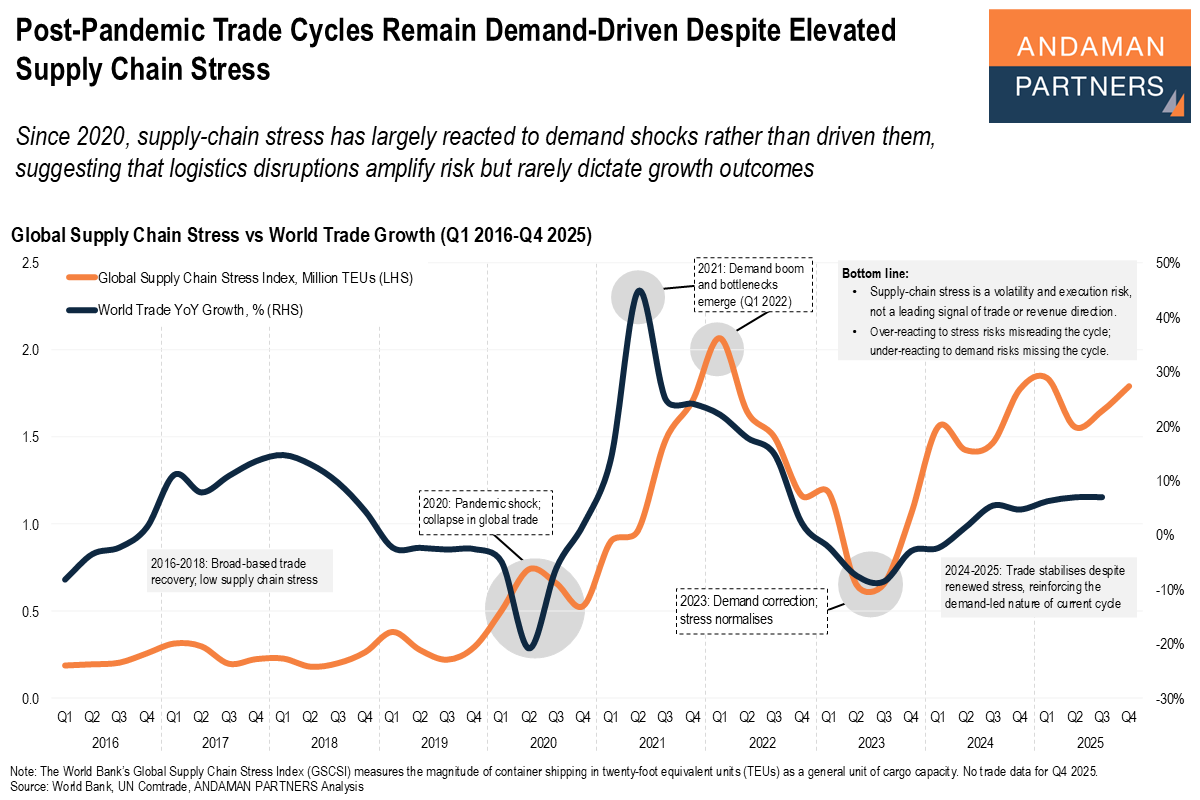
Post-Pandemic Trade Cycles Remain Demand-Driven Despite Elevated Supply Chain Stress
Supply-chain stress has largely reacted to demand shocks rather than driven them, suggesting that logistics disruptions rarely dictate growth.
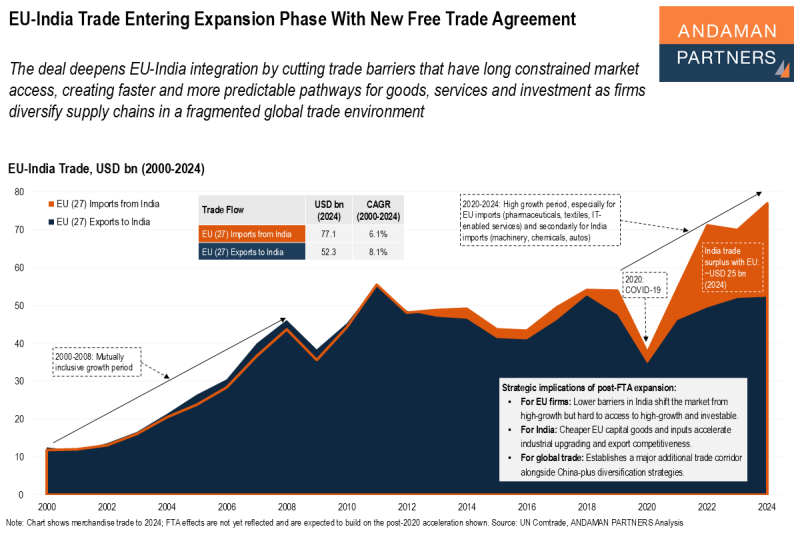
EU-India Trade Entering Expansion Phase With New Free Trade Agreement
The deal deepens EU-India integration by cutting trade barriers that have long constrained market access.
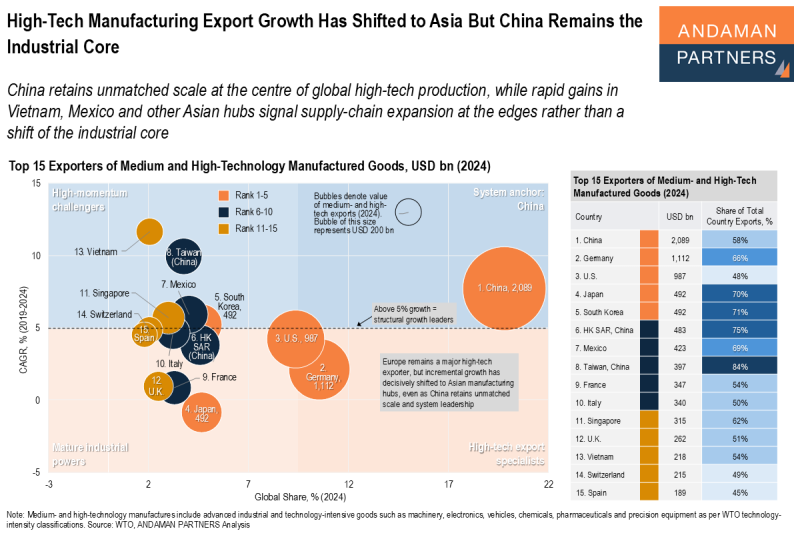
High-Tech Manufacturing Export Growth Has Shifted to Asia, But China Remains the Industrial Core
China retains unmatched scale at the centre of global high-tech production, while rapid gains in Vietnam, Mexico and other Asian hubs.