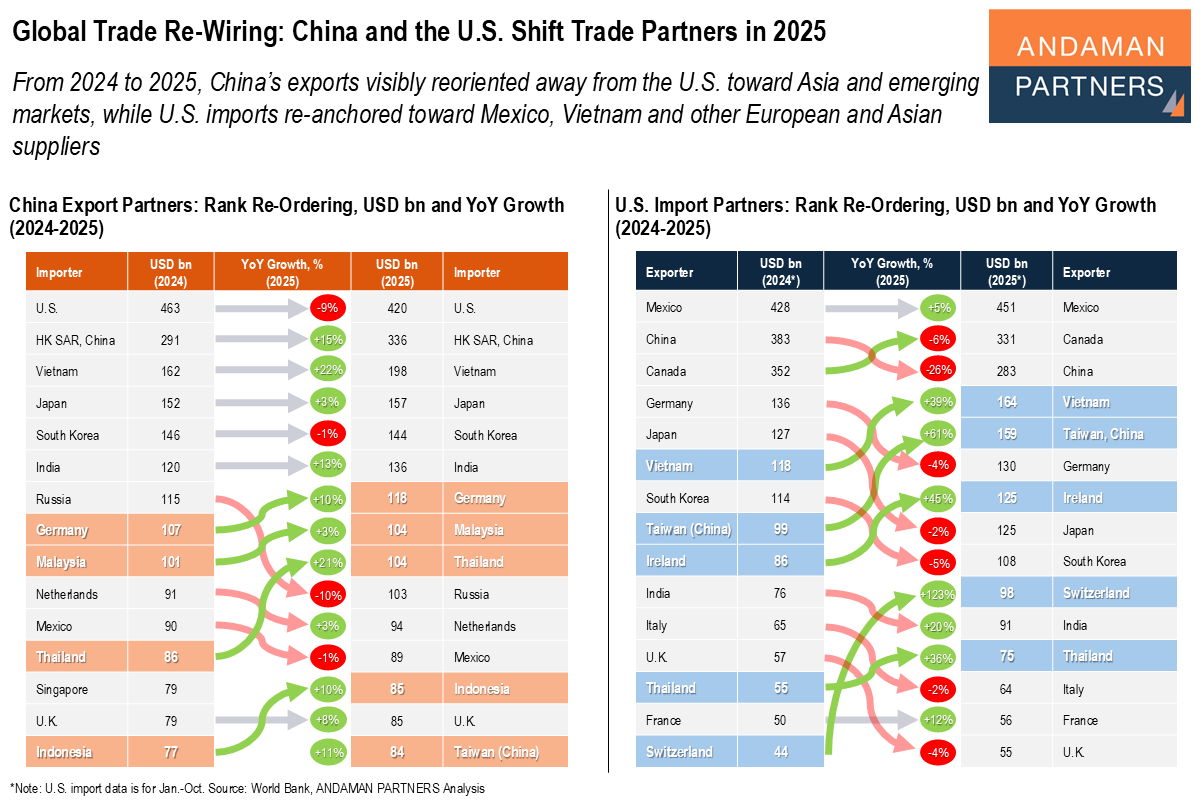
Global Trade Re-Wiring: China and the U.S. Shift Trade Partners in 2025
China’s exports reoriented away from the U.S. toward Asia and emerging markets, while U.S. imports re-anchored toward Mexico, Europe and Asia.

China’s exports reoriented away from the U.S. toward Asia and emerging markets, while U.S. imports re-anchored toward Mexico, Europe and Asia.
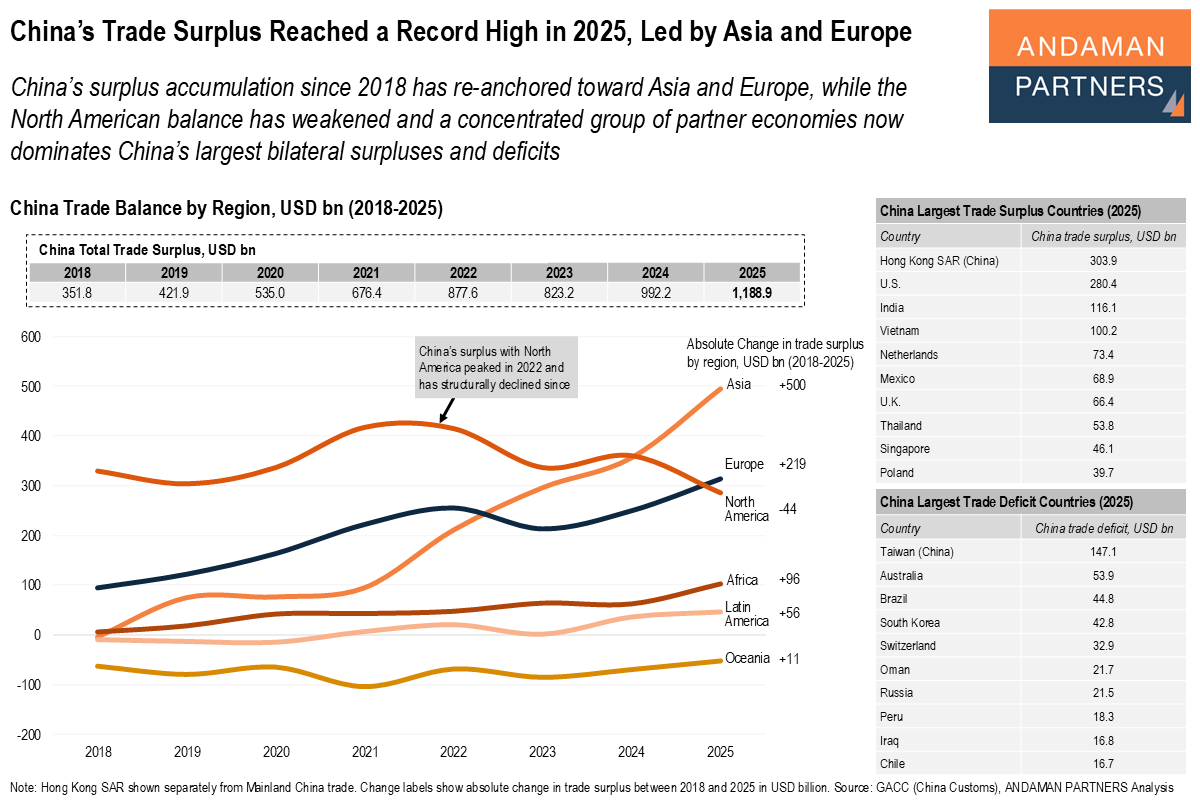
China’s surplus accumulation since 2018 has re-anchored toward Asia and Europe, while the North American balance has weakened.
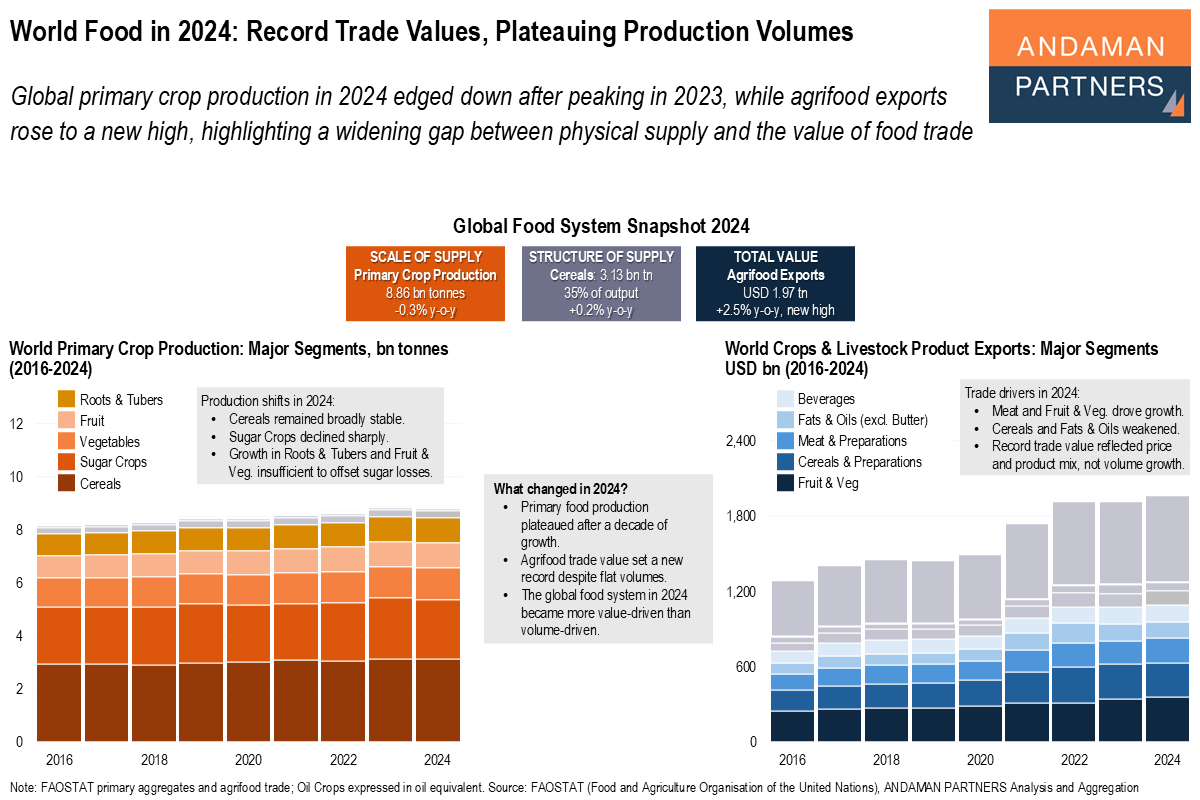
Global primary crop production in 2024 edged down after peaking in 2023, while agrifood exports rose to a new high.
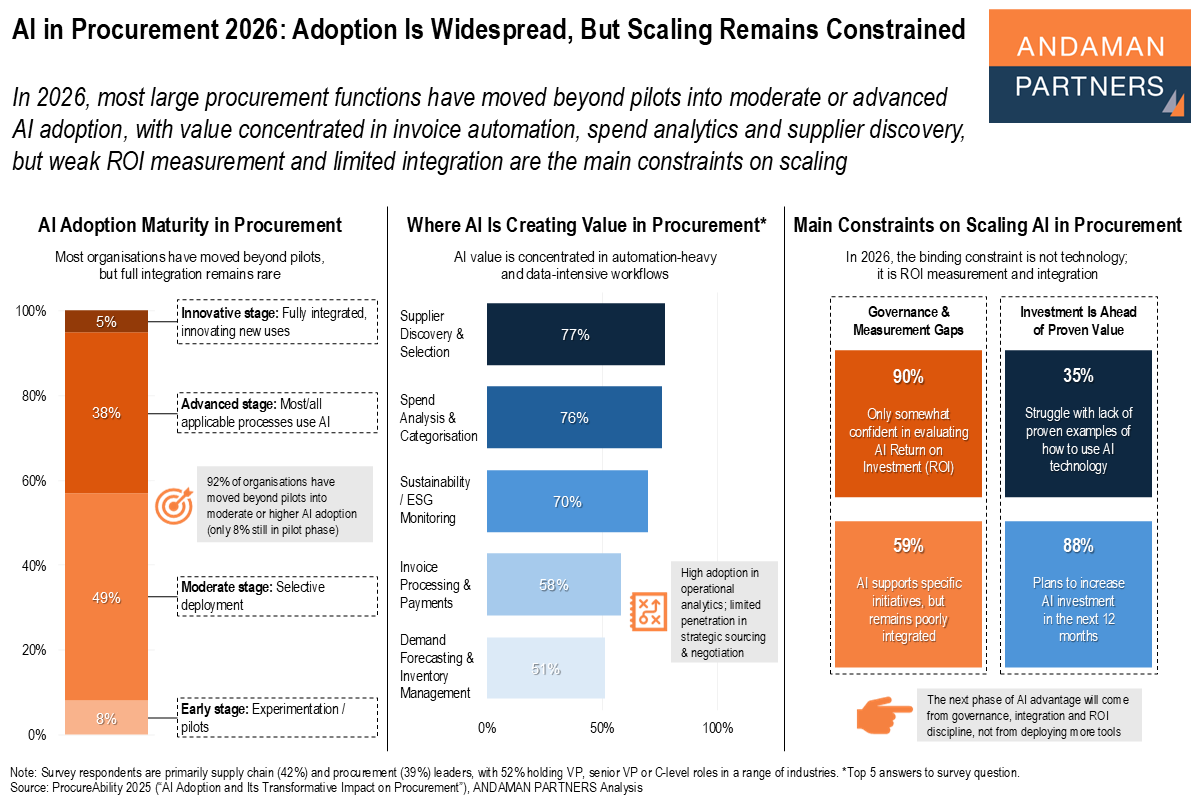
Procurement functions have moved into moderate or advanced AI adoption, but there are still constraints on scaling.

ANDAMAN PARTNERS Co-Founders Kobus van der Wath and Rachel Wu will attend Investing in African Mining Indaba 2026 in Cape Town, South Africa.
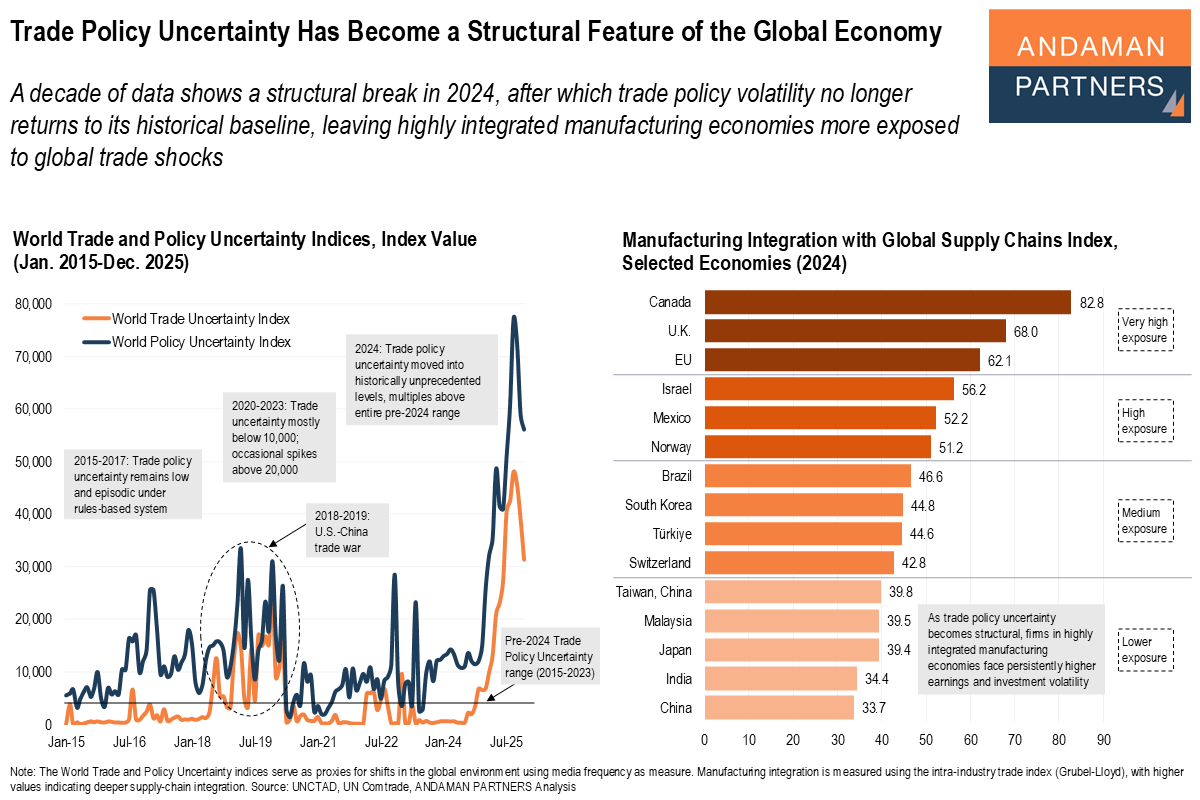
A decade of data shows a structural break in 2024, after which trade policy volatility no longer returns to its historical baseline.
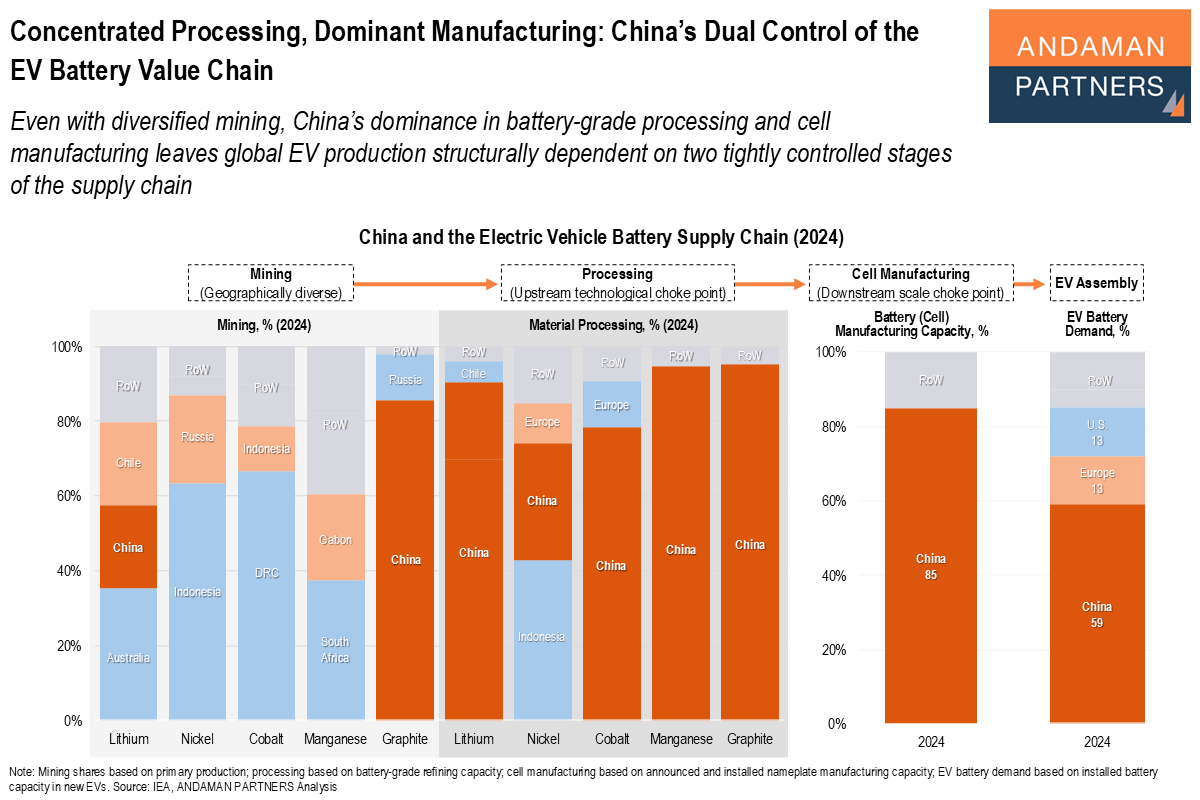
China’s dominance in battery-grade processing and cell manufacturing leaves global EV production dependent on two stages of the supply chain.
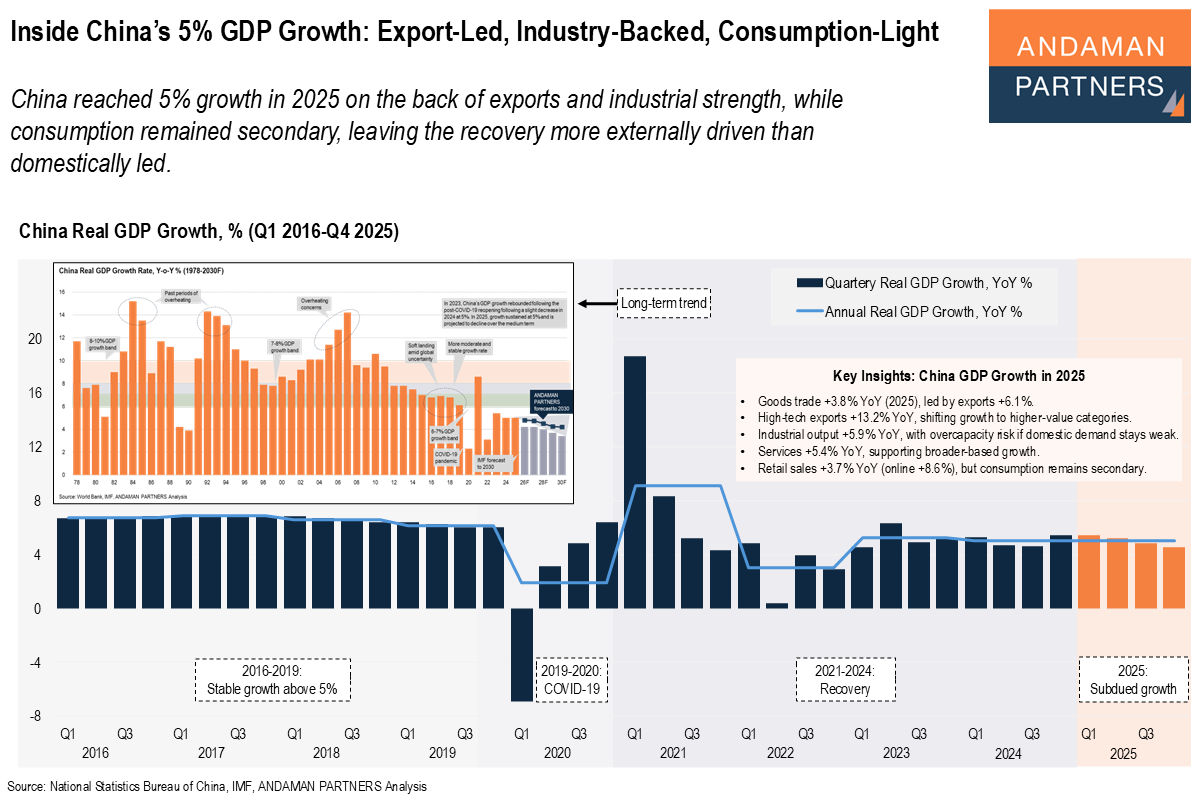
China reached 5% growth in 2025 on the back of exports and industrial strength, while consumption remained secondary.

ANDAMAN PARTNERS outlines, unpacks and unravels some of the broad shifts and finer intricacies of China’s economic development and transition in 2026.
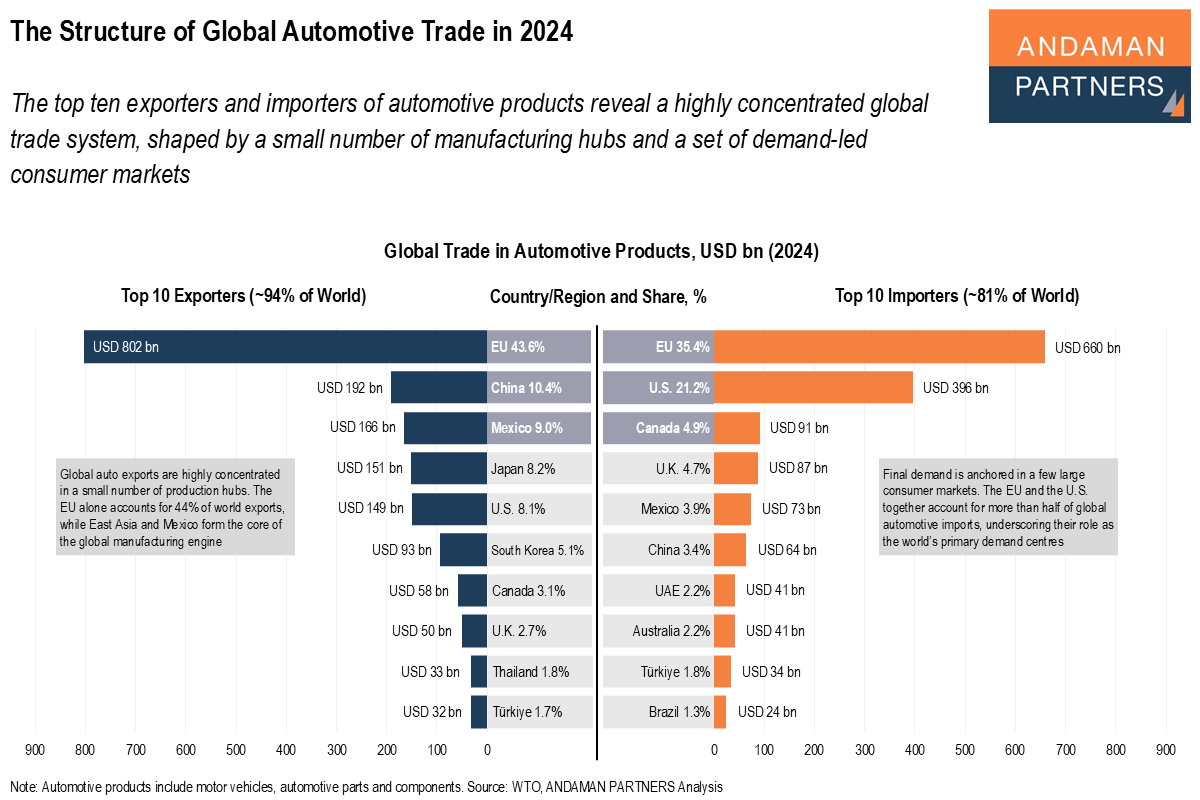
The top ten exporters and importers of automotive products reveal a highly concentrated global trade system.