
High-Tech Export Intensity Since 2007
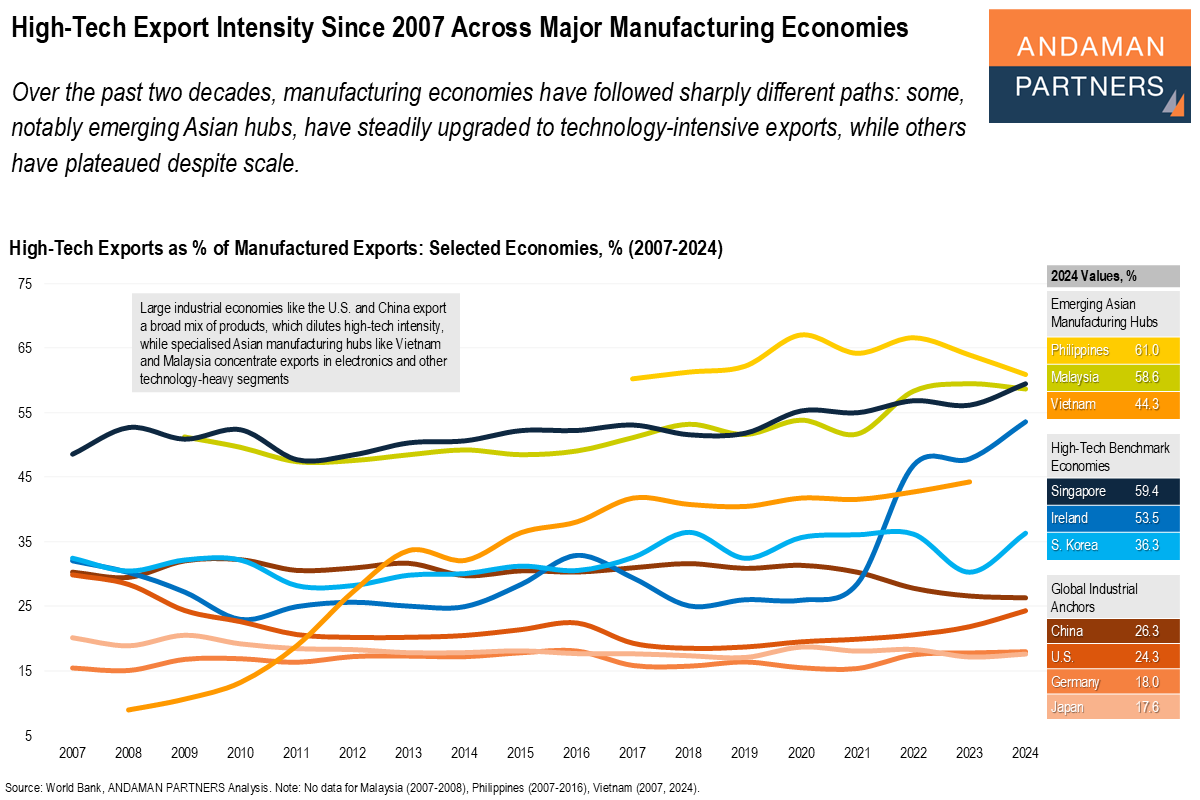
High-Tech Export Intensity Since 2007 Across Major Manufacturing Economies
Over the past two decades, manufacturing economies have followed sharply different paths: some, notably emerging Asian hubs, have steadily upgraded to technology-intensive exports, while others have plateaued despite scale.
Over the last two decades, high-technology export intensity has become a clear marker of how manufacturing economies are positioning themselves within global value chains. Scale alone does not guarantee upgrading: large industrial economies such as China, Germany and the U.S. export across a broad mix of products, which keeps headline high-tech shares structurally lower even as absolute volumes remain vast.
By contrast, several emerging Asian manufacturing hubs, notably Vietnam, Malaysia and the Philippines, have steadily increased their exposure to electronics and other technology-heavy segments, driving a sustained rise in high-tech intensity. The result is a widening divergence in export structures, with implications for resilience, margins and strategic relevance as global trade becomes more technology-driven.
A small group of high-tech benchmark economies, led by Ireland and Singapore, sits persistently at the upper end of the range, reflecting specialisation in technology-intensive exports. These economies serve as a reference point against which both emerging climbers and large industrial economies can be assessed.
Where an economy sits on the trajectory of high-tech export intensity increasingly shapes its competitiveness, its exposure to future trade shocks and the ecosystems in which advanced manufacturing investment will concentrate.
Also by ANDAMAN PARTNERS:
ANDAMAN PARTNERS supports international business ventures and growth. We help launch global initiatives and accelerate successful expansion across borders. If your business, operations or project requires cross-border support, contact connect@andamanpartners.com.

Hong Kong: From a Gateway to a Springboard Out of Mainland China by ANDAMAN PARTNERS Co-Founder Rachel Wu
Analysis by ANDAMAN PARTNERS Co-Founder Rachel Wu on Hong Kong’s changing role
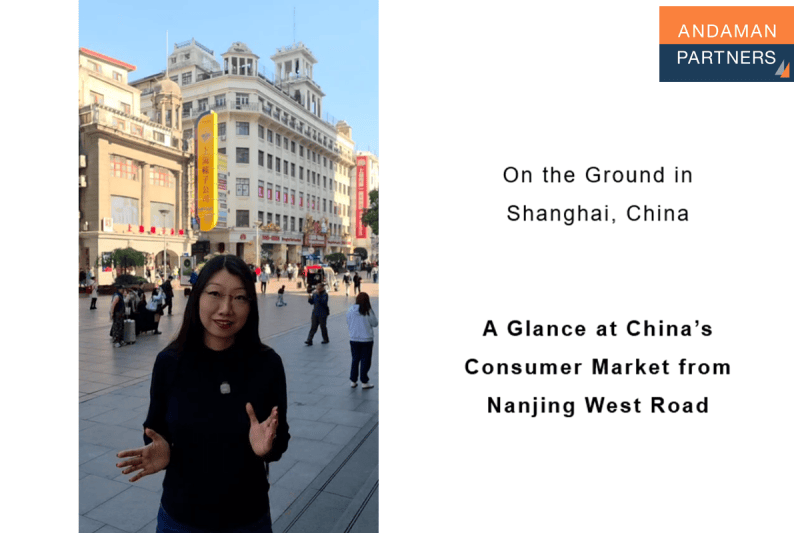
A Glance at China’s Consumer Market from Nanjing West Road by ANDAMAN PARTNERS Co-Founder Rachel Wu
Analysis by ANDAMAN PARTNERS Co-Founder Rachel Wu on China’s consumer economy

China Keeps Shopping for Services. Are You Selling? By ANDAMAN PARTNERS Co-Founder Rachel Wu
Analysis by ANDAMAN PARTNERS Co-Founder Rachel Wu on Shanghai’s services economy
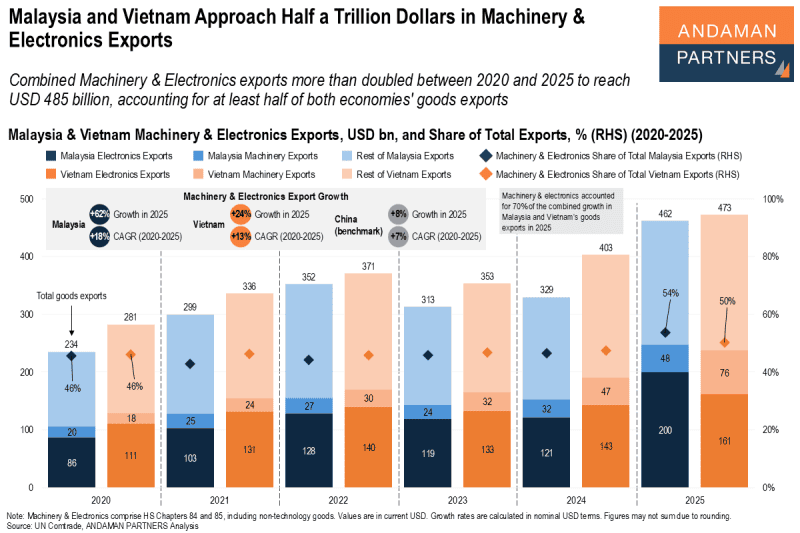
Malaysia and Vietnam Approach Half a Trillion Dollars in Machinery & Electronics Exports
Combined Machinery & Electronics exports more than doubled between 2020 and 2025 to reach USD 485 billion
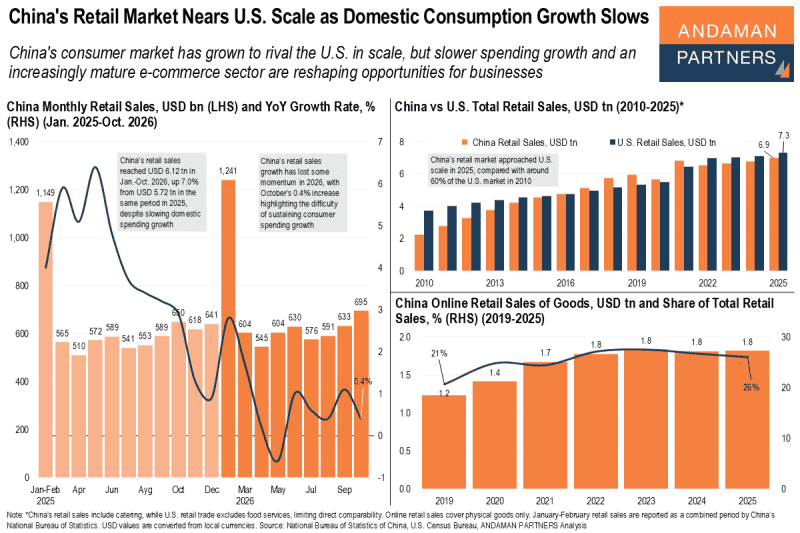
China’s Retail Market Nears U.S. Scale as Domestic Consumption Growth Slows
China’s consumer market has grown to rival the U.S. in scale, but slower spending growth is reshaping opportunities for businesses
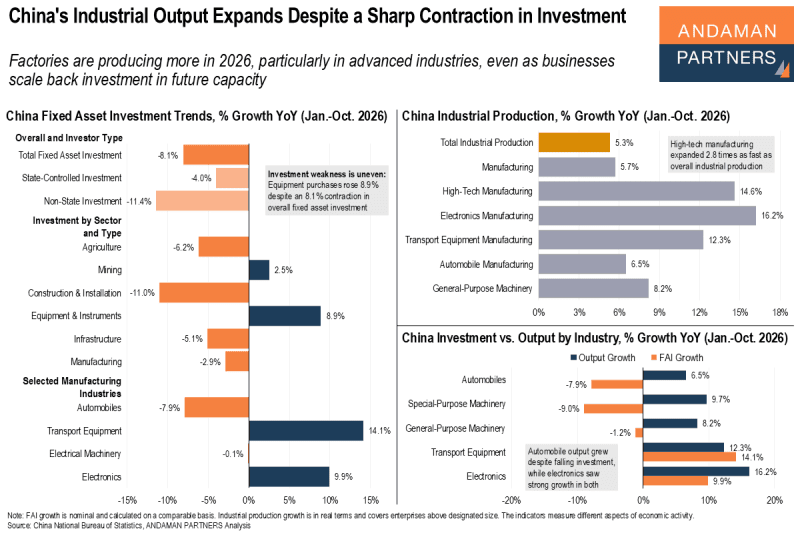
China’s Industrial Output Expands Despite a Sharp Contraction in Investment
Factories are producing more in 2026, particularly in advanced industries, even as businesses scale back investment in future capacity
Pingback: The Structure of Global Automotive Trade in 2024 | ANDAMAN PARTNERS
Pingback: Trade Policy Uncertainty Has Become a Structural Feature of the Global Economy | ANDAMAN PARTNERS
Pingback: China’s Capital Goods Exports Are Shifting To New Industrial Markets | ANDAMAN PARTNERS